Window Cling vs Vinyl: Adhesive and Perforated Films
 Daniel
October 31, 2026Updated November 3, 20268 min read

Should You Choose a Window Cling, Adhesive Vinyl or Perforated Film?
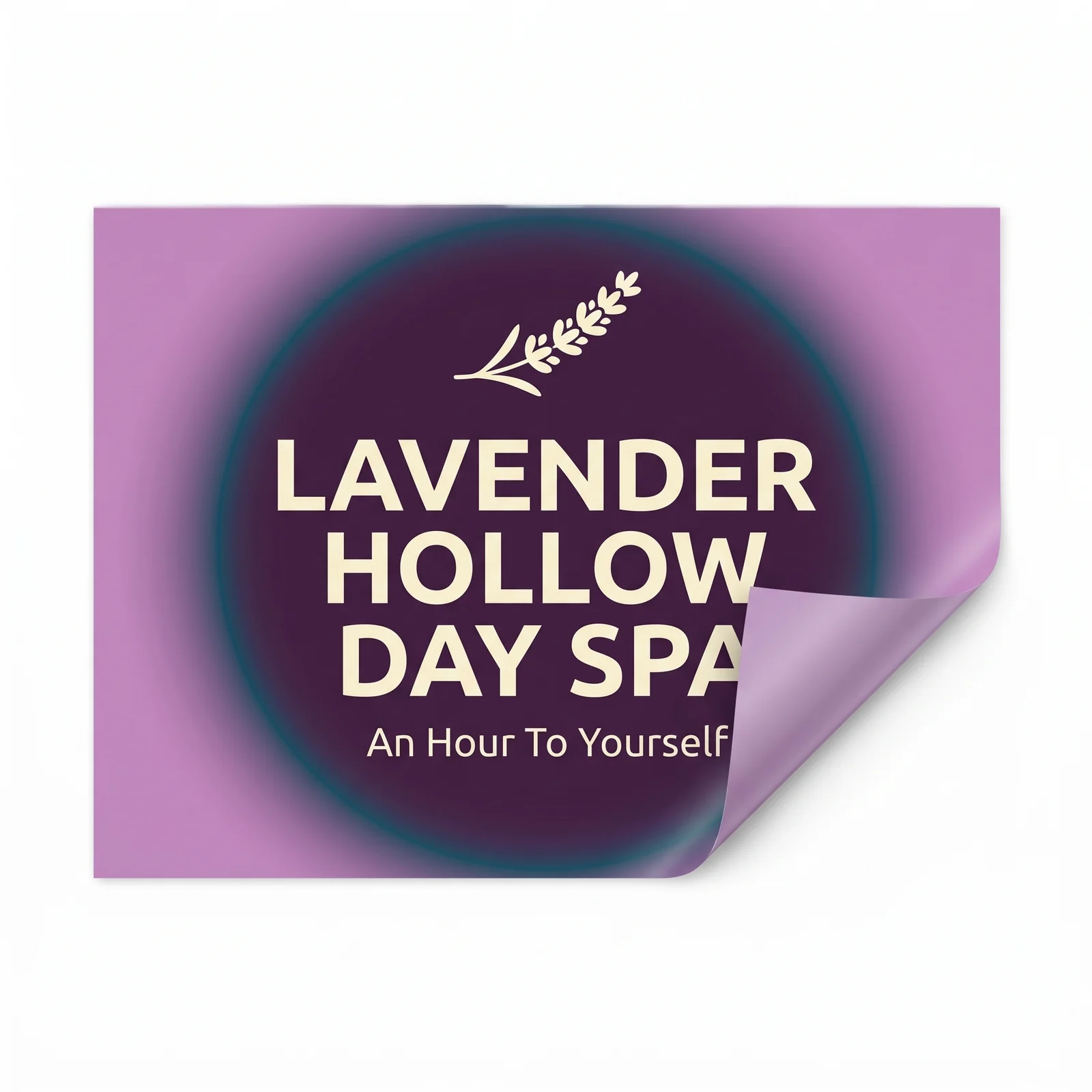
A 24" × 36" Window Cling is $99.99. Artwork prep is $14.99 per item. Printed in the USA in 48 hours and shipped nationwide, flat $10 shipping to any US address. A cling holds by static and peels off; adhesive vinyl stays put long term; perforated film covers a whole pane yet keeps the view out.
Choose by how long the graphic stays and how much glass it covers. A window cling holds by static and peels off, so it suits promotions that change. Adhesive vinyl bonds to the glass, so it suits a logo, hours and lettering that stay. Perforated film covers a whole pane with a graphic while people inside can still see out.
| Film | Holds by | Best for | Starts at |
|---|---|---|---|
| Window cling | Static | Seasonal promos | $29.99 |
| Glass door decal | Adhesive | Logo, lettering | See product page |
| One way window film | Adhesive, perforated | Full pane coverage | $54.99 |
All three print in the USA in 48 hours after proof approval and ship for a flat $10 per product to any US address. The glass door decal page opens on an 18 x 18 inch decal: An 18" × 18" 3M IJ-35C Glass Door Decal is $84.19. Artwork prep is $14.99 per item. Printed in the USA in 48 hours and shipped nationwide, flat $10 shipping to any US address.
How Does a Window Cling Work?
A window cling is a thin vinyl film that holds to smooth glass by static, with no adhesive. You smooth it onto clean glass and it stays. When the promotion ends, you peel it off, store it on its backing and put it up again next year.
That makes clings the right film for anything that changes: seasonal sales, holiday displays, event announcements, a weekly special. They leave no residue, so staff can take them down without a scraper.
Clings need smooth, clean glass. They do not hold well on textured, frosted or dirty glass, and they are best applied on the inside of the window, where weather cannot reach them.
When Is Adhesive Vinyl the Better Choice?
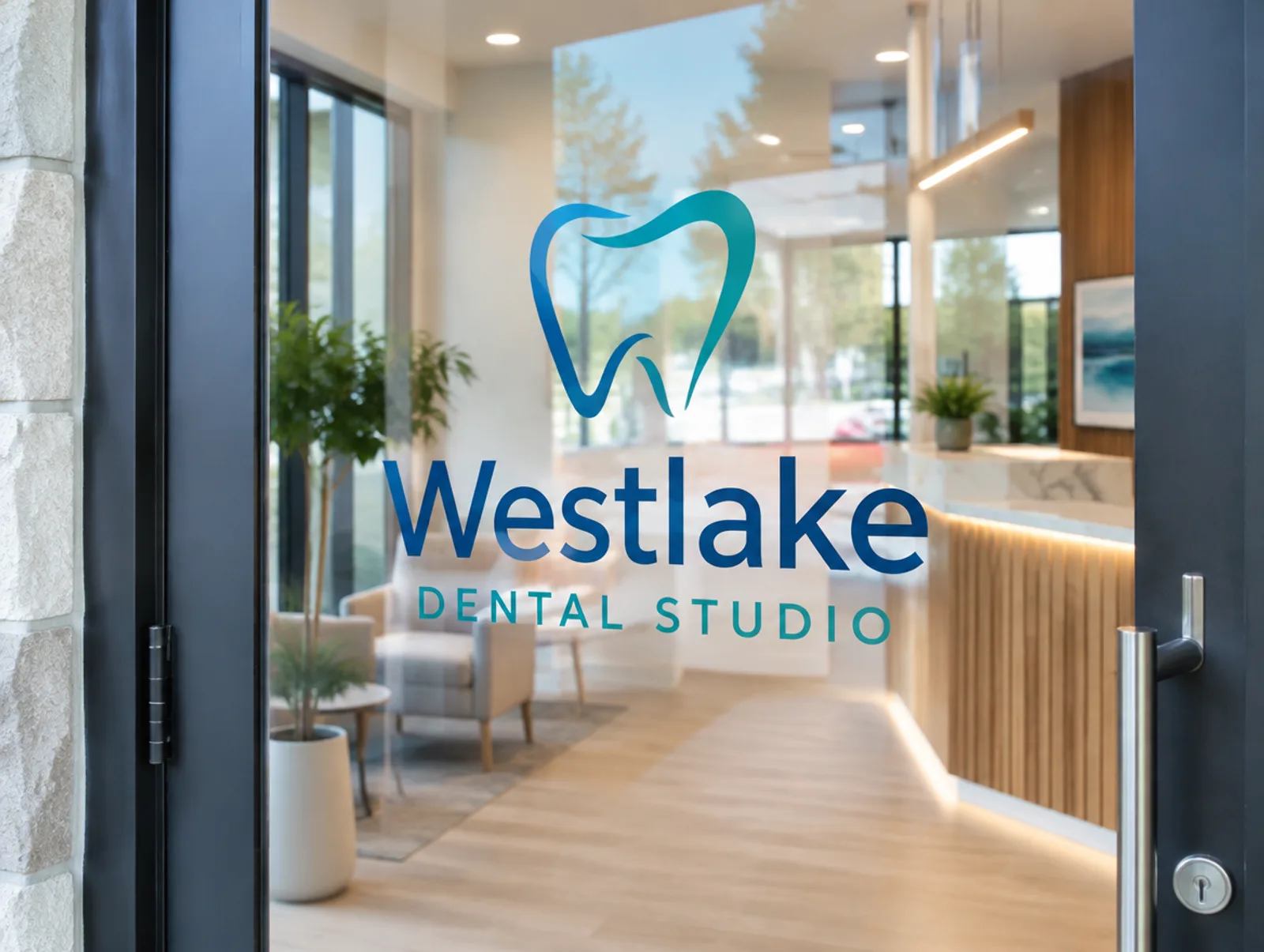
Choose adhesive vinyl when the graphic should stay up long term: your logo on the door, your store hours, your phone number and web address, required notices. Adhesive vinyl bonds to the glass and stays put through cleaning and seasons.
Store hours decals and glass door decals are printed on 3M IJ-35C vinyl with a gloss laminate and cut to the shape of your artwork. They ship on the full vinyl sheet with the cut lines plotted. You remove the extra vinyl before applying, and most applications need transfer tape, which is not included.
A store hours decal set comes with a business hours template. A 12" × 18" 3M IJ-35C Store Hours Decal with a 12" × 12" logo decal is $114.88. Artwork prep is $14.99 per item. Printed in the USA in 48 hours and shipped nationwide, flat $10 shipping to any US address.
When Is Perforated Window Film the Right Choice?
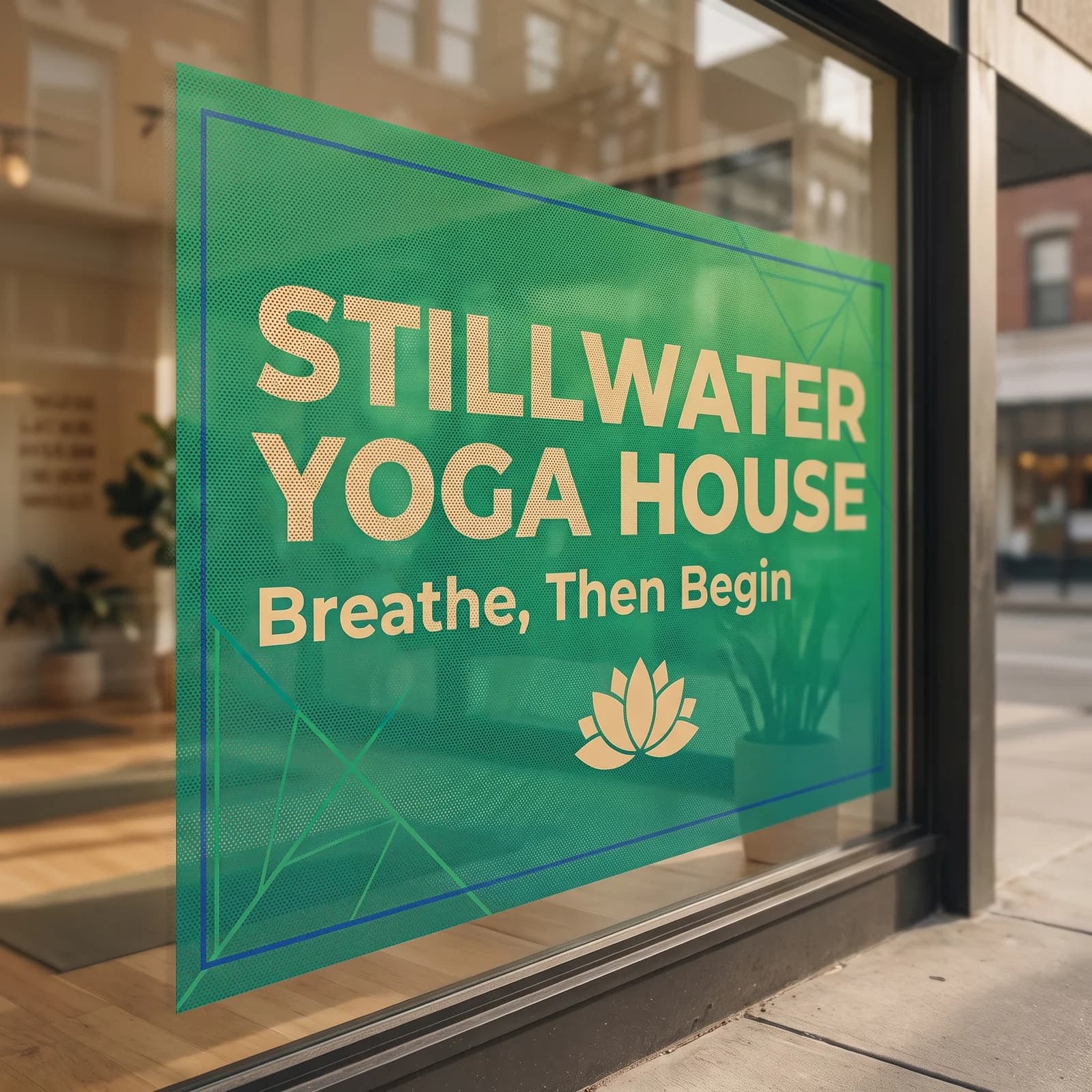
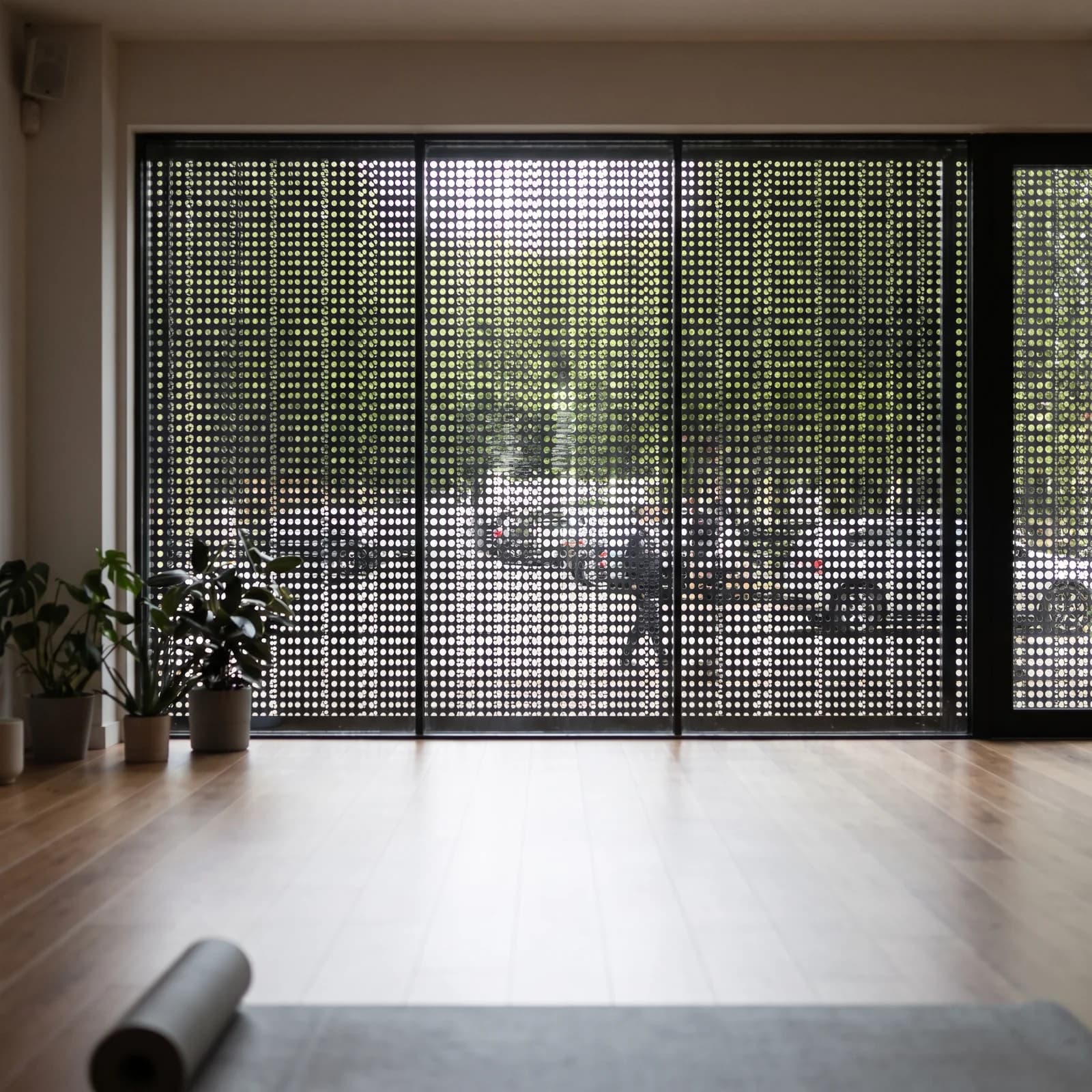
Choose perforated film when you want a graphic across a whole pane and still need to see out. The film is printed with your design and full of tiny holes. From outside in daylight, people see the graphic; from inside, staff see the street through the holes.
Perforated film is the choice for storefront windows that face a busy street, office windows that need privacy, and large panes that would otherwise show a cluttered back room. Storefront window graphics on perforated film start at $96.29 for a 24 x 36 in pane.
It is printed and cut to the closest rectangle size, not contour cut to the shape of the glass, so trimming to fit and installation are done on site. A laminated version adds protection for outside applications.
How Do the Three Films Compare Side by Side?
The films differ in how they hold, how long they last in place and how they look from each side:
- Removal: a cling peels off with no residue; adhesive vinyl and perforated film need patience, and sometimes heat, to remove.
- Reuse: a cling can go up again; adhesive vinyl and perforated film are single use.
- View: a cling and a decal block the view where they are printed; perforated film keeps it.
- Coverage: clings and decals suit a part of the glass; perforated film suits the whole pane.
- Weather: clings belong inside; adhesive vinyl and laminated perforated film can go outside.
Which Side of the Glass Should Each Film Go On?
Put clings on the inside. Put adhesive decals on whichever side protects them and reads correctly; hours and logos often go on the outside face, read directly, or on the inside face, printed mirrored to read through the glass. Put perforated film on the outside, where the graphic faces the street.
Tell us which side each piece goes on when you order. A decal meant to be read through the glass from outside must be reverse printed, and the proof will show it.
What About Glass That Faces the Sun?
Strong sun is hard on every film. A cling in a hot window can loosen at the edges; a decal can fade faster without a laminate; perforated film also shades the glass it covers. For long term outdoor exposure, choose laminated film where the product offers it.
Clean glass matters more in sun. Dust and residue under a cling make it lift sooner. Clean with a glass cleaner that leaves no film, then dry fully before applying.
How Do You Apply Each Film?
Apply a cling by spraying the glass lightly with water, placing the cling, and smoothing it out with a squeegee from the center. Apply adhesive vinyl dry, using tape hinges to position it before you remove the backing. Apply perforated film to clean, dry glass, working from the top down.
For step by step instructions, see how to apply a window cling and how to apply a window decal without bubbles.
Which Film Fits Which Business?
The right mix depends on how often your message changes and how much of the glass you want to use.
- A retail shop with weekly sales uses adhesive vinyl for the logo and hours on the door, and window clings for the sale of the week. The clings come down and go up without touching the permanent decals.
- A restaurant puts hours, the logo and delivery app decals in adhesive vinyl by the door, and seasonal specials on clings.
- An office or clinic on a busy street uses perforated film across the front panes for privacy and branding, with a small adhesive decal for the hours.
- A gym or studio uses perforated film to cover the workout floor from street view while keeping the light coming in.
- A pop up or short lease uses clings for nearly everything, so the glass is clean when the lease ends.
If you are unsure, start with one permanent decal for your name and hours, and one cling for your current offer. Add perforated film when you want the whole window working for you.
How Do You Measure Glass for Window Graphics?
Measure the visible glass, inside the frame, width first and then height. For a cling or a decal, decide how much of that glass the graphic should cover and leave a margin from the frame so the edges are easy to smooth.
For perforated film, order the closest rectangle to the pane. The film is trimmed on site to the exact edge of the glass, so a little extra on each side is easier to work with than a piece that comes up short.
Photograph the window straight on with a tape measure in the shot. It helps you plan the layout, and it helps anyone who installs the graphic.
What Should You Check on Window Film Proofs?
Check first for the reading side. A design approved as if read straight on, then applied to the inside of the glass, reads backward from the street. Say which side it goes on.
Next, check for a perforated graphic with fine text. The holes break up small letters, so text on perforated film needs to be large and bold.
Also check for a cling sized for the whole window. Large clings are harder to apply without bubbles; for a full pane, perforated film or a decal is easier.
How Do You Order Window Graphics?
Measure the glass, decide which side each piece goes on, and choose the film for how long it stays. Artwork prep is $14.99 per item if you send a phone photo or a ChatGPT image, and a free proof comes with every order.
All three films print in 48 hours after proof approval and ship for a flat $10 per product to any US address. In San Antonio, Inline also installs window graphics; elsewhere, they are made to apply yourself or with a local installer.
Frequently Asked Questions
A window cling holds to glass by static, with no adhesive, so it peels off and can be reused. A vinyl decal has adhesive and bonds to the glass for long term use. A 12 x 18 in cling starts at $29.99.
Yes, from the side facing the darker space. The film is full of tiny holes; outside in daylight you see the graphic, and inside you see out through the holes. At night with lights on inside, the effect reverses.
Use perforated film to cover a whole pane with a graphic and keep the view out, adhesive vinyl for a logo and hours that stay year round, and window clings for promotions that change. Many storefronts use all three.
Clings work best on the inside of the glass, protected from weather. Order the artwork mirrored if it will be read through the glass from outside, and say so when you order.
Window clings, adhesive window decals and perforated window film all print in 48 hours after proof approval, then ship for a flat $10 to any US address.
It is printed and cut to the closest rectangle size you order. It is not contour cut to the shape of the glass, so trimming to fit and installation are done on site.
Related Articles
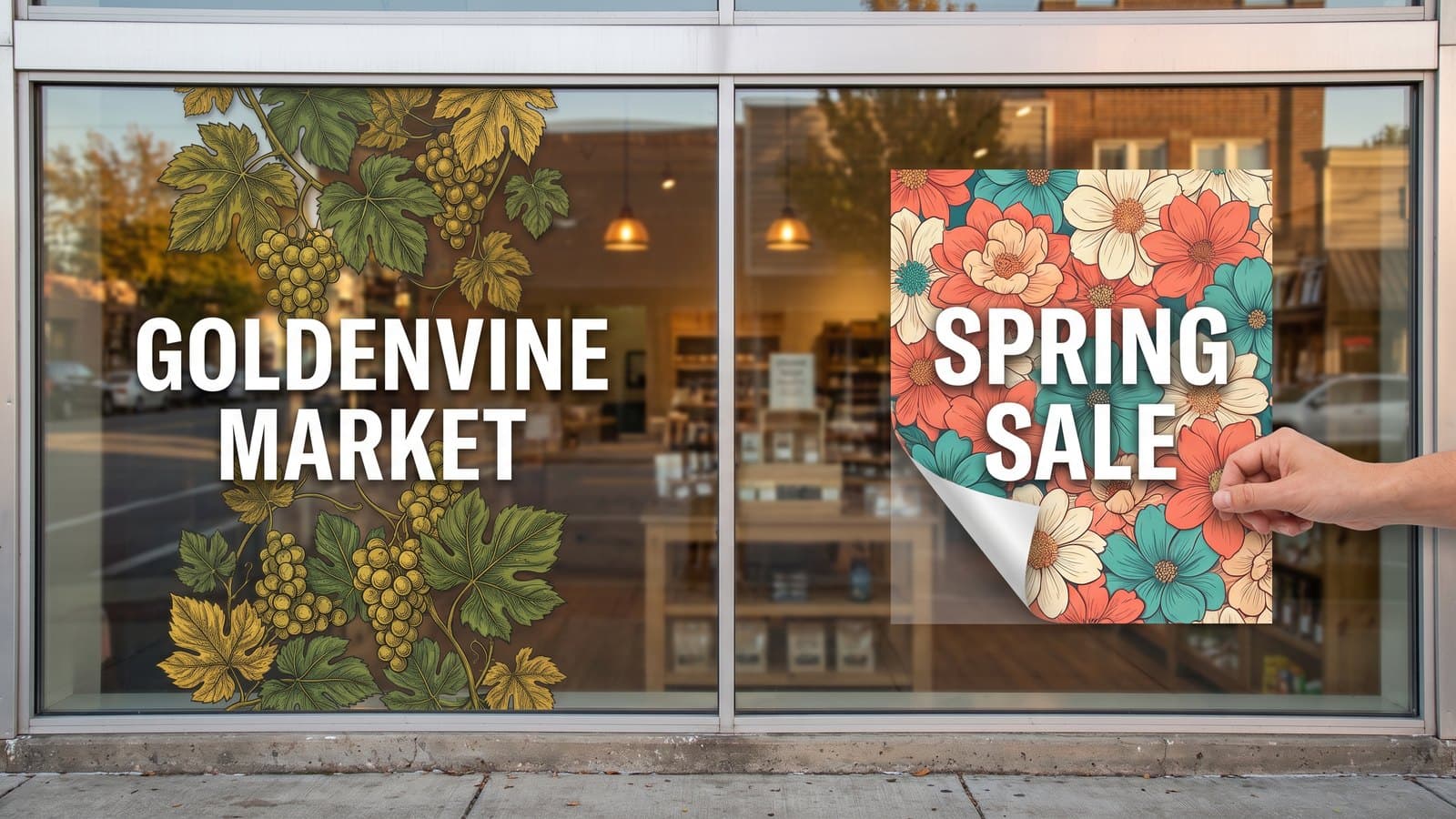
Window Decals vs Window Clings: Which One Lasts Longer
Window decals use adhesive and stay put for years. Window clings use static and peel off clean. [...]
Read More: Window Decals vs Window Clings: Which One Lasts LongerOne Way Vision Window Film Cost: Price and How It Works
One way vision film runs from 12 x 18 in to 48 x 72 in, and the page opens at 24 x 36 in. Piece [...]
Read More: One Way Vision Window Film Cost: Price and How It Works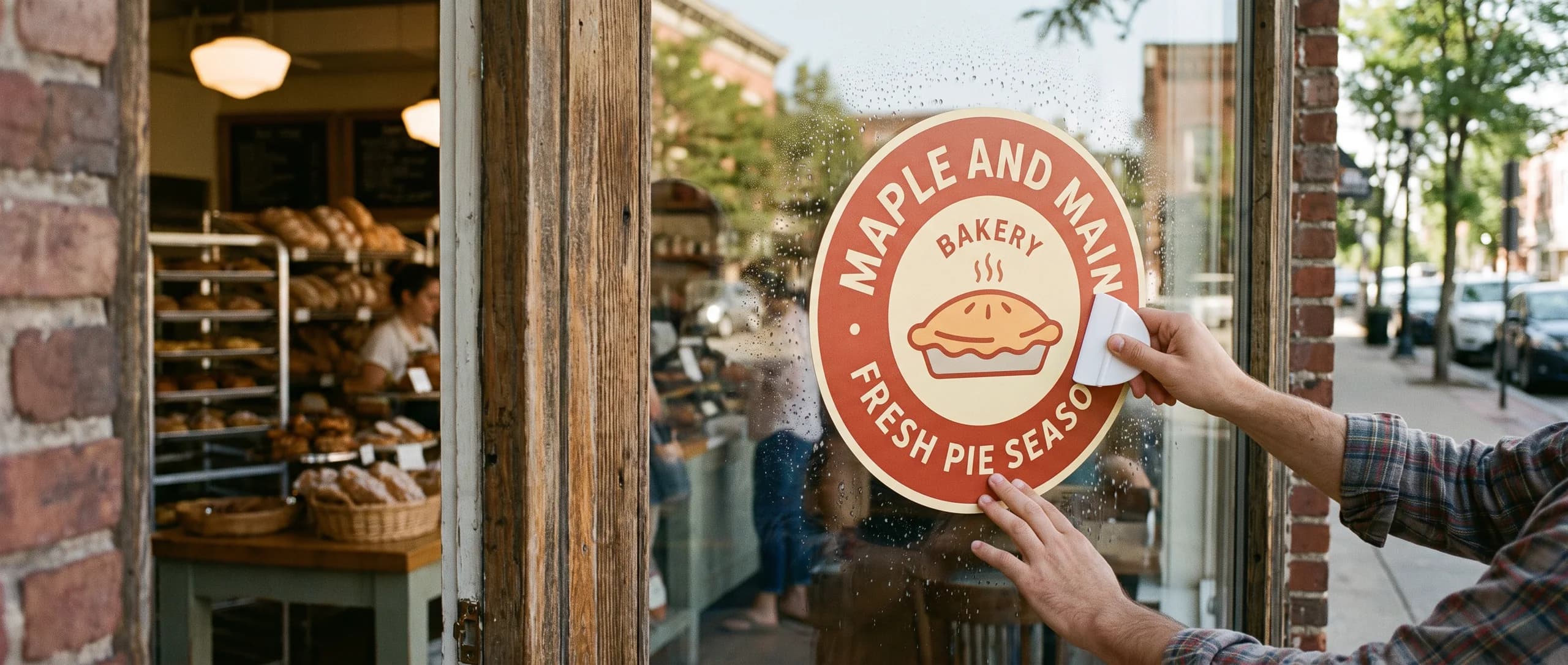
How to Apply Window Cling Without Bubbles or Wrinkles
Clean the glass, then squeegee a static cling from the center out. A 24 x 36 inch window cling [...]
Read More: How to Apply Window Cling Without Bubbles or Wrinkles
Adhesive Vinyl Types: Calendared, Cast and Laminates
Adhesive vinyl comes in 2 main types: calendared for flat walls and windows, cast for curves [...]
Read More: Adhesive Vinyl Types: Calendared, Cast and Laminates