Business Card Design Guide: Layout, Stock and Finish
 Daniel
October 31, 2026Updated November 3, 20267 min read
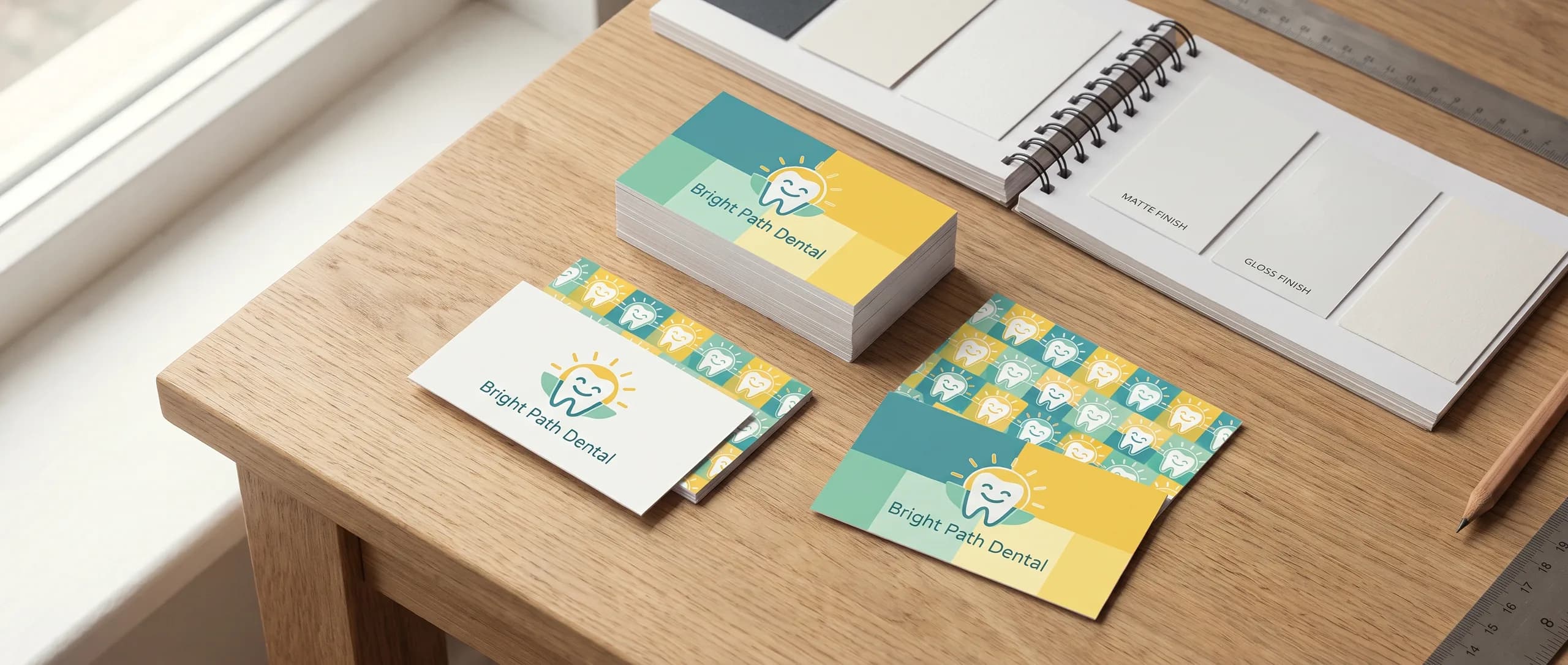
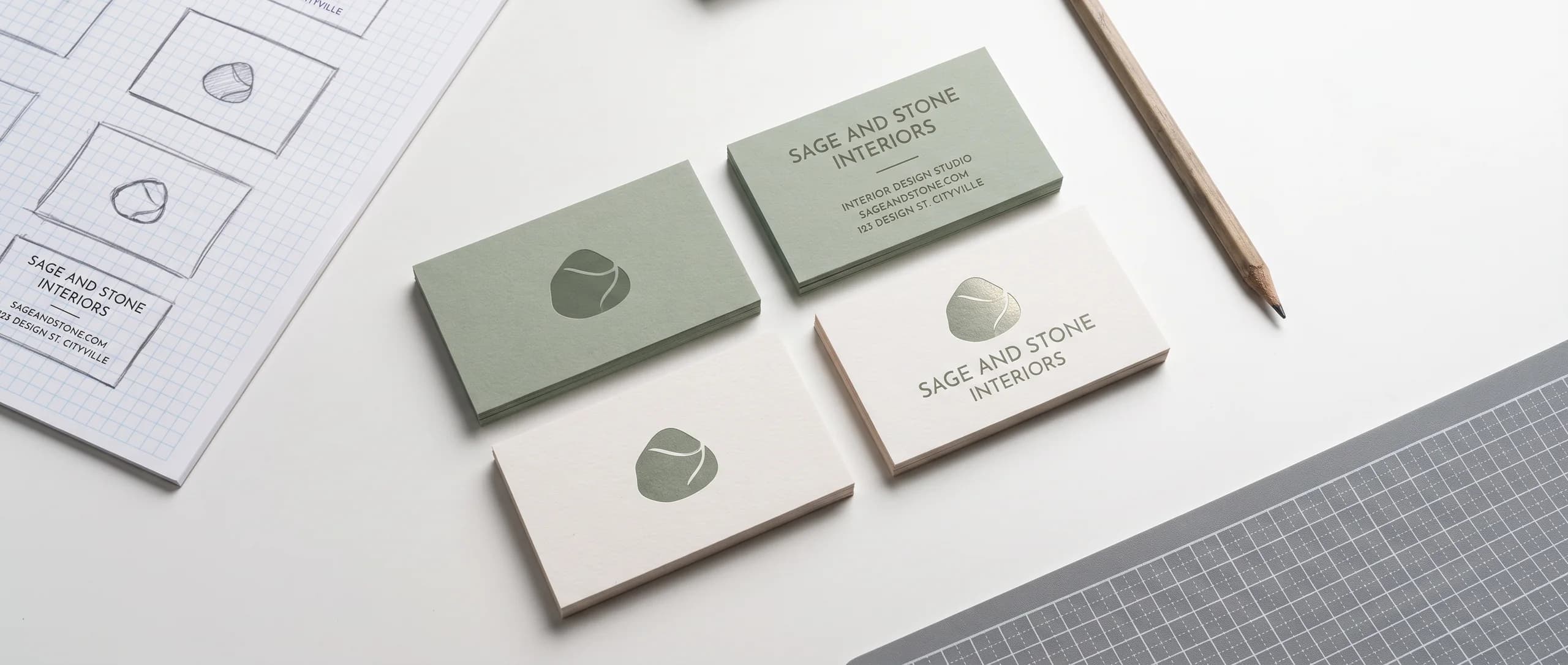
How Should You Lay Out a Business Card?
A standard business card is 3.5 x 2 in, set up at 3.75 x 2.25 in with 0.125 in bleed and all text 0.125 in inside the trim. 50 double-sided 16 pt cards start at $53.49, printed in the USA in 48 hours with flat $10 shipping.
Lay out a business card on a 3.5 x 2 inch trim, with the file set up at 3.75 x 2.25 inches to include 0.125 inch of bleed on every side. Keep all text and logos at least 0.125 inch inside the trim, in a 3.25 x 1.75 inch safe area. Put your name largest, then your title and business, then the contact block.
| Zone | Size | What goes there |
|---|---|---|
| Bleed | 3.75 x 2.25 in | Background color and images only |
| Trim | 3.5 x 2 in | The finished card edge |
| Safe area | 3.25 x 1.75 in | All text, logos and QR codes |
Custom business cards are printed in the USA on 16 pt cardstock with a full color gloss finish, starting at $53.49 for 50 double-sided cards. They print in 48 hours after proof approval and ship for a flat $10 to any US address.
What Information Belongs on a Business Card?
A business card needs your name, your title, the business name, one phone number, one email, your website and your logo. That covers the essentials. Add a social handle only if it is where your customers find you.
Arrange it by importance. The name is the largest line, because people look for it first. The title and business sit just below. The contact block is smaller and grouped together, often anchored to the bottom of the safe area.
Use the back. Single sided and double sided print the same price on these cards, so the back can carry a QR code, a list of services, a short line about what you do, or a clean logo on a solid color.
How Big Should the Text Be?
Make the name roughly 14 to 20 points, the title about 9 to 12 points, and the contact details around 8 to 9 points. Small enough to fit, large enough to read without squinting.
Test it: print the proof at actual size and read it at arm's length. If you have to bring it closer, the contact text is too small. Our business card font size guide goes into more detail. Choose one or two fonts at most: a bold one for the name and a clean, simple one for everything else. Decorative script fonts look elegant at headline size and become hard to read in a phone number.
Which Card Stock Should You Choose?
Choose a thick stock if you want the card to feel substantial. These paper cards are printed on 16 pt cardstock, a heavy card that does not flop when handed over. A thicker card signals care before anyone reads it.
For an even stronger impression, brushed aluminum business cards come in 0.025 inch and 0.040 inch. They cost more per card and suit a short list of important contacts. See when a metal card is worth it.
Which Finish Should You Choose?
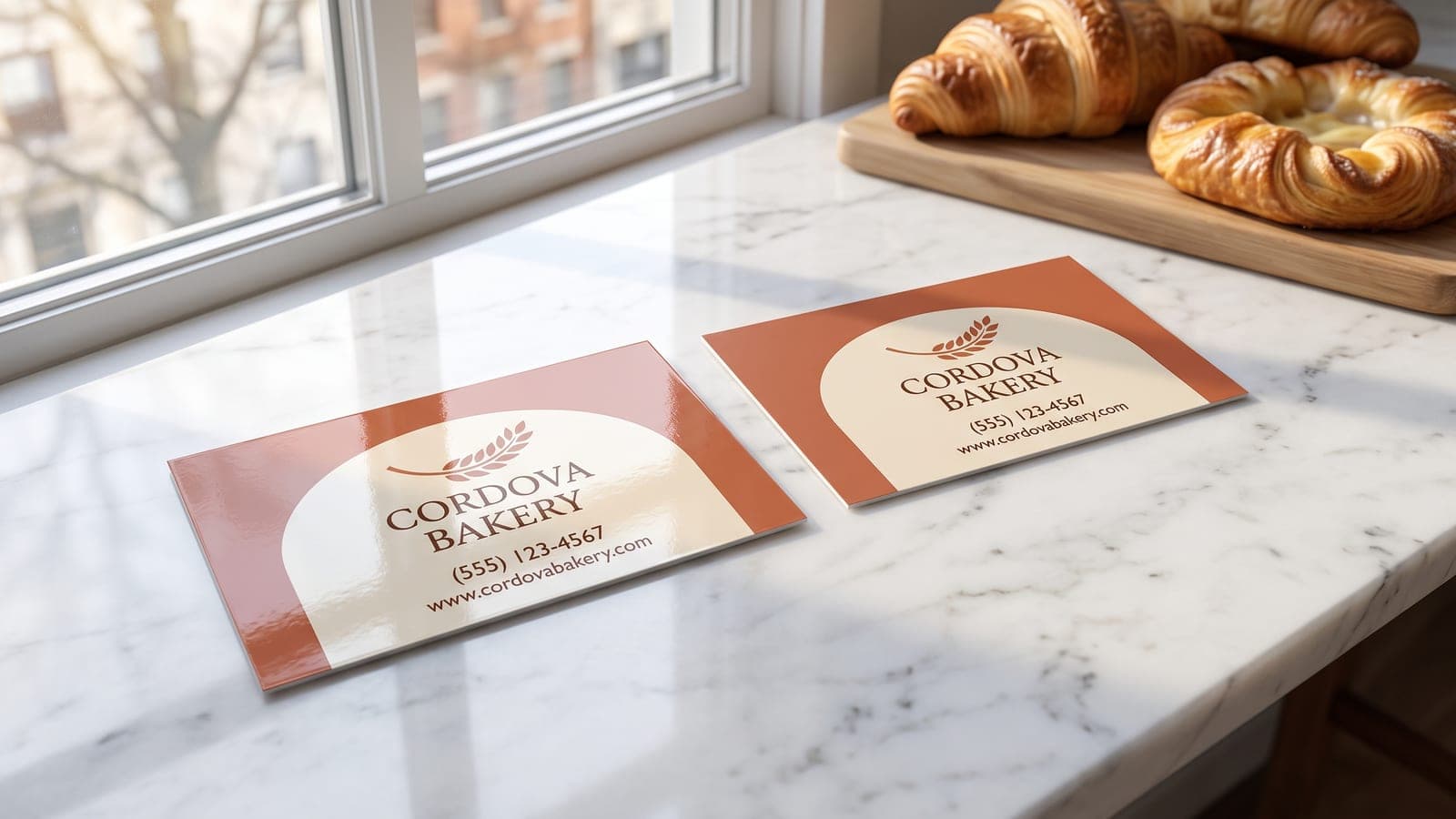
Gloss and matte each have strengths. Gloss makes colors look deeper and resists smudges and fingerprints. Matte avoids glare under bright light and takes ink from a pen more easily.
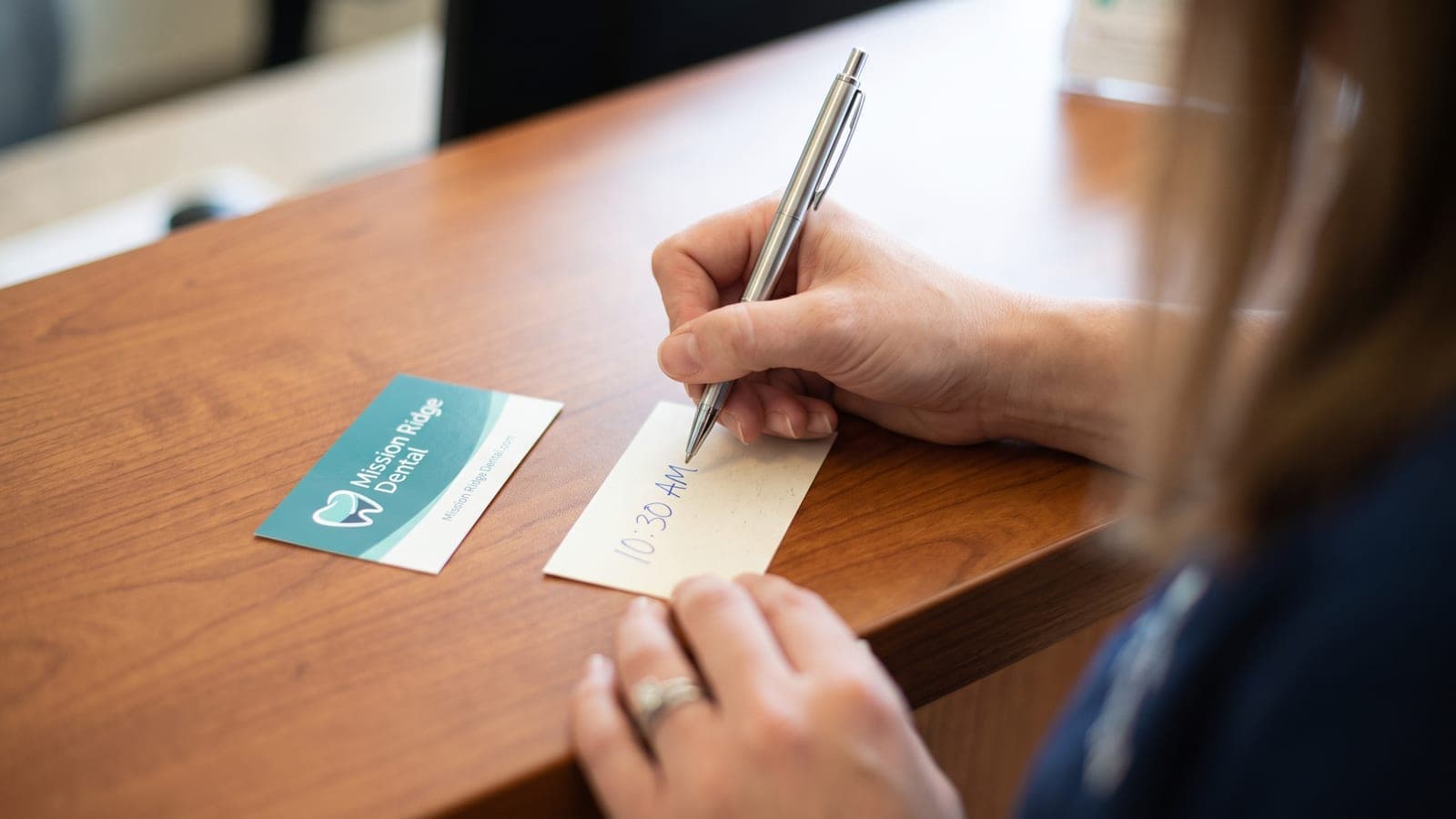
These paper cards are printed with a full color gloss finish. If your card needs to be written on, such as an appointment card, plan a light area on the back where a pen will work, or test a pen on the proof stock before you order a large run.
How Do You Use Color on a Business Card?
Use your brand colors, and use contrast. Match the colors to your sign, website and vehicle, so the card is instantly recognizable as yours. Write down the exact color values from your logo file and send them with the order; screens show colors differently, and the values keep the print consistent with everything else you print. Dark text on a light background, or light text on a dark one, reads best at small sizes. Two mid tones together, such as gray on blue, blur at 8 points.
If the background is a full color, run it to the bleed edge, 3.75 x 2.25 inches, so no white edge shows after trimming. Keep borders well inside the safe area or leave them out; a thin border near the trim can look uneven after cutting.
Should You Put a QR Code on a Business Card?
Put a QR code on the back if it opens something useful: your website, a booking page, a portfolio or a digital contact card. Add a short line telling people what it opens.
Keep the code inside the safe area, dark on a light background, with clear space around it. Scan it from the proof with two different phones before you approve.
Should You Use a Vertical Card?
A vertical card, 2 x 3.5 inches, stands out in a stack of horizontal ones and suits tall logos, portraits and designs with a strong top to bottom flow. It uses the same trim, bleed and safe area numbers, turned on end.
The trade off is the contact block. Long email addresses and websites need width, and a vertical card has less of it. If your email is long, test the layout before you commit. Horizontal is the simpler layout when the contact block is long.
How Do You Design a Card for Your Industry?
Design the card around what your customer needs to do next. A few examples:
- Contractors and home services: the phone number large, the service list on the back, and a license number if your state requires it on marketing.
- Real estate agents: a professional photo, the brokerage as your state requires, and a QR code to your listings.
- Salons and spas: an appointment line on the back, where the front desk can write the next booking.
- Restaurants and cafes: the address, hours and a QR code to the menu or ordering page.
- Consultants and professionals: a clean layout, the name and title prominent, and a short line about what you solve.
In each case, the front says who you are and the back helps the customer act.
How Many Business Cards Should You Order?
Order for the next few months of handing them out, and reorder when the details change. A business owner who hands out cards daily goes through a few hundred quickly; someone who meets a few new contacts a week needs far fewer.
Business cards start at $53.49 for 50, and the price per card drops at 250, 1,000 and larger quantities, as the product page lists. A bigger run costs less per card, but cards with an old phone number or title are wasted, so order what you will use before anything changes.
How Do You Set Up the Artwork File?
Set up the file at 3.75 x 2.25 inches, one page per side, at 300 dpi for any photos or raster logos. Draw guides at the trim, 0.125 inch in, and at the safe area, 0.25 inch in from the outer edge. Use the largest, sharpest version of your logo.
If you do not have a designer, the business card maker builds a layout from your details. You can also send a phone photo, a sketch or a ChatGPT image; artwork prep is $14.99 per item, and the proof shows the finished card.
What Should You Check on Business Card Proofs?
Check first for typos in the phone number and email. Read each digit and letter out loud. A wrong digit makes the whole box of cards useless.
Next, check for text outside the safe area. Anything closer than 0.125 inch to the trim can be cut off.
Also check for a white edge. If the background color stops at the trim instead of the bleed, a sliver of white can show after cutting.
How Do You Order Business Cards?
Choose the quantity, send your design or details, and approve the proof. Business cards start at $53.49 for 50 double-sided cards, and the price per card drops at larger quantities. A free proof comes with every order.
Business cards print in 48 hours after proof approval and ship for a flat $10 to any US address.
Frequently Asked Questions
A standard business card is 3.5 x 2 inches. Set up the file at 3.75 x 2.25 inches, which adds 0.125 inch of bleed on every side, and keep all text inside a 3.25 x 1.75 inch safe area.
Your name, title, business name, phone, email and website, plus your logo. Put the name largest. Use the back for a QR code, services or a short line, since double sided costs the same.
A thick cardstock feels substantial in the hand. These cards are 16 pt cardstock with a full color gloss finish. 250 double-sided 16pt Cardstock cards are $74.89, which is about $0.30 a card. 50 cards start at $53.49. Artwork prep is $14.99 per item. Printed in the USA in 48 hours and shipped nationwide, flat $10 shipping to any US address.
Gloss makes colors look rich and resists smudges; matte reads well under bright light and is easier to write on. These paper cards are printed with a gloss finish.
No. On these paper cards, single sided and double sided print the same price, so the back can carry a QR code, a map line or a list of services at no extra cost.
Business cards print in 48 hours after proof approval and ship for a flat $10 to any US address.
Related Articles
Standard Business Card Size: 3.5 x 2 in, Bleed and Pixels
The standard business card size is 3.5 x 2 in, 1050 x 600 pixels at 300 dpi. Bleed and safe [...]
Read More: Standard Business Card Size: 3.5 x 2 in, Bleed and Pixels
Business Card Font Size: What Stays Readable at 3.5 x 2
Name at 10 to 12 pt, contact lines at 7 to 8 pt, all inside a 0.125 in safe area. 250 [...]
Read More: Business Card Font Size: What Stays Readable at 3.5 x 2Matte vs Glossy Business Cards: How to Pick a Finish
Gloss emphasizes color, while matte reduces glare and may accept pen ink more easily. Compare 3 [...]
Read More: Matte vs Glossy Business Cards: How to Pick a Finish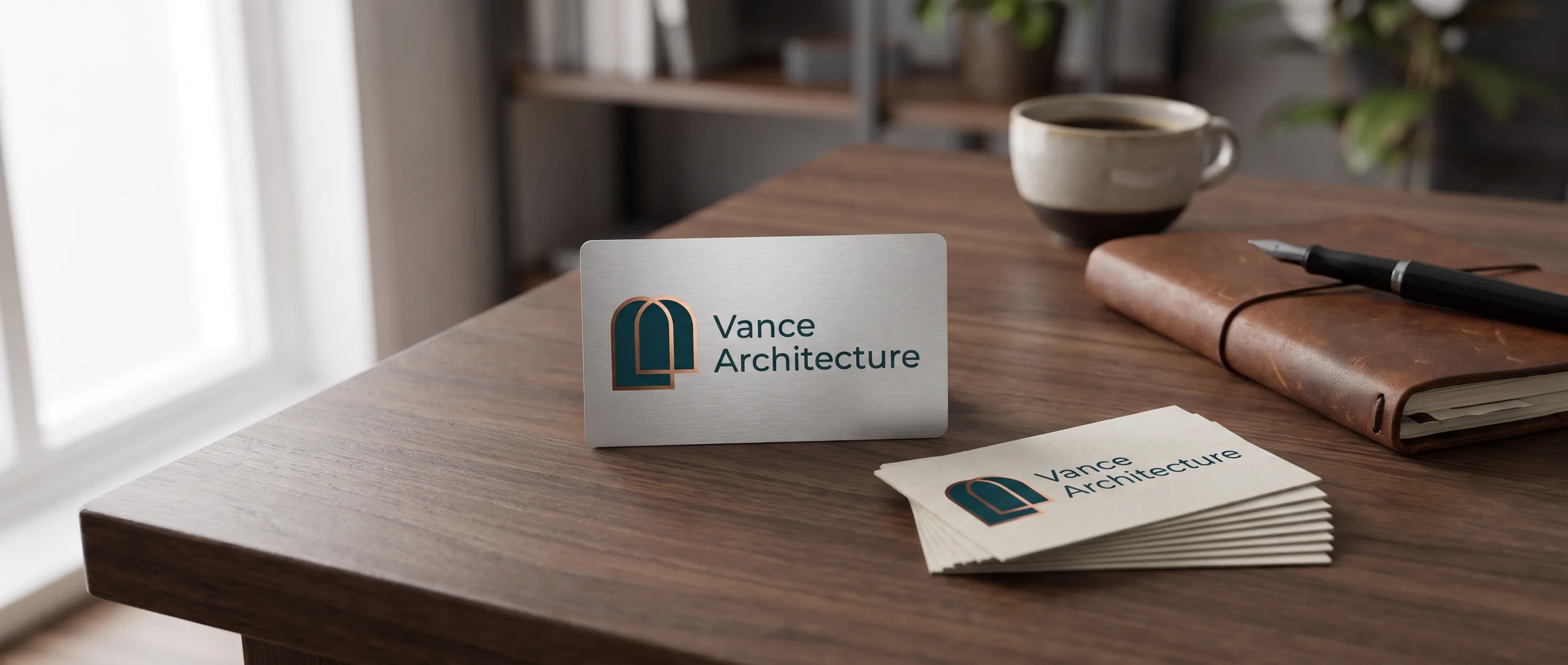
Aluminum Business Cards: When a Metal Card Is Worth It
Aluminum business cards start with 50 double-sided 0.025 in brushed cards, printed in 48 hours; [...]
Read More: Aluminum Business Cards: When a Metal Card Is Worth It