Aluminum Business Cards: When a Metal Card Is Worth It
 Tomas Amaya
October 31, 2026Updated November 3, 20268 min read

When Is an Aluminum Business Card Worth It?
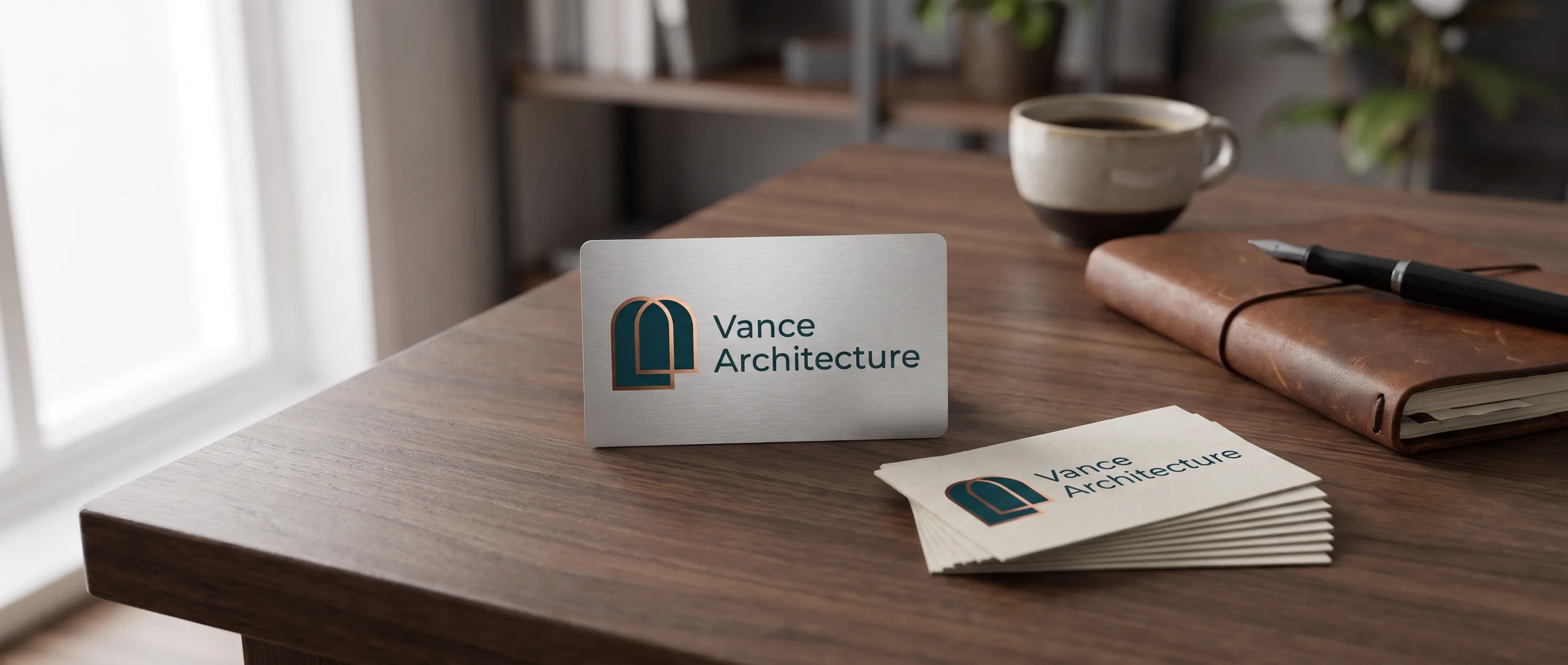
100 double-sided 0.025in Aluminum cards are $256.79, which is about $2.57 a card. 50 cards start at $149.79. Artwork prep is $14.99 per item. Printed in the USA in 48 hours and shipped nationwide, flat $10 shipping to any US address. Metal is worth it for high value clients; paper suits everyday handouts.
An aluminum business card is worth it when each card goes to someone whose business is worth far more than the card: a high value client, an investor, a partner, a referral source. A brushed metal card is heavy in the hand, hard to bend and hard to throw away, so it stays on a desk long after a paper card is gone.
It is not worth it for mass handouts. At a trade show, in every shopping bag or on a community board, paper cards do the same job for a fraction of the cost per card.
| Card | Pack | Starts at | Production |
|---|---|---|---|
| Aluminum, 0.025 in | 50 cards | See product page | 48 hours |
| Paper, 16 pt | 50 cards | $53.49 | 48 hours |
Both are printed in the USA in 48 hours after proof approval and ship for a flat $10 to any US address. The aluminum card page opens on 100 cards; 50 cards start lower, as the opening line shows: 100 double-sided 0.025in Aluminum cards are $256.79, which is about $2.57 a card. 50 cards start at $149.79. Artwork prep is $14.99 per item. Printed in the USA in 48 hours and shipped nationwide, flat $10 shipping to any US address.
What Are Aluminum Business Cards Made Of?
Aluminum business cards are brushed aluminum sheets cut to the standard 3.5 x 2 inch card size and printed in full color. The brushed finish shows through areas you leave unprinted, so a design can use the metal itself as a color.
They come in two thicknesses. The 0.025 inch card is lighter and more flexible. The 0.040 inch card is the heaviest and most rigid option on the page. Both fit standard wallets and card cases.
How Does a Metal Card Compare With Paper?
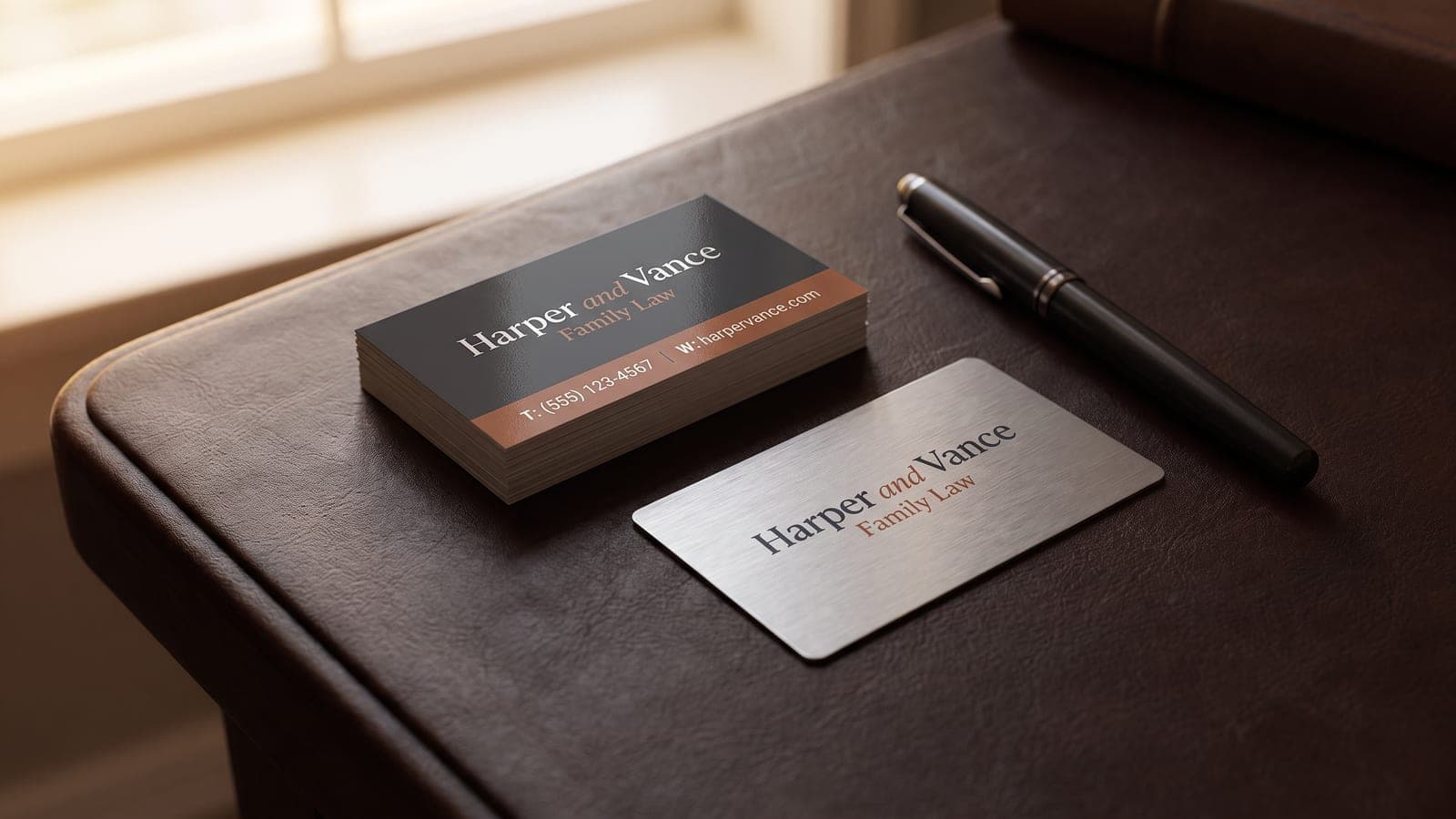
A metal card wins on impression and durability; a paper card wins on cost and quantity. Paper business cards are 16 pt cardstock with a full color gloss finish, and single sided and double sided print the same price. Metal cards are brushed aluminum, in full color, with the metal showing through.
- Feel: metal is heavier and cooler to the touch; paper is lighter and familiar.
- Durability: metal resists bending and water; paper creases.
- Cost per card: paper is a fraction of the cost of metal at the same quantity.
- Writing on it: paper takes a pen; a metal card is not made for notes.
Some professionals carry both: paper cards for everyone, a few metal cards for the people who matter most.
Who Uses Metal Business Cards?
Metal business cards suit professions where a single client relationship is worth a lot, and where an impression of quality matters:
- Real estate agents handing a card to a buyer or seller on a large transaction.
- Attorneys, financial advisors and consultants meeting a new client.
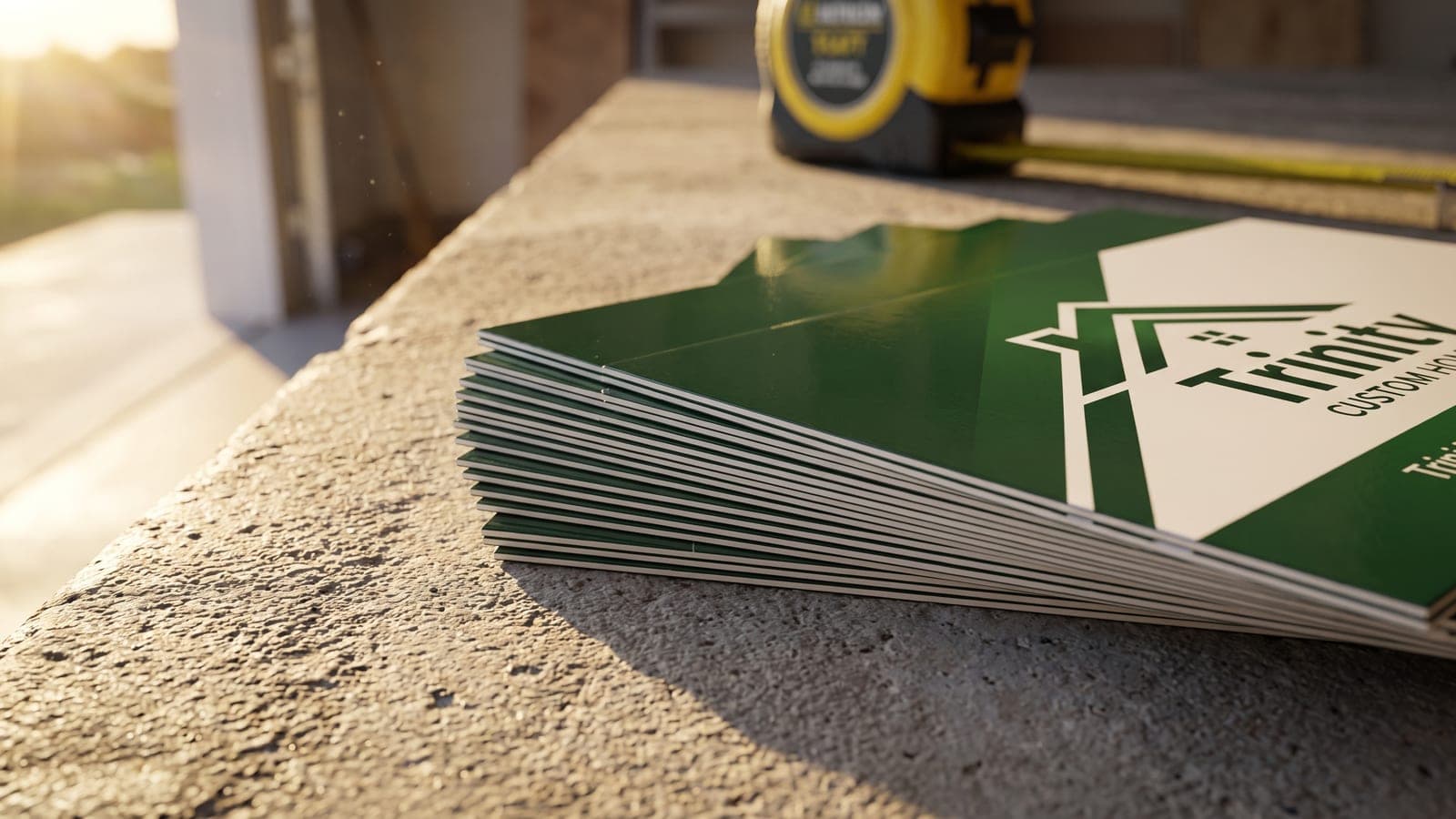
- Contractors and builders bidding a large project.
- Car dealers, jewelers and luxury retailers closing a high ticket sale.
- Founders and executives meeting investors and partners.
In each case, the card goes to a short list of people, so a small pack lasts.
How Should You Design an Aluminum Business Card?
Design a metal card to use the metal. Leave some areas unprinted so the brushed aluminum shows, and let the logo or the name sit on it. A design that covers every inch in ink hides the one thing that makes the card special.
Keep the layout simple. Name, title, phone, email and website on one side; logo or a short line on the other. Use bold, clean fonts that read on a reflective surface.
Set up the artwork at the standard card geometry: 3.5 x 2 inch trim, 3.75 x 2.25 inch with 0.125 inch bleed, and all text 0.125 inch inside the trim.
Which Thickness Should You Choose?
Choose 0.025 inch for a metal card that still feels like a card: light, slightly flexible, easy to carry a dozen in a case. Choose 0.040 inch when you want the card to feel substantial, stiff and heavy, the kind people turn over in their hands.
The thicker card makes a stronger first impression and costs more per card. The thinner card is the practical choice if you hand out metal cards often. Both are brushed aluminum with full color print, and both fit standard wallets and card cases.
If you are unsure, start with the 0.025 inch pack. The opening build on the product page uses it.
What Colors Work on Brushed Aluminum?
Full color prints on brushed aluminum, and in lighter tints the brushed texture can show through, which is part of the look. Dark, rich colors such as navy, black, deep green and burgundy read strongly. Very light colors and fine gradients can look washed out against the metal.
Use the metal as your white. Instead of printing a white background, leave the area unprinted and let the brushed silver be the background. Text in a dark color on bare aluminum reads clearly and looks like it belongs on metal.
Check contrast on the proof. A mid gray on brushed silver can disappear at certain angles of light. When in doubt, go darker.
Can a Metal Card Carry a QR Code?
Yes. A QR code prints on aluminum like any other artwork and can link to your website, a booking page or a digital contact card. Put it on the back, with a short line telling people what it opens.
Print the code dark on a light or bare metal area, large enough to scan easily, with clear space around it. Scan it from the proof with two different phones before you approve; a metal card tends to be kept, so a code that does not scan is an expensive mistake.
How Many Metal Cards Should You Order?
Order for the number of people you will hand them to in the next several months, not the number of paper cards you go through. For many professionals, that is a short list: new clients, top prospects, partners.
The aluminum card page lists packs starting at 50 cards, and the price per card drops as the pack grows. Start with 50 to see how you use them, then reorder at a larger pack if they go faster than you expected.
How Do Metal Cards Fit the Rest of Your Brand?
A metal card should match everything else a client sees from you: the paper cards, the proposal, the email signature, the sign on the door. Use the same logo, fonts and colors, adapted to the metal, so the card feels like part of the brand rather than a novelty.
Order the paper and metal cards from the same artwork file, with the metal version simplified where needed. Matching layouts let a client recognize your card instantly, whichever one they receive.
If you are refreshing your brand, update the paper cards first, test the layout in the field, then order the metal cards once the design is settled. A metal card is the last place you want an old logo.
How Do You Hand Out a Metal Card?
Hand a metal card at the moment that matters: at the close of a meeting, with a proposal, at a signing. It works best as a deliberate gesture, not a reflex. Pairing it with a paper card or a printed proposal gives the client something to write on and something to keep.
Keep metal cards in a case. They are durable, but loose in a pocket with keys, the printed face can scratch.
What Should You Check on Metal Card Proofs?
Check first for small text. Fine print on a reflective metal surface is harder to read than the same size on paper. Keep the phone and email at a comfortable size.
Next, check for the bleed. Background color should run to the bleed line so no metal edge shows where you did not intend one.
Also check for spelling and numbers. Metal cards last; a wrong digit lasts with them.
How Do You Order Aluminum Business Cards?
Choose the thickness, the pack and your design. Artwork prep is $14.99 per item if you send a phone photo or a ChatGPT image, and a free proof comes with every order. Aluminum and paper business cards print in 48 hours after proof approval and ship for a flat $10 per product to any US address.
Frequently Asked Questions
100 double-sided 0.025in Aluminum cards are $256.79, which is about $2.57 a card. 50 cards start at $149.79. Artwork prep is $14.99 per item. Printed in the USA in 48 hours and shipped nationwide, flat $10 shipping to any US address.
Two thicknesses: 0.025 inch, lighter and more flexible, and 0.040 inch, the heaviest and most rigid option. Both are brushed aluminum printed in full color, at the standard 3.5 x 2 inch size.
For a small number of important contacts, often yes: a metal card is memorable and hard to throw away. For handing out at events or in every bag, paper cards cost far less per card. Some businesses carry both.
3.5 x 2 inches, the standard business card size that fits every wallet and card case. Set up the artwork at 3.75 x 2.25 inches with 0.125 inch bleed, and keep text 0.125 inch inside the trim.
Aluminum business cards print in 48 hours after proof approval and ship for a flat $10 to any US address.
Yes. The opening build is double sided, with full color on the front and back. Use the back for contact details, a QR code or a short line about what you do.
Related Articles
Metal Business Cards vs Paper: Cost Per Card and Feel
Metal business cards run about $2.46 each at 100 against about $0.64 for 16pt paper. Compare [...]
Read More: Metal Business Cards vs Paper: Cost Per Card and Feel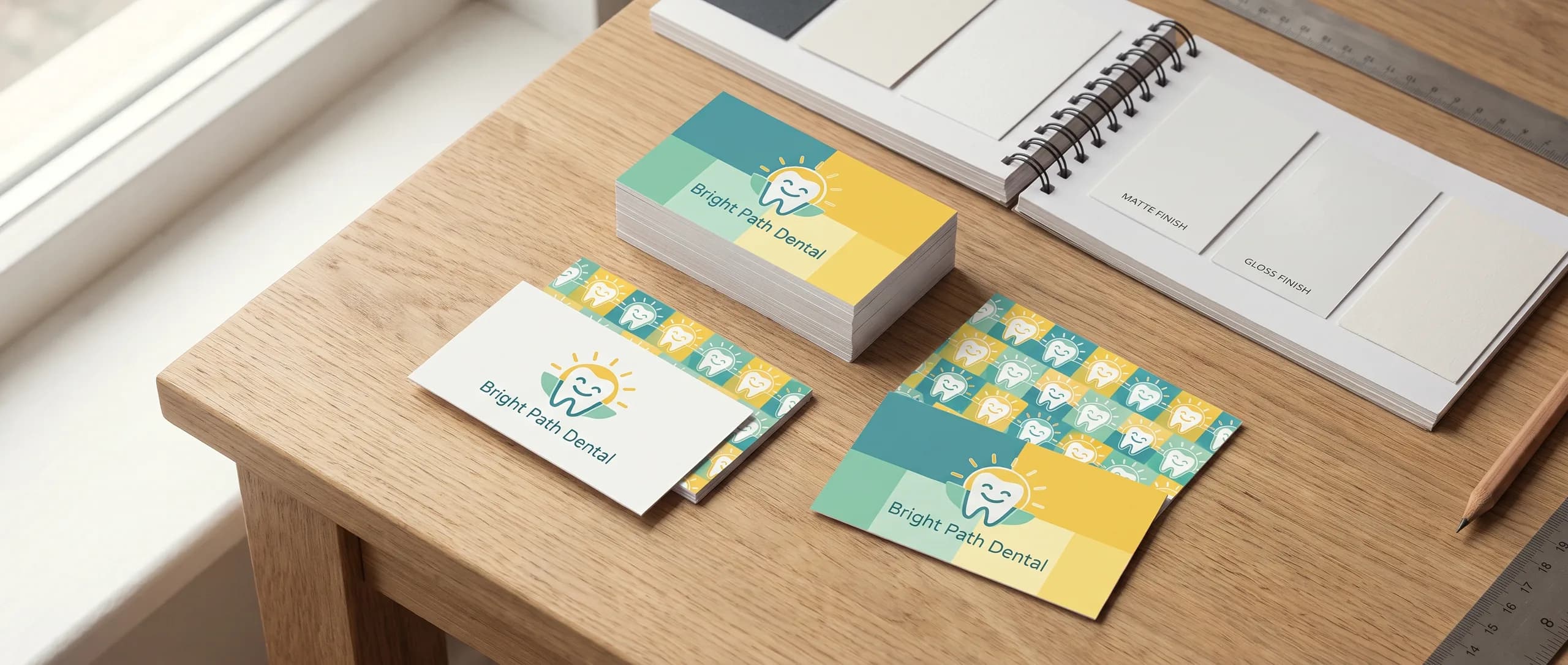
Business Card Design Guide: Layout, Stock and Finish
A business card is 3.5 x 2 in, set up at 3.75 x 2.25 in with bleed; 50 double-sided 16 pt cards [...]
Read More: Business Card Design Guide: Layout, Stock and Finish
Standard Business Card Size: 3.5 x 2 in, Bleed and Pixels
The standard business card size is 3.5 x 2 in, 1050 x 600 pixels at 300 dpi. Bleed and safe [...]
Read More: Standard Business Card Size: 3.5 x 2 in, Bleed and PixelsBusiness Card Thickness: 14pt vs 16pt in Inches and mm
A 14pt business card is 0.014 in thick and a 16pt card is 0.016 in, or 0.36 mm and 0.41 mm. [...]
Read More: Business Card Thickness: 14pt vs 16pt in Inches and mm