Metal Business Cards vs Paper: Cost Per Card and Feel
Tomas Amaya
September 15, 2026Updated September 18, 20268 min read

Are Metal Business Cards Worth It?
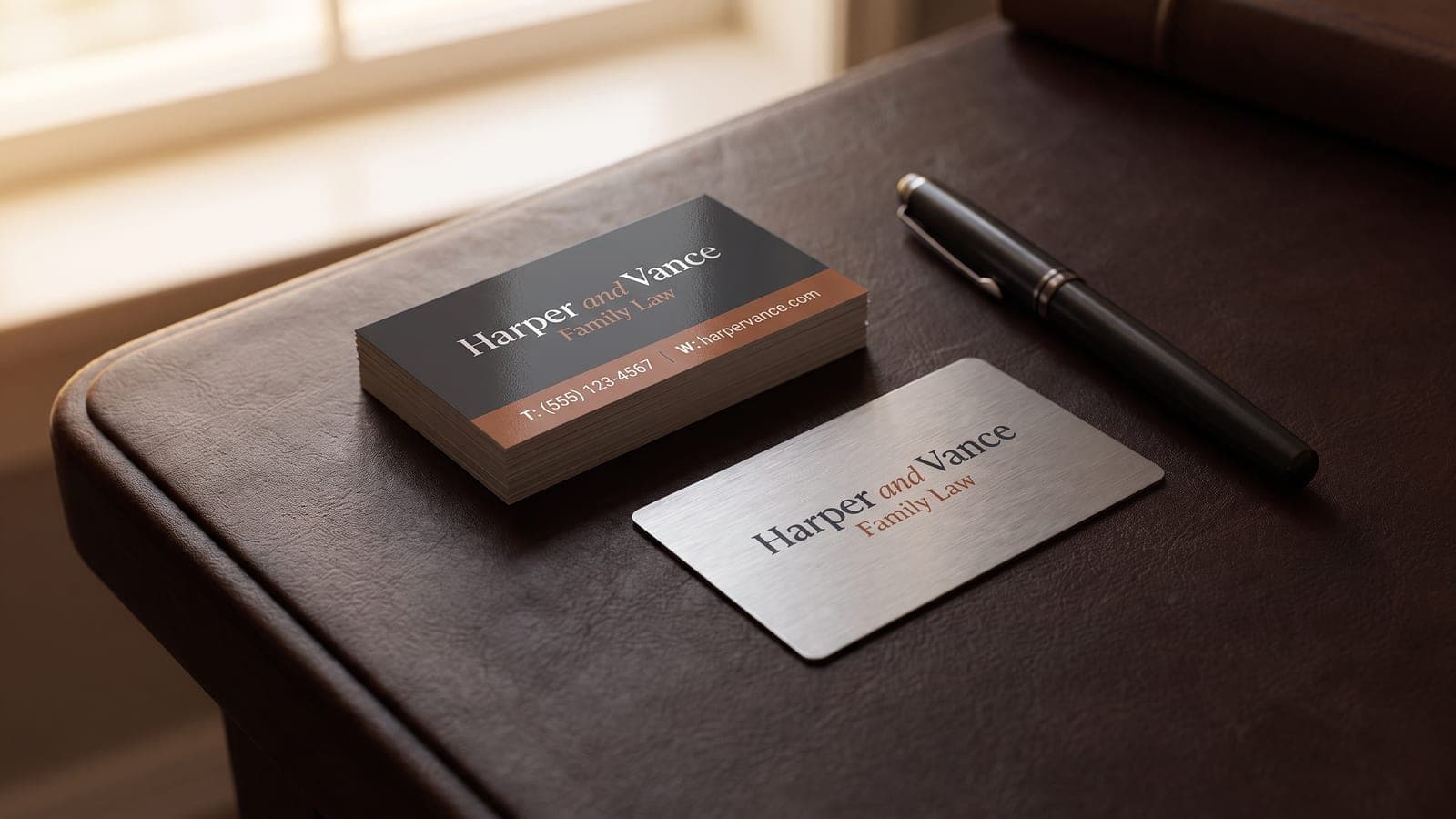
Metal business cards cost about four to ten times what paper cards cost per card. Brushed aluminum runs about $2.30 a card at 100 and about .44 at 500, while 16pt gloss paper is about $0.60 at 100 and about $0.18 at 500. Paper wins on volume, metal wins on memory.
So paper wins on volume and metal wins on memory. If you hand out 200 cards a month, paper is the only sane answer. If you hand out twenty and one of them decides a large project, metal pays for itself the first time it works.
Both cards are printed in the USA and shipped anywhere in the country, both are cut to the same 3.5 x 2 inch standard size, and both print full color. The rest of this page is what changes between them.
What Do Metal and Paper Business Cards Cost?
Paper is one price whether you run one side or two. Aluminum charges an upcharge for the second side, so both numbers are in the table.
| Quantity | Standard 16pt paper | 0.025 in aluminum, 1 side / 2 sides | 0.040 in aluminum, 1 side / 2 sides |
|---|---|---|---|
| 50 | $49.99 | $129.99 / $139.99 | $169.99 / $179.99 |
| 100 | $59.99 | $229.99 / $239.99 | $279.99 / $299.99 |
| 250 | $69.99 | $449.99 / $499.99 | $609.99 / $659.99 |
| 500 | $89.99 | $719.99 / $789.99 | $899.99 / $989.99 |
| 1,000 | $109.99 | $1,179.99 / $1,329.99 | $1,549.99 / $1,719.99 |
Paper keeps climbing past that rung, up to 3,000 cards for $209.99. Aluminum stops at 1,000, which tells you something about how metal cards are meant to be used. On top of either one, there is no setup fee on a file you send, design is +$30 if a designer builds the card with two revisions, and shipping is a flat $10 per order.
The Per-Card Math at 100 and 500
Pack prices hide the gap, and per card it is obvious. At 100 cards, paper is about $0.60 each, the lighter 0.025 in aluminum is about $2.30 each single sided, and the rigid 0.040 in is about $2.80 each. That is about four to five times the paper card.
At 500 cards, paper drops to about $0.18 each while 0.025 in aluminum is about $1.44 and 0.040 in aluminum is about $1.80. The spread widens to roughly eight to ten times, because paper gets dramatically cheaper with volume and metal barely does.
The reason is worth understanding before you order. Metal is priced on material, not on setup, so buying more of it does not rescue you the way it does with cardstock. There is no rung on the aluminum ladder where the per card cost suddenly collapses, which is why the right metal order is a small one.
16pt gloss paper
- Caliper
- 16 pt
- 0.016 in
- 0.41 mm
- 50 cards
- $49.99, one or two sides
- 100 cards
- $59.99, one or two sides
- 500 cards
- $89.99, one or two sides
0.025 in aluminum
- Caliper
- 25 pt
- 0.025 in
- 0.64 mm
- 50 cards
- $129.99 one side
- $139.99 both sides
- 100 cards
- $229.99 one side
- $239.99 both sides
- 500 cards
- $719.99 one side
- $789.99 both sides
0.040 in aluminum
- Caliper
- 40 pt
- 0.040 in
- 1.02 mm
- 50 cards
- $169.99 one side
- $179.99 both sides
- 100 cards
- $279.99 one side
- $299.99 both sides
- 500 cards
- $899.99 one side
- $989.99 both sides
How Each One Feels in a Hand
A 16pt paper card is 0.016 inches thick, which is the weight most people read as professionally printed. It has a clean square trim, a gloss face that keeps photography and brand color saturated, and it holds its corners in a wallet.
Aluminum is a different event. The lighter stock is 0.025 inches and the heavy one is 0.040 inches, which on the same points scale printers use for paper is 25pt and 40pt, against 16pt for the paper card. Metal is cool to the touch, it has real mass, and it interrupts the pocket and forget reflex. People look at the card, then look back at you. That pause is the product you are buying.
If the units are new to you, business card thickness explained puts 14pt, 16pt, 25pt and 40pt on one scale with a diagram.
Durability, Writing on It, and Pocket Weight
Paper loses to three things: a dog eared corner, a spilled drink, and a back pocket. It is also the card you can write on. If you scribble a quote, a next appointment or a direct cell number on the back, you want paper, and gloss takes pen less willingly than matte does, which is its own decision in matte vs glossy business cards.
Metal does not soften, absorb or crease. A year later the card looks the way it looked when you handed it over, which is exactly why it ends up on a desk instead of in a drawer.
The cost is bulk and writability. The 0.040 in stock takes noticeable room in a wallet, a stack of 100 of them is about four inches tall, and nobody is jotting a phone number on brushed aluminum. Carry a handful, not a stack.
There is a middle ground people miss. A 16pt paper card that lives in a card case instead of a back pocket ages slowly, and the corners are what give out first, not the print. If paper keeps coming back to you looking beaten, the fix may be a case rather than a switch to metal.
How Each One Is Printed
Paper cards print full color on 16pt cardstock with a gloss finish, trimmed square across the run. Because double sided costs nothing extra, the back is free space for a service list, a QR code, a license number or a short offer.
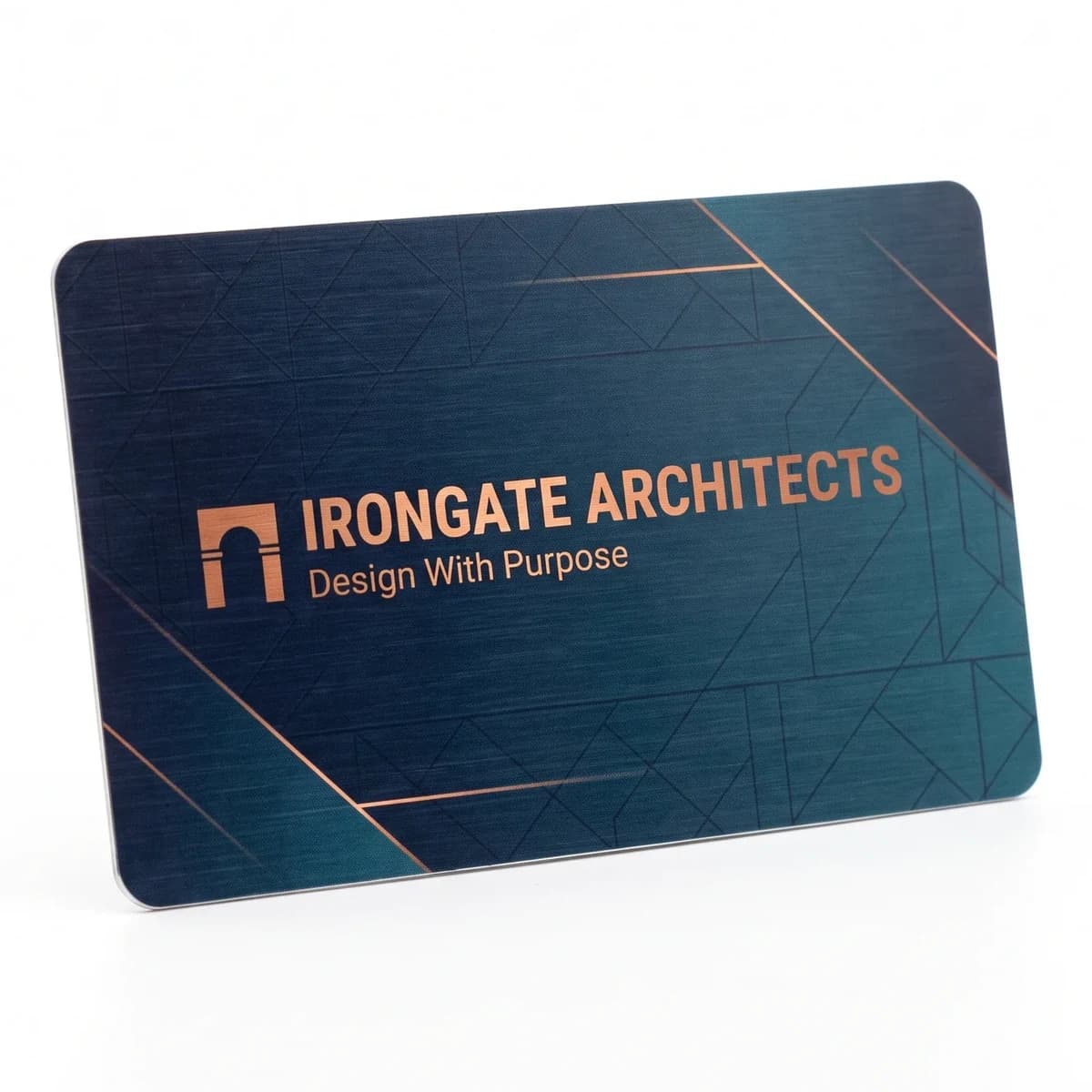
Aluminum prints full color directly on brushed metal, and the brushed surface reads through the design as part of the finish. Bold marks and high contrast reproduce beautifully, while very fine hairlines and pale tints are where we will tell you honestly that the layout needs adjusting first. Some brands print one side and leave the bare metal on the back on purpose, and it reads as intentional rather than cheap.
Both cards are built from the same file size, 3.75 x 2.25 inches with an eighth inch bleed, which the standard business card size guide lays out in inches, millimeters and pixels.
The order path is the same for both as well. You see a free digital proof before anything prints, production runs 48 hours once you approve it, and transit sits on top of that. Nothing goes to press on either material until you have looked at it, which matters more on metal, where a reprint is expensive enough to hurt.
Who Should Carry Metal, and Who Should Carry Paper
Metal earns its cost for a custom builder pitching a whole home remodel, a listing agent working luxury inventory, a founder taking twenty meetings a quarter, a private wealth advisor, or a specialty trade quoting jobs in the tens of thousands. The card should feel like the price point of the work. Metal does not earn its cost at a mixer where you hand out forty cards to people who were never going to call.
Paper is for everyone handing out volume. A restaurant owner working a weekend market, a church office giving cards to visitors, a contractor leaving one at every door on a street, a team of six who all need matching cards. At about $0.18 a card, leaving one behind costs you nothing, which is the point of a business card in the first place.
Paper is also the right call when the details might change. A new hire, a moving office, a phone number in transition: order 250, not 1,000.
The Hybrid Most Clients Land On
The honest recommendation is almost never one or the other. It is a bulk paper run for everyday volume plus a small aluminum run kept in a separate pocket for the introductions that justify the difference.
Concretely: 1,000 Standard Business Cards at $109.99 plus 50 double sided 0.025 in aluminum cards at $139.99 is $249.98 of printing. Same design, two tiers, and you decide in the moment which one the conversation deserves. There is no setup fee, design help is the only optional extra, and shipping is flat $10 per order to any US address.
What We See on Proofs
Two things come back to us on metal proofs, and both are fixable before the file goes to press.
The first is a design carried straight over from paper. A pale gray drop shadow or a 0.25 point hairline rule reads fine on coated cardstock and disappears into brushed aluminum, because the brush texture is running underneath it. When we hold a metal proof it is usually for that, and the fix is thickening the line or dropping it entirely.
The second is the second side. Paper prints two sides for the same price, so people fill the back without thinking about it, then send the identical layout for metal where the second side is a real upcharge. Decide what the back is worth on metal before you order, and if the answer is not much, leave the bare brushed aluminum and let it look deliberate.
Both cards sit side by side on the business cards category page, and the business card maker hands the layout to a designer if you would rather skip the file wrangling. For a pre order checklist, the ten questions to ask before buying business cards covers stock, proofing and total cost, and what information should be on a business card covers what belongs on the front and the back.
Know which card you want? Get started now.
Frequently Asked Questions
Metal is worth it when the number attached to being remembered is large and the number of cards is small. At 100 cards it is about $2.30 each against about $0.60 for paper, so a pack of 50 is a real expense for a new business and a rounding error for one closing a deal a month. If you hand out 200 cards a month, paper is the only sane answer.
Our brushed aluminum cards start at $129.99 for 50 single sided cards in 0.025 inch and $169.99 for 50 in 0.040 inch. At 100 cards it is $229.99 and $279.99, and at 500 it is $719.99 and $899.99. Printing the second side is an upcharge on metal, unlike paper, where one side and two sides cost the same.
Our aluminum cards are 0.025 inches or 0.040 inches thick, which is 0.64 mm and 1.02 mm. On the points scale printers use for paper that is 25pt and 40pt, against 16pt for our paper card. The 0.025 inch card has a slight flex and the 0.040 inch card is rigid and noticeably heavier in a pocket.
Not really. Brushed aluminum does not take ballpoint or gel ink, and a permanent marker sits on the surface and smears before it dries. If part of the card's job is carrying a handwritten appointment time, a direct number or a quoted price, that is the paper card's job. Carry both and hand over the right one.
Yes. Full color prints directly onto the brushed aluminum, and the brushed surface reads through the design as part of the finish. Bold marks and high contrast reproduce beautifully. Very fine hairlines and pale tints are where we will tell you honestly that the layout needs adjusting before it goes to press.
Order 50 to start, which is the smallest pack we run, and keep them in a separate pocket from your paper cards. Metal is priced on material rather than setup, so ordering more of it barely lowers the per card cost. The volume discount that makes a 1,000 pack sensible on paper does not exist on metal.
The same file size, yes. Both are cut to 3.5 x 2 inches and both are built at 3.75 x 2.25 inches with an eighth inch bleed and a 3.25 x 1.75 inch safe zone. The design usually needs a tweak for metal, because pale tints and hairlines behave differently on brushed aluminum than they do on coated cardstock.
Related Articles
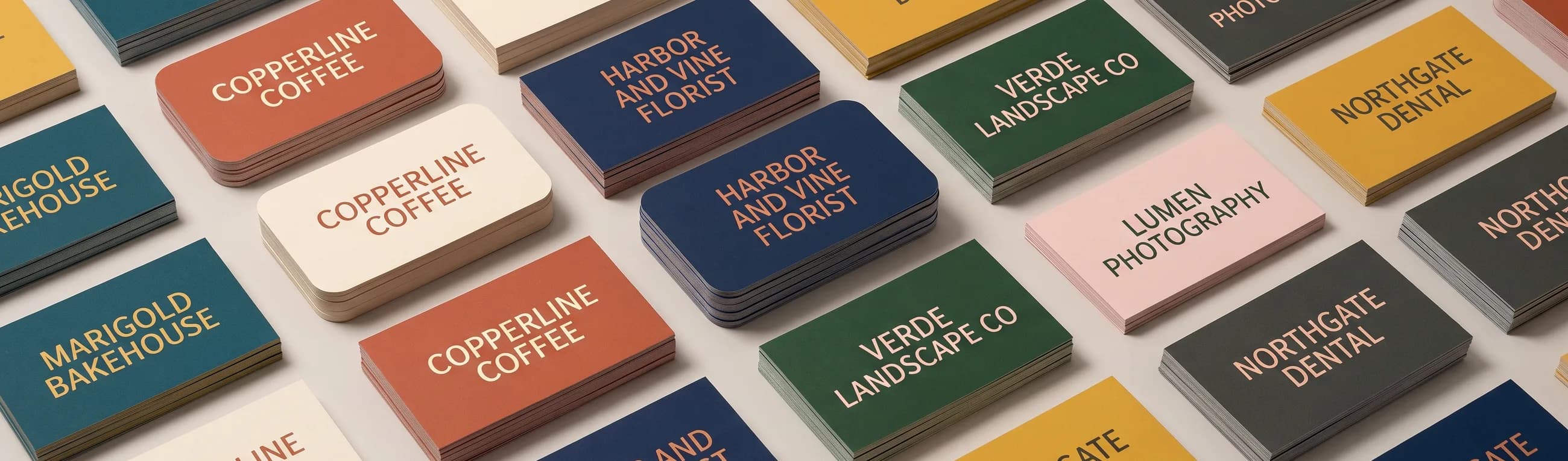
Standard Business Card Size: 3.5 x 2 in, Bleed and Pixels
The standard business card size is 3.5 x 2 in, 1050 x 600 pixels at 300 dpi. Bleed and safe [...]
Read More: Standard Business Card Size: 3.5 x 2 in, Bleed and Pixels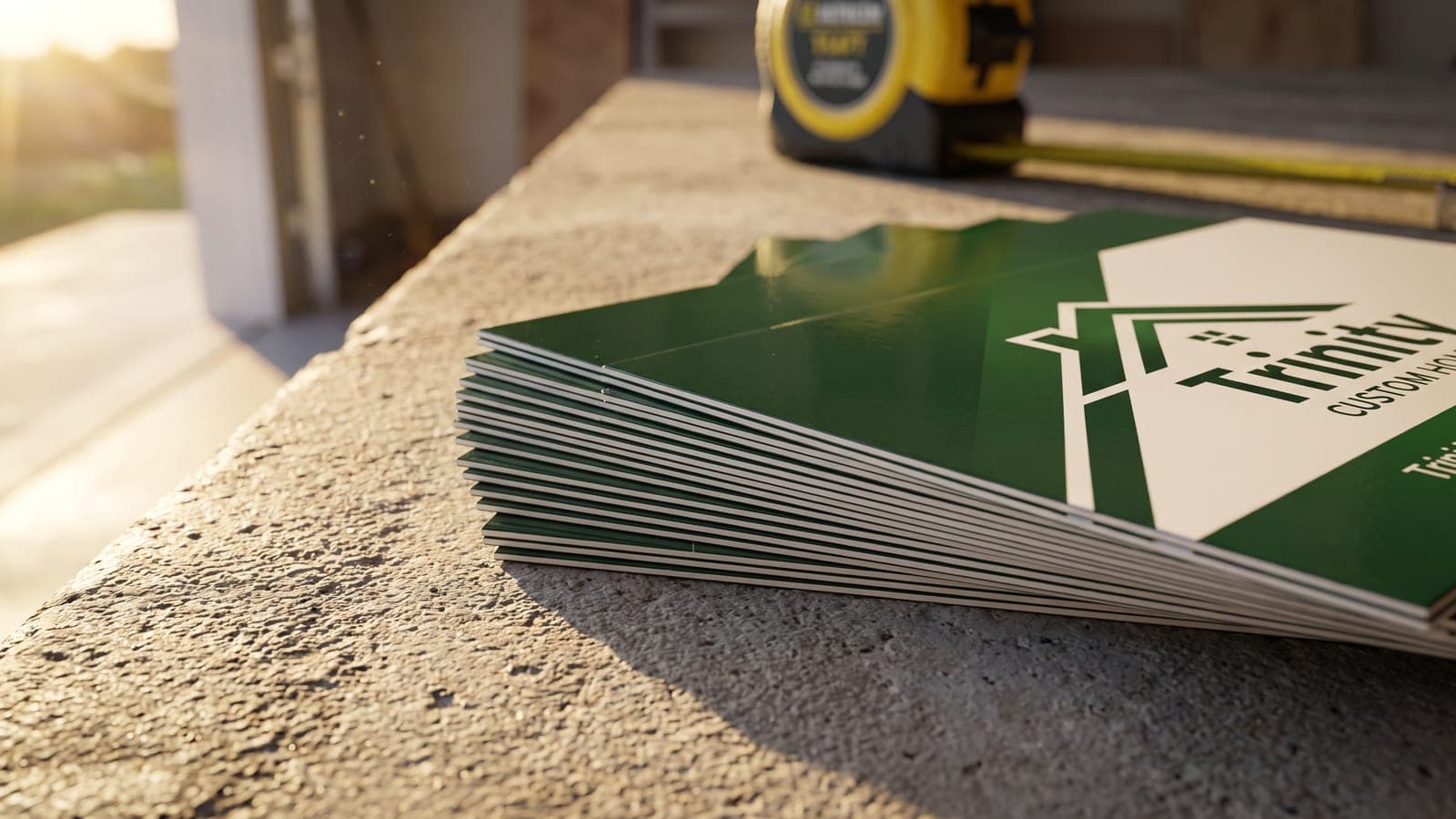
Business Card Thickness: 14pt vs 16pt in Inches and mm
A 14pt business card is 0.014 in thick and a 16pt card is 0.016 in, or 0.36 mm and 0.41 mm. [...]
Read More: Business Card Thickness: 14pt vs 16pt in Inches and mm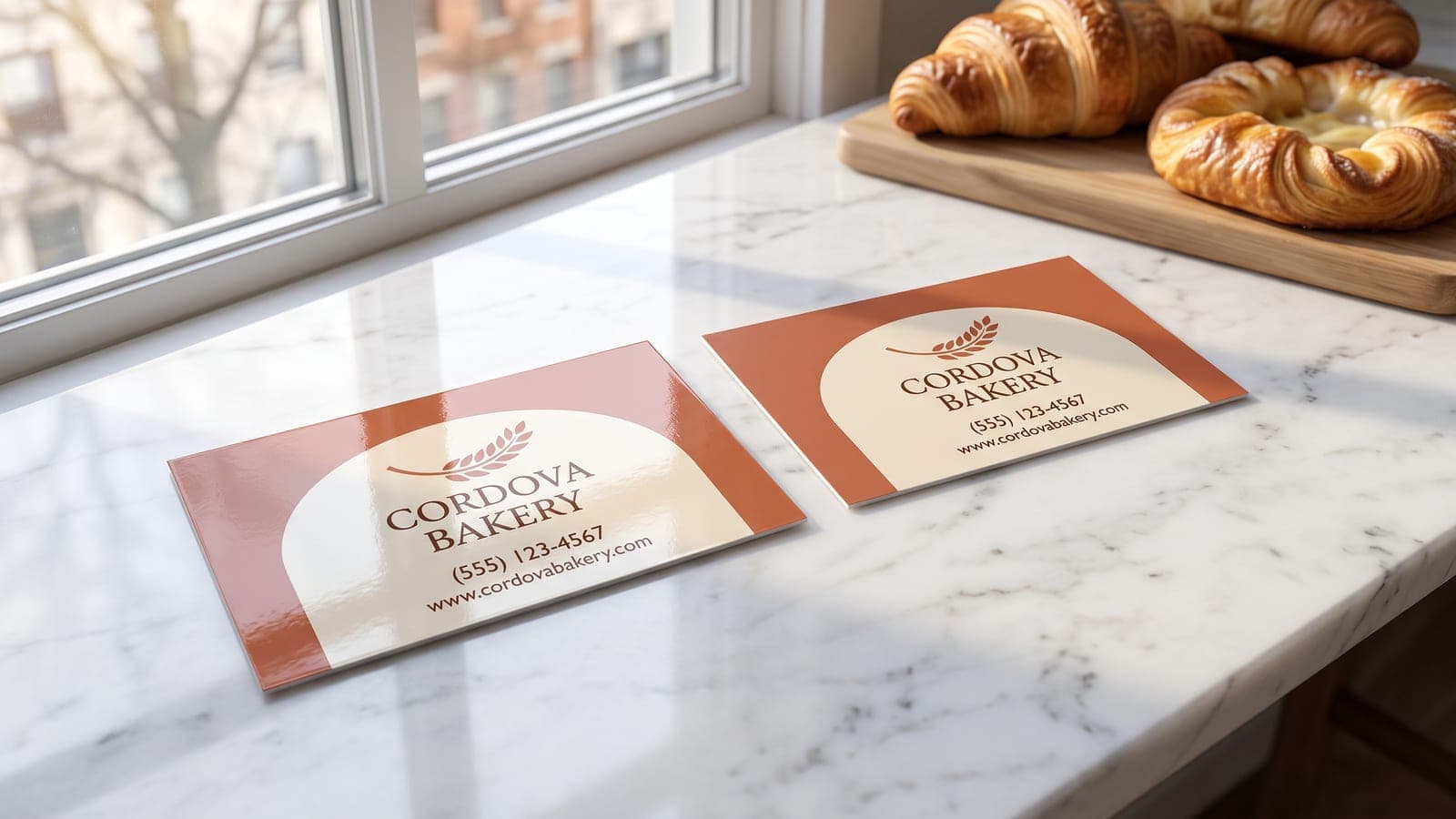
Matte vs Glossy Business Cards: How to Pick a Finish
Gloss business cards keep color saturated and resist a pen, matte reads softer and writes [...]
Read More: Matte vs Glossy Business Cards: How to Pick a Finish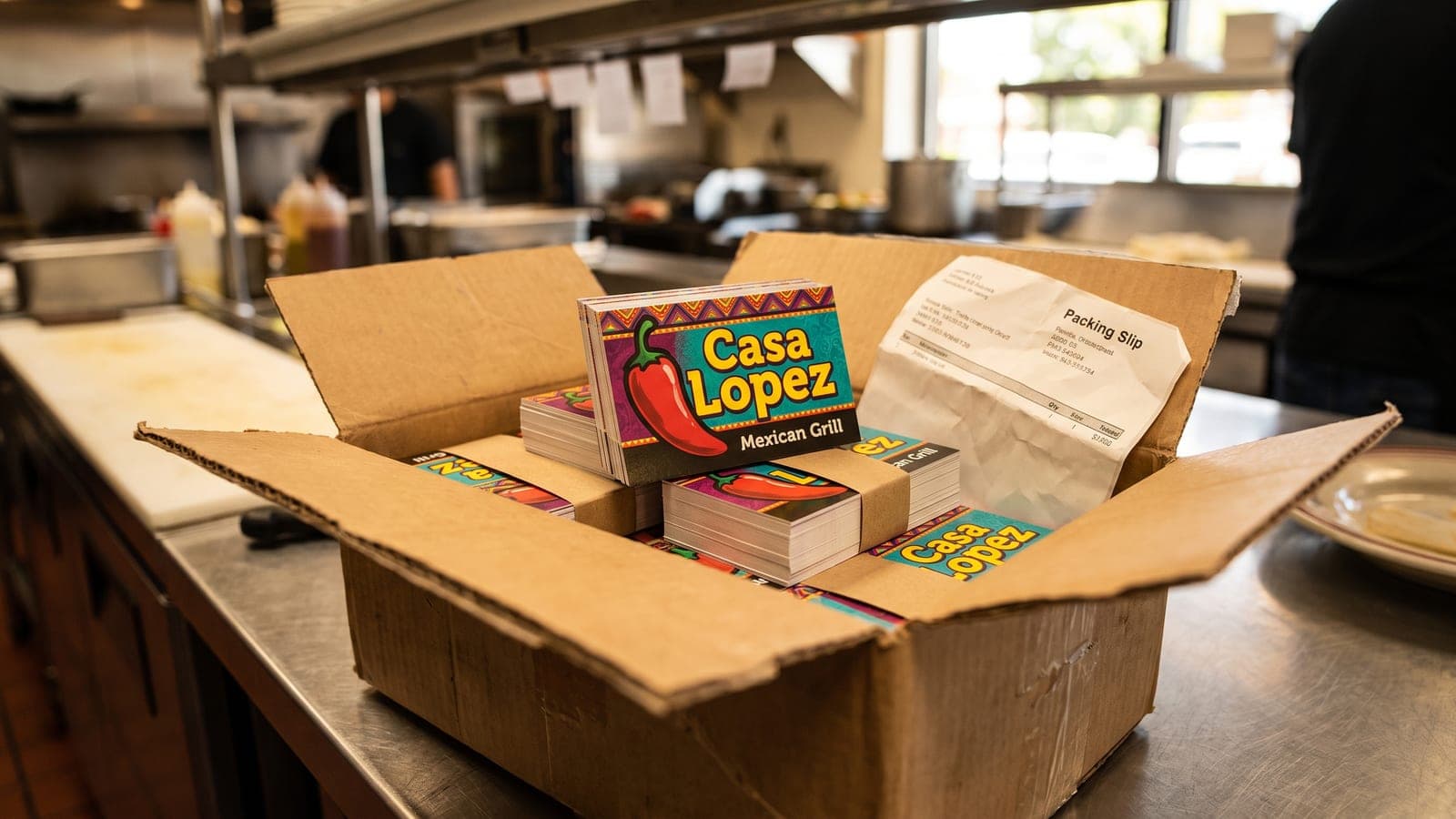
How Much Do Business Cards Cost? Pack and Per-Card Prices
Business cards cost $49.99 for 50, $89.99 for 500 and $109.99 for 1,000 in full color on both [...]
Read More: How Much Do Business Cards Cost? Pack and Per-Card Prices