How to Set Up Canopy Tent Equipment Safely in Wind
 Jean
October 31, 2026Updated November 3, 20268 min read
How Do You Set Up a Canopy Tent Safely in Wind?
Set up a 10x10 canopy tent with two people: open the frame halfway, check the canopy, open it fully, raise the legs, then weight every leg before walls go on. A 4 bag sandbag set starts at $139.09 and holds 76 lb filled. It ships from the USA in 3 to 4 business days, flat $10 shipping.
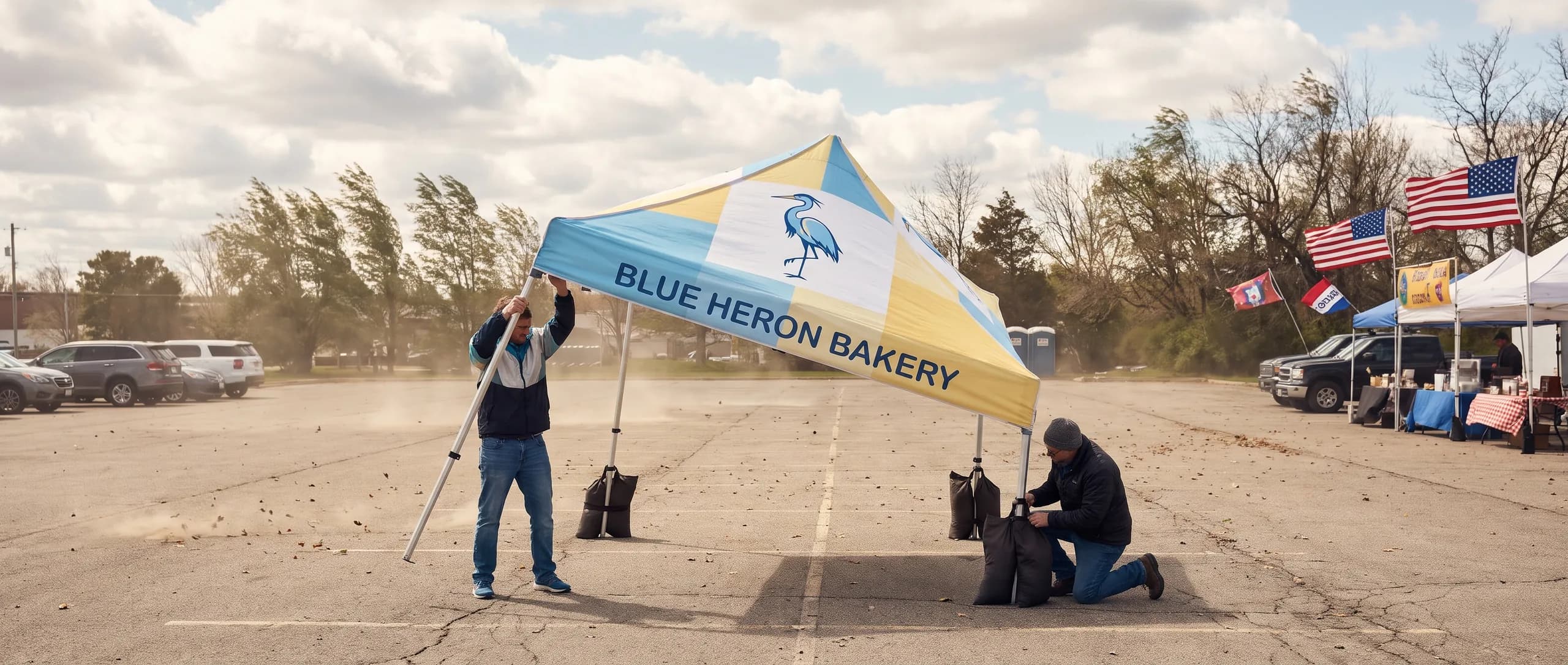
Set up a canopy tent safely in wind by working with two people, keeping the legs low until the canopy is attached, and putting weight on every leg before you add walls or flags. The order matters more than the equipment. A tent weighted after the walls go on, or not weighted at all, is the one most likely to move.
Here is the short version for a 10x10 pop-up:
- Stand the folded frame upright in your space with the bag removed.
- With one person on each side, pull the frame halfway open.
- Check that the canopy is attached at every corner and centered.
- Open the frame fully until the slider locks at each corner.
- Raise the legs one notch at a time on opposite corners.
- Weight or stake every leg before anything else goes on.
- Add walls, flags and the table last.
| Surface | Anchor | What to bring |
|---|---|---|
| Grass, soft ground | Ropes and stakes, plus weights | The kit stakes and a mallet |
| Asphalt, concrete | Weights on every leg | Sandbags or other leg weights |
| Indoors | Weights on every leg | Sandbags; no stakes allowed |
A 4 bag sandbag set starts at $139.09. It ships empty, holds 76 lb of ballast when filled, and ships in 3 to 4 business days for a flat $10 to any US address.
What Should You Check Before Bringing the Tent?
Check the event rules and the forecast before you pack. The vendor packet usually lists the space size, whether stakes are allowed, any minimum weight per leg and the setup window. Read it the night before, not in the parking lot.
Check the forecast for gusts, not only the average wind speed. A steady breeze is easy to manage. Sudden gusts lift canopies. If the forecast calls for strong gusts, plan for full weights, no side walls and a lower leg height.
Pack the weights. Weights left at home mean a tent set up with nothing on the legs. If you use sandbags, fill them the day before so you are not hunting for sand at the event.
How Should You Inspect the Frame and Fabric?
Inspect the frame and canopy at home after every few events. Open the frame fully and look at each joint, slider and leg. A bent truss, a cracked plastic joint or a pin that does not lock is a weak point that wind will find.
Check the canopy for torn corners, loose velcro and worn stitching at the valances. A small tear at a corner grows fast when the wind pulls on it.
If the frame is damaged but the canopy is good, a replacement frame is sold with the tent hardware. If the frame is good but the canopy is worn or out of date, a custom canopy top on its own starts at $631.29.
How Do You Choose Canopy Anchoring Equipment?
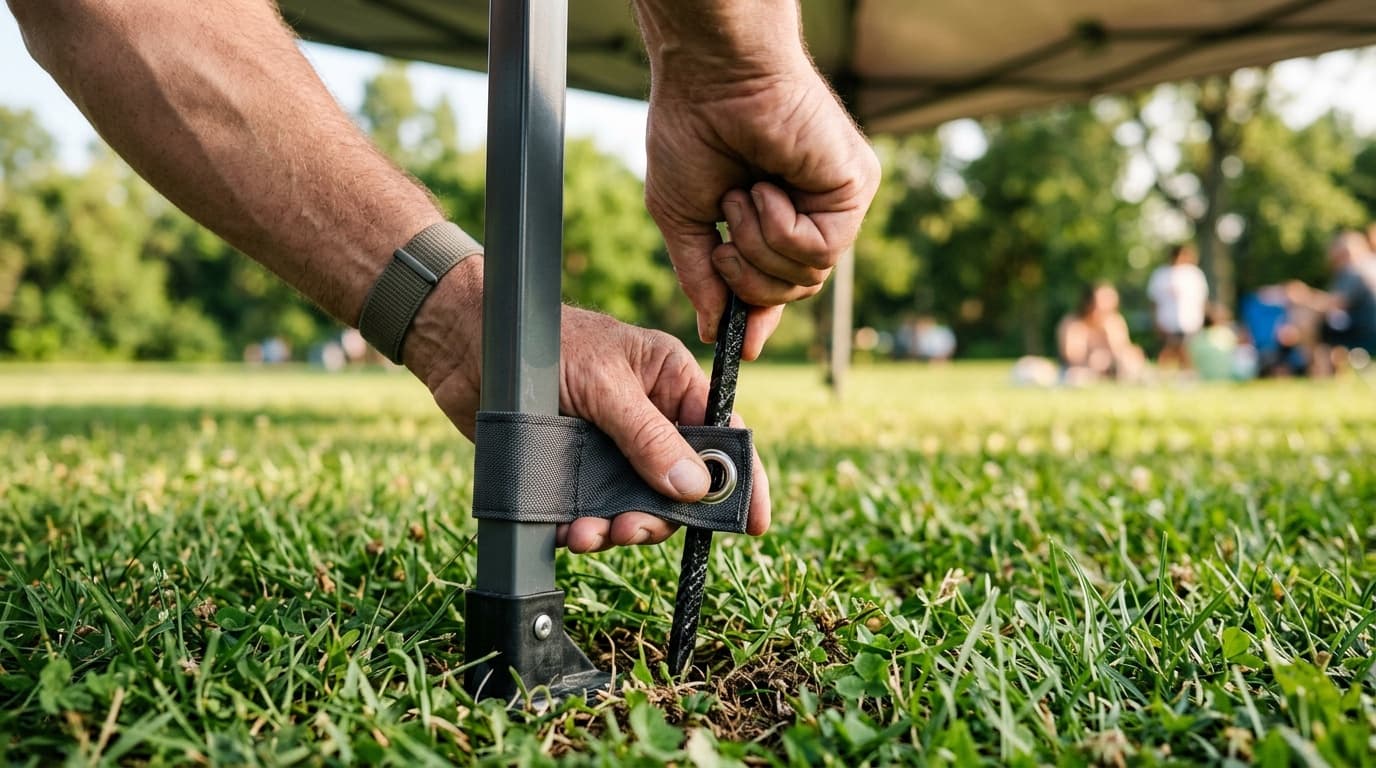
Choose anchors for the surface you will stand on. The frame kit includes ropes and stakes, which hold a tent on grass. On pavement or indoors, you need weights on every leg.
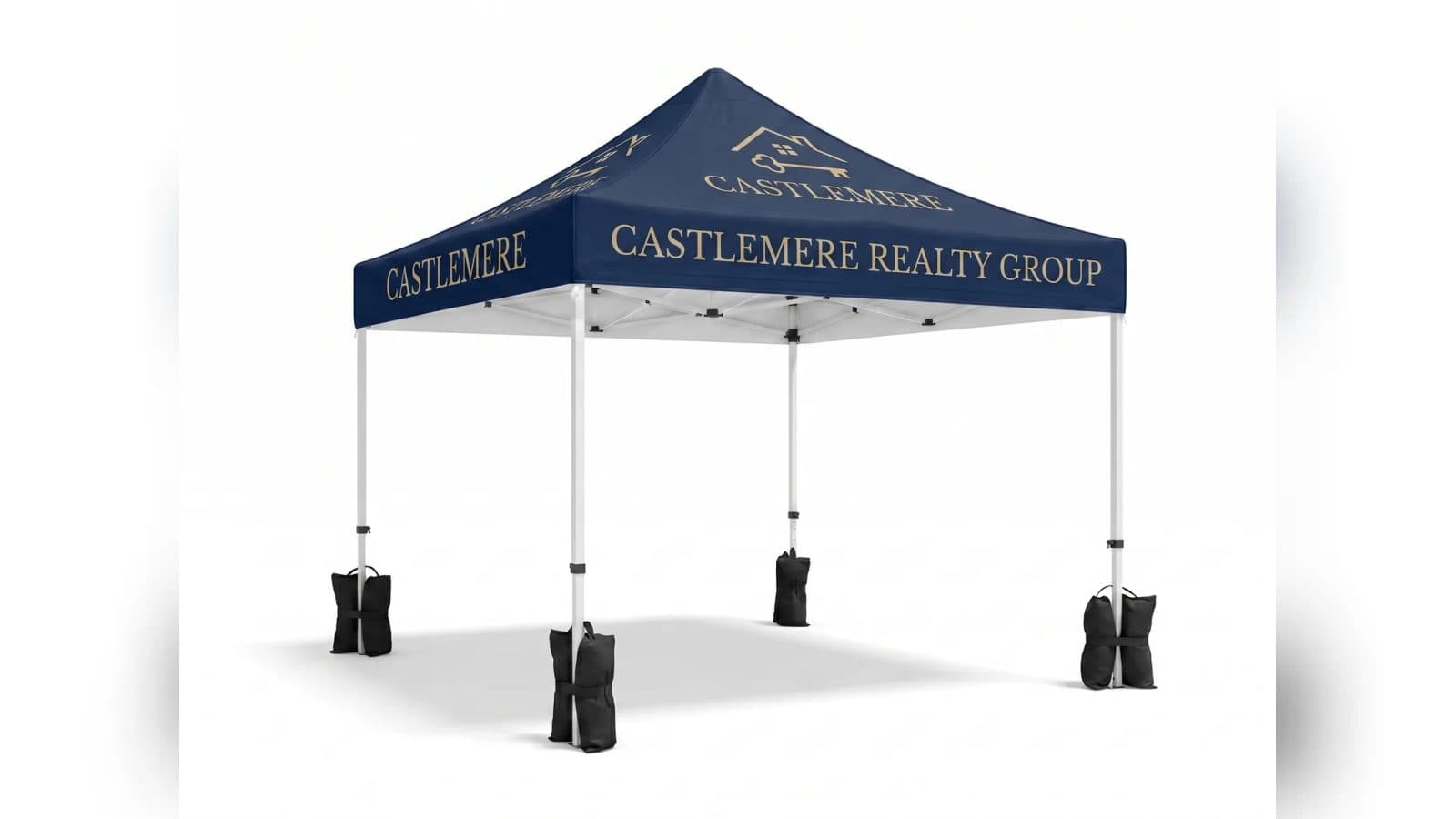
Weights that strap to the foot of each leg keep the load low and close to the frame. A sandbag set is 4 bags, one per leg on a 10x10. A 10x15 or 10x20 has 6 legs, so plan for two sets or your own weights for the middle legs.
On grass in wind, use both. Stake every leg, tie down every rope, and add weights anyway. Stakes pull out of soft or wet ground, and a weight on the foot keeps the leg planted if a stake lets go.

What Is the Correct Order for Opening the Tent?
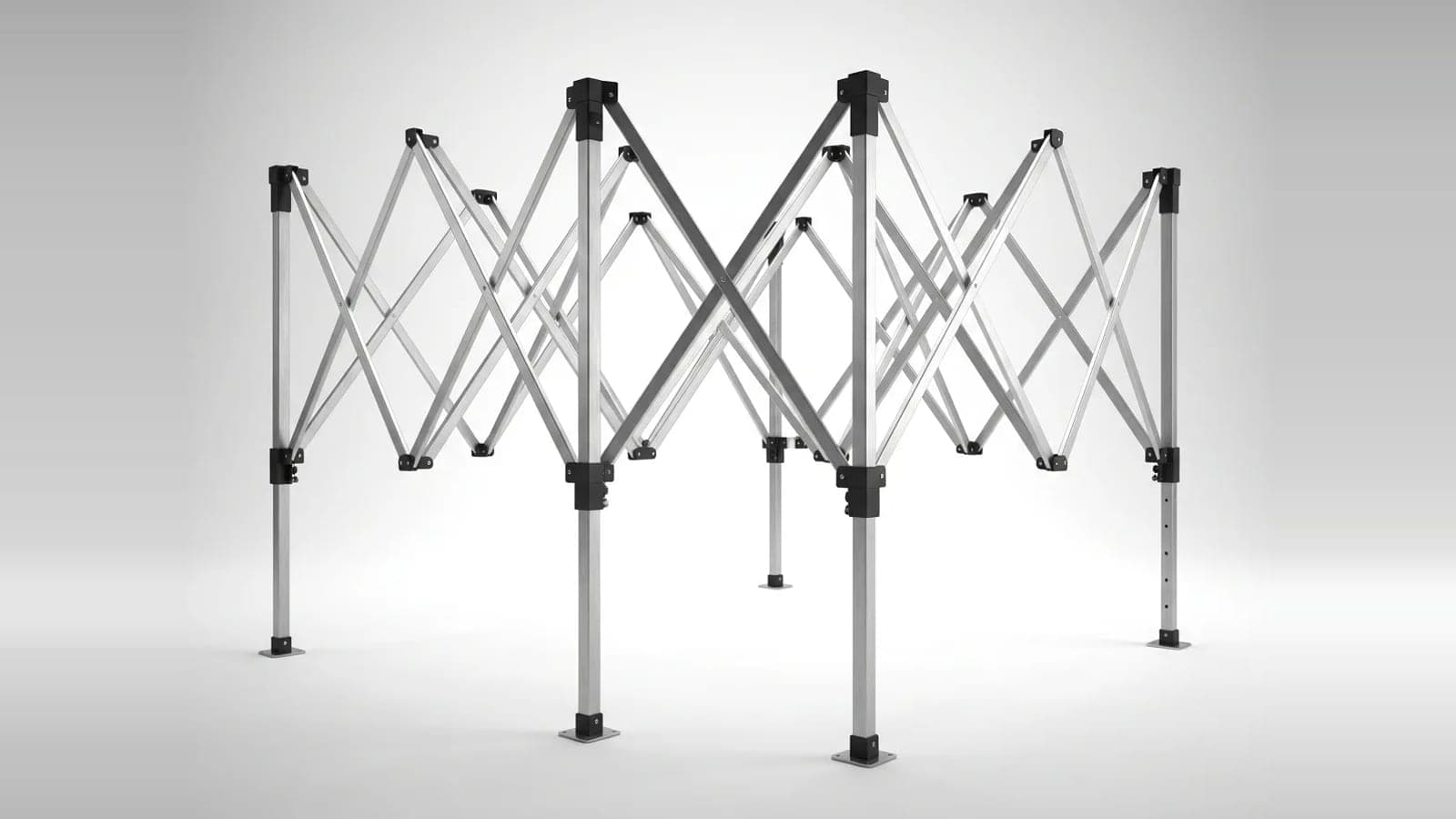
Open the frame partway, attach or check the canopy, open fully, then raise the legs. That order keeps the canopy low while you work on it, which is where the wind has the least leverage.
Work with one person on each side of the frame. Lift and walk apart slowly until the frame is half open. Check that the canopy is attached at every corner. Then push the sliders up until they lock at each corner.
Raise the legs last, one notch at a time on opposite corners, so the frame stays level. In strong wind, leave the legs at a lower setting. A lower tent gives the wind less to push against.
Do Tent Walls and Flags Change the Setup Plan?
Yes. Walls and flags add surfaces for the wind to push, so they go on only after every leg is weighted. A full wall is 113 x 78 inches on a 10x10 and works like a sail. A half wall is 39 inches tall and catches much less wind.
On a windy day, use the back wall and leave the side walls off. If you must use side walls, add more weight to the legs on the windward side.
A tent flag kit clamps a 10.5 ft feather flag to a tent leg. The flag moves the wind load onto that leg, so weight it first and check the clamp after setup.
How Do You Practice Setup Before the First Event?
Practice the full setup once at home, in a driveway or a park, before the first event. Time it, and do it with the person who will help you on event day. A first setup in front of customers, with a line of vendors watching, is when steps get skipped.
Use the practice run to settle who does what. One person handles the frame, the other the canopy corners and the weights. Decide where the weights ride in the car so they come out first, before the walls and the merchandise.
Practice the takedown too. Closing a frame in wind is harder than opening one, and knowing the order (walls off, legs down, frame closed, weights last) keeps everyone calm when the weather turns.
When Should You Close the Booth Because of Weather?
Close the booth when gusts lift a leg off the ground or the frame rocks, even with every leg weighted. Lightning in the area, heavy rain pooling on the canopy, or an event official telling vendors to close are also reasons to take the tent down.
To take it down in wind, remove the walls and flags first, lower the legs to the bottom setting, then close the frame with one person on each side. Keep weights on the legs until the frame is closed.
Your merchandise can wait. A tent that lifts can injure people and damage the booths beside yours.
What Should You Check After Taking the Tent Down?
Check that the canopy is dry before you pack it. A wet canopy folded into a bag for days can stain and smell. If you had to pack it wet, open it at home within a day and let it dry fully.
Look for damage from the day: a bent leg, a loose joint, a torn corner. Fix it or order the part before the next event, not the morning of.
Count your stakes and weights. Missing gear is easy to forget until the next setup.
Which Setup Mistakes Should You Avoid?
Two setup mistakes are easy to make. The first is a tent with nothing on the legs because the weights stayed home or the stakes would not go into pavement. Next, check for side walls added before the tent was secured.
Both are avoided by the same rule: weights on every leg before anything else goes on. Make it part of the setup routine, the same way every time, and the wind is something you plan for rather than something that surprises you.
How Do You Order a Tent and Prepare for Setup?
Order the tent size your event assigns, add weights for every leg, and set it up once at home before the first event. A 10x10 event tent with printed canopy and frame starts at $973.69, with ropes, stakes and a carry bag included.
Tents, walls and hardware run on 3 to 4 business days, and everything ships for a flat $10 per product to any US address. A free proof comes with every printed order, and nothing prints until you approve it.
Frequently Asked Questions
Two people set up a 10x10 pop-up canopy safely, one on each side of the frame. A 10x15 or 10x20 uses a heavier 40mm hex frame with 6 legs, so plan on two or three people, especially in wind.
Put weight on all 4 legs. A 4 bag sandbag set holds 76 lb of ballast when filled, one bag per leg. Some events publish a minimum weight per leg in the vendor packet; bring at least that much.
No. The ropes and stakes in the frame kit hold a tent on grass and soft ground only. On asphalt, concrete or indoor floors, weights on every leg are the only thing holding the tent down.
Add walls only after every leg is weighted, and leave side walls off when wind is strong. A 113 x 78 inch full wall acts like a sail. A half wall, 39 inches tall, catches far less wind.
Take it down when gusts start lifting a leg off the ground or the frame rocks, even with every leg weighted. Lower the legs first to reduce the wind load, then remove the walls and close the frame.
No. The sandbag set ships empty and sand is not included. It ships in 3 to 4 business days for a flat $10 to any US address. Fill the bags with sand or gravel before the event.
Related Articles

How to Weigh Down a Canopy Tent: Stakes and Sandbags
A 4-piece canopy sandbag set is $139.09. Learn where stakes work, how to secure every leg and [...]
Read More: How to Weigh Down a Canopy Tent: Stakes and Sandbags
Canopy Tent Accessories: Walls, Weights and Hardware
Canopy tent accessories start with a 10x10 half wall at $278.19, a full wall at $385.19 and [...]
Read More: Canopy Tent Accessories: Walls, Weights and Hardware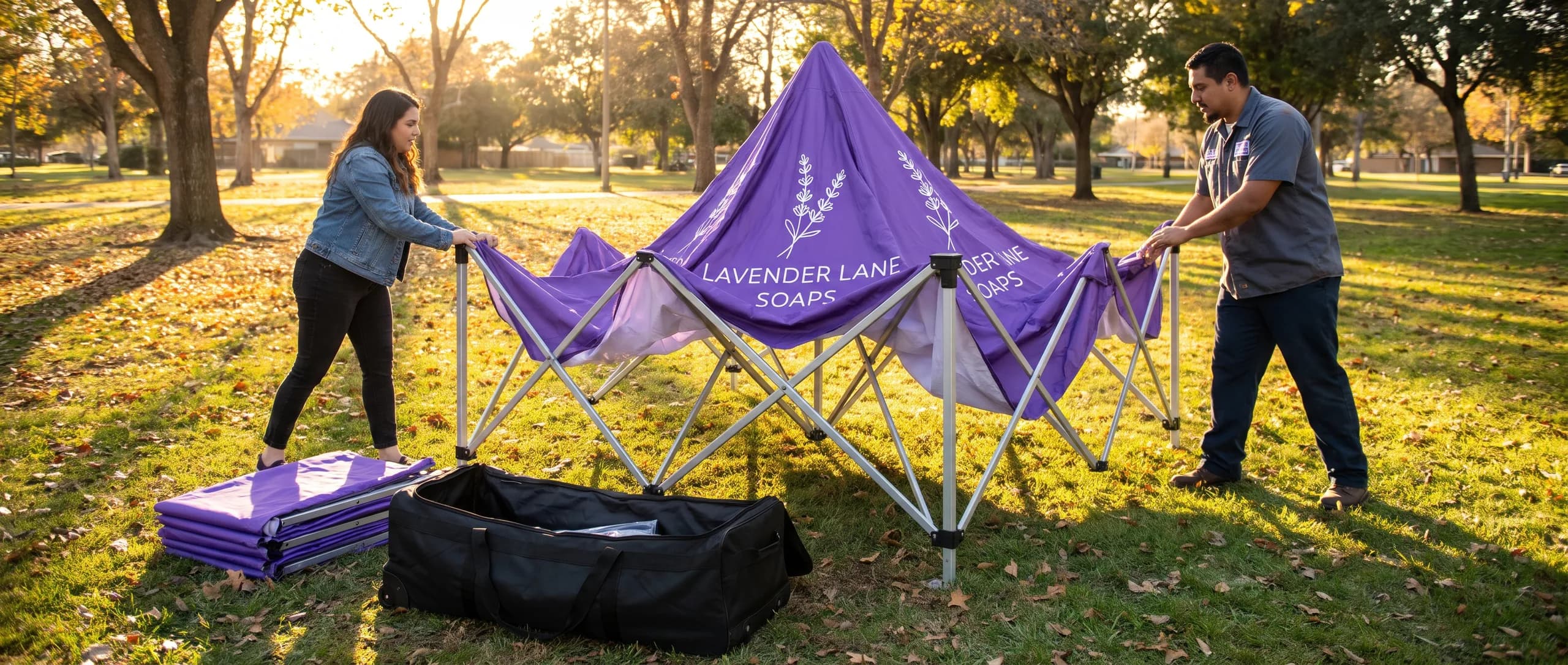
How to Fold a Canopy Tent: Steps, Weight, and the Bag
Walk a pop-up hex frame closed with two people and bag it dry. A 10x15 kit weighs about 60.5 [...]
Read More: How to Fold a Canopy Tent: Steps, Weight, and the Bag
Custom Canopy Tents: Sizes, Kits and Buying Checklist
A custom 10x10 canopy tent with frame starts at $973.69 and prints in 3 to 4 business days. [...]
Read More: Custom Canopy Tents: Sizes, Kits and Buying Checklist