Flyer vs Postcard vs Brochure: Compare 4 Print Formats
 Daniel
October 31, 2026Updated November 3, 20268 min read
Should You Choose a Flyer, Postcard, Rack Card or Brochure?
Choose a flyer to hand out, a postcard to mail, a rack card for display racks and a brochure for detail. 25 4 x 6 flyers start at $53.49 and 100 postcards at $74.89, both in 48 hours; brochures take 3 to 5 business days. Printed in the USA, flat $10 shipping.
Choose by how the piece reaches people. A flyer is handed out or posted. A postcard is mailed or handed over. A rack card sits in a display rack. A brochure is picked up by someone who wants detail. The format follows the path, and the message follows the format.
| Format | Best for | Starts at | Production |
|---|---|---|---|
| Flyer, 4 x 6 in | Handouts, counters | $53.49 for 25 | 48 hours |
| Postcard, 4 x 6 in | Mailing | $74.89 for 100 | 48 hours |
| Rack card, 3.5 x 8.5 in | Display racks | $181.89 for 250 | 3 to 5 days |
| Brochure, 8.5 x 11 in | Detail | $246.09 for 250 | 3 to 5 days |
Production times are business days after proof approval. Everything is printed in the USA and ships for a flat $10 per product to any US address.
When Should You Use a Flyer?
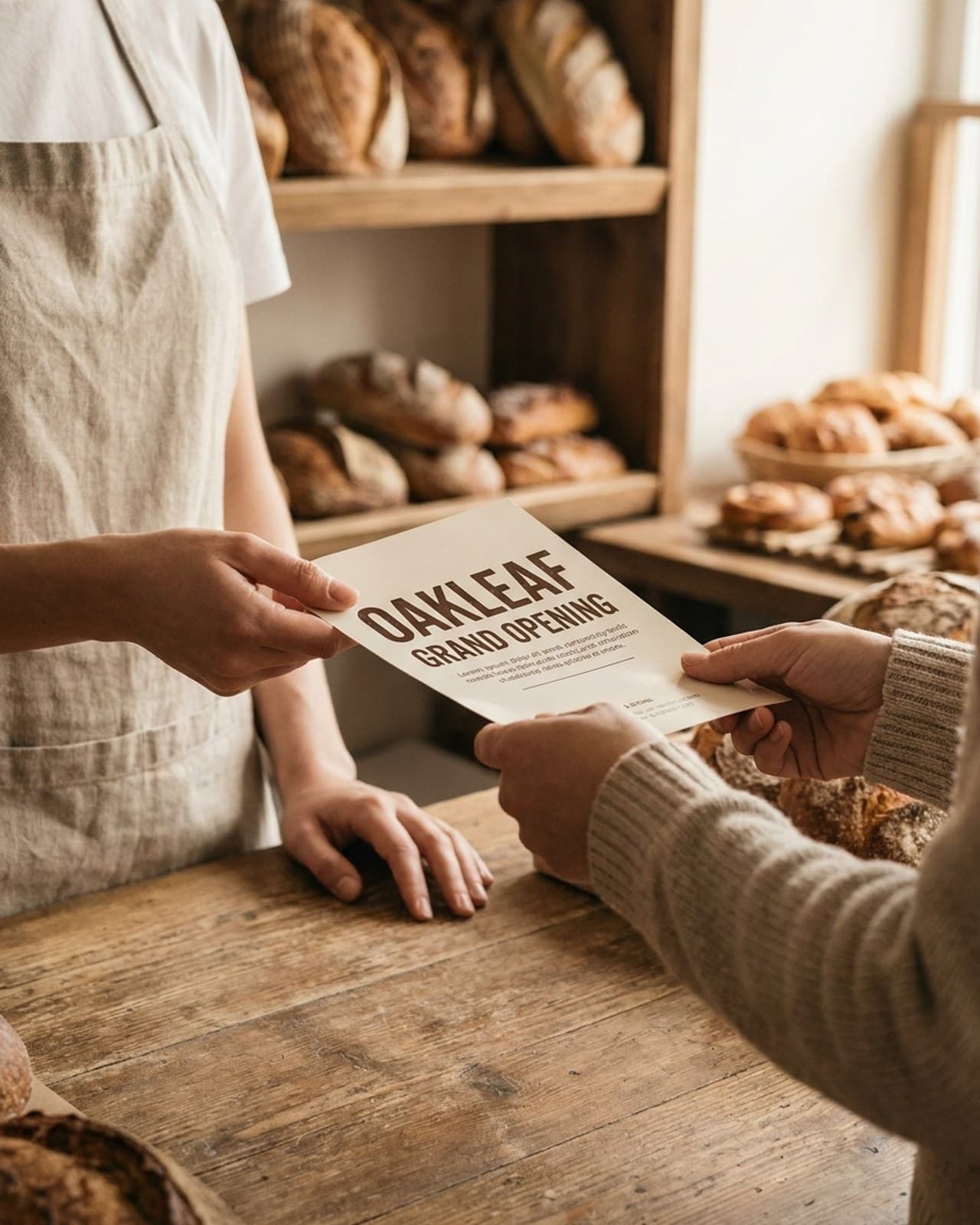
Use a flyer for one message handed directly to people: an event, a sale, a grand opening, a new service. Flyers go on counters, in bags, on community boards and into hands at events.
These flyers are 4 x 6 inches on 16 pt gloss, sturdy enough to sit in a holder or ride home in a bag without bending. 100 4x6 Standard 16pt Gloss flyers are $74.89, which is about $0.75 a flyer. 25 flyers start at $53.49. Artwork prep is $14.99 per item. Printed in the USA in 48 hours and shipped nationwide, flat $10 shipping to any US address.
Keep a flyer to one idea: a headline, a few lines of detail, the date or offer, and how to respond. A flyer that tries to say everything says nothing.
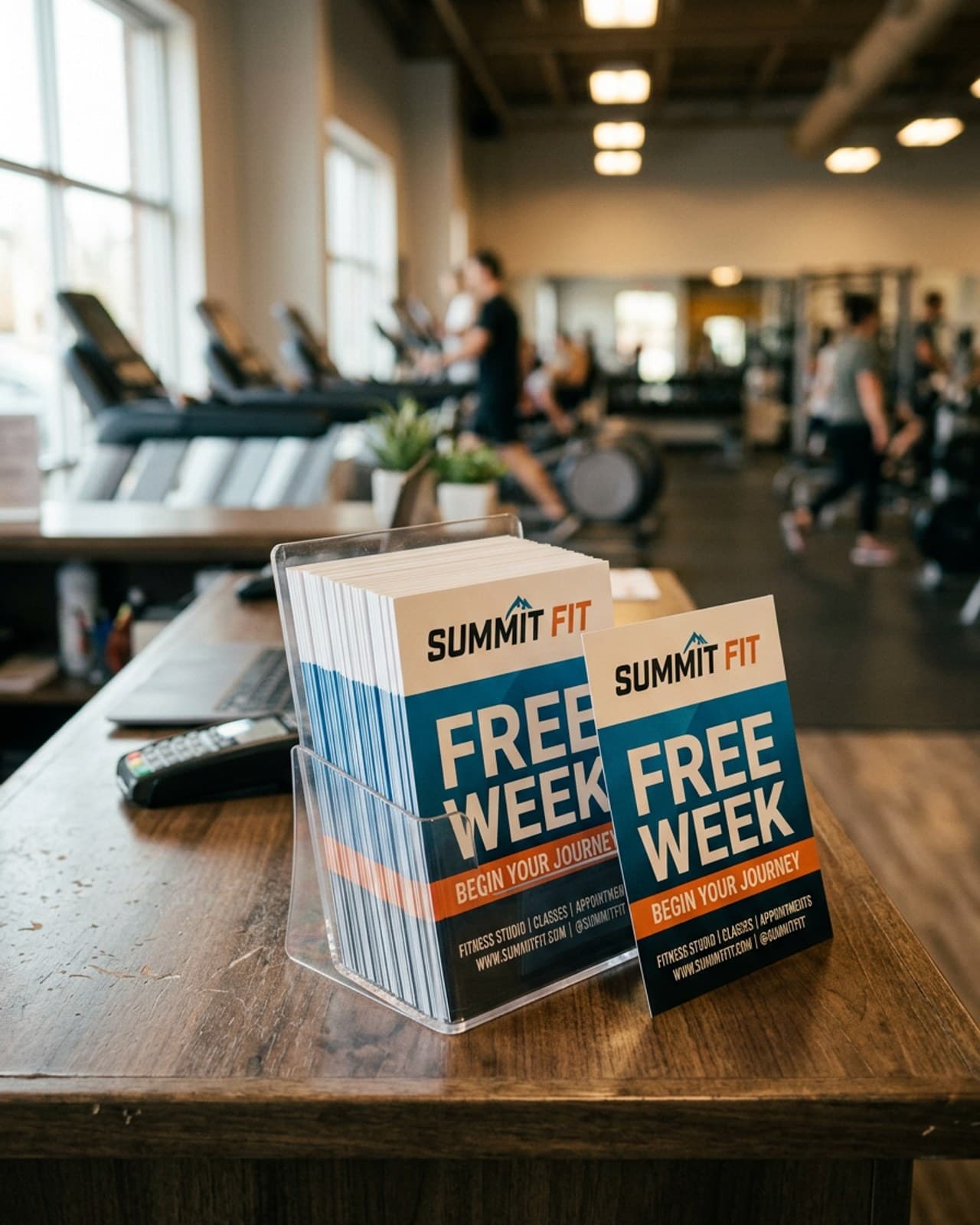
Think about where the flyer will sit. In an acrylic holder on a counter, only the top half shows, so the headline belongs there. On a community board, the flyer competes with a dozen others, so a bold color and a large headline matter more than detail. In a bag, it is read later at home, so the web address or phone number needs to be easy to find.
When Does a Postcard Work Better?
A postcard works better when the piece has to travel by mail. It is designed to be addressed and stamped, with one side for the message and one side for the address. These postcards are 16 pt gloss and print double sided at no extra cost.
Postage follows the size. A 4 x 6 postcard is the cut that mails at the USPS postcard rate, which tops out at 4.25 x 6 inches; the 5 x 7 and 6 x 9 sizes mail as letters. Check current postal rules before a large mailing.
Postcards also work as handouts at a checkout counter or in a welcome packet, where a sturdier card feels more valuable than a flyer.

What Is a Rack Card For?
A rack card is for literature racks: the tall displays in hotel lobbies, visitor centers, waiting rooms and chambers of commerce. It is narrow so many fit side by side, and the top third is what people see when it sits in the rack.
These rack cards are double sided on heavy cover stock. The 4 x 9 inch card is the size the product page recommends; 3.5 x 8.5 inch is a slimmer alternative. 250 4x9 Cover Stock rack cards are $203.29, which is about $0.81 a rack card. Artwork prep is $14.99 per item. Printed in the USA in 3 to 5 business days and shipped nationwide, flat $10 shipping to any US address.
Put your name and the main reason to pick it up in the top third, where it shows above the rack's edge. Use the back for the details: a map line, hours, a short list of what you offer and how to book.
When Is a Brochure the Right Choice?
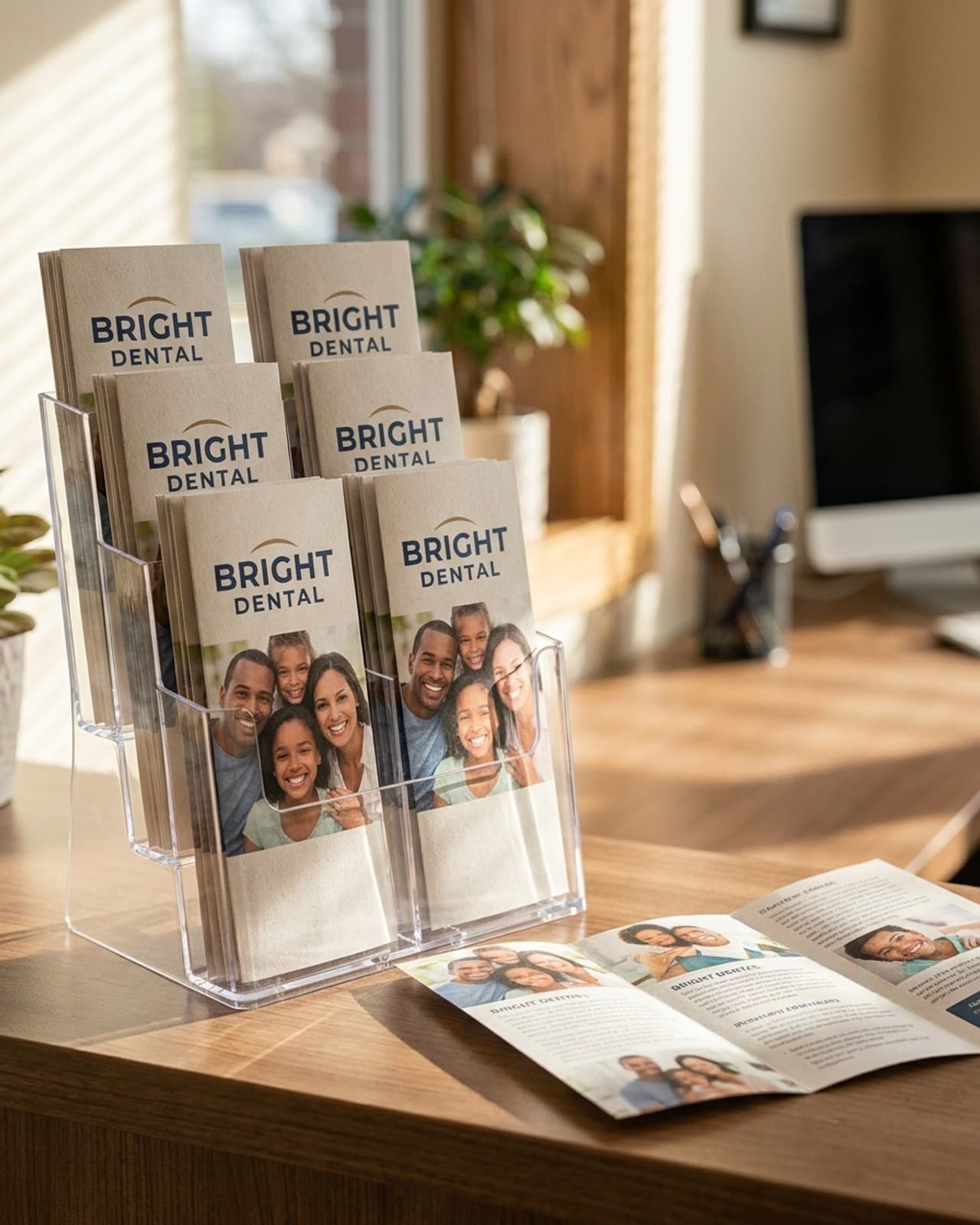
A brochure is the right choice when someone needs detail before they decide: a list of services, prices, photos of work, a menu, a program schedule. Folding gives you panels, and each panel can carry one topic.
These brochures are 8.5 x 11 inches, half folded, on 70 lb text stock, which folds cleanly. 250 8.5x11 Half-Fold 70# Text Stock brochures are $246.09, which is about $0.98 a brochure. Artwork prep is $14.99 per item. Printed in the USA in 3 to 5 business days and shipped nationwide, flat $10 shipping to any US address.
Brochures suit clinics, schools, real estate listings, contractors and anyone with a story too long for a flyer. Leave the back panel for contact details and a clear next step. They print in 3 to 5 business days after proof approval.
Which Format Fits Your Business?
Different businesses lean on different formats. A few common matches:
- Restaurants and cafes: flyers for events and specials, postcards for a grand opening mailing, rack cards in hotel lobbies for visitors.
- Real estate agents: postcards for just listed and just sold mailings, brochures for a featured listing.
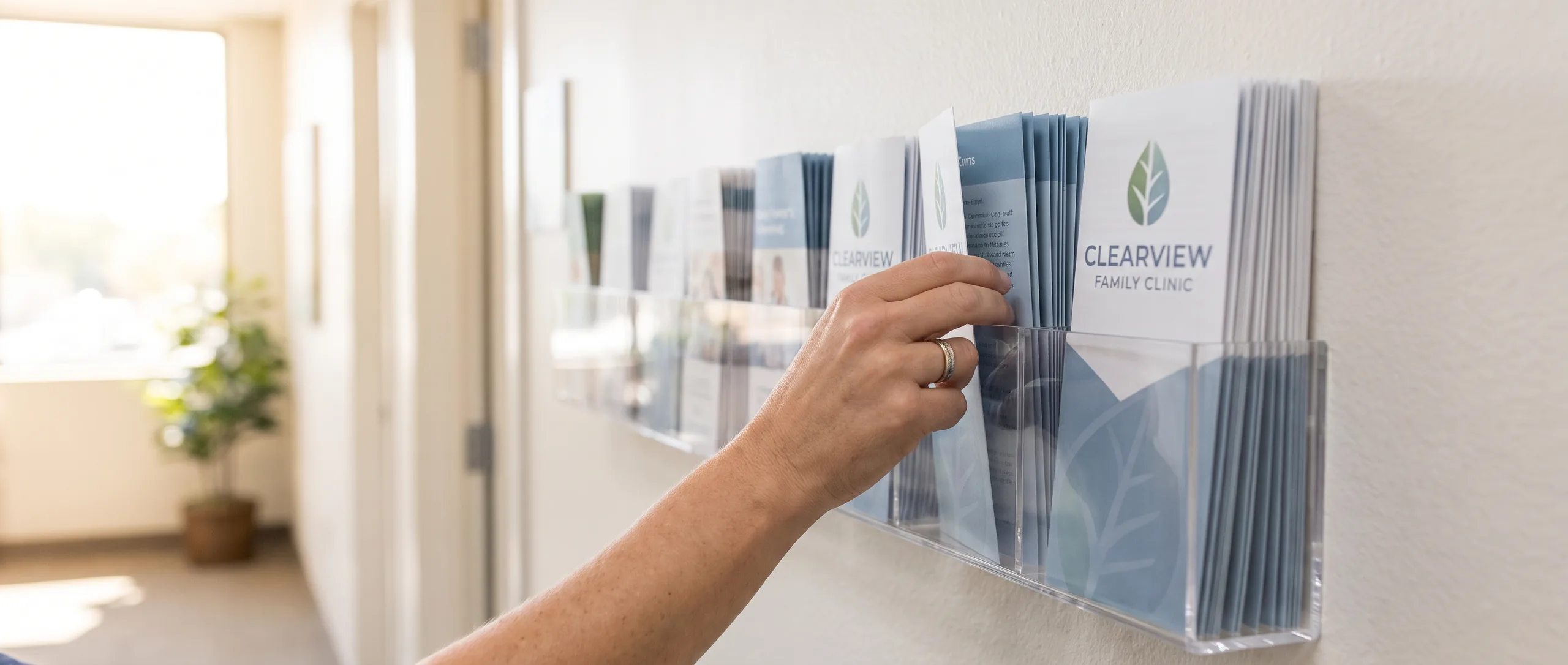
- Clinics and dental offices: brochures and rack cards in the waiting room, postcards for appointment reminders.
- Contractors and home services: postcards and door hangers for neighborhoods, brochures for bigger projects.
- Tourism, attractions and hotels: rack cards in visitor centers, brochures for detailed guides.
- Schools, churches and nonprofits: flyers for events, brochures for programs.
If your business fits more than one row, start with the format that reaches the people closest to buying.
What Should Each Format Say?
Each format has room for a different amount, so write to fit it.
A flyer says one thing: the event, the offer, the date, how to respond. A headline people read from a few feet away, a few short lines, a call to action.
A postcard says one thing to someone at their mailbox: a short headline and image on the front, and a few lines, the offer and the contact on the back next to the address area.
A rack card says why to pick it up in the top third, then fills in the rest below: what you offer, hours, location, how to book.
A brochure tells the full story, one topic per panel: who you are, what you offer, proof of your work, prices or packages, and how to get in touch on the back panel.
How Long Does Each Piece Stay Useful?
A flyer for an event is useful until the event. A postcard is useful until it is thrown away, so the front has to earn a second look. A rack card can sit in a rack for months, so keep dates and prices off it unless you will replace it. A brochure lasts as long as its details are current.
Write dated details only on pieces you will reprint soon. For pieces meant to last, point to your website for anything that changes.
How Do You Decide by Budget?
Decide by the cost of reaching one person who matters, not by the cheapest box. Flyers have the lowest starting order, at $53.49 for 25. Postcards start at $74.89 for 100. Rack cards and brochures start at 250 pieces.
Larger quantities cost less per piece on every format, as each product page lists. Order enough for the campaign, not so many that the details go out of date in a drawer.
Can You Use More Than One Format?
Yes, and many campaigns do. A business might mail postcards to bring people in, hand flyers to walk ins, keep rack cards in a local visitor center and hand brochures to serious prospects. Each format does its job, with the same design and message.
Order them together so one proof round covers all of them and the colors match. Use the same headline and offer on each piece, so people who see two of them recognize the campaign.
What Should You Check on Print Proofs?
Check first for the offer, the date and the contact details. These are the parts people act on, and a mistake there wastes the whole run.
Next, check for text near folds on brochures and near the edges on cards. Anything too close can be cut or fall in the fold.
Also check for the mailing side on postcards. Leave the address area clear as the postal rules require.
How Do You Order Print Marketing?
Choose the format by how it will reach people, pick the quantity and send your design. Artwork prep is $14.99 per item if you send a phone photo or a ChatGPT image, and a free proof comes with every order.
Flyers and postcards print in 48 hours; rack cards and brochures in 3 to 5 business days, after proof approval. Each product ships for a flat $10 to any US address.
Frequently Asked Questions
A flyer is one flat sheet with one message, made to hand out or post. A brochure is folded into panels and holds more detail, such as services, photos and prices. Flyers print in 48 hours; brochures in 3 to 5 business days.
A postcard. It is built to mail on 16 pt gloss, and a 4 x 6 postcard qualifies for the USPS postcard rate, which tops out at 4.25 x 6 inches. 250 4x6 Standard 16pt Gloss postcards are $106.99, which is about $0.43 a postcard. 100 postcards start at $74.89. Artwork prep is $14.99 per item. Printed in the USA in 48 hours and shipped nationwide, flat $10 shipping to any US address.
A rack card is a tall 4 x 9 or 3.5 x 8.5 inch card for literature racks in hotels, visitor centers and waiting rooms. 250 rack cards start at $181.89.
250 8.5x11 Half-Fold 70# Text Stock brochures are $246.09, which is about $0.98 a brochure. Artwork prep is $14.99 per item. Printed in the USA in 3 to 5 business days and shipped nationwide, flat $10 shipping to any US address.
Per order, flyers start lowest at $53.49 for 25. Per piece, larger quantities of any format cost less each. Pick the format by how it reaches people first, then the quantity.
Flyers and postcards print in 48 hours; rack cards and brochures in 3 to 5 business days, after proof approval. Each product ships for a flat $10 to any US address.
Related Articles
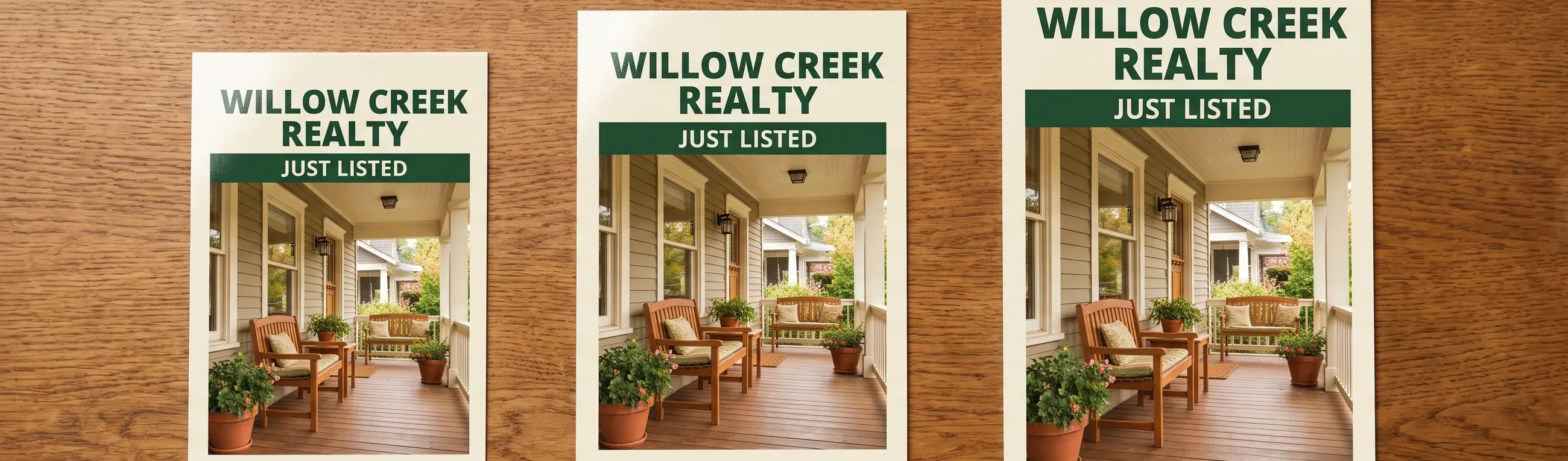
Postcard Sizes in Inches and Pixels: 4x6, 5x7, 6x9 Chart
Standard postcard sizes are 4x6, 5x7 and 6x9 in. A 4x6 card is 1200 x 1800 pixels at 300 dpi. [...]
Read More: Postcard Sizes in Inches and Pixels: 4x6, 5x7, 6x9 Chart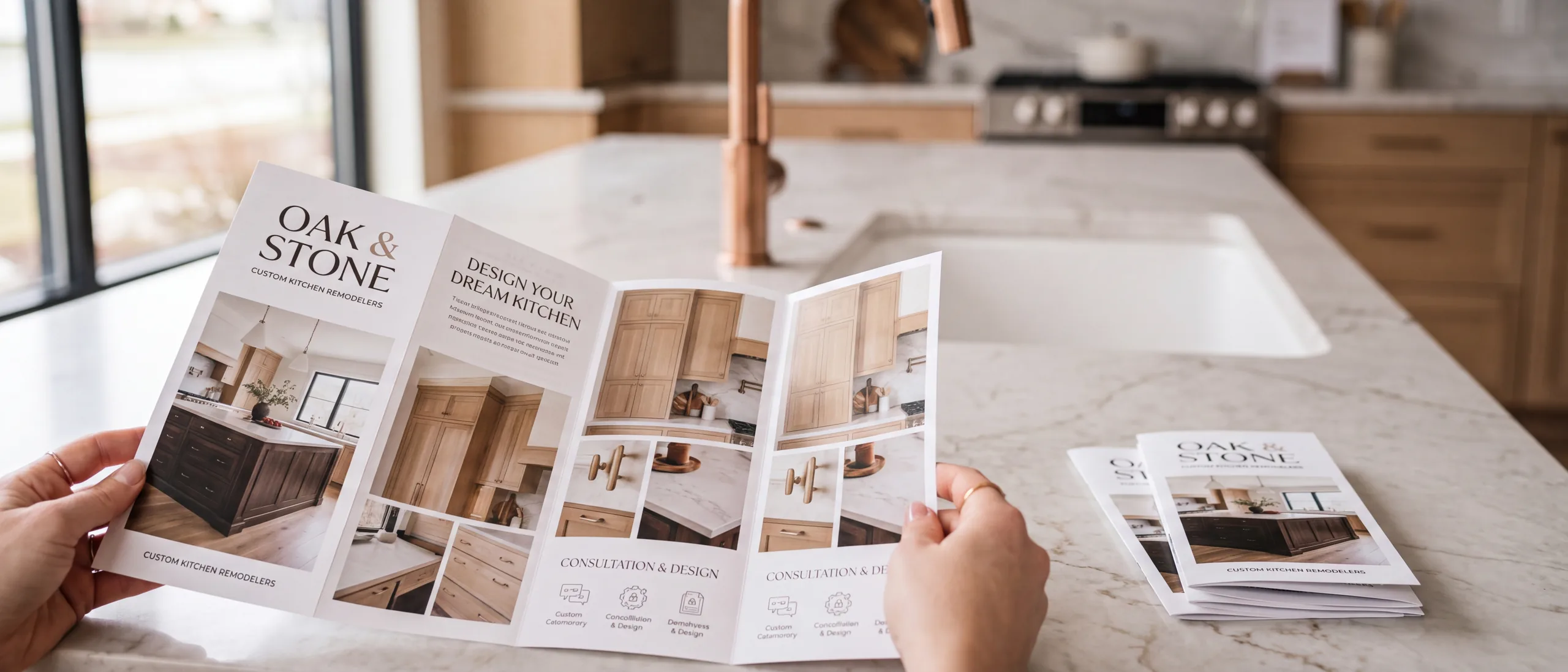
Brochure Printing Cost: Prices for 250 to 2,500 Copies
Brochure printing cost is $246.09 for 250 letter-size half-folds or trifolds on 70# text, both [...]
Read More: Brochure Printing Cost: Prices for 250 to 2,500 Copies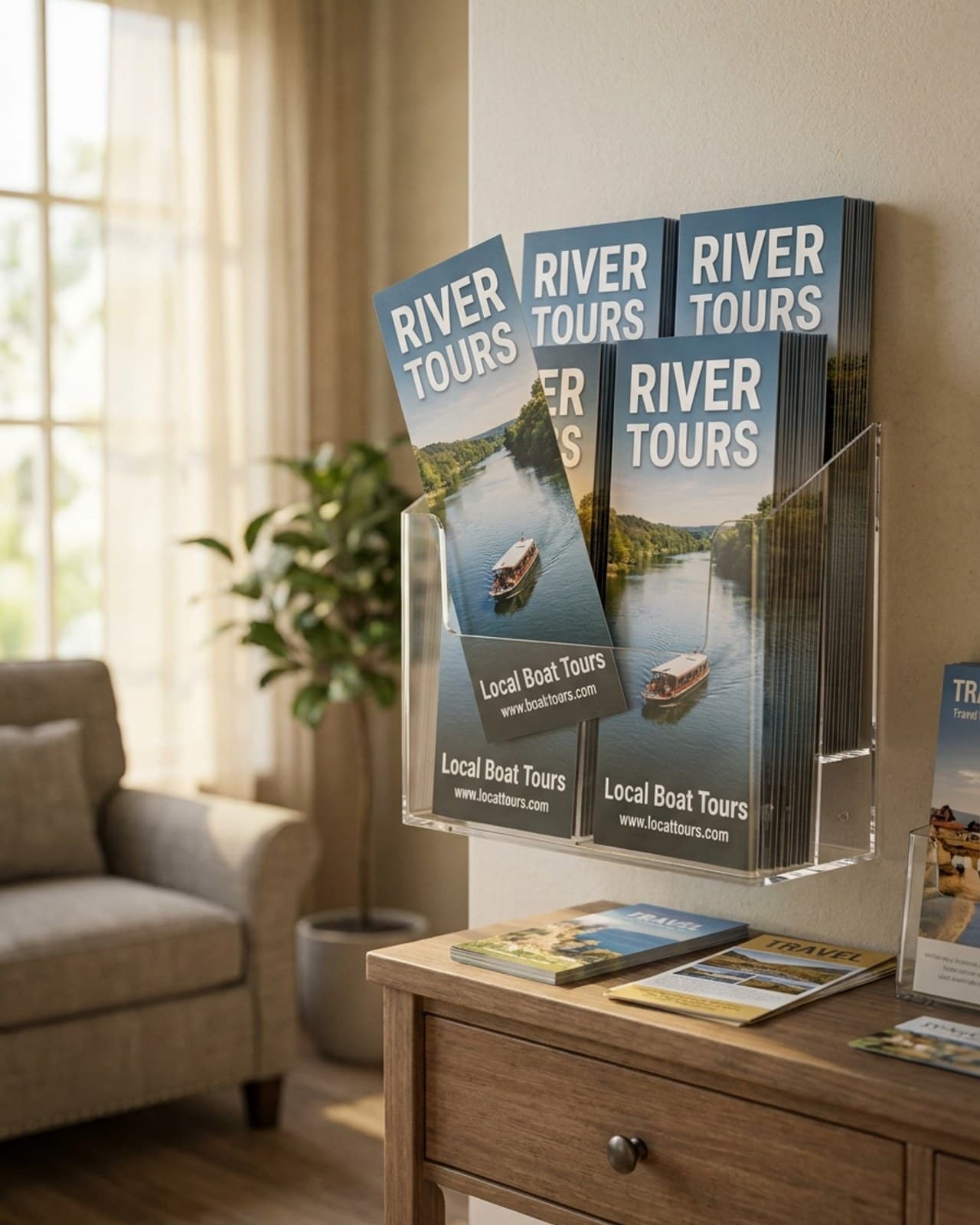
Rack Cards Cost: Prices for 250 Through 2,000 Cards
Rack cards measure 4 x 9 in and come in packs of 250 to 2,000. Compare every Cover Stock total, [...]
Read More: Rack Cards Cost: Prices for 250 Through 2,000 Cards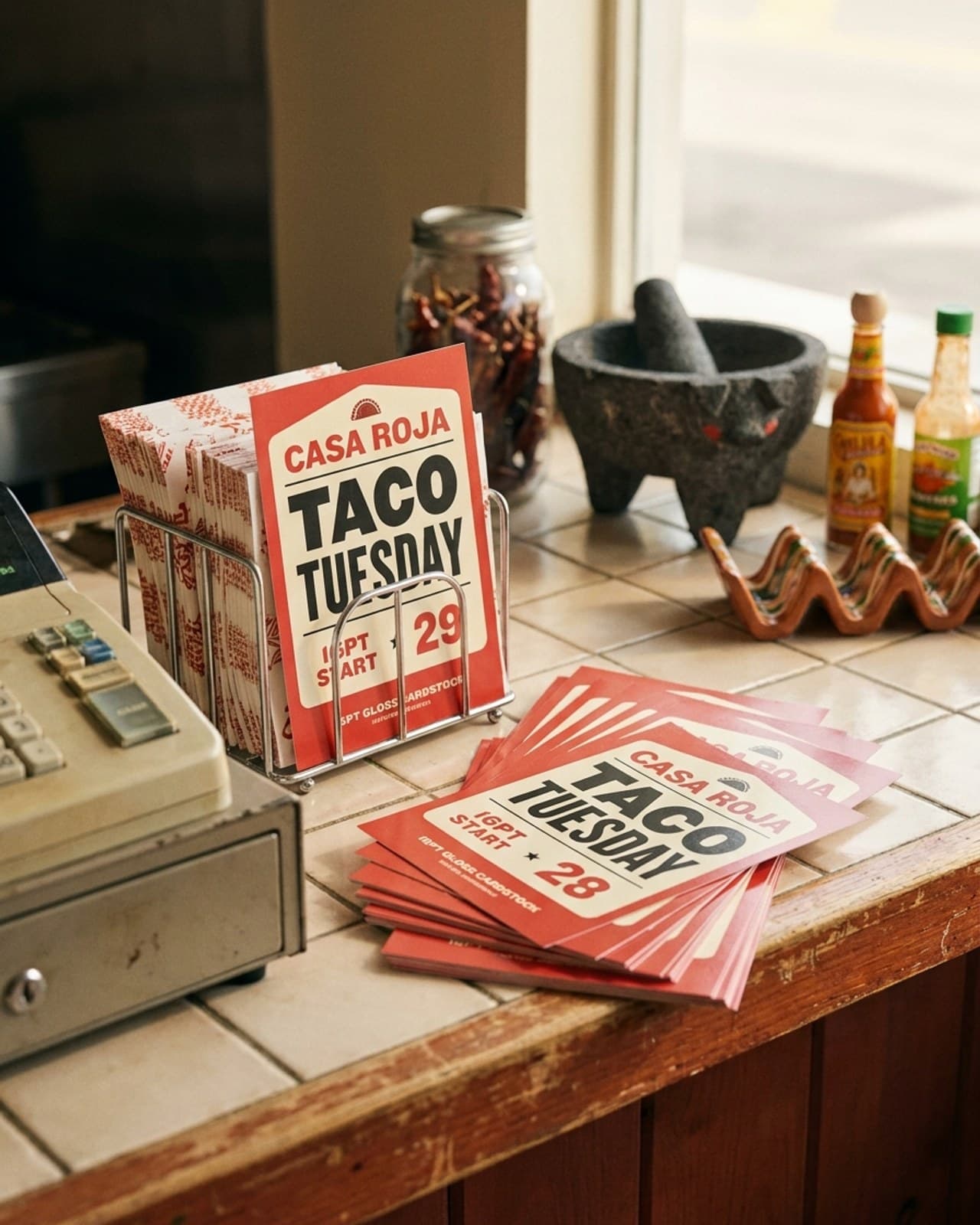
Cardstock Weight Guide: Paper, Thickness and Finishes
Business cards, flyers and postcards print on 16 pt cardstock; brochures on 70 lb text; rack [...]
Read More: Cardstock Weight Guide: Paper, Thickness and Finishes