Rack Cards Cost: Prices for 250 Through 2,000 Cards
 Tomas Amaya
October 12, 2026Updated October 16, 20269 min read

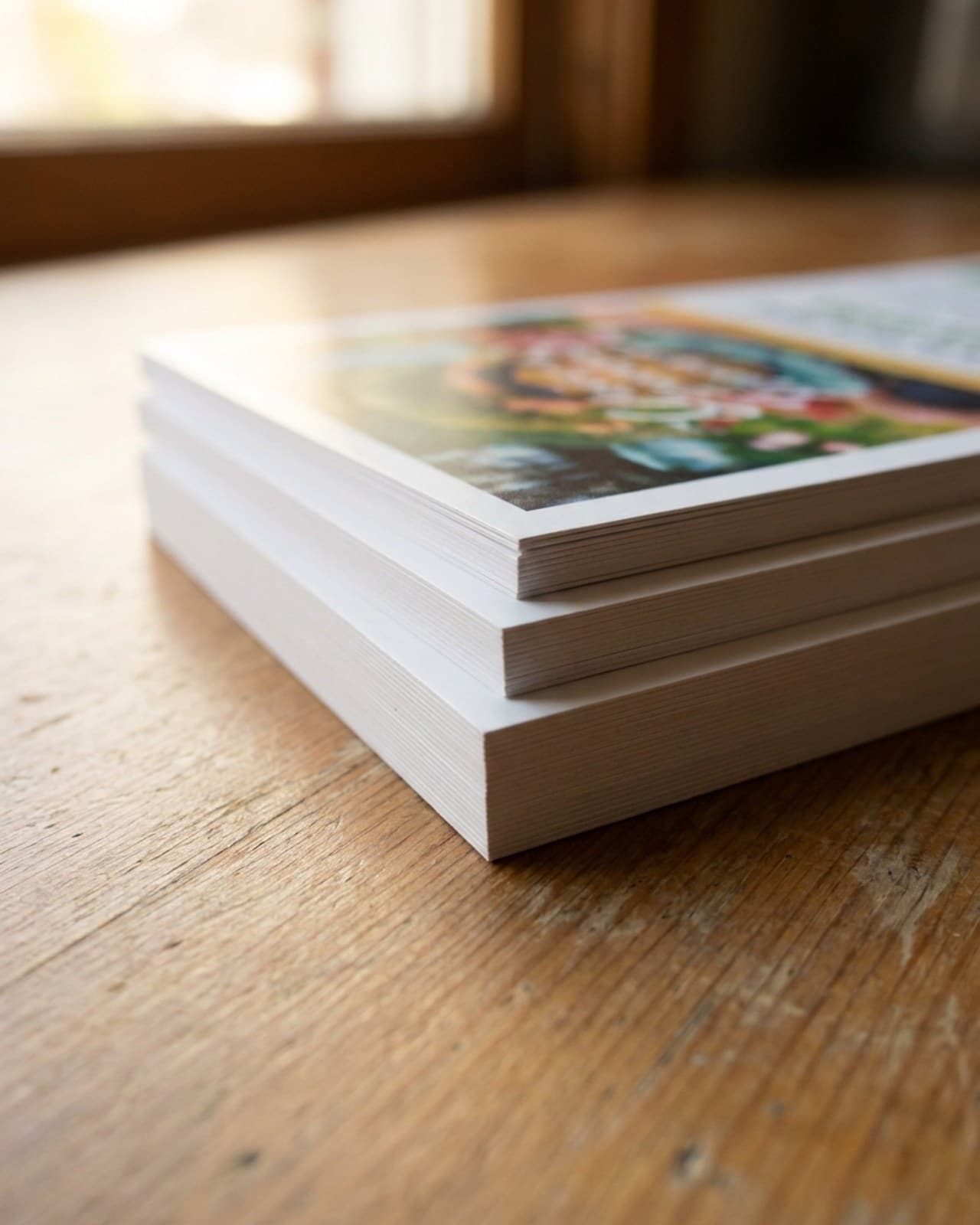
How Much Do Rack Cards Cost?
250 4 x 9 in rack cards on Cover Stock cost $203.29, and 4 x 9 in is the recommended true rack size. Printed in the USA in 3 to 5 business days after artwork approval, they ship nationwide for flat $10 shipping to any US address.
Rack cards cost $203.29 for 250, $224.69 for 500, $246.09 for 750, $267.49 for 1,000, $363.79 for 1,500, and $385.19 for 2,000. Every figure uses the same 4 x 9 in Cover Stock configuration, so the quantity is the only changing selection in the comparison.
| Quantity | Total price |
|---|---|
| 250 cards | $203.29 |
| 500 cards | $224.69 |
| 750 cards | $246.09 |
| 1,000 cards | $267.49 |
| 1,500 cards | $363.79 |
| 2,000 cards | $385.19 |
All six totals apply to 4 x 9 in cards on Cover Stock. They are complete pack prices, not single-card teasers. Keep the default size selected when comparing quantities. The 3.5 x 8.5 in alternative is a separate selection and needs its own configured total.
The same quantity choices are available on the custom rack cards product page. Use that one page for the configuration and proof workflow. The totals here should not be applied to another size or another printed format.
Why Is 4 x 9 in the Recommended Rack Card Size?
The 4 x 9 in format is recommended as a true rack card size because it makes strong use of a tall holder while giving the artwork enough width for readable headlines, photographs, and response details. It feels purpose-built for vertical browsing rather than like a narrow flyer placed into a display.
The extra half inch of width compared with 3.5 x 8.5 in may look modest on paper, but it matters when the front carries a logo, image, and headline together. Wider lines of type need fewer awkward breaks. Photographs can hold a stronger crop, and a code can sit beside contact information without squeezing both.
The 3.5 x 8.5 in size still has a place. It suits a slim design, a short message, or an existing layout already built to that proportion. Choose it when the artwork benefits from the narrow shape, not because the difference seems too small to matter.
Always test the design at the finished size. A tall layout shown large on a monitor can make small copy seem comfortable. Print a paper proof at 100 percent and place it behind another sheet to simulate the part that may be hidden in a holder. The visible top should still identify the subject immediately.
For a new layout, begin at 4 x 9 in. It is the stronger default for the product category and the configuration behind every price in this article.
What Does the Rack Card Price Include?
The rack card price includes the chosen quantity of 4 x 9 in pieces printed in full color on heavy Cover Stock, with both faces available for the message and a digital proof with every order before production. The fixed configuration keeps the price table clear and gives the design enough structure for frequent handling.
Cover Stock helps the card remain upright and presentable in a holder. It also provides a substantial feel when someone takes a copy. A tall marketing piece is often handled from the top edge, so clean trimming and sensible edge spacing matter as much as the stock itself.
Use the front to win the first glance. A strong photograph, a short headline, and one recognizable name usually do more than a dense list of features. The top portion should identify the subject even when the lower portion sits behind the holder lip or another stack of cards.
Use the back for the explanation. A short list, a simple process, a map-style diagram without place names, a code, and contact details can live there without weakening the front. Keep one obvious next step. Several equal calls to action make the reader decide what the designer should have decided.
Shipping is separate from the printed card totals. It is a flat $10 to any US address after production. The master table stays limited to the rack card totals so every quantity can be compared on the same basis.
How Many Rack Cards Should You Order?
Order enough rack cards to fill the planned holders, support the expected refill schedule, and leave a measured reserve. Count each holder, estimate its usable capacity, then decide how often someone can check and refill it. That calculation is more reliable than choosing a round quantity without a distribution plan.
The 250-card pack suits a focused rollout or a message that may change. It limits leftover pieces when staff details, offers, or schedules are still moving. It can also serve as a first run when the design is new and actual use is not yet known.
The 500-card and 750-card packs fit several active holders with a planned refill cycle. Divide the pack across the number of holders and reserve some copies for replacements or direct handouts. If the division leaves only a handful of cards per holder, the pack may be smaller than it first appears.
The 1,000-card pack works for a stable message with sustained use. The 1,500-card and 2,000-card packs fit a broad, established plan and require enough storage to keep the cards flat, clean, and dry. Large quantities make sense only when someone owns the refill process.
How Should Rack Card Artwork Be Organized?
Rack card artwork should place the identity and main promise at the top, keep the front visually simple, and use the back for details and the response path. The tall shape creates a natural reading order from headline to image to action. Good hierarchy makes that order clear without arrows or clutter.
Design the visible top first. Imagine the lower half covered by other cards or a holder. The remaining area should still show what the card is about and why someone should take it. A logo alone rarely does that. Pair the name with a plain benefit or subject line.
Choose one hero image rather than a small collage. One strong image carries farther and gives the headline room. If several services must appear, list them on the back in a clear sequence. Tiny image grids become difficult to understand at rack-card width.
Use type that remains comfortable at the finished size. Long paragraphs can look manageable when zoomed in and become tiring on paper. Break the back into short sections with descriptive headings. Keep contact details together and give the response path visible breathing room.
If a code is used, place it on a quiet background and test it from the printed paper proof. Add a short label that tells the reader what opens. A code without context asks for trust before giving a reason to scan.
Keep important content away from the edges. Thin borders close to the cut line make normal trim movement easy to notice. A borderless color field that extends fully outward or a frame pulled well inside the edge is more forgiving.
What Do We See on Rack Card Proofs?
The most common rack card proof problem is a weak top section. The name sits low, the headline begins below the holder line, or the most useful image is hidden behind the cards in front. We check the top as its own small advertisement because that is often all the reader sees first.
The second problem is body copy written like a web page. Long paragraphs fill the back, type shrinks, and the response details compete with the explanation. A rack card works better with short sections, a few useful points, and one next step. The printed piece should guide, not carry every fact.
We also see codes pushed too close to the edge or placed over textured images. Give the code clear space and test it on the proof. Confirm that it opens the intended page and that the page is comfortable on a phone. A successful scan that lands on the wrong destination is still a failed card.
Front-to-back orientation causes avoidable errors. Turn the paper proof as a reader would and confirm that the back is upright. This is especially important when the front uses a horizontal photo inside the vertical card shape.
Finally, read every phone number and web address one character at a time. Familiar information is easy to skim. A second reader who did not build the design is more likely to catch a transposed digit or missing letter.
How Long Do Rack Cards Take?
Rack cards have a production period of 3 to 5 business days after artwork approval. Proof preparation and revisions happen before that period begins, and transit follows production. A realistic schedule includes all three stages instead of treating the production range as the full time from upload to arrival.
Send organized files to protect the schedule. Include the front and back at the same finished orientation, provide original images where possible, and identify final copy clearly. If corrections are needed, return one complete list tied to the proof pages.
Do not approve until the visible top, back copy, code, phone number, web address, and orientation have been checked. A careful review is part of the schedule, not a delay outside it. One missed error across a large quantity costs more time than one extra proof pass.
Production takes 3 to 5 business days after artwork approval. The cards ship nationwide and have flat $10 shipping to any US address. Shipping time begins after production is complete.
How Do You Order Rack Cards?
Order rack cards by confirming the 4 x 9 in format, counting the distribution and refill need, and choosing the closest listed pack that covers the plan. Prepare a front that works above the holder line and a back that explains the offer and gives one clear response path.
Use the custom rack cards product page to select the quantity and upload the artwork. Keep the 4 x 9 in default selected if you are matching the totals in this article. Review another size as a separate configuration rather than assuming the same amount.
Print a paper copy of the proof at full size. Hold it behind another sheet, check the visible top, turn it over, test the code, and read every contact detail. Then compare the quantity with the actual holder count one final time.
After approval, keep the final artwork and a record of how the first run was distributed. That information makes the next quantity decision more accurate and helps preserve a consistent design when the message is updated later.
Frequently Asked Questions
250 4 x 9 in rack cards on Cover Stock cost $203.29. This is the smallest listed pack and a practical choice when the message may change or the distribution plan is focused. Review the headline, contact details, code, and both printed faces on the proof before approval.
1,000 4 x 9 in rack cards on Cover Stock cost $267.49. Use this quantity when the design is stable and there is a counted plan for the cards. Dated offers and changing staff details shorten the useful life, so keep time-sensitive information easy to update.
2,000 4 x 9 in rack cards on Cover Stock cost $385.19. It is the largest listed pack. Confirm the receiving address, storage plan, distribution count, and final artwork before approval because one missed correction will repeat across all two thousand cards.
The 4 x 9 in format is the recommended true rack size. It uses the vertical display area well and leaves enough room for a strong front and a detailed back. A 3.5 x 8.5 in choice is also available when a slimmer format better fits the artwork.
The listed prices use heavy Cover Stock cut to rack-card size and printed on both faces. The stock helps the tall piece stand neatly in a holder and survive repeated handling. These totals apply to the stated configuration, so another product or format needs its own configured price.
Production is 3 to 5 business days after artwork approval. The proof must be approved before that period begins. Shipping follows production and is a flat $10 to any US address, so the full schedule should include proof review, production, and transit rather than production alone.
Related Articles
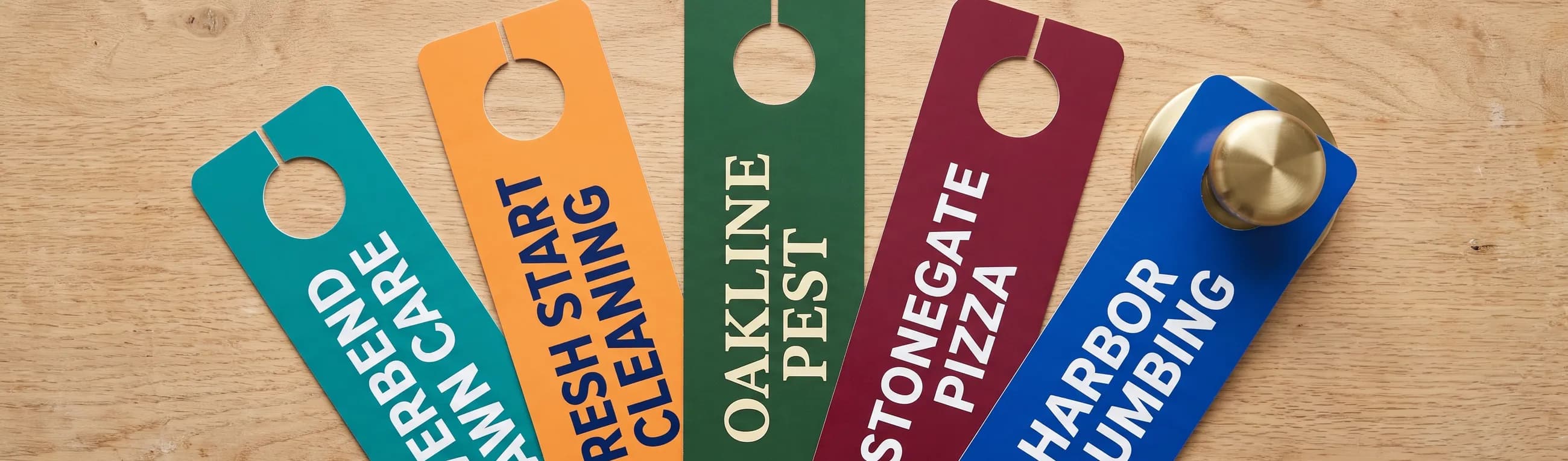
Door Hanger Sizes: 3.5x8.5 and 4.25x11 in, Die Cut Rules
Standard door hanger sizes are 3.5 x 8.5 and 4.25 x 11 inches. Compare pack prices, bleed, safe [...]
Read More: Door Hanger Sizes: 3.5x8.5 and 4.25x11 in, Die Cut Rules
Postcard Sizes: 4x6, 5x7, 6x9, Bleed and USPS Rules
Standard postcard sizes are 4 x 6, 5 x 7 and 6 x 9 inches. Retail postcard pricing ends at 4.25 [...]
Read More: Postcard Sizes: 4x6, 5x7, 6x9, Bleed and USPS Rules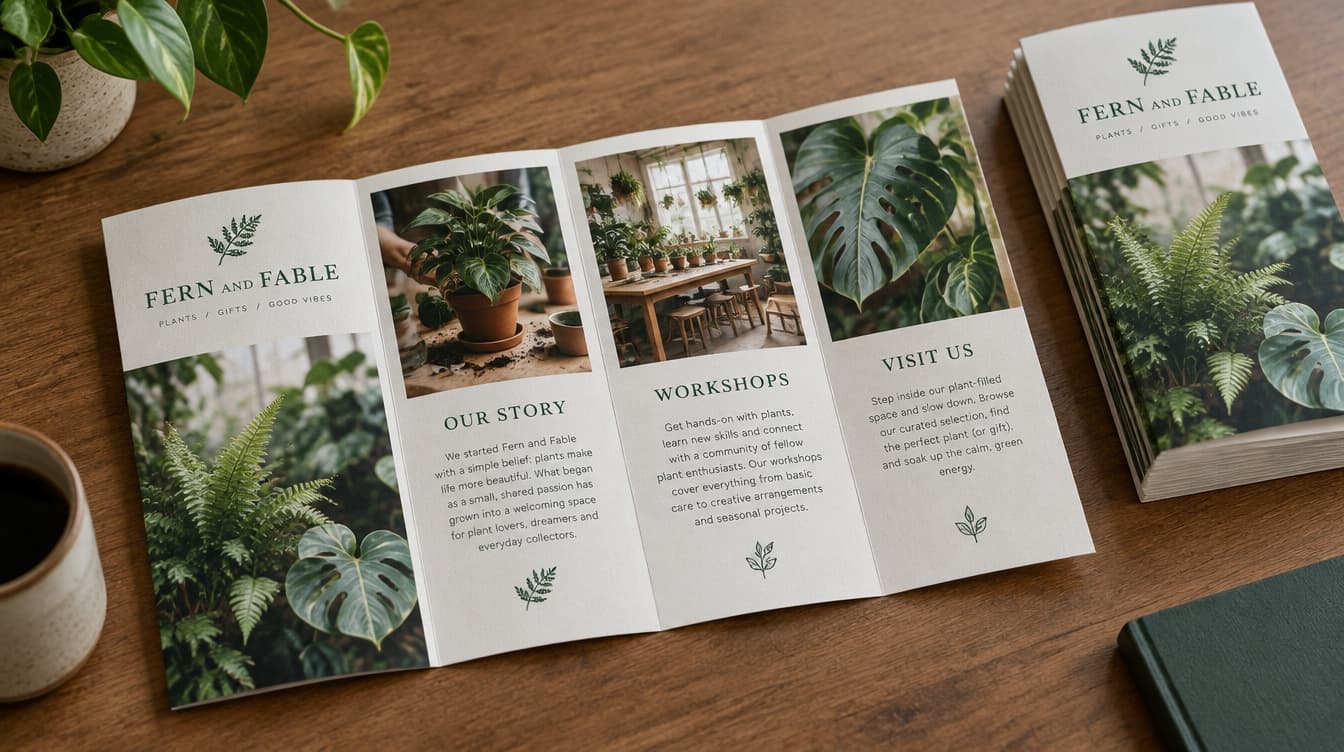
How to Make a Brochure: A Professional Print Guide
An 8.5 x 11 in brochure can use a half-fold or tri-fold, while 8.5 x 14 in supports a tri-fold. [...]
Read More: How to Make a Brochure: A Professional Print Guide
Custom Flyers Cost: Prices for 100, 250 and 500 Flyers
Custom flyers come in 100, 250, and 500 piece packs on 4 x 6 in stock. Compare every quantity, [...]
Read More: Custom Flyers Cost: Prices for 100, 250 and 500 Flyers