Custom Flyers Cost: Prices for 100, 250 and 500 Flyers
 Jean
October 12, 2026Updated October 16, 20269 min read
How Much Do Custom Flyers Cost?
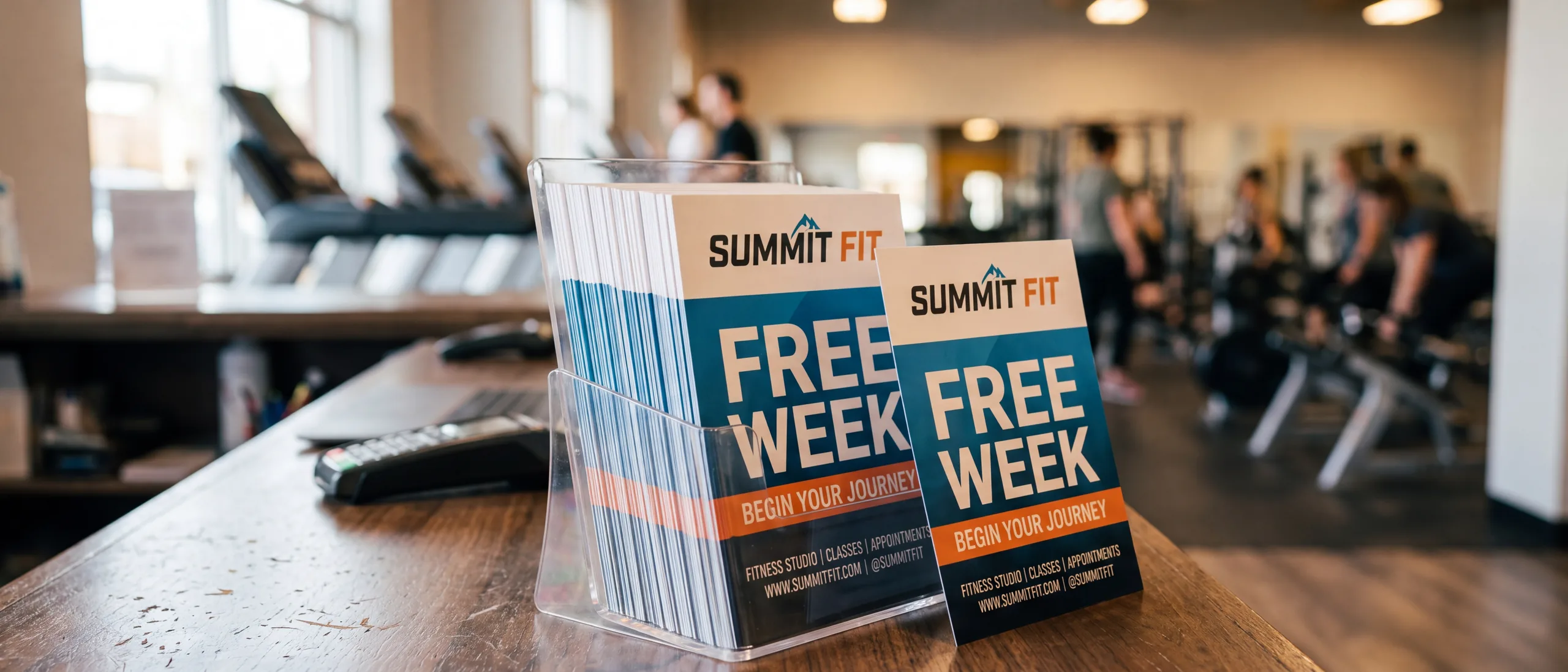
100 4 x 6 in Standard 16pt Gloss custom flyers cost $74.89, 250 cost $106.99, and 500 cost $149.79. Production takes 48 hours after artwork approval. The flyers are printed in the USA, ship nationwide, and have flat $10 shipping to any US address.
The default flyer configuration is 4 x 6 in on Standard 16pt Gloss stock. Its five available packs run from 25 to 500 pieces, and keeping both the size and stock fixed makes the totals below directly comparable.
| Quantity | Total price |
|---|---|
| 25 flyers | $53.49 |
| 50 flyers | $64.19 |
| 100 flyers | $74.89 |
| 250 flyers | $106.99 |
| 500 flyers | $149.79 |
All five totals apply to 4 x 6 in flyers on Standard 16pt Gloss stock. Larger packs, 750 to 2,500 flyers, are priced on the product page for the Premium 100# Gloss and Standard 70# Uncoated stocks. They are complete pack prices, not per-piece estimates. Keep both default selections fixed when comparing quantities, and treat another size or stock as a separate configuration.
All listed choices can be reviewed on the custom flyers product page. Other sizes and stocks should be configured there on their own terms. The dollar figures on this page should not be reused for another size, stock, or printed product.
How Should You Compare 100, 250, and 500 Flyers?
Compare 100, 250, and 500 flyers by matching each pack to a counted distribution plan, not by choosing the largest number automatically. The three totals are $74.89, $106.99, and $149.79. The useful pack is the one that covers the intended handouts plus a sensible reserve without leaving dated pieces unused.
A 100-flyer pack fits a short list or a focused handout. It is easier to review and store, and it reduces waste when the offer, date, staff, or contact line could change soon. A small quantity is not a failure to plan when the message itself has a short life.
A 250-flyer pack gives more room for repeated use. It can support several handout periods, inserts placed into outgoing orders, or a team sharing one printed message. Before selecting it, assign an approximate count to each use. A plan with no counts often consumes the first stack quickly and leaves the remainder untouched.
A 500-flyer pack works when the message is settled and the handout schedule is broad enough to use it. Check whether the design contains dates, prices, staff names, limited offers, or codes that could expire. Evergreen service information has a longer useful life than a one-week promotion.
What Does the Listed Flyer Price Include?
The listed flyer price includes the selected quantity of 4 x 6 in pieces printed in full color on Standard 16pt Gloss stock, plus a digital proof before production. The proof lets you review the headline, image crop, offer details, contact information, and overall reading order at the finished proportions.
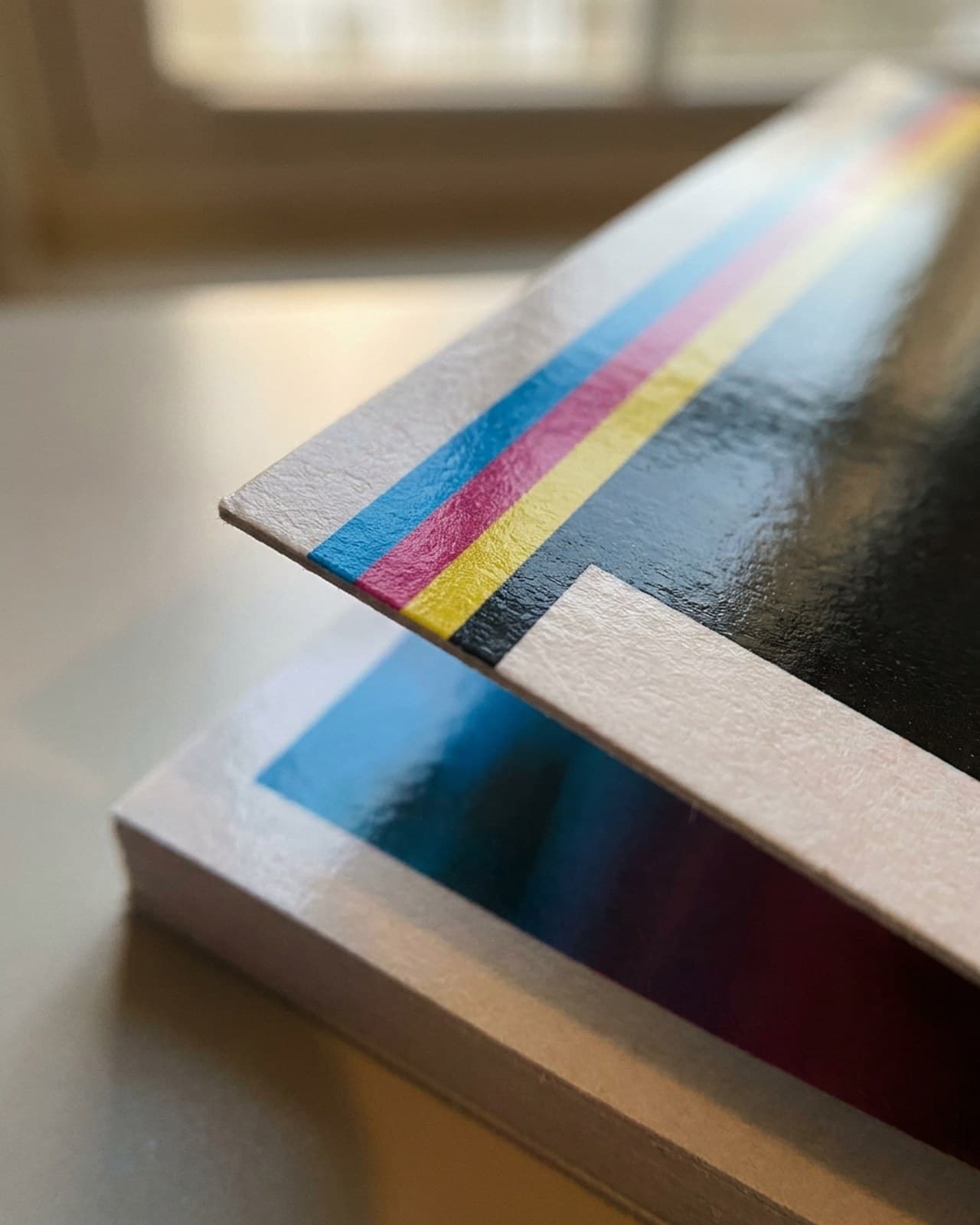
Standard 16pt Gloss is a sturdy flyer stock rather than a thin text sheet. It gives a handout more body and helps rich color and photography reproduce with a polished surface. That makes it useful when the flyer should feel like a lasting marketing piece instead of a disposable notice.
The printed size is compact enough for one clear idea. It can carry a strong photograph, a direct headline, short supporting copy, and one response path. Trying to fit a full brochure onto the card usually creates small type and a weak hierarchy. If the message needs several sections, a larger flyer size may fit better.
The price does not turn every stock into the same product. Premium 100# Gloss and Standard 70# Uncoated are distinct choices. They may suit different artwork or writing needs, but they are not priced here. Keep this article tied to the default stock so the quantity totals remain honest.
Shipping is a separate flat $10 to any US address. It is not included in any printed pack total.
How Do Flyer Size and Stock Affect the Decision?
Flyer size and stock affect how much information fits, how the piece feels in a hand, and how the artwork should be organized. The default used for every listed total is 4 x 6 in Standard 16pt Gloss. Larger sizes add room, while another stock changes the surface and writing behavior.
The available Standard 16pt Gloss sizes include 4 x 6, 5 x 7, 6 x 9, and 8.5 x 11 in. A 4 x 6 flyer works best for a focused message. A 5 x 7 format allows a little more explanation. A 6 x 9 or 8.5 x 11 piece can support sections, schedules, lists, or several images without shrinking the type.
Do not select a larger size only to add more copy. Start with the action the reader should take, then keep only the information needed to support that action. A spacious small flyer can read more confidently than a crowded large sheet. Size is a tool for hierarchy, not permission to include every detail.
Gloss supports saturated color, sharp product photography, and strong contrast. Standard 70# Uncoated can suit a piece that needs a softer surface or room for handwriting. Premium 100# Gloss is another separate option. Since this page quotes only Standard 16pt Gloss, review the configured total before changing stock.
How Should a Custom Flyer Be Designed?
A custom flyer should lead with one clear promise, support it with a strong image or short explanation, and end with one obvious response path. A reader should understand the subject in a quick glance. The design can be colorful, but every visual element should help the message arrive faster.
Write the headline before arranging the page. If the headline cannot state the main value in one line, the offer may still be too broad. Place it where the eye lands first, then use the next largest element for the proof, feature, or image that supports it.
Keep contact information together. A phone number, web address, code, and social handle scattered into different corners compete with each other. Choose the response path that best matches the offer and make it easy to find. Secondary contact details can be smaller without becoming tiny.
Use contrast for reading, not decoration. Light text over a busy photograph often disappears in print even when it looks dramatic on a bright screen. Add a solid area behind the copy, darken the image where the text sits, or move the words to quieter space. Readability has to survive normal lighting and a quick handoff.
Leave comfortable margins around names, dates, and response details. A border close to the cut edge makes minor trim movement more visible. Pulling the border inward or letting color run cleanly beyond the edge creates a more forgiving design.
What Do We See on Custom Flyer Proofs?
The most common custom flyer proof issue is too much information competing at the same size. The headline, offer, service list, date, contact line, and code all appear bold, so nothing becomes the first thing to read. Reducing two or three elements usually improves the design more than adding another effect.
We also see low-resolution logos pulled from a screenshot. They may look acceptable at phone size and become soft or jagged in print. An original vector or high-resolution file is better. When no better file exists, the proof should be reviewed at the intended print size rather than only as a full-screen preview.
Codes need quiet space and enough physical size to scan reliably. Placing one over a photograph, crowding it with text, or stretching it can make the response path fail. Test the proof from another phone before approval and confirm that it opens the intended destination.
Dates and contact details deserve a separate reading pass. Look at each digit in the phone number, each character in the web address, and every date. A beautiful flyer with one wrong digit is still unusable. Ask a second reader to check facts without focusing on the design.
Finally, check the back if artwork is supplied for both faces. Make sure the orientation matches the front and that the reader will not have to rotate the piece unexpectedly. The proof is the final chance to correct that relationship before production begins.
How Long Do Custom Flyers Take?
Custom flyers have a 48-hour production period after artwork approval. The production clock starts only when the digital proof is approved. File review, corrections, and the time spent waiting for approval happen before production, while shipping begins after the printed pieces are complete.
Organized artwork protects the schedule. Send the highest-resolution logo and photographs available, identify the final copy, and provide one consolidated correction list after reviewing the proof. Several small correction messages are harder to track than one complete set of marked changes.
Do not approve a proof simply to start the clock. Confirm the quantity, finished size, stock, orientation, dates, contact details, and response path first. A corrected proof approved a little later is safer than an early approval that sends an error into every copy.
Production takes 48 hours after artwork approval. The flyers ship nationwide and have flat $10 shipping to any US address. Transit time follows the production period, so plan the order around proof approval rather than the first upload.
How Do You Order Custom Flyers?
Order custom flyers by choosing the distribution count first, then selecting the finished size and stock that fit the message. For the exact totals on this page, keep 4 x 6 in and Standard 16pt Gloss selected. Choose one of the listed quantities and prepare the strongest available artwork.
Use the custom flyers product page to configure the order and upload the file. The proof should be reviewed at the finished proportions, with special attention to small type, image sharpness, dates, contact details, and any code or web address.
Count the handout plan one more time before approval. Separate the needed pieces by use, then add a reserve for replacements or a planned second round. If the total does not reach the next pack in a useful way, choose the smaller quantity and keep the message current.
After the proof is approved, save the final copy and artwork with a clear date. That record makes a later repeat easier and helps prevent an old offer from being printed again after the message changes.
Frequently Asked Questions
100 4 x 6 in custom flyers on Standard 16pt Gloss cost $74.89. This price applies to the default size and stock named here. Use the pack when the distribution list is close to one hundred people and there is little value in holding a large reserve.
250 4 x 6 in custom flyers on Standard 16pt Gloss cost $106.99. Count the intended handouts before ordering and leave a modest reserve for follow-up use. If the design contains a date or a limited offer, avoid buying more than can be distributed while it remains accurate.
500 4 x 6 in custom flyers on Standard 16pt Gloss cost $149.79. This pack fits a broad, planned distribution when the headline, offer, dates, and contact details are settled. Review every repeated detail on the proof because one missed correction appears on all five hundred pieces.
The Standard 16pt Gloss flyer sizes are 4 x 6, 5 x 7, 6 x 9, and 8.5 x 11 in. The listed totals on this page apply only to the 4 x 6 in default. Price another size through its own configured selection rather than reusing these totals.
16pt Gloss is the Standard cardstock used for the listed prices, with a full-color gloss finish. Premium 100# Gloss and Standard 70# Uncoated are separate stock choices, but their prices are not quoted on this page. Compare stock by the intended look, writing needs, and handling rather than by name alone.
Production takes 48 hours after artwork approval. The digital proof must be approved before that clock begins. Shipping follows production and is a flat $10 to any US address, so add transit time when planning when the flyers must be in hand and ready to distribute.
Related Articles
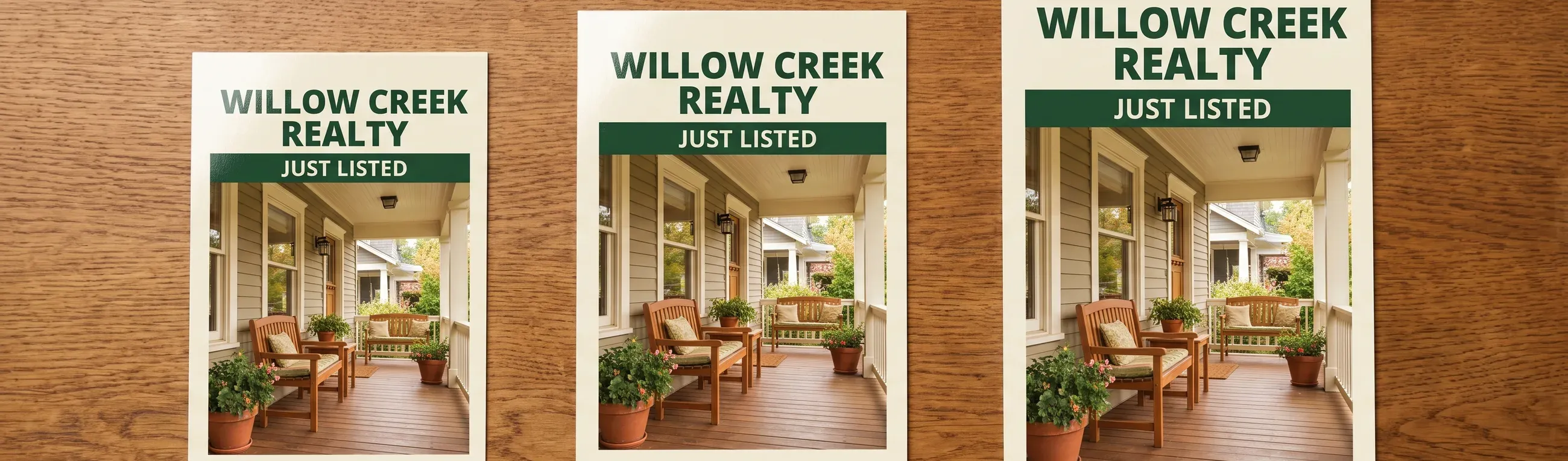
Postcard Sizes: 4x6, 5x7, 6x9, Bleed and USPS Rules
Standard postcard sizes are 4 x 6, 5 x 7 and 6 x 9 inches. Retail postcard pricing ends at 4.25 [...]
Read More: Postcard Sizes: 4x6, 5x7, 6x9, Bleed and USPS Rules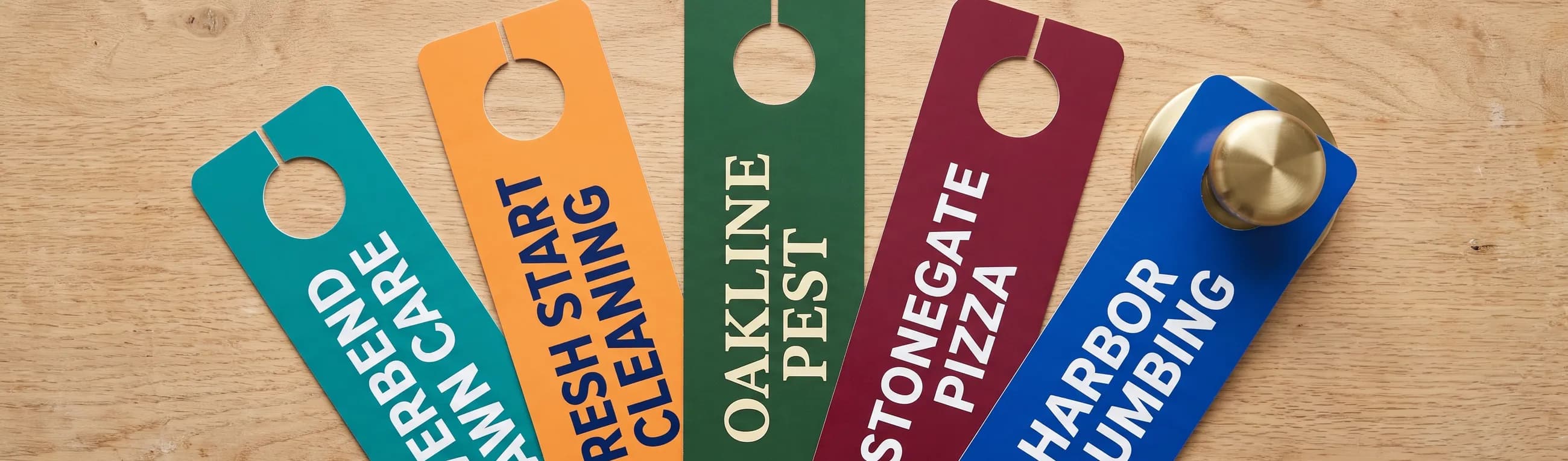
Door Hanger Sizes: 3.5x8.5 and 4.25x11 in, Die Cut Rules
Standard door hanger sizes are 3.5 x 8.5 and 4.25 x 11 inches. Compare pack prices, bleed, safe [...]
Read More: Door Hanger Sizes: 3.5x8.5 and 4.25x11 in, Die Cut Rules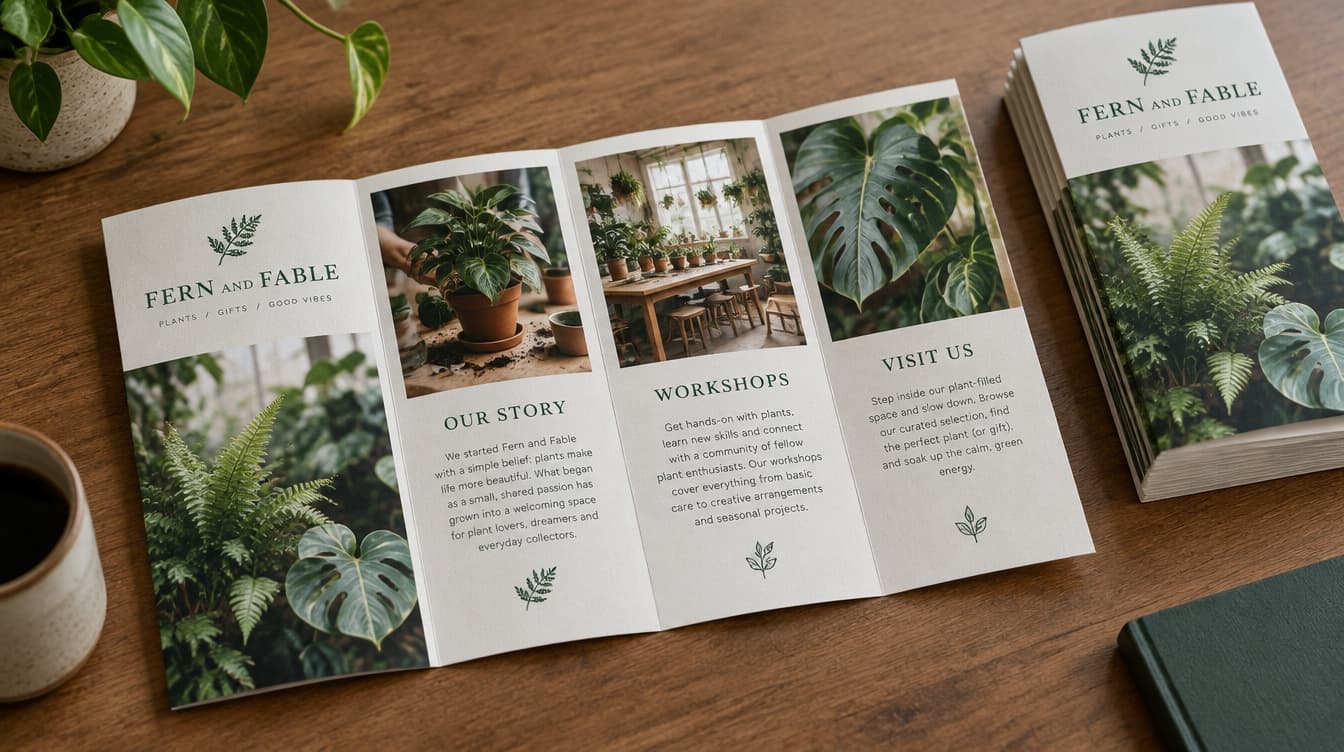
How to Make a Brochure: A Professional Print Guide
An 8.5 x 11 in brochure can use a half-fold or tri-fold, while 8.5 x 14 in supports a tri-fold. [...]
Read More: How to Make a Brochure: A Professional Print Guide
Custom Posters Cost: Prices for 10 Through 250 Posters
Custom posters measure 12 x 18 in and come in packs of 10 to 250. Compare every 16pt Gloss [...]
Read More: Custom Posters Cost: Prices for 10 Through 250 Posters