Custom Posters Cost: Prices for 10 Through 250 Posters
 Daniel
October 12, 2026Updated October 16, 20269 min read
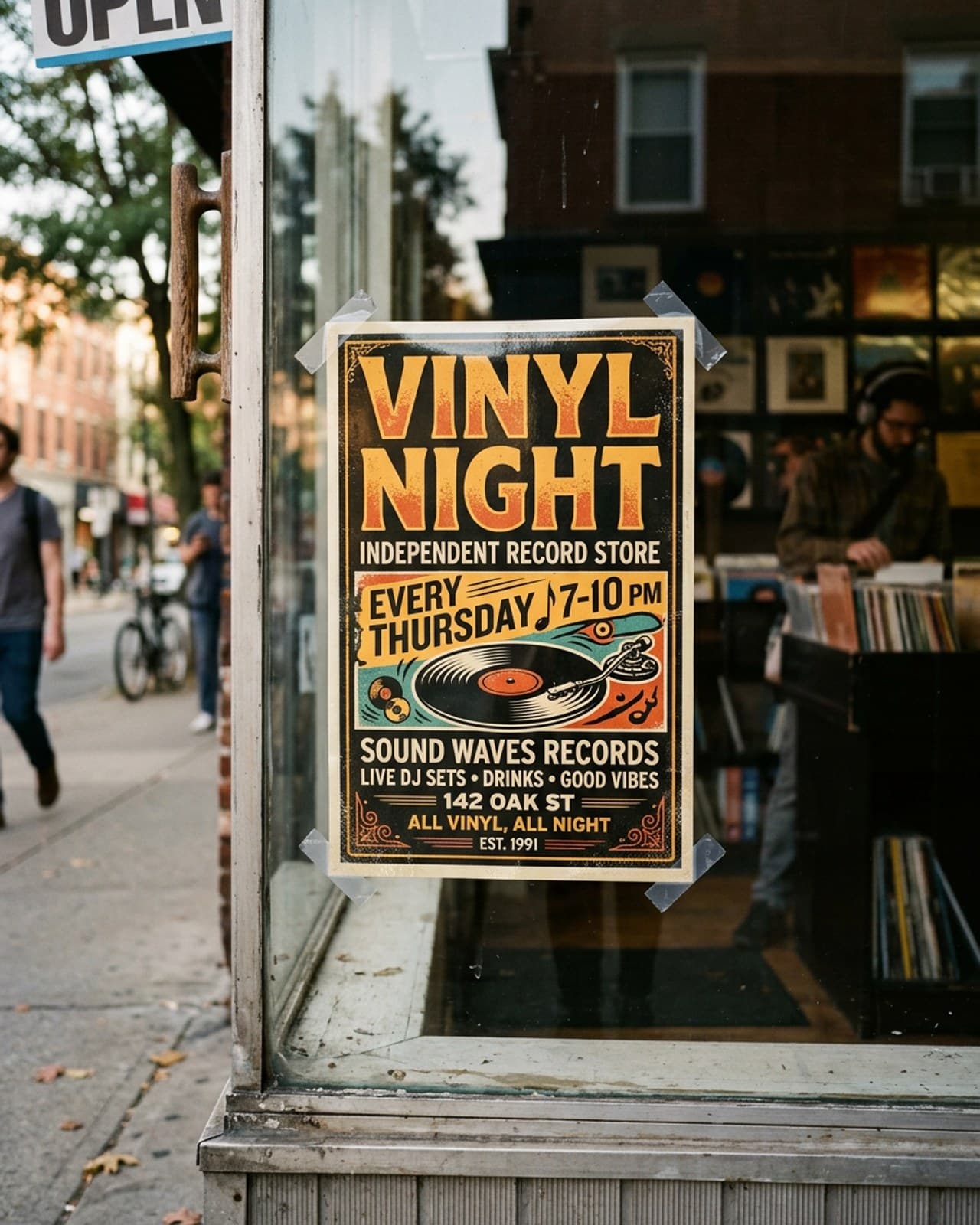
How Much Do Custom Posters Cost?
10 custom 12 x 18 in posters on 16pt Gloss cost $74.89. Production takes 48 hours after artwork approval. The posters are printed in the USA, ship nationwide, and have flat $10 shipping to any US address. Packs of 25, 50, 100, and 250 are also available.
Custom posters cost $74.89 for 10, $106.99 for 25, $160.49 for 50, $246.09 for 100, and $545.69 for 250. Every total uses the same 12 x 18 in 16pt Gloss configuration. The quantity is the only changing selection, so the figures compare matching printed posters.
| Quantity | Total price |
|---|---|
| 10 posters | $74.89 |
| 25 posters | $106.99 |
| 50 posters | $160.49 |
| 100 posters | $246.09 |
| 250 posters | $545.69 |
All five totals apply to 16pt Gloss (Standard Sizes), and the four sizes on that stock, 12 x 18, 14 x 11, 16 x 12, and 17 x 11 in, share one price ladder, so 25 posters at 14 x 11 in cost the same $106.99 as 25 at 12 x 18 in. The same product also runs 16pt Gloss (Oversized) at 18 x 28 or 20 x 16 in, printed one per sheet on the same stock, with its own ladder: $96.29 for 10, $160.49 for 25, $246.09 for 50, $427.99 for 100, and $1,005.79 for 250.
Use the custom posters product page to choose a pack and upload the artwork. Pick any of the four standard sizes on that page and the table above holds. Pick an oversized size and the oversized ladder applies instead.
What Does the Custom Poster Price Include?
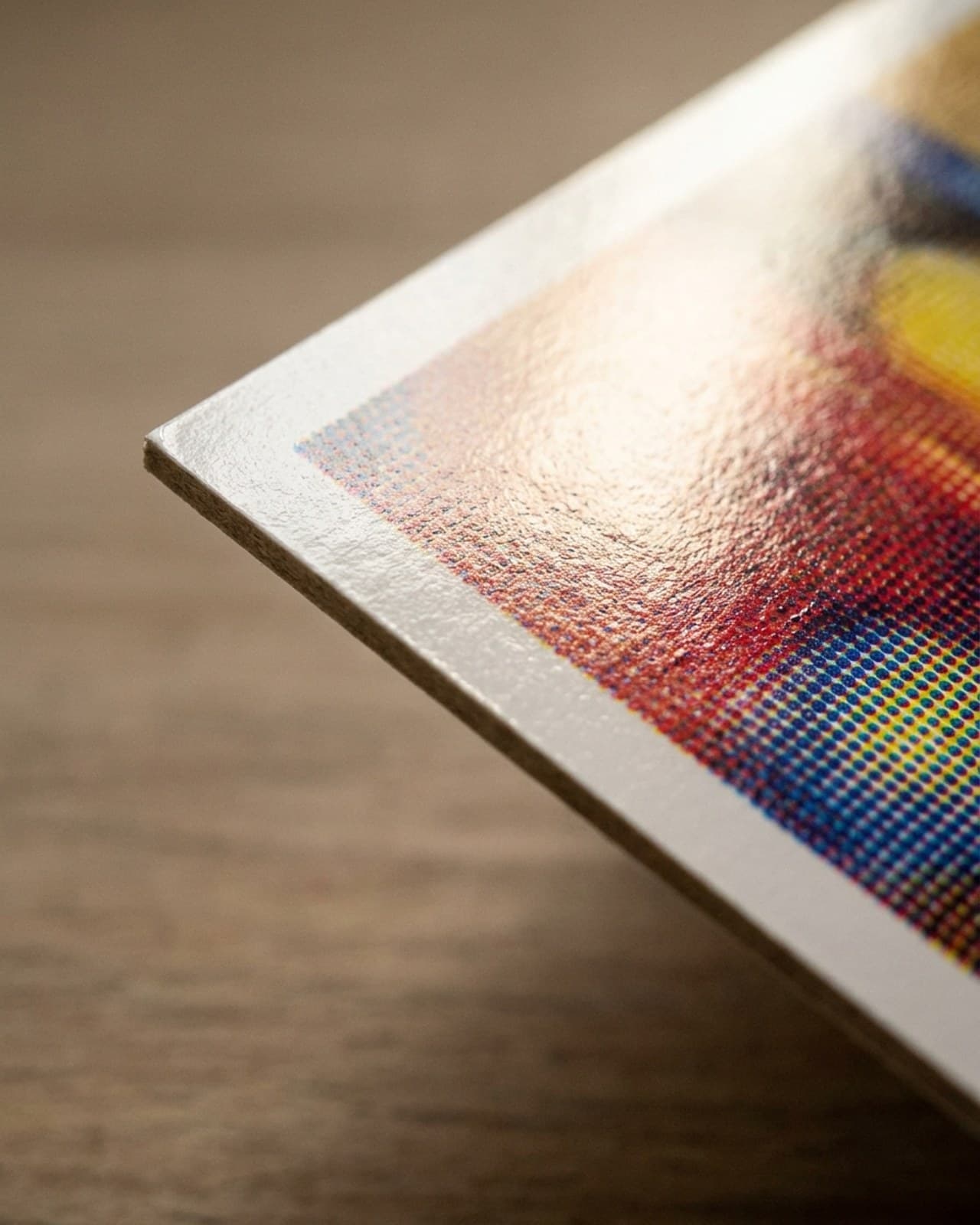
The custom poster price includes the selected quantity of standard-size pieces, 12 x 18 in by default, printed in full color on 16pt Gloss, plus a digital proof with every order before production. The stock has the body of a card-style marketing print and a gloss surface that supports saturated color, photography, and bold type.
These posters are well suited to close-range displays in windows, on boards, in frames, and on easels. The 16pt stock is more substantial than lightweight paper and handles repeated placement more confidently. It is still a printed sheet, so storage and handling should protect the edges and surface.
The digital proof shows the artwork at the chosen proportion. Use it to check image crops, headline scale, small copy, border spacing, dates, contact details, and codes. A proof can reveal composition and print preparation, but it cannot restore detail missing from a low-resolution source image.
The price is tied to the 16pt Gloss (Standard Sizes) stock. Switching among its four sizes changes nothing on the total, while switching the stock to 16pt Gloss (Oversized) moves the order to the oversized ladder on the same product. Posters 18 x 24 in and larger are a separate large format poster product and are not priced here.
Shipping is separate from the poster total and is a flat $10 to any US address. It is not included in any printed pack total.
Which Poster Quantity Should You Choose?
Choose a poster quantity by counting every planned display, adding a measured replacement reserve, and deciding how long the message will remain accurate. A pack of 10 or 25 fits a focused plan, while 50, 100, or 250 requires broader distribution and more confidence that the artwork will stay current.
Ten posters work for a small set of displays or a message still being tested. The quantity leaves little room for waste, which is useful when dates, staff names, or offers may change. It also makes it easier to compare how different placements perform before committing to a larger run.
Twenty-five or fifty posters fit a coordinated rollout with replacements. Write down each intended display and assign a copy to it. Then decide how many spares are needed for damaged edges, changed arrangements, or later use. A named reserve is more reliable than adding an arbitrary percentage.
One hundred posters suit a stable message and a broad distribution plan. Two hundred fifty suit a repeatable program with enough storage and someone responsible for managing the copies. Large packs can be efficient only when the pieces are actually placed and the information remains true.
Which Standard Poster Size Works Best?
The best standard poster size depends on the artwork proportion, viewing distance, available display area, and amount of copy. The 16pt Gloss (Standard Sizes) choices are 12 x 18, 14 x 11, 16 x 12, and 17 x 11 in. All four share the price table above, and 12 x 18 in is the default selection.
The 12 x 18 in format gives a strong vertical shape. It works for a headline, one dominant image, a few supporting lines, and one clear response path. A horizontal 18 x 12 orientation can use the same proportions when the image or display area favors width.
The 14 x 11 and 16 x 12 in choices are closer to familiar document and photo proportions. They can suit horizontal artwork, framed information, or a composition with two balanced areas. The 17 x 11 in choice creates a wider strip that can support panoramic artwork or a short left-to-right sequence.
Choose the size after measuring the display area. A design can look large on a monitor and feel modest once placed behind glass or beside other printed pieces. Make a paper outline at the finished dimensions and hold it in position before building the final artwork.
The oversized choices, 18 x 28 and 20 x 16 in, sit on the same product under the 16pt Gloss (Oversized) stock and carry the oversized ladder listed above. They print one per sheet and suit a display read from across a room rather than at arm's length.
How Should Custom Poster Artwork Be Prepared?
Custom poster artwork should use a strong headline, one dominant visual, comfortable edge spacing, and image resolution suited to the 12 x 18 in finished size. Build the file at the correct proportion from the start. Enlarging a small square image into a tall poster usually forces a weak crop or visible softness.
Start with the intended viewing distance. If the poster must communicate from several steps away, the headline should do most of the work. Keep it short, make the contrast unmistakable, and place it away from busy parts of the image. Supporting details can be smaller but should remain readable at the real size.
Use original images whenever possible. A picture copied from a website or screenshot may contain too few pixels for a clean poster. The proof can show that the image is soft, but the best correction is a stronger source file. Sharpening cannot create details that were never captured.
Let background color and photos extend cleanly to the outer edge when the design calls for full coverage. Keep names, dates, codes, and contact details comfortably inward. Thin borders close to the cut line make normal trim movement easier to notice and can look uneven on the finished piece.
Use one response path. A large phone number, code, web address, and several social handles all fighting for attention weaken the design. Decide what action matters most, then support it with a brief label that tells the reader what happens next.
Check color with reasonable expectations. A bright monitor emits light, while a printed poster reflects it. Extremely luminous blues, greens, and reds may appear more restrained on paper. The proof should be judged for hierarchy and prepared color, not as a promise that paper will glow like a screen.
What Do We See on Custom Poster Proofs?
The most common custom poster proof problem is a source image that looked sharp at phone size and becomes soft at 12 x 18 in. Faces, logos, and fine product details reveal the weakness first. We ask for the original file when one exists because a better source is the cleanest fix.
We also see too much small copy. The large canvas tempts people to add a full paragraph, long list, several offers, and every contact method. At viewing distance, that material becomes texture instead of information. Cutting the copy often improves the poster more than increasing the type slightly.
Borders are another frequent issue. A thin frame close to the edge makes a small cut shift visible. Pull the frame well inward, make it intentionally thick, or remove it and let the background run outward. The goal is a design that remains balanced after normal trimming.
Codes need clear space and enough physical size. Test the code from a printed proof at the distance a reader will use. Confirm that it opens the correct destination and that the destination works on a phone. A code that scans only from a perfect angle is not ready.
Finally, verify dates, prices, phone numbers, web addresses, and orientation. Ask a second reader to check the facts without commenting on the design. Familiar text is easy to read as intended rather than as printed.
How Long Do Custom Posters Take?
Custom posters have a 48-hour production period after artwork approval. File review and proof corrections happen before that period, while shipping begins after production. The useful planning date is therefore the day the correct proof is approved, not the day the first file is uploaded.
Send the highest-resolution artwork available and identify the finished orientation clearly. Include final copy in one place so there is no question about which version is current. If proof changes are needed, return one complete list tied to the visible pages or areas.
Do not approve until the size, quantity, image quality, border spacing, dates, contact details, and code have been checked. A careful approval protects every copy in the pack. The larger the quantity, the more valuable that final review becomes.
Production takes 48 hours after artwork approval. The posters ship nationwide and have flat $10 shipping to any US address. Transit comes after production and should be included in the full schedule.
How Do You Order Custom Posters?
Order custom posters by measuring the display area, choosing one of the four standard sizes, counting the needed copies, and selecting the closest listed pack that covers the plan. Prepare the artwork at the final proportion and gather original images, logos, and final copy before upload.
Use the custom posters product page to choose the quantity and upload the design. Keep 16pt Gloss (Standard Sizes) selected when matching the prices in this article; any of its four sizes returns the same totals. Switching to 16pt Gloss (Oversized) moves the order to that stock's own ladder.
Once the proof is correct, approve it and save the final artwork with the finished size in the filename. That simple record makes a later matching run easier and helps prevent an older version from being printed after the message changes.
Frequently Asked Questions
10 custom 12 x 18 in posters on 16pt Gloss cost $74.89. This is the smallest listed pack and fits a focused display plan or a new message that may change. Count each intended display plus replacements before selecting the quantity and approving the artwork.
25 custom 12 x 18 in posters on 16pt Gloss cost $106.99. The quantity can support several matching displays plus a reserve. Keep stored copies flat and clean, and avoid printing time-sensitive information in a quantity that will outlast the offer or schedule.
100 custom 12 x 18 in posters on 16pt Gloss cost $246.09. Use this pack when the artwork is stable and the distribution count is known. Check every repeated date, code, phone number, and web address because one overlooked correction will appear on all one hundred pieces.
250 custom 12 x 18 in posters on 16pt Gloss cost $545.69. It is the largest listed pack for the default configuration. Choose it only with a clear distribution and storage plan, plus artwork that will remain accurate long enough to use the full quantity.
12 x 18, 14 x 11, 16 x 12, and 17 x 11 in are available on the 16pt Gloss (Standard Sizes) stock, and all four share one price ladder, so the totals on this page apply to any of them. The same product also offers 16pt Gloss (Oversized) at 18 x 28 or 20 x 16 in, which has its own higher ladder starting at $96.29 for 10 posters.
Production takes 48 hours after artwork approval. Proof preparation and corrections happen before that period begins. Shipping follows production and is a flat $10 to any US address, so the complete schedule should include proof review, production, and transit time.
Related Articles
Poster Sizes: 11x17, 18x24, 24x36, Bleed and Pixels
Standard poster sizes are 11 x 17, 18 x 24 and 24 x 36 inches. Get bleed, safe zones, pixel [...]
Read More: Poster Sizes: 11x17, 18x24, 24x36, Bleed and Pixels
Postcard Sizes: 4x6, 5x7, 6x9, Bleed and USPS Rules
Standard postcard sizes are 4 x 6, 5 x 7 and 6 x 9 inches. Retail postcard pricing ends at 4.25 [...]
Read More: Postcard Sizes: 4x6, 5x7, 6x9, Bleed and USPS Rules
Door Hanger Sizes: 3.5x8.5 and 4.25x11 in, Die Cut Rules
Standard door hanger sizes are 3.5 x 8.5 and 4.25 x 11 inches. Compare pack prices, bleed, safe [...]
Read More: Door Hanger Sizes: 3.5x8.5 and 4.25x11 in, Die Cut Rules
Custom Flyers Cost: Prices for 100, 250 and 500 Flyers
Custom flyers come in 100, 250, and 500 piece packs on 4 x 6 in stock. Compare every quantity, [...]
Read More: Custom Flyers Cost: Prices for 100, 250 and 500 Flyers