Cardstock Weight Guide: Paper, Thickness and Finishes
 Daniel
October 31, 2026Updated November 3, 20268 min read
Which Paper Stock Does Each Product Use?
Business cards, flyers and postcards print on 16 pt gloss cardstock, brochures on 70 lb text stock, and rack cards, door hangers and table tents on cover stock. 50 double-sided cards start at $53.49, printed in the USA in 48 hours with flat $10 shipping.
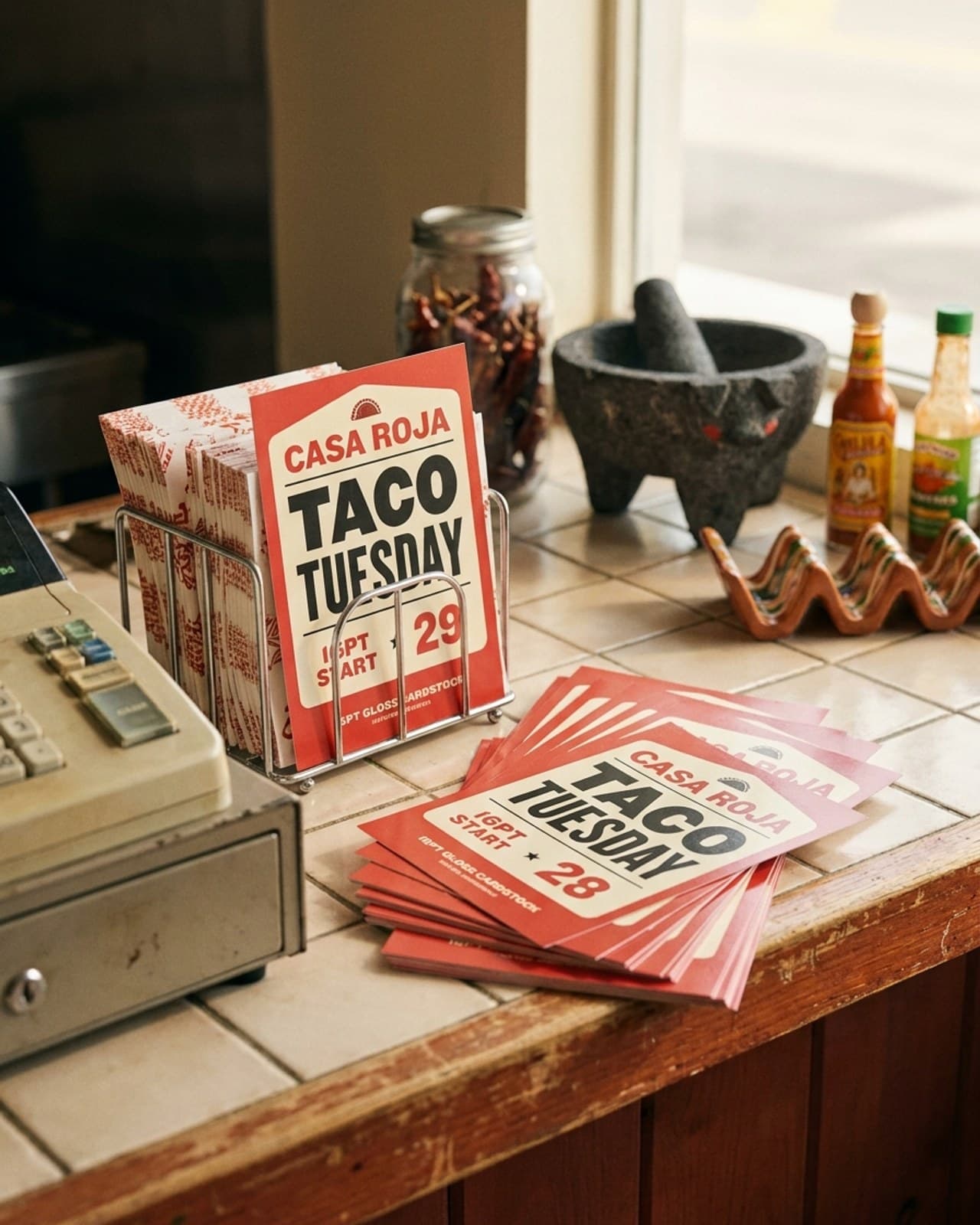
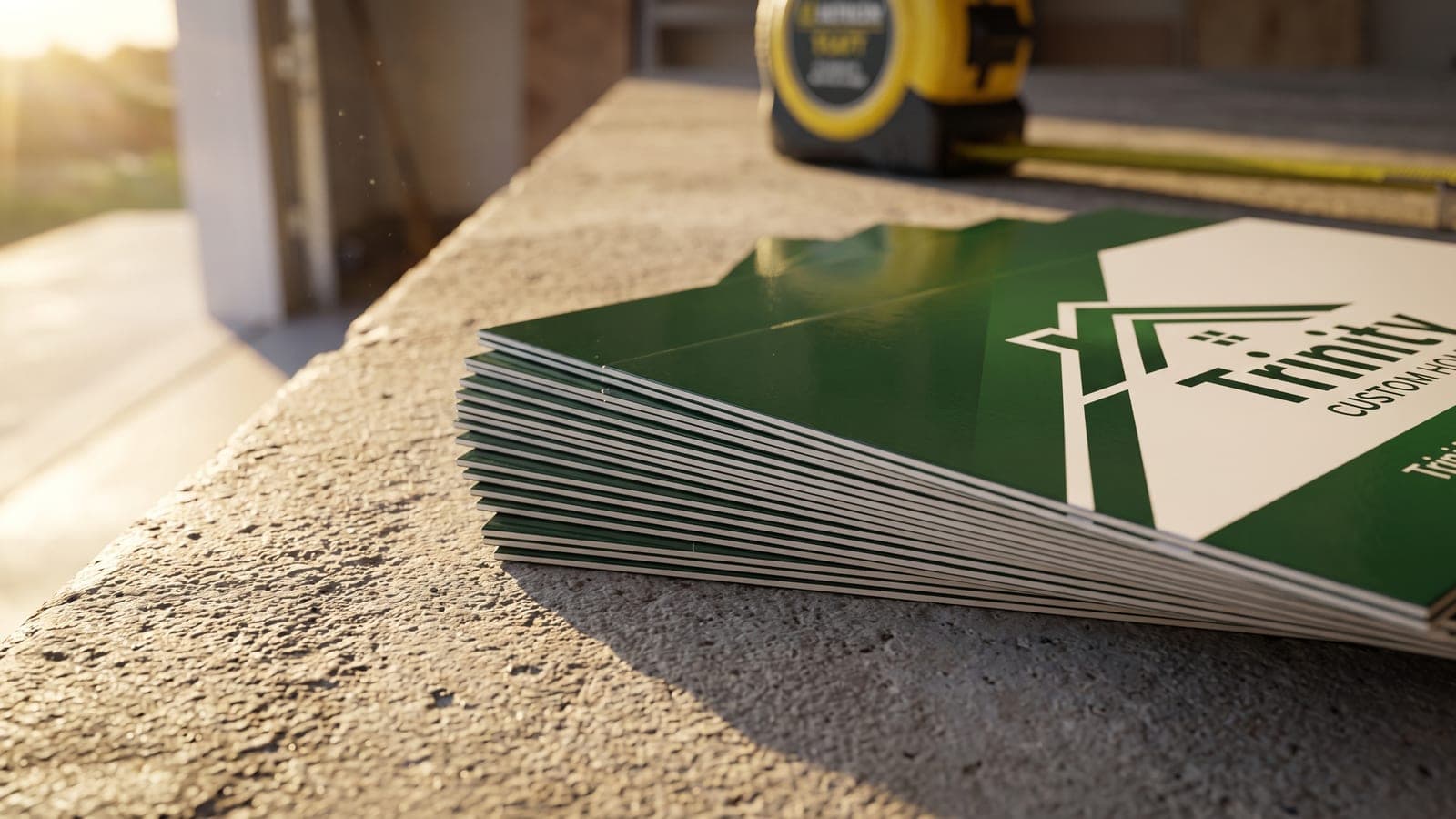
Each printed piece uses the stock that suits how it is handled. Business cards, flyers, postcards and trading cards print on 16 pt gloss cardstock, heavy enough to feel substantial. Brochures print on 70 lb text stock, which folds cleanly. Rack cards, door hangers and table tents print on cover stock, stiff enough to stand in a rack, hang on a knob or stand on a table.
| Product | Stock | Starts at | Production |
|---|---|---|---|
| Business cards | 16 pt cardstock, gloss | $53.49 for 50 | 48 hours |
| Flyers | 16 pt gloss | $53.49 for 25 | 48 hours |
| Postcards | 16 pt gloss | $74.89 for 100 | 48 hours |
| Brochures | 70 lb text | $246.09 for 250 | 3 to 5 business days |
| Rack cards | Cover stock | $181.89 for 250 | 3 to 5 business days |
| Door hangers | UV gloss cover stock | $246.09 for 250 | 3 to 5 business days |
Everything is printed in the USA and ships for a flat $10 per product to any US address.
What Does Paper Weight Mean?
Paper weight describes how heavy and thick a sheet is, and there are two systems in common use. Points, written pt, measure thickness: 16 pt is 16 thousandths of an inch. Pounds, written lb, describe the weight of a standard ream of that paper type, which is why a 70 lb text stock is thinner than many cover stocks with a lower pound number.
The practical rule: compare points with points, and pounds with pounds of the same type. Text, cover and cardstock are measured on different scales.
When in doubt, think about the hand. A card that bends easily feels cheap; a card that stays flat feels considered.
If you want to compare before a large order, start with a small run of the piece you hand out most, such as 50 business cards, and hold it next to cards you have collected from other businesses. The difference in weight is easy to feel, and it helps you decide what your brand should feel like in someone else's hand.
What Is the Difference Between Text and Cover Stock?
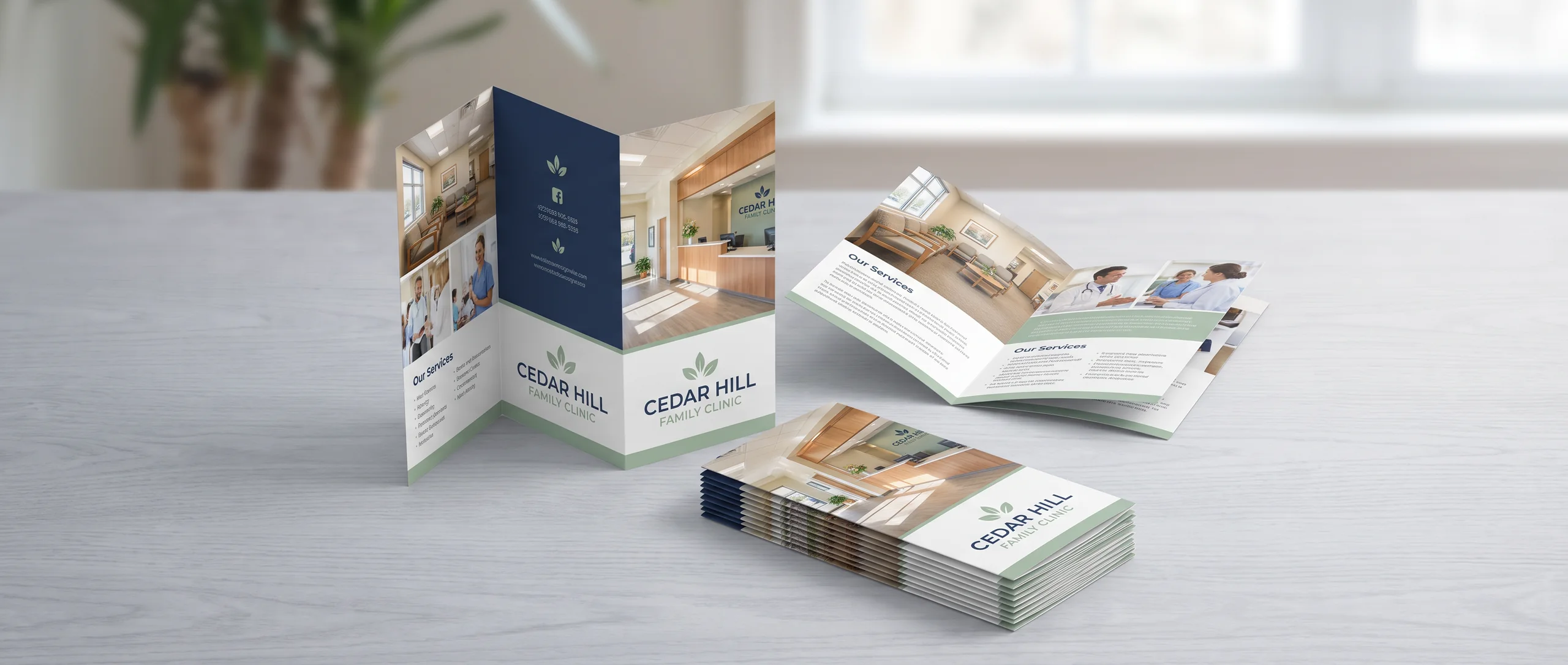
Text stock is the thinner, more flexible paper used for pages and folded pieces. It folds cleanly without cracking, which is why brochures use it. These brochures print on 70 lb text stock.
Cover stock is the heavier, stiffer paper used for pieces that need to hold their shape. Rack cards stand up in a literature rack, door hangers hang on a knob, and table tents stand on a table, so all three use cover stock. Door hangers add a UV gloss coating.
Choose by what the piece has to do. If it folds, text stock. If it stands, hangs or gets handed out, cover stock or cardstock. A piece that does both, such as a folded table tent, uses a scored cover stock so it folds cleanly and still stands.
Why Do Cards and Postcards Use 16 pt?
Business cards, postcards and trading cards use 16 pt because they are handled, carried and kept. A heavy card survives a wallet, a mailbox and a desk drawer, and it feels like the business took care. Postcards on 16 pt gloss are the same weight these business cards print on.
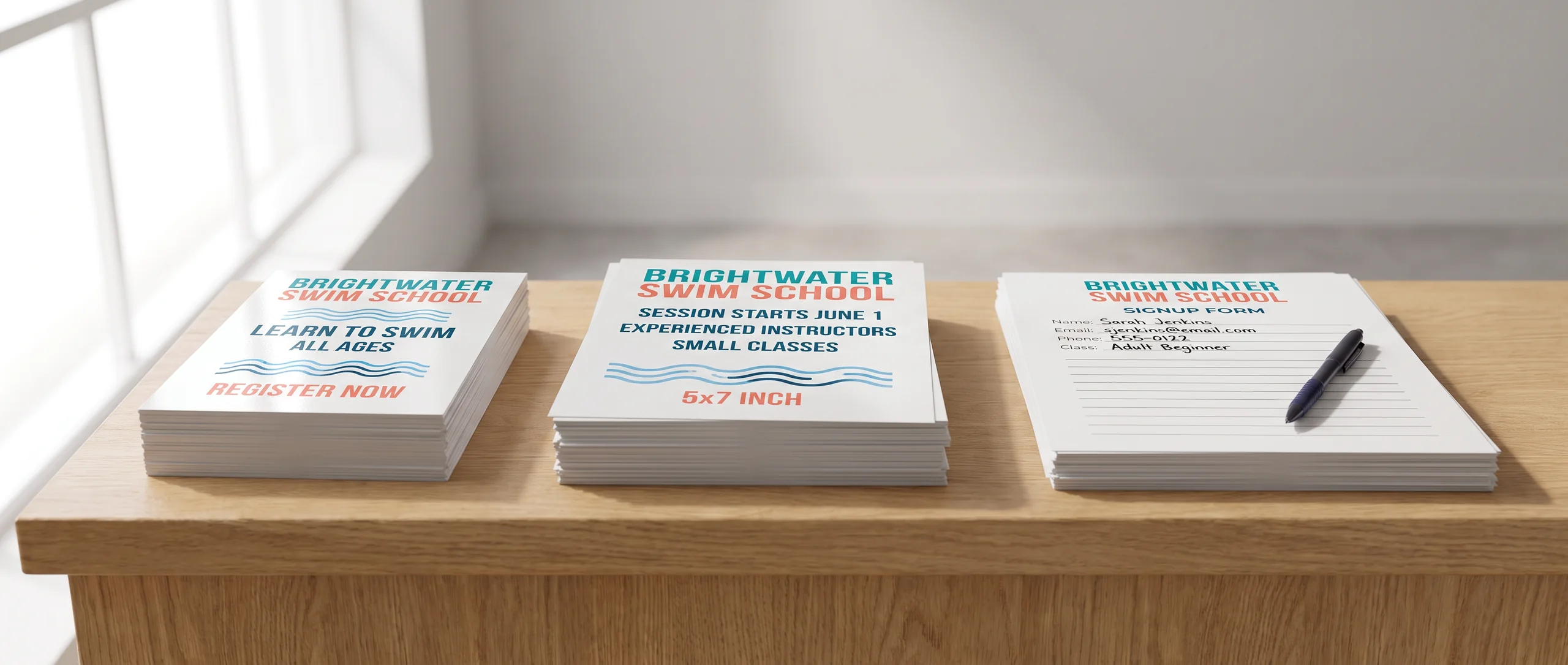
Flyers on 16 pt gloss work like a large postcard: a 4 x 6 handout that holds up on a counter or in a bag. For a sign up form or a flyer meant for writing, a lighter matte paper is easier to write on; ask if that is what you need.
Which Finish Should You Choose?
Gloss and matte each suit different uses. Gloss makes photos and colors look deep and resists fingerprints, which suits postcards, flyers and business cards with color. Matte reduces glare and takes ink from a pen more easily, which suits forms and appointment cards.
These cards, flyers, postcards and trading cards print with a gloss finish, and door hangers carry a UV gloss coating. If a piece must be written on, test a pen on the proof stock, or leave a lighter area for writing.
Which Stock Fits Which Marketing Job?
Match the stock to the job the piece does once it leaves your hands:
- Handed over in person: business cards and trading cards on 16 pt cardstock, which survive a wallet or a pocket.
- Handed out at a counter or event: 4 x 6 flyers on 16 pt gloss, which stay flat in a bag.
- Mailed: 4 x 6 postcards on 16 pt gloss, which arrive with crisp corners.
- Read and kept: brochures on 70 lb text, which fold into panels and open like a booklet.
- Displayed in a rack: rack cards on cover stock, which stand up without slumping.
- Hung on a door: door hangers on UV gloss cover stock, which hang without curling.
- Stood on a table: table tents on cover stock, scored and folded to stand on their own.
If a piece has two jobs, choose for the harder one. A card that is mailed and then pinned to a fridge needs the weight of the mail, not the fridge.
What About Pieces That Are Not Paper?
Some marketing pieces need something tougher than paper. Aluminum business cards are brushed metal in 0.025 or 0.040 inch, for a card that is never thrown away. Signs, banners and decals use rigid boards, vinyl and films made for weather.
For a poster that hangs indoors, large format poster paper prints big sizes economically. For anything outdoors, choose a vinyl banner, a coroplast sign or a rigid sign instead of paper.
How Does Thickness Change How a Brand Feels?
Thickness is part of the first impression. People judge a card or a postcard by its weight before they read it, and a thin, floppy piece suggests a business that cut corners. A heavy piece suggests care.
That does not mean every piece needs the heaviest stock. A brochure needs to fold, so text stock is right. A sign up form needs to be written on, so a lighter matte paper is easier. Choose the weight that does the job well, and the brand benefits.
How Does Paper Affect Color?
Coated papers, such as gloss, hold ink on the surface, so colors look brighter and sharper. Uncoated papers absorb more ink, so colors look softer and slightly darker. A brand color printed on gloss and on uncoated paper can look different side by side.
Keep the same product for repeat runs of the same piece, so colors stay consistent from order to order. Send your brand colors as values with every order.
How Does Stock Affect Mailing?
Postcards mail at the USPS postcard rate only at sizes up to 4.25 x 6 inches, and the 4 x 6 postcard is the cut that qualifies. Larger 5 x 7 and 6 x 9 postcards mail as letters. Check current postal rules for thickness and size before a large mailing.
A heavy 16 pt postcard arrives in better shape than a thin one, with fewer bent corners.
What Should You Check on Paper Proofs?
Check first for the product, the stock and the size on the order summary. The proof shows the design, and the order shows the stock; both need to match what you planned.
Next, check for colors on a screen versus paper. A digital proof shows layout and color approximately; paper and coating change color slightly.
Also check for text near folds and edges on brochures, door hangers and table tents.
How Do You Order Print on the Right Stock?
Choose the product, and the stock comes with it: each product page lists its paper and finish. Artwork prep is $14.99 per item if you send a phone photo or a ChatGPT image, and a free proof comes with every order.
Cards, flyers and postcards print in 48 hours; brochures, rack cards, door hangers and table tents in 3 to 5 business days, after proof approval. Each product ships for a flat $10 to any US address.
Frequently Asked Questions
A heavy card stock about 16 thousandths of an inch thick. It is the stock for these business cards, flyers, postcards and trading cards, printed in full color with a gloss finish.
For a flyer that is handed out and kept, a heavy stock feels more valuable. These 4 x 6 flyers print on 16 pt gloss, starting at $53.49 for 25.
Text stock is thinner and folds easily, which suits brochures; these brochures use 70 lb text. Cover stock is heavier and stiffer, which suits rack cards, door hangers and table tents that have to stand or hang.
16 pt gloss cardstock, the same weight as these business cards, printed double sided at no extra cost. 250 4x6 Standard 16pt Gloss postcards are $106.99, which is about $0.43 a postcard. 100 postcards start at $74.89. Artwork prep is $14.99 per item. Printed in the USA in 48 hours and shipped nationwide, flat $10 shipping to any US address.
Gloss makes photos and colors look rich and resists smudges; matte reduces glare and takes a pen more easily. These cards, flyers and postcards print with a gloss finish.
Each product prints on the stock listed on its page, chosen for how that piece is used. If you need something different, ask before you order.
Related Articles
Business Card Thickness: 14pt vs 16pt in Inches and mm
A 14pt business card is 0.014 in thick and a 16pt card is 0.016 in, or 0.36 mm and 0.41 mm. [...]
Read More: Business Card Thickness: 14pt vs 16pt in Inches and mmBrochure Paper: A Guide to 70# Text, Folds and Prices
Brochure paper is 70# text in 3 sheet-and-fold options. Compare half-fold and tri-fold prices, [...]
Read More: Brochure Paper: A Guide to 70# Text, Folds and PricesFlyer Paper Stock: Compare 16pt, 100# Cover and 70# Text
Flyer paper stock comes in 3 options: 16pt gloss, 100# gloss cover, and 70# uncoated text. [...]
Read More: Flyer Paper Stock: Compare 16pt, 100# Cover and 70# Text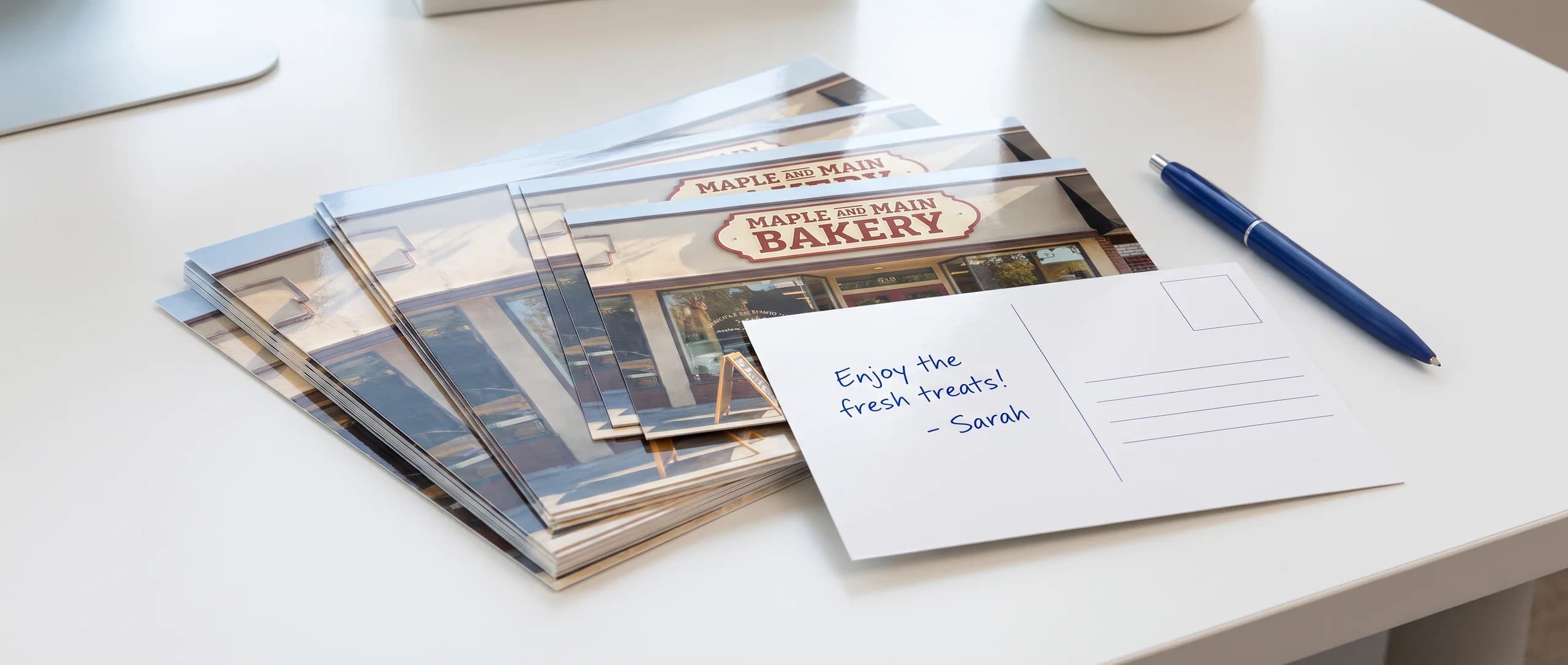
Postcard Paper Stock: 16pt Gloss, Writing and Mailing
Postcard paper stock is 16pt gloss on both sides, in 4 x 6, 5 x 7, and 6 x 9 in. Compare [...]
Read More: Postcard Paper Stock: 16pt Gloss, Writing and Mailing