Custom Trading Cards for Teams: Youth Player Card Guide
 Jean
October 31, 2026Updated November 3, 20268 min read
How Do Custom Trading Cards Work for a Team?
Custom trading cards for teams are the standard 3.5 x 2.5 in size on 16 pt cardstock, printed on both sides. 50 cards start at $53.49, printed in the USA in 48 hours with flat $10 shipping. Put the player photo on the front and stats on the back.
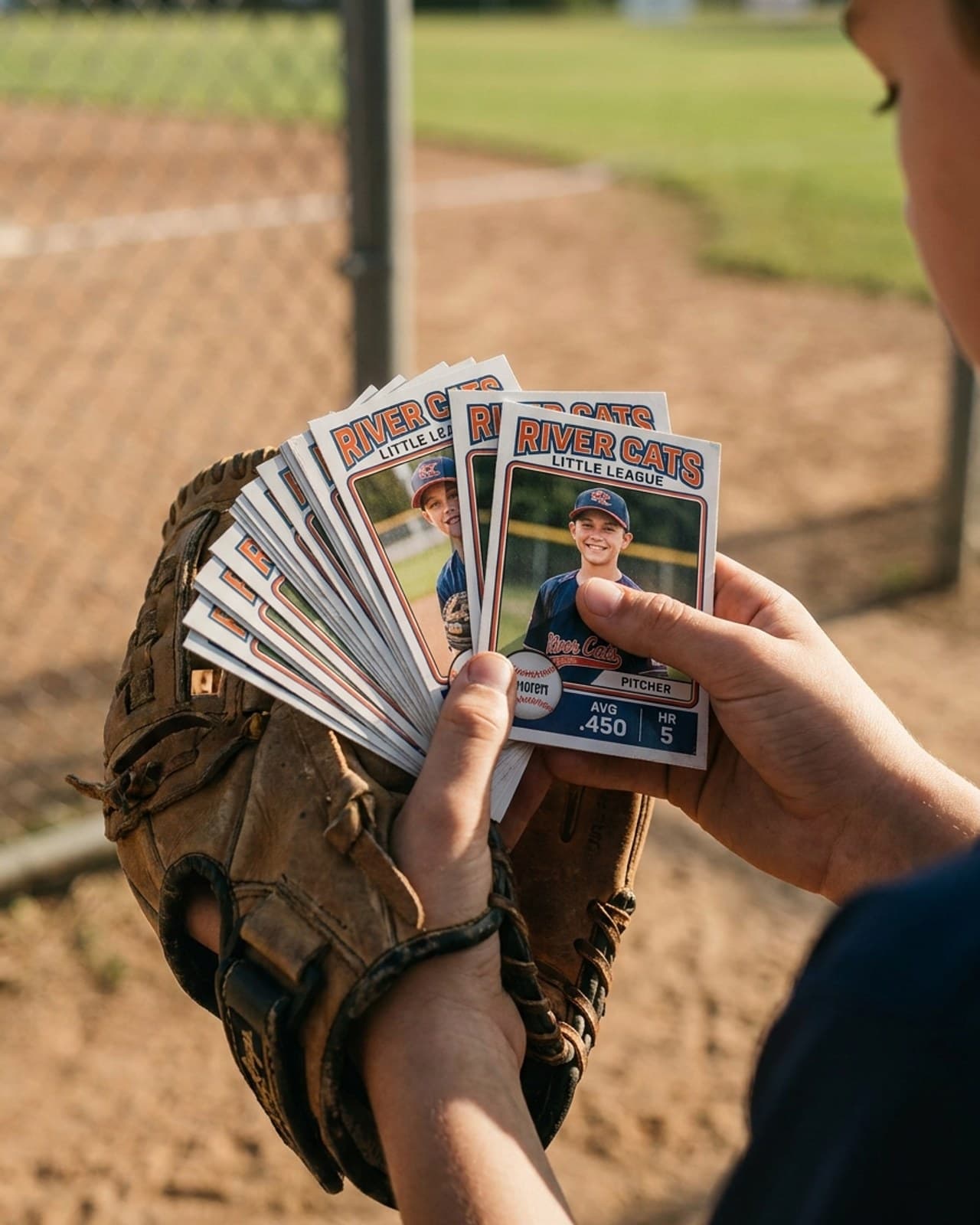
Custom trading cards give every player a card of their own: a photo on the front, stats and fun facts on the back, in the standard 3.5 x 2.5 inch trading card size. Teams hand them out at the end of the season, trade them at tournaments, and give them to grandparents who could not make every game.
| What | Detail |
|---|---|
| Size | 3.5 x 2.5 in |
| Stock | 16 pt gloss cardstock |
| Sides | Both, same price |
| Starts at | $53.49 for 50 |
| Production | 48 hours |
Custom trading cards are printed in the USA and ship for a flat $10 to any US address. The product page opens on 250 cards: 250 double-sided 16pt Cardstock trading cards are $85.59, which is about $0.34 a trading card. 50 trading cards start at $53.49. Artwork prep is $14.99 per item. Printed in the USA in 48 hours and shipped nationwide, flat $10 shipping to any US address.
What Goes on the Front of a Player Card?
The front carries the player's photo, name, number and team. Use an action shot or a clean portrait, with the team colors as a border or a band across the bottom. The name and number should be large enough to read at a glance.
Keep the layout the same for every player, so the cards look like a set. Only the photo, name, number and position change from card to card.
Leave the face clear of text. Put the name band above or below the photo, not across it.
Choose a simple, bold font for the name and number, in a color that contrasts with the border. A card is often held at arm's length or seen across a table during a trade, so the name should read at a glance. Add a small team logo in a corner of the front, so a card that ends up in another team's binder still says where it came from.
What Goes on the Back of a Player Card?
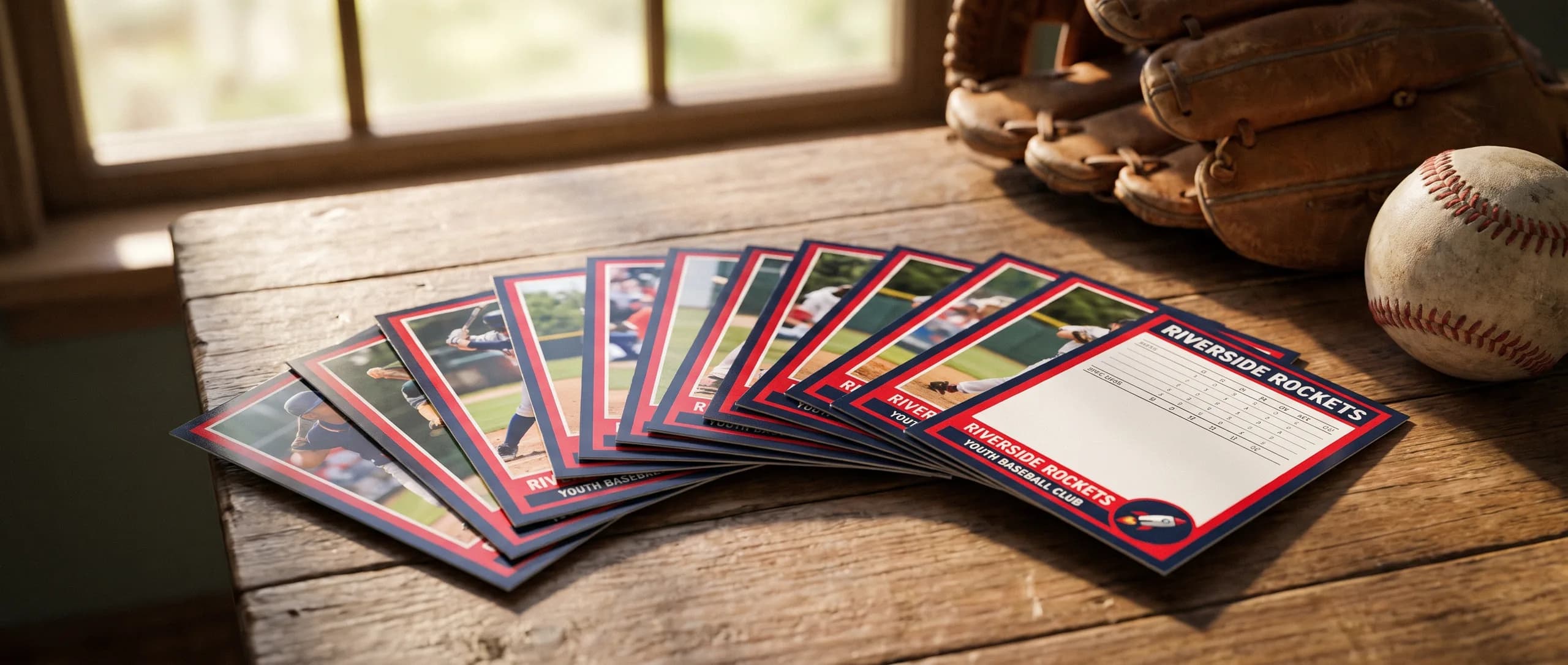
The back carries the details: name, number, position, team and season year, plus a few stats or fun facts. Favorite food, walk up song, best moment of the season and years playing all make the card personal.
Keep it to what is safe to share. Leave off home addresses, schools, birthdays and anything else that identifies where a child can be found. First name and last initial is a sensible choice for younger players.
Add the team logo and the league or season name, so the card is a keepsake that remembers the year.
How Do You Take Photos for Trading Cards?
Take photos in good, even light, outdoors in the shade or on an overcast day. Bright midday sun casts hard shadows on faces under caps and helmets. Shoot each player against a simple background: the field, a fence or the team banner.
Use the highest resolution your camera or phone allows. A photo cropped tight to fit a 2.5 inch wide card needs plenty of pixels to stay sharp; aim for about 300 pixels per inch at the printed size.
Take a few shots of each player, so you can pick the one where eyes are open and the expression is right. Shoot every player from the same distance and angle, so the faces sit at the same size across the set and the cards look consistent side by side.
How Many Cards Should Each Player Get?
Decide how the cards will be used, then size the order. For a keepsake set, a small stack per player covers family and a few friends. For trading at a tournament, players want more of their own card to trade.
Trading cards start at $53.49 for 50 cards, and larger quantities cost less per card, as the product page lists. Ask on the order how a mix of player designs is counted, so the quantity for the whole team is clear before you approve.
How Do You Set Up the Artwork?
Set up each card at 3.75 x 2.75 inches, which adds 0.125 inch of bleed around the 3.5 x 2.5 inch trim. Keep names, numbers and stats at least 0.125 inch inside the trim. Run borders and backgrounds out to the bleed edge so no white sliver shows after cutting.
If you do not have a designer, send the player photos, names, numbers and the details for the back. Artwork prep is $14.99 per item if you send phone photos or a ChatGPT image, and a free proof comes with every order.
How Do Teams Use Trading Cards?
Teams use trading cards in a few ways:
- End of season gift from the coach, with a card for every player and a team card.
- Tournament trading, where players swap cards with other teams.
- Fundraising, selling packs to family and sponsors.
- Sponsor thank you, with a sponsor's logo on the back of the team card.
- Keepsake, mailed to grandparents and family out of town.
Pair the cards with other team gear in the same colors: custom t-shirts start at $42.79 each, and a team canopy marks the sideline at every game.
How Do You Collect Player Information?
Collect everything in one place before anyone starts designing. A simple form or spreadsheet for each player saves a week of back and forth: name as it should print, jersey number, position, two or three fun facts and the photo file name.
Ask parents to confirm the spelling and approve what goes on the back. Some families prefer first name only, or no fun facts, and the card should respect that.
Set a deadline a few days before you plan to order. One missing photo holds up the whole set, so have a backup plan, such as a team logo card, for a player whose photo never arrives.
Should There Be a Team Card and a Coach Card?
Yes, they round out the set. A team card with the group photo, the season record and the roster on the back is the one every family wants. Coach cards thank the volunteers who made the season happen.
A sponsor card, or a sponsor logo on the back of the team card, thanks the business that paid for uniforms or fees. Get the sponsor's current logo and their permission before it goes on the card.
Use the same design for every card in the set, so the team card, coach cards and player cards look like they belong together.
When Should a Team Order Trading Cards?
Order once the season is far enough along to have photos and stats worth printing. For an end of season party, take photos mid season, collect stats near the end, and order about two weeks before the party.
For tournament trading, order before the tournament with this season's photos and basic details; stats can wait for an end of season set. Trading cards print in 48 hours after proof approval, so the schedule is mostly about collecting photos and approving proofs on time.
How Do You Protect the Cards?
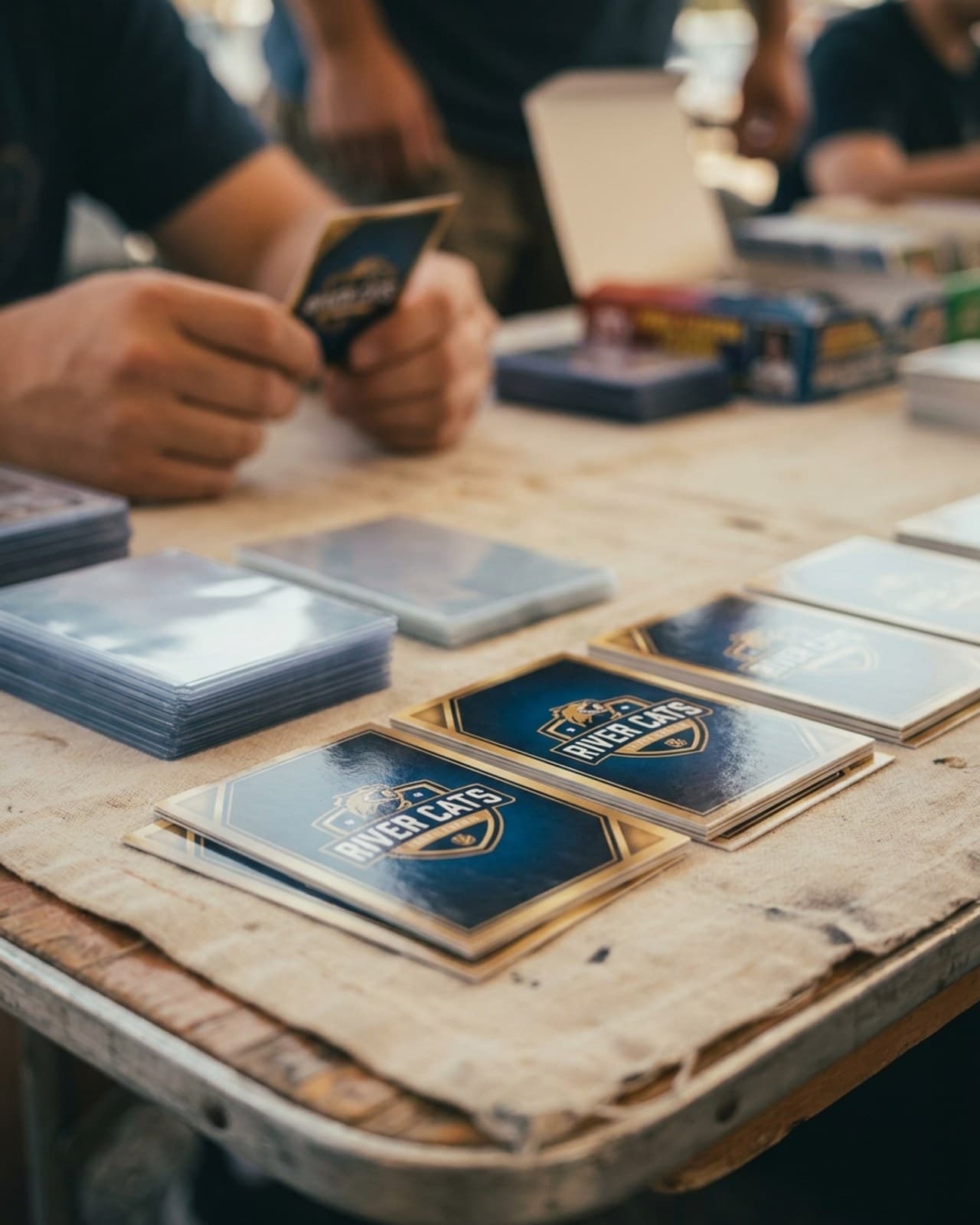
Hand out the cards in penny sleeves or top loaders, which are made for the standard 3.5 x 2.5 inch size. A sleeve keeps fingerprints and drinks off the gloss and turns the card into a keepsake.
For a full set, a nine pocket binder page holds a team's cards together. Hand them out at the end of season party in sleeves, one stack per player, with the team card on top.
What Should You Check on Trading Card Proofs?
Check first for the spelling of every player's name. Parents notice, and a misspelled name on a keepsake is hard to fix. Send the roster as a typed list, not from memory.
Next, check for the right photo on the right card. With a dozen similar uniforms, it is easy to swap two players.
Also check for numbers and stats. A wrong jersey number on the front or a wrong stat on the back is the kind of mistake kids point out.
How Do You Order Custom Trading Cards?
Collect the photos and details for every player, choose the quantity, and send the files. Approve the proof for each card. Trading cards print in 48 hours after approval and ship for a flat $10 to any US address. Order about two weeks before the end of season party, so there is time for photos, design and proofs.
Frequently Asked Questions
Custom trading cards start at $53.49 for 50 double-sided cards. 250 double-sided 16pt Cardstock trading cards are $85.59, which is about $0.34 a trading card. 50 trading cards start at $53.49. Artwork prep is $14.99 per item. Printed in the USA in 48 hours and shipped nationwide, flat $10 shipping to any US address.
3.5 x 2.5 inches, the standard trading card size, so they fit card sleeves, binders and top loaders made for sports cards. Set up the file with 0.125 inch bleed on every side.
Yes. Each player's card is its own design. Order a pack per player, or ask on the order how a mix of player designs is quantified before you approve the proof.
The player's name, number, position and team, plus a few fun facts or season stats, the team logo and the season year. Keep personal details such as home address or school off the card.
Trading cards print in 48 hours after proof approval and ship for a flat $10 to any US address. Order two weeks before the end of season party to leave time for photos and proofs.
Yes. Single sided and double sided print the same price on 16 pt cardstock with a gloss finish, so the back can carry stats and team details at no extra cost.
Related Articles
How to Make Trading Cards: Size, Files and Print Steps
Make 3.5x2.5 inch trading cards on 16pt gloss cardstock. Follow steps for front and back [...]
Read More: How to Make Trading Cards: Size, Files and Print StepsTrading Cards Cost: Prices by Quantity and Card Size
Trading cards measure 3.5 x 2.5 in and come in packs of 50 to 1,000. Compare every double-sided [...]
Read More: Trading Cards Cost: Prices by Quantity and Card Size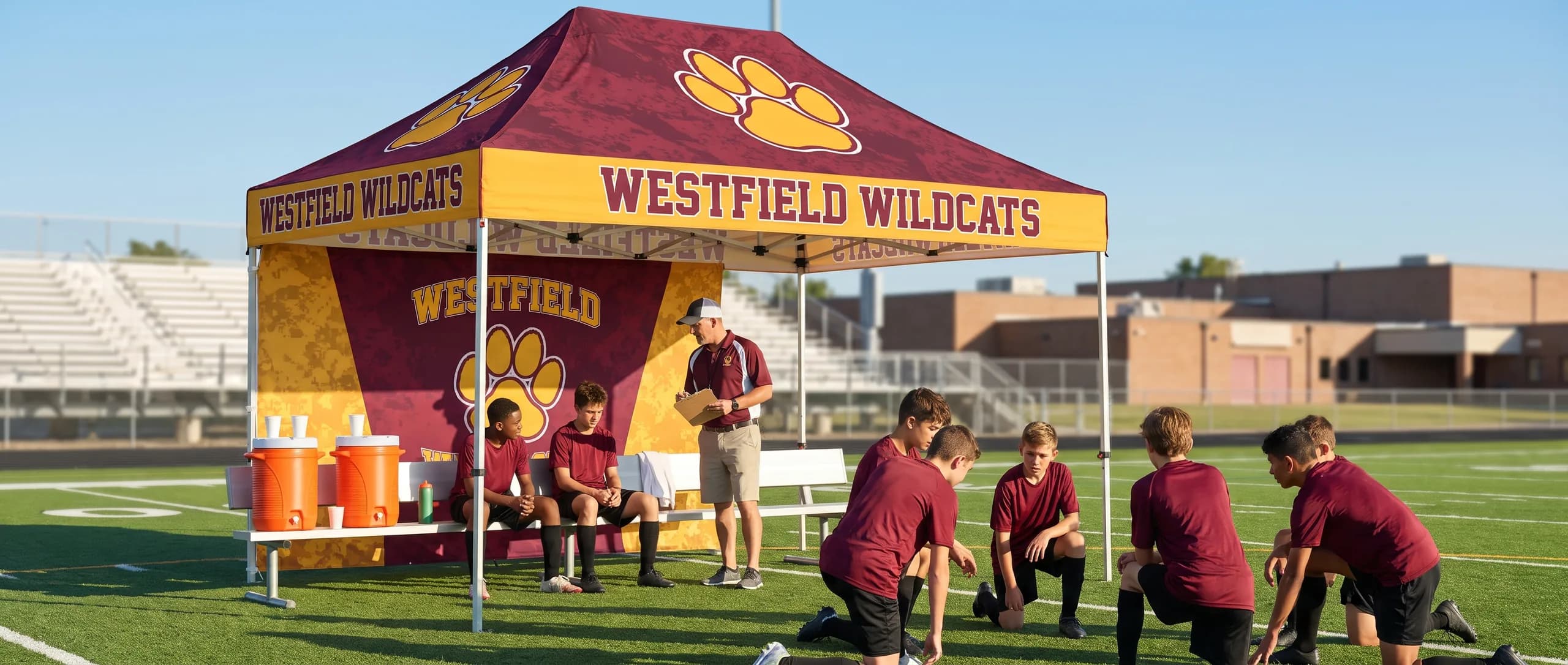
Custom Canopy Tents for Schools, Teams, and Sidelines
A 10x10 full custom canopy with the V6 frame is $973.69 for a sideline. A 10x20 canopy is [...]
Read More: Custom Canopy Tents for Schools, Teams, and Sidelines
School Fundraiser Ideas: Flyers, Banners and Tent Plans
School fundraiser printing starts at $53.49 for 25 flyers and an 18 x 24 yard sign at $64.99. [...]
Read More: School Fundraiser Ideas: Flyers, Banners and Tent Plans