Trading Cards Cost: Prices by Quantity and Card Size
 Tomas Amaya
October 12, 2026Updated October 12, 20269 min read
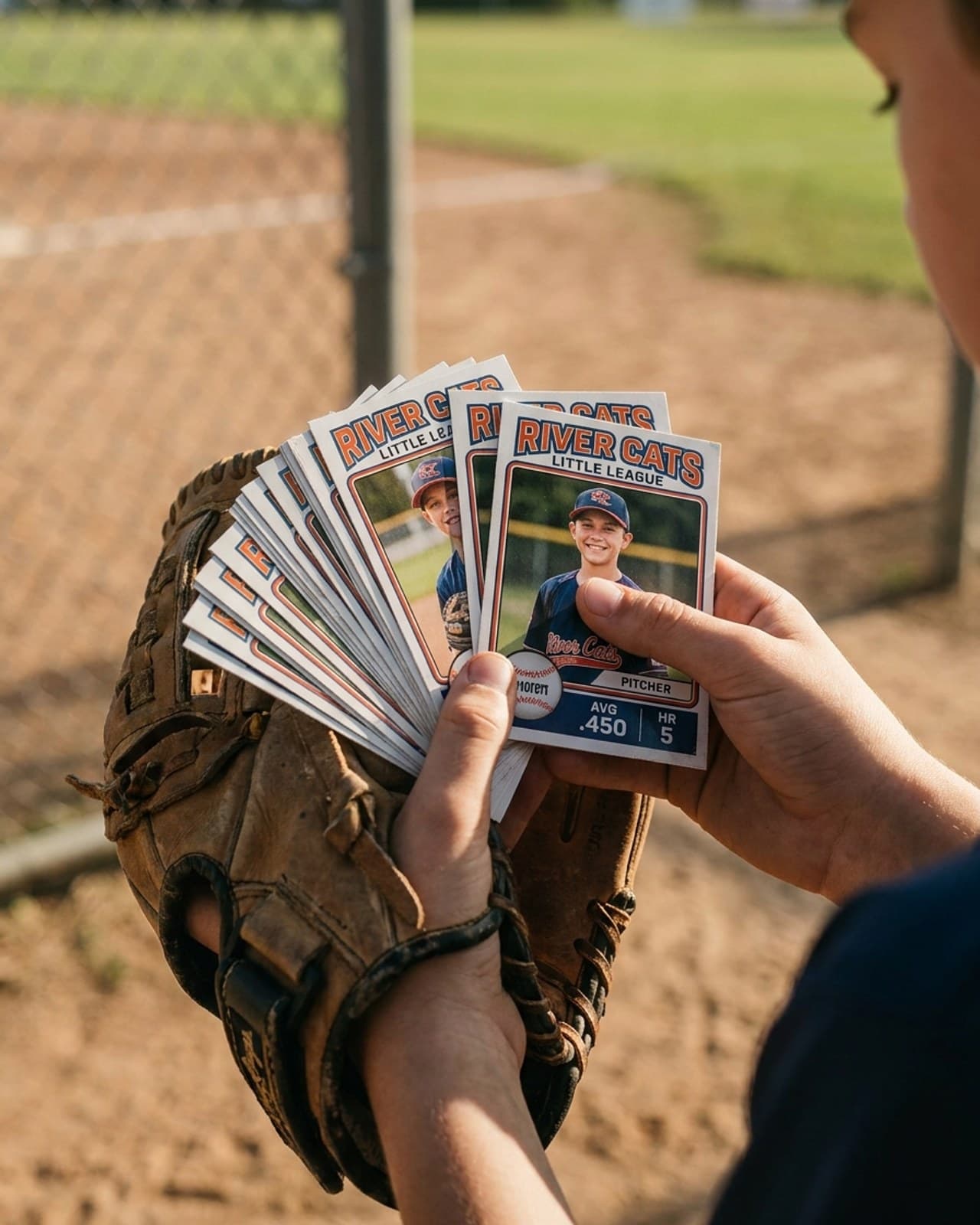
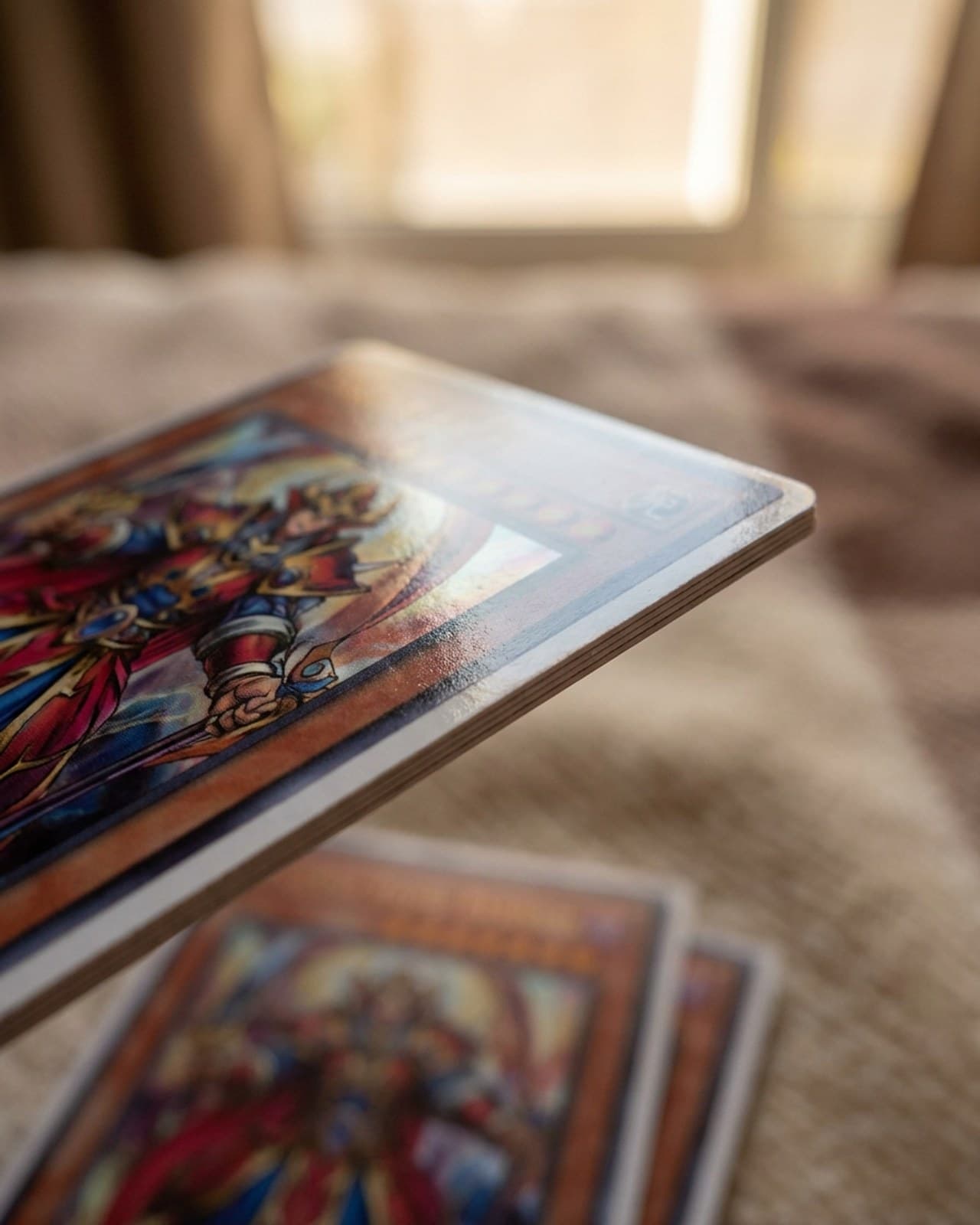
How Much Do Trading Cards Cost?
50 double-sided 3.5 x 2.5 in trading cards on 16pt Cardstock cost $53.49. Production takes 48 hours after artwork approval. The cards are printed in the USA, ship nationwide, and have flat $10 shipping to any US address. Packs are also available in 100, 250, 500, and 1,000 cards.
Trading cards cost $53.49 for 50, $64.19 for 100, $85.59 for 250, $106.99 for 500, and $128.39 for 1,000. Each price covers a double-sided 3.5 x 2.5 in set printed in full color on 16pt Cardstock. The card dimensions, stock, and side choice stay fixed so the totals compare the same product.
| Quantity | Total price |
|---|---|
| 50 cards | $53.49 |
| 100 cards | $64.19 |
| 250 cards | $85.59 |
| 500 cards | $106.99 |
| 1,000 cards | $128.39 |
Each quantity is the number of cards printed from the uploaded file. A sports team might print a team promo card for every supporter or a featured player card. A maker might print a collectible product card. Count how many cards are useful, then add a measured reserve for replacements or future handouts.
Every total on this page comes from the same configuration on the custom trading cards product page. If the design needs a different product format, do not carry these prices across to it. A different finished piece should be priced as its own product.
Why Does Trading Card Quantity Change the Total?
Quantity changes the total because every print run includes press setup, printing, cutting, and packing before the individual copies are counted. A larger pack spreads that shared work across more cards. The order total rises while the cost of each card falls.
The right comparison begins with the use for the card. A 50-card pack can cover a small team handout, a short product release, or a limited keepsake project. A 250-card pack can support a longer campaign or include one card inside many outgoing orders. The proof shows the front and back exactly as they will print.
Do not choose the largest pack only because it contains more cards. Choose it when the name, photo, number, message, and branding on the card are settled. A short pack is useful for a first edition. A larger pack fits artwork that will remain accurate long enough to distribute every copy.
What Is Included in the Trading Card Price?
The trading card price includes the selected quantity of 3.5 x 2.5 in cards printed from the uploaded file on 16pt Cardstock, full-color printing, and the selected single- or double-sided format. Single- and double-sided printing carry the same listed price. Every order includes a digital proof before production so the complete design can be checked.
The stock has enough body to feel like a purpose-made card rather than a thin handout. A consistent gloss presentation helps saturated photos and bold color reproduce with energy. The surface still depends on the source artwork, so a dark, low-resolution image will not become a crisp portrait just because it is printed on a strong stock.
Double-sided printing gives the card a useful second face at the same price. The front can carry one player, team, product, character, or feature. The back can carry a profile, short story, statistics, sponsor marks, a code, or contact information. The proof shows that front and back before anything prints.
Shipping is separate from the card total. One order ships for flat $10 to any US address after production. That charge is not included in the printed card totals.
Which Trading Card Quantity Should You Choose?
Choose a trading card quantity by counting how many cards the project needs, then add a practical reserve and round up to the next available pack. This simple calculation connects the order to a real handout plan and prevents an attractive quantity from becoming unused inventory.
A 50-card pack works for a short test, a small team promo, one featured player card, or a controlled handout. It is useful when the design is new or the printed details may change. A small first pack keeps the purpose clear and the proof simple.
A 100-card or 250-card pack gives more room for sharing. These quantities suit a settled card that will be handed out repeatedly, placed inside shipments, or distributed to a larger group. Count each intended use and give the reserve a name rather than ordering extra copies without a plan.
The 500-card and 1,000-card packs fit broad distribution or a card meant to stay useful over time. Before choosing either one, verify every proper name, number, title, photograph, and response detail. Larger runs reward stable artwork and magnify a missed correction, which makes a careful proof review more important.
How Should Trading Card Artwork Be Prepared?
Trading card artwork should be built as a 3.5 x 2.5 in file with a clear front, an optional back, comfortable edge spacing, and images sharp enough for small-format printing. The full pack prints from that file, so every name, number, image, and contact detail must be final before approval.
Start with the main subject. A player card can lead with one portrait and a short name line. A team promo card can lead with one team image and a season message. A product card can lead with one strong photograph and a compact benefit. One card should not try to represent several unrelated ideas.
Keep small type limited. A 3.5 x 2.5 in card has less reading room than a flyer. Short statistics, a brief profile, one code, or a few contact details can fit on the back. A long biography should move to a linked page rather than shrinking until it becomes uncomfortable to read.
Use the strongest available source image. A tightly cropped screenshot may look acceptable on a phone and print soft. An original photograph with room around the subject gives the layout more freedom. Leave enough space around faces, hands, logos, and numbers so the finished cut does not make the design feel cramped.
The back should support the front. It can carry a short story, statistics, sponsor marks, a code, or contact information. Keep the reading order obvious and the response path easy to find. If the card is single sided, make sure the front still communicates the full purpose on its own.
Avoid thin borders close to the edge. Minor trim movement becomes easy to see when a narrow frame is almost touching the cut. Pull the frame inward, make it intentionally bold, or let the background color run cleanly outward.
What Do We See on Trading Card Proofs?
The most common trading card proof problem is crowded information. A portrait, long name, statistics, sponsor marks, code, and several contact details all compete inside a compact format. Reducing the copy and choosing one clear response path usually improves the card more than making every element smaller.
We also see important details placed too close to the edge. Card numbers, thin frames, names, and small marks often sit where a minor cut shift becomes easy to notice. Pulling those elements inward protects them and gives the finished card a calmer, more deliberate border.
Image quality varies more than people expect. A professionally lit portrait and a cropped phone screenshot can live in the same folder, but they will not print with the same clarity. The proof can show composition and order. It cannot add source detail that was never present. Replace weak images before approval whenever a better original exists.
Front-to-back orientation is another useful check. Print a paper proof, turn it as a recipient would, and confirm that the reverse reads upright. Then inspect every digit in the card number, statistics, phone number, or web address. Familiar details are easy to skim as intended instead of as printed.
Test every code from the paper proof. Give it a quiet background and enough clear space around it. Confirm that it opens the correct destination and that the destination works comfortably on a phone. A successful scan that leads to an outdated page does not help the card.
How Long Do Custom Trading Cards Take?
Custom trading cards have a 48-hour production period after artwork approval. File preparation and proof review happen before that production clock begins. Shipping follows production, so the date a file is uploaded is not the date the order leaves the print workflow.
Plan backward from the day the cards are needed. Reserve time for the first proof, requested corrections, a second review when needed, production, and transit. The fastest way to protect the schedule is to send organized files and return one complete correction list instead of several separate messages.
Approval should happen only after the proof has been reviewed carefully. A fast approval that misses one wrong name creates a bigger problem across the entire pack. Ask another person to compare the proof with the source details, especially when the card includes proper names, dates, or statistics.
Production takes 48 hours after artwork approval. The cards ship nationwide and have flat $10 shipping to any US address. Transit begins after production is complete, so the stated production period is not an arrival promise.
How Do You Start a Trading Card Order?
Start a trading card order by finalizing the front, deciding whether the card needs a printed back, and choosing the smallest listed pack that covers the distribution plan. Gather the strongest available image, final copy, logos, and response details before upload.
Use the custom trading cards product page to choose the quantity and select single- or double-sided printing at the same listed price. Upload the best available artwork. The digital proof is the moment to inspect the file as it will print and request corrections before production.
Review the main name first because spelling errors are easy to miss when the picture is strong. Review numbers and statistics second, then image quality, edge spacing, and the response path. Finish by turning the paper proof to check the back orientation and testing any code.
Once the proof is correct, approve it and keep a copy of the final front and back with the order details. That record makes a later matching run easier. It also helps prevent an older design from being printed again after a name, photograph, date, or response detail changes.
Frequently Asked Questions
50 double-sided 3.5 x 2.5 in trading cards on 16pt Cardstock cost $53.49. This is the smallest available pack and a practical choice for a team promo, player, product, or character card. A digital proof lets you check the approved design before production.
250 double-sided 3.5 x 2.5 in trading cards cost $85.59 on 16pt Cardstock. The pack prints from the file you upload and approve on the proof. Count the planned handouts, included pieces, or keepsakes and add a measured reserve before choosing this quantity.
1,000 double-sided 3.5 x 2.5 in trading cards cost $128.39 on 16pt Cardstock. It is the largest listed pack. Use it when the artwork and printed details are settled, because one missed correction will appear on every copy after proof approval.
Custom trading cards finish at 3.5 x 2.5 in. The horizontal or vertical orientation can change, but the finished dimensions stay the same. Keep important names, numbers, logos, and faces comfortably inside the cut edge so a small trim shift does not crowd the design.
One pack prints the file you upload, reviewed on a digital proof before production. Build the front, and the back if the card is double sided, as a 3.5 x 2.5 in file at the finished proportion. If your project calls for more than one card layout, ask before ordering so the pack is set up the way you need.
Production is 48 hours after artwork approval. That clock begins after the digital proof is approved, not when the first files are sent. Shipping follows production and is a flat $10 to any US address, so allow transit time beyond the stated production period.
Related Articles

Postcard Sizes: 4x6, 5x7, 6x9, Bleed and USPS Rules
Standard postcard sizes are 4 x 6, 5 x 7 and 6 x 9 inches. Retail postcard pricing ends at 4.25 [...]
Read More: Postcard Sizes: 4x6, 5x7, 6x9, Bleed and USPS Rules
Door Hanger Sizes: 3.5x8.5 and 4.25x11 in, Die Cut Rules
Standard door hanger sizes are 3.5 x 8.5 and 4.25 x 11 inches. Compare pack prices, bleed, safe [...]
Read More: Door Hanger Sizes: 3.5x8.5 and 4.25x11 in, Die Cut Rules
Poster Sizes: 11x17, 18x24, 24x36, Bleed and Pixels
Standard poster sizes are 11 x 17, 18 x 24 and 24 x 36 inches. Get bleed, safe zones, pixel [...]
Read More: Poster Sizes: 11x17, 18x24, 24x36, Bleed and Pixels
Custom Flyers Cost: Prices for 100, 250 and 500 Flyers
Custom flyers come in 100, 250, and 500 piece packs on 4 x 6 in stock. Compare every quantity, [...]
Read More: Custom Flyers Cost: Prices for 100, 250 and 500 Flyers