Table Tents Cost: Prices for 1,000 and 2,500 Tents
 Tomas Amaya
October 12, 2026Updated October 16, 20269 min read

How Much Do Table Tents Cost?
1,000 4 x 6 in table tents on Tri-Fold Cover Stock cost $641.99. Production takes 3 to 5 business days after artwork approval. The tents are printed in the USA, ship nationwide, and have flat $10 shipping to any US address. A 2,500-piece pack is also available.
Table tents cost $641.99 for 1,000 and $999.00 for 2,500 in the default 4 x 6 in size on Tri-Fold Cover Stock. Both totals cover the same scored, folded, self-standing product. Quantity is the only selection that changes between the two rows, which keeps the comparison direct.
| Quantity | Total price |
|---|---|
| 1,000 table tents | $641.99 |
| 2,500 table tents | $999.00 |
Both totals apply to 4 x 6 in pieces on Tri-Fold Cover Stock. Each piece is scored and folded into a self-standing tri-fold product. Another finished size is a separate configuration and needs its own total.
The custom table tents product page carries the same two quantities plus the available size choices. Configure a different size there as its own selection. Do not reuse the 4 x 6 in totals for another finished dimension or another product.
What Does the Table Tent Price Include?
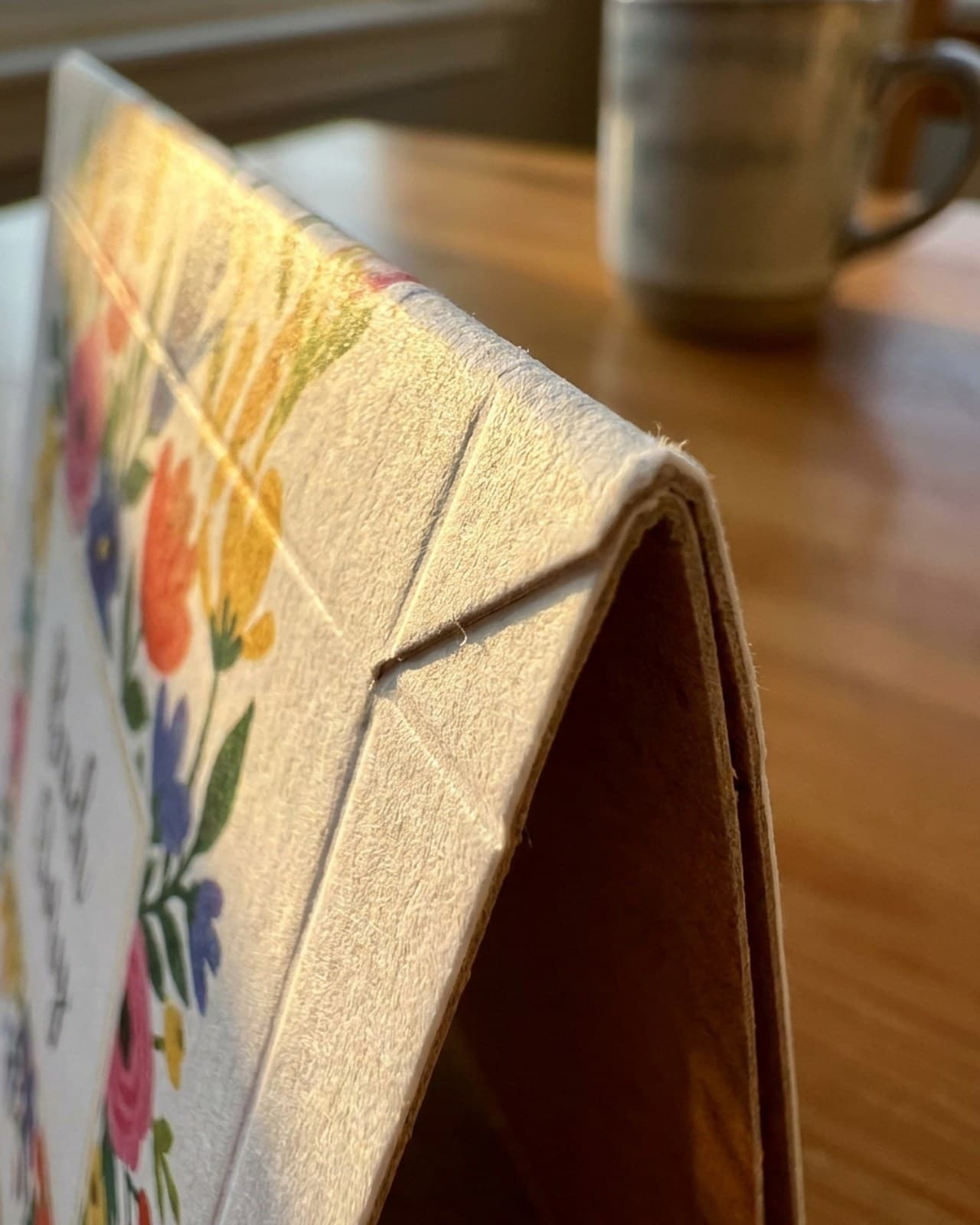
The table tent price includes the selected quantity printed in full color on Tri-Fold Cover Stock, scored for folding into a self-standing shape, and reviewed through the digital proof included with every order before production. The format creates several visible surfaces, so one printed piece can present a message from more than one direction.
The heavy cover stock gives the piece enough body to stand after folding. Scoring guides the folds and reduces the rough cracking that can appear when thick paper is bent without preparation. The finished shape depends on those panels lining up correctly, which makes artwork orientation an important part of proof review.
Each face can perform a different job. One can lead with a headline and image. Another can explain the offer or list a short set of choices. A third can hold a code, contact detail, or next step. Repeating the same dense design on every face wastes the opportunity created by the folded format.
The digital proof shows how the artwork sits on the flat layout before it is folded. Read each panel in its intended direction and check which edges meet. A design that looks correct as one flat rectangle can become upside down or out of order after assembly if the panels were not planned around the fold.
Shipping is separate from the printed product total and is a flat $10 to any US address. Keeping that charge apart makes the two pack prices directly comparable.
Which Table Tent Quantity Should You Choose?
Choose the table tent quantity by counting every surface that needs a piece, estimating replacements, and deciding how long the printed message will remain accurate. A 1,000-piece pack suits a shorter distribution plan, while 2,500 pieces require a stable message and a clear path for using the larger supply.
Begin with the active count. If the pieces will be divided among several branches of one organization, write down the amount for each. Then add replacements for spills, bent folds, lost pieces, and future resets. A replacement reserve should be measured rather than guessed.
The 1,000-piece choice makes sense when the artwork is new, the offer may change, or the first run will teach you how quickly the pieces are used. Track how many go out and how many remain after a set period. That real number is more useful than an optimistic forecast.
The 2,500-piece choice makes sense when the message is evergreen and the distribution system is already known. It also requires clean, dry storage that keeps the pieces flat before folding. Boxes placed under weight or exposed to moisture can affect the scored folds and the finished shape.
Time-sensitive copy shortens useful life. A dated promotion, temporary code, staff name, or changing price can leave a large remainder obsolete. Move changing information behind a code when possible, and keep the printed piece focused on a stable promise that can stay in use.
Which Table Tent Size Works Best?
The best table tent size depends on viewing distance, message length, available surface space, and the visual weight of the artwork. The three choices are 4 x 6, 4.25 x 6, and 5 x 5.5 in. The listed prices use 4 x 6 in, the straightforward default for a focused vertical message.
The 4 x 6 in format suits a short headline, one image, a few supporting lines, and a response path. It occupies modest surface space and works best when the reader is close. The vertical proportion naturally supports a top-to-bottom reading order.
The 4.25 x 6 in format adds a little width without changing the height. That extra room can help a wider logo, a short menu-style list, or a code sitting beside a label. It remains visually close to the default while giving type more horizontal breathing room.
The 5 x 5.5 in format is wider and more compact in proportion. It can support a strong square image or balanced centered design. The reduced height compared with a tall vertical piece means the hierarchy should be simple and the headline should not consume too many lines.
Make a paper model before choosing. Print the artwork at full size, fold a rough triangle, and place it on the intended surface. Check whether it blocks useful space, whether the headline reads from a seated position, and whether the code is comfortable to scan.
Another size must be reviewed as its own configuration. The two totals in this article apply only to the 4 x 6 in default and should not be carried across to the other dimensions.
How Should Table Tent Artwork Be Organized?
Table tent artwork should assign one purpose to each panel, preserve the correct fold orientation, and keep every message readable at close range. The strongest designs use the multiple faces as a short sequence instead of repeating a crowded composition. Each face should make sense even when the others are not visible.
Lead with the clearest benefit. One face may be seen first from one direction and a different face from another, so the main identity should appear wherever a reader can approach the piece. That does not require duplicating every detail. Repeat the name and core message, then vary the supporting content.
Keep copy short. A table tent is read while other activity is happening around it. A compact headline, one supporting sentence, and one response path are easier to absorb than several paragraphs. Move extended information to a web page reached through a code.
Leave room around the score lines. Important words, faces, logos, and codes should not cross a fold. Fine details placed directly on the fold can look distorted after assembly. Treat each panel as its own design area while keeping the colors and type system consistent across the whole piece.
Remember the base or closing panel. Artwork that accidentally appears on a hidden tab adds complexity without helping the message. The proof should clearly identify every visible face and every structural area before approval.
What Do We See on Table Tent Proofs?
The most common table tent proof problem is an upside-down panel. The flat file looks coherent on screen, but one face rotates after folding. We check each panel according to the finished shape and recommend a paper model whenever the orientation is not immediately obvious.
The second problem is copy placed too close to a score. A headline, code, or face crosses the fold and loses clarity. Moving the element inward protects it and gives the assembled piece a calmer appearance. Fold lines need the same respect that cut edges receive on a flat card.
We also see one dense design copied onto every face. That approach ignores the benefit of the format. A better proof gives the front a clear promise, uses another panel for explanation, and reserves another for the response. The reader receives a sequence instead of three competing posters.
Small type can become harder to read on a slanted surface. Print the proof at full size and place it at the expected reading angle. If the supporting copy needs to be enlarged, reduce the number of words rather than squeezing the margins.
Finally, verify all dates, codes, phone numbers, and web addresses. Scan every code from the paper model. A second reader should check the factual lines without judging the design, because familiar details are easy for the designer to skim.
How Long Do Table Tents Take?
Table tents have a production period of 3 to 5 business days after artwork approval. Proof preparation and corrections happen before production, while shipping begins after the printed pieces are complete. The full schedule therefore starts with organized artwork and a careful proof response.
Provide the final copy, original logo, strong images, and any fold guidance with the first upload. If the artwork is already on a table-tent template, identify the finished size clearly. A well-labeled file reduces the chance of orientation questions and protects the review timeline.
Do not approve until a paper model has been folded and every panel has been read in the finished direction. Confirm the quantity, size, dates, response details, code, and hidden structural areas. The production period begins only after that approved proof.
Production takes 3 to 5 business days after artwork approval. The tents ship nationwide and have flat $10 shipping to any US address. Transit follows production, so include it when planning when the pieces must be ready for use.
How Do You Order Table Tents?
Order table tents by counting the required surfaces, choosing one of the three finished sizes, and selecting the quantity that covers the plan plus a measured reserve. For the totals on this page, keep the 4 x 6 in default and Tri-Fold Cover Stock configuration selected.
Use the custom table tents product page to choose between 1,000 and 2,500 pieces and upload the artwork. Review the flat proof, then print and fold a paper model so every panel can be checked in its finished direction.
Read the headline on each visible face, inspect the score areas, test the code, and verify every changing fact. Confirm that the message will remain accurate long enough to use the selected quantity. A smaller useful run is better than a larger supply built around an expiring message.
After approval, save the final flat artwork and one assembled reference piece. The pair makes a later matching run easier and helps future updates preserve the correct panel order and orientation.
Frequently Asked Questions
1,000 4 x 6 in table tents on Tri-Fold Cover Stock cost $641.99. This is the smaller listed quantity. Confirm how many tables, counters, or desks need a piece, how often the message changes, and whether a reserve is useful before approving the full run.
2,500 4 x 6 in table tents on Tri-Fold Cover Stock cost $999.00. Choose this quantity when the message is stable and the distribution count supports it. Dates, prices, codes, and short-term offers should be checked carefully because one change can shorten the life of the remaining pieces.
Custom table tents are available in 4 x 6, 4.25 x 6, and 5 x 5.5 in finished sizes. The totals on this page apply only to the 4 x 6 in default. Review another size as its own configured choice rather than carrying these prices across.
The listed table tents use Tri-Fold Cover Stock, a heavy stock that is scored and folded into a self-standing triangular form. The material supports full-color artwork and repeated close-range viewing. The fold pattern is part of the product, so artwork must follow the correct panel orientation.
Each visible table tent panel should have one clear job. One face can carry the headline and image, another can explain the offer, and another can hold a code or response detail. Keep type readable at close range, leave room around folds, and test the assembled paper proof before approval.
Production is 3 to 5 business days after artwork approval. Proof review and corrections happen before that period. Shipping follows production and is a flat $10 to any US address, so the full schedule must include proof approval, production, and transit.
Related Articles

Postcard Sizes: 4x6, 5x7, 6x9, Bleed and USPS Rules
Standard postcard sizes are 4 x 6, 5 x 7 and 6 x 9 inches. Retail postcard pricing ends at 4.25 [...]
Read More: Postcard Sizes: 4x6, 5x7, 6x9, Bleed and USPS Rules
Door Hanger Sizes: 3.5x8.5 and 4.25x11 in, Die Cut Rules
Standard door hanger sizes are 3.5 x 8.5 and 4.25 x 11 inches. Compare pack prices, bleed, safe [...]
Read More: Door Hanger Sizes: 3.5x8.5 and 4.25x11 in, Die Cut Rules
How to Make a Brochure: A Professional Print Guide
An 8.5 x 11 in brochure can use a half-fold or tri-fold, while 8.5 x 14 in supports a tri-fold. [...]
Read More: How to Make a Brochure: A Professional Print Guide
Custom Flyers Cost: Prices for 100, 250 and 500 Flyers
Custom flyers come in 100, 250, and 500 piece packs on 4 x 6 in stock. Compare every quantity, [...]
Read More: Custom Flyers Cost: Prices for 100, 250 and 500 Flyers