Medical Marketing Materials: What Practices Should Print
 Jean
February 17, 2026Updated November 6, 20268 min read
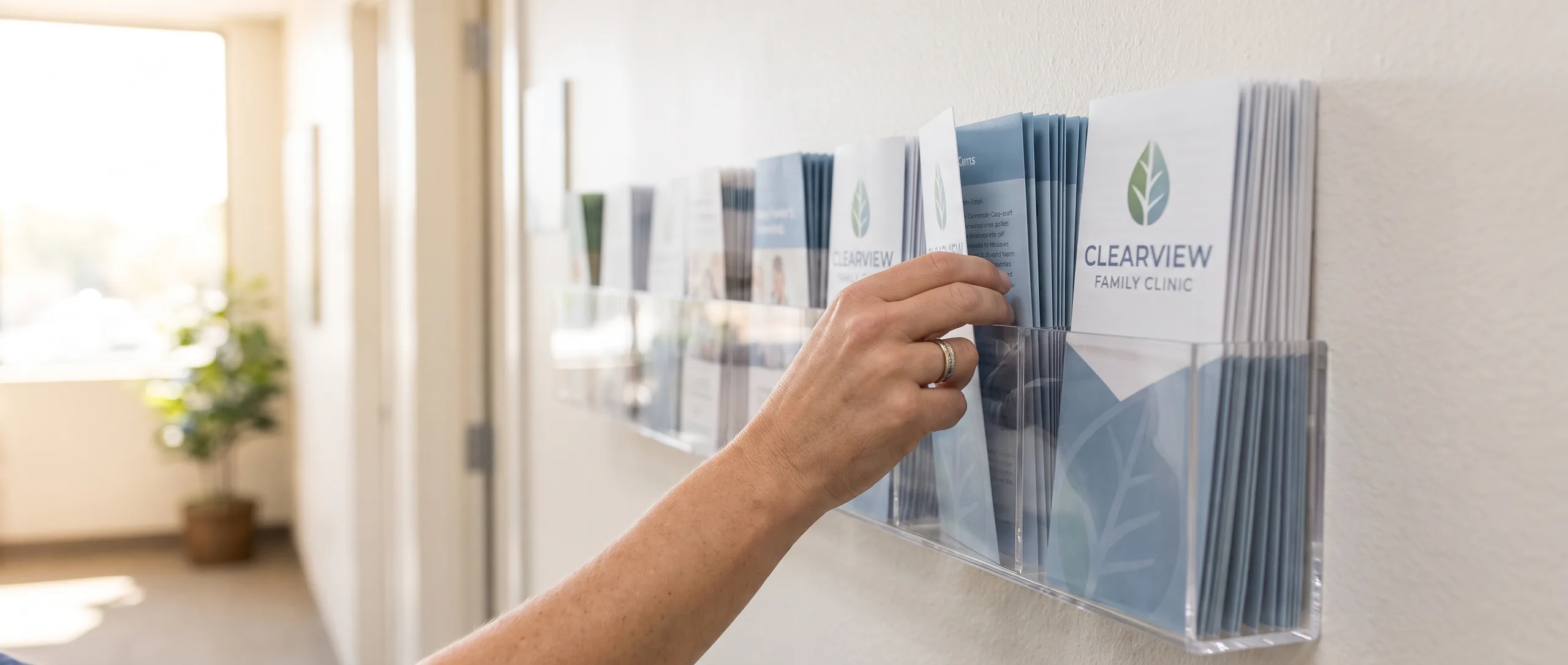
Which medical marketing materials does a practice need first?
Medical marketing materials help people understand a practice's services and next steps. Inline Graphics prints 250 double-sided 8.5x11 tri-fold brochures on 70# text stock for $246.09, with flat $10 ground shipping per design nationwide. Start with readable service information and keep patient information out of the artwork.
Give every piece a specific assignment before choosing quantities. Someone considering a new dental office needs different information from a visitor looking for the therapy reception desk. A public handout can introduce a service, while a directional sign can help someone reach the correct room. Neither needs an entire practice website squeezed onto it.
Start by writing down the questions your public materials should answer: What does the practice offer? Who can call about a first visit? Where is the entrance? How does someone request information? Separate those general questions from individual care instructions, which belong in the practice's private communication process.
The healthcare printing collection can help you identify formats for those settings. Build a small, coordinated group of pieces rather than ordering every format at once. Keep the practice name, public phone number, website and visual style consistent so that each piece is recognizable on its own.
What belongs on brochures, rack cards and small practice cards?
Use brochures for a service overview, rack cards for a focused waiting-room message, and business-size cards for a compact scheduling or referral contact route.
A clinic brochure might explain how to inquire about a first visit and describe its service categories. A dental brochure can outline preventive and restorative services in everyday language. A therapy practice can describe its areas of care and how to ask about availability. Have a qualified member of the practice review clinical wording before it enters the design.
Keep the cover useful when the brochure is closed. Put the practice name and main subject where someone can see them in a display holder. Inside, divide the copy into short sections instead of running one long paragraph across the folds. The brochure size guide explains how the available formats change the space for that layout.
Rack cards do not require unfolding, making them useful for a brief introduction to one service or program. Available sizes are 3.5x8.5 and 4x9 inches on cover stock. Measure the waiting-room holder before selecting a size, and keep the main heading above its front lip. Use the rack card size guide to compare the formats.
A 3.5x2 inch card on 16pt business card stock can carry appointment-request instructions or the practice's referral phone number. Keep the printed artwork generic. A referral contact card should direct people to the appropriate office without containing a patient's name, symptoms or medical history. The gloss finish also deserves a pen test if staff expect to write on a finished card.
How much do medical marketing materials cost?
A first run of 250 double-sided 8.5x11 tri-fold brochures on 70# text stock costs $246.09, with other practice materials priced by their own configuration.
These are separate product prices, not a bundled clinic package. Choose only the pieces that have a distribution plan.
| Item and details | Price |
|---|---|
| 250 brochures, 8.5x11 tri-fold, 70# text stock, full color both sides, folded | $246.09 |
| 500 brochures, 8.5x11 tri-fold, 70# text stock, full color both sides, folded | $256.79 |
| 250 rack cards, 4x9 inches, cover stock, printed both sides | $203.29 |
| 250 practice contact cards, 3.5x2 inches, 16pt gloss cardstock, printed both sides | $74.89 |
| One Standard retractable banner stand with a 33x81 inch single-sided UV printed fabric insert | $213.99 |
The custom brochure ordering page offers 8.5x11 half-fold, 8.5x11 tri-fold and 8.5x14 tri-fold formats. All use 70# text stock with full-color printing on both sides. Select the size and fold before preparing the layout.
Ground shipping is a flat $10 per design. Each design in the cart carries that charge. Artwork services are separate: an existing file or image goes through AI image to print for $14.99 per item. Design it for me costs +$29.99 with two revisions and is free when the item itself is $499 or more. There is no production setup fee.
How can healthcare print be easier to read?
Use plain words, large type, high contrast and a short path from the main message to the next action.
For materials intended for older adults, CDC recommends 16- to 18-point type or larger and the strongest practical contrast between words and background. Those are audience-specific readability recommendations, not a certification that a printed piece meets every accessibility requirement. See CDC's guidance on older-adult health literacy.
CDC also cautions that glossy paper can create glare. Since the 16pt contact cards have a gloss finish, review them under the lighting where people will read them.
Apply that guidance by reducing copy before shrinking type. Use dark lettering on a light, uncluttered field. Avoid placing appointment instructions over a photograph or relying on a pale accent color for essential contact details. Leave room between sections, and use headings that identify the question being answered.
Replace specialized terms when a familiar phrase communicates the same idea. Explain any medical term that must remain. CDC's plain-language resources offer alternatives and tools for clearer health communication.
Include a phone number and readable web address beside a QR code. A person should be able to act without a smartphone. For translated versions, have a qualified reviewer check the language and layout together, since the same message may occupy more space in another language.
What should practices leave out of marketing artwork?
Leave patient information out of every marketing file, and have the practice review advertising claims under the rules that apply to its profession and state.
Never send patient names, diagnoses, appointment records, chart screenshots or identifiable care images as part of a marketing design. Use staged images with appropriate permissions and general service descriptions instead. Blank sample layouts should use clearly fictional content, without copying a real record and hiding only part of it.
HHS explains that HIPAA generally requires written authorization for marketing uses or disclosures of protected health information, subject to limited exceptions. Keeping patient information out of this print project is a practical safeguard, not a complete HIPAA compliance process. Consult the practice's privacy lead about any proposed use. See HHS marketing guidance.
Health advertising rules vary. Check the relevant state medical, dental or therapy board before approving claims about credentials, results, prices or offers. A state physician advertising regulation illustrates why those details require review; it does not establish one national rule for every practice. This is general information, not legal advice.
How should office signs and health fair displays support the handouts?
Use office signage for a short destination or instruction, and a retractable health fair banner for one service message that staff can explain in conversation.
A reception sign might identify the check-in desk or direct visitors to an entrance. Keep promotional signage distinct from required accessibility, safety or regulatory signs, which need their own specifications. A printed marketing sign should not be treated as a substitute for those requirements.
At a health fair, put the practice name and main service near the top of a retractable display. Keep the handout's wording consistent with the banner, but leave detailed explanations in the brochure. Place takeaways where visitors can reach them without obstructing the display or walkway.
Browse the print marketing collection for companion pieces after the brochure message is settled. Proofread every public contact detail, test the QR destination and approve the final digital proof sent after ordering. Nothing prints before approval.
Brochures and rack cards take 3 to 4 business days of production after artwork approval. A weekday approval before 12 PM Central starts production the next business day; later approvals move that starting point. Allow about 3 business days for ground transit after production, and avoid promising a specific arrival date for an event.
Need medical marketing materials or other custom printing? Inline Graphics helps businesses, churches, schools, and event organizers across the country design and print cards, banners, signs, decals, displays, and marketing materials that get noticed. Contact us today for a quote.
Frequently Asked Questions
Start with a service brochure that explains the practice and a small contact or referral card. Add waiting-room rack cards and event displays when there is a specific place and purpose for them.
250 8.5x11 tri-fold brochures on 70# text stock, printed in full color on both sides and folded, cost $246.09. Shipping is a flat $10 per design, with artwork services separate.
Yes. The 3.5x2 inch paper business card uses 16pt gloss cardstock. Use it for general scheduling or referral contact information, and test the intended pen before relying on handwritten notes on the gloss finish.
CDC recommends 16- to 18-point type or larger for materials intended for older adults. Choose large, readable type and strong contrast, and review a full-size printout with the intended audience.
No. Keep names, diagnoses, appointment details, chart images and other patient information out of marketing artwork and files sent for printing. Use the practice's approved private communication process for individual care information.
Brochure production takes 3 to 4 business days after artwork approval. A weekday approval before 12 PM Central starts production the next business day. Ground transit takes about 3 business days after production.
Related Articles
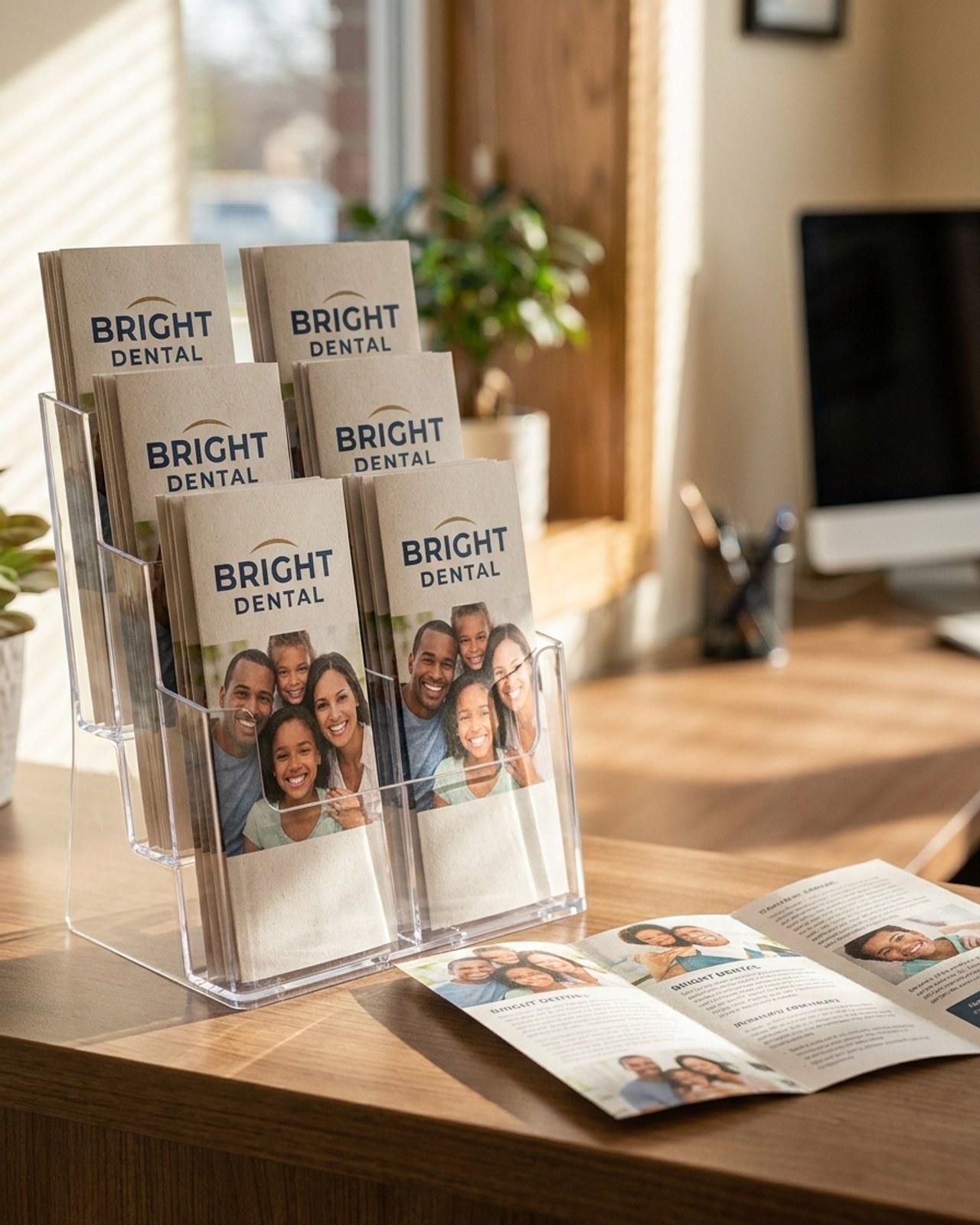
Brochure Sizes: Flat Sheets and Finished Dimensions Guide
8.5 x 11 and 8.5 x 14 are the sold flat brochure sizes; finished widths run from 3.67 to 5.5 [...]
Read More: Brochure Sizes: Flat Sheets and Finished Dimensions Guide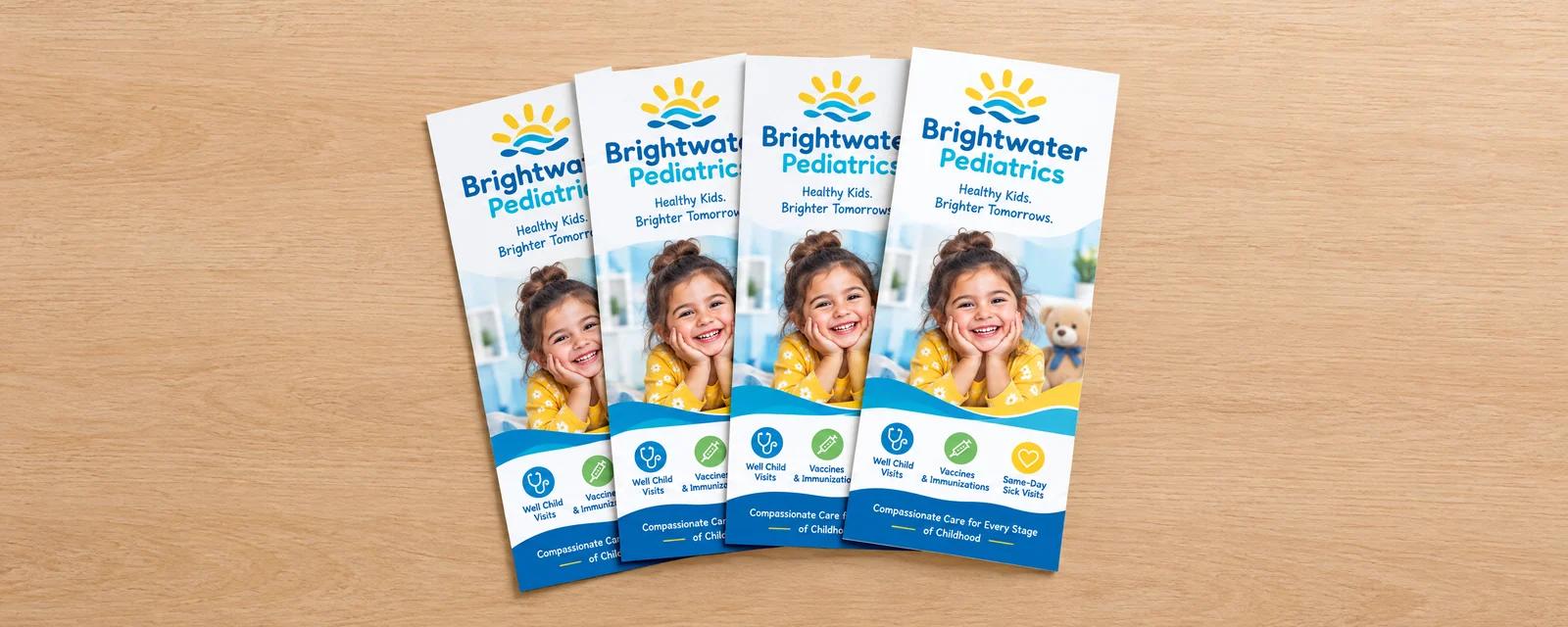
Rack Card Sizes: 3.5x8.5 vs 4x9 for Your Rack Pocket
Rack cards come in 3.5 x 8.5 and 4 x 9 in. 250 of the 4 x 9 cover-stock cards are $203.29. [...]
Read More: Rack Card Sizes: 3.5x8.5 vs 4x9 for Your Rack Pocket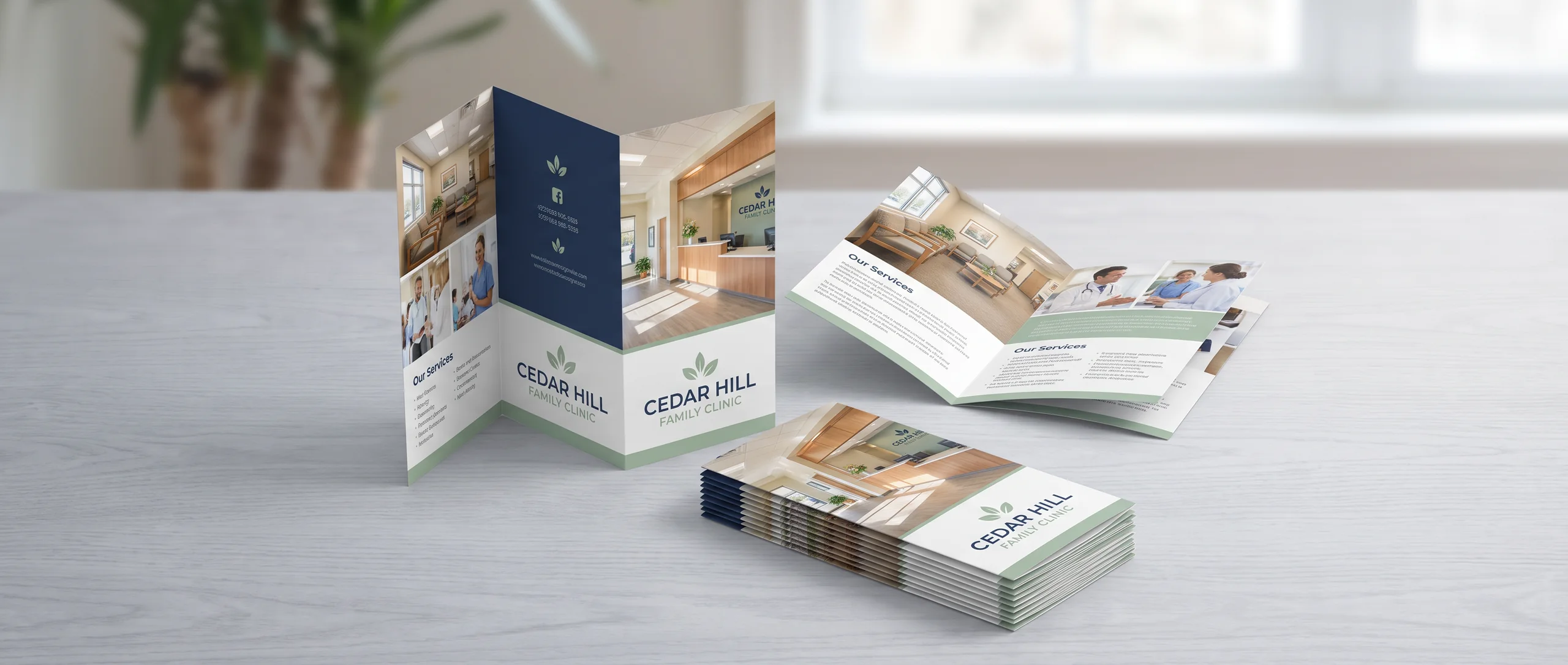
Brochure Paper: A Guide to 70# Text, Folds and Prices
Brochure paper is 70# text in 3 sheet-and-fold options. Compare half-fold and tri-fold prices, [...]
Read More: Brochure Paper: A Guide to 70# Text, Folds and Prices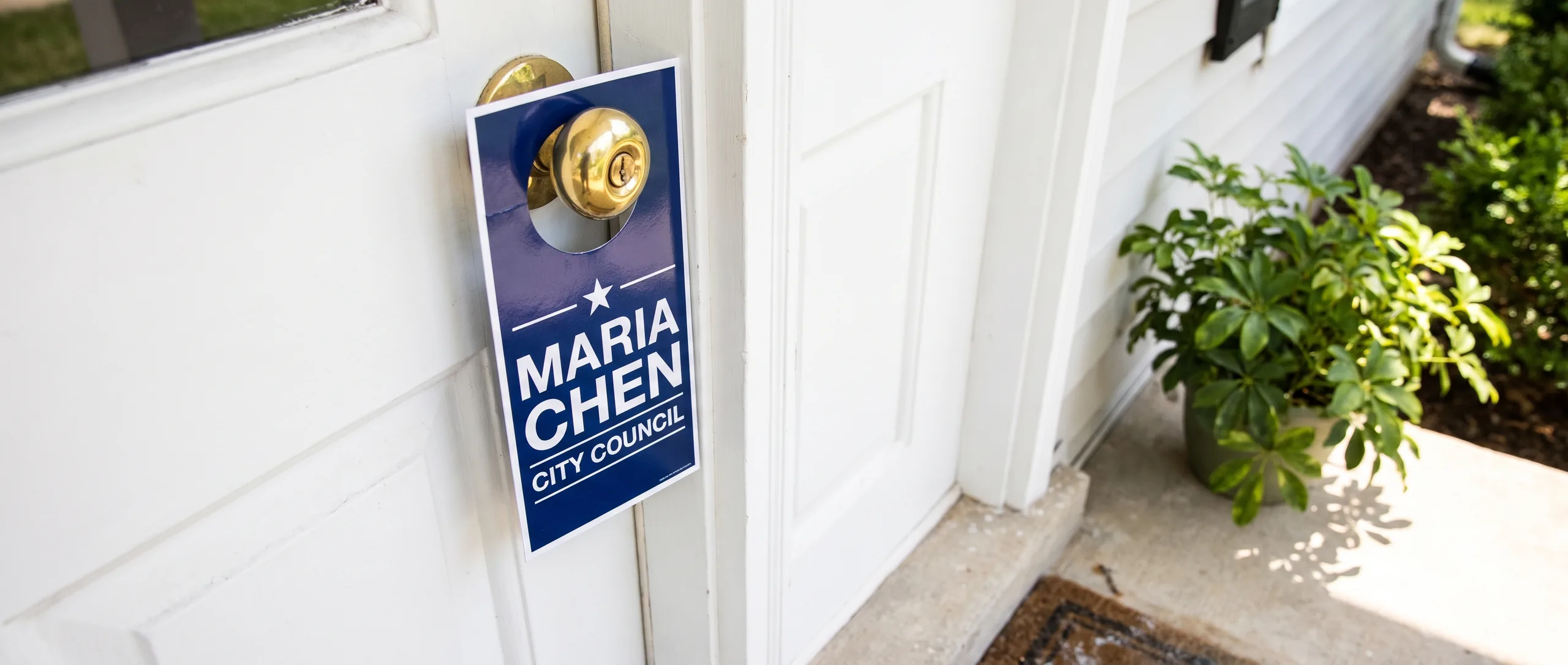
Campaign Door Hangers and Push Cards That Voters Keep
Campaign door hangers start at $246.09 for 250 at 3.5 x 8.5 in, double sided with a UV gloss [...]
Read More: Campaign Door Hangers and Push Cards That Voters Keep