Why Businesses Are Switching to Fabric Banners
 Tomas Amaya
March 25, 2026Updated October 16, 20268 min read

What Is a Fabric Banner?
A 36 x 90 inch tension fabric display with graphic and frame is $449.39. It uses a dye-sublimated pillowcase graphic on an aluminum frame. Printed in the USA the next business day after artwork approval and shipped nationwide, flat $10 shipping to any US address. Choose vinyl when the job requires a traditional outdoor banner.
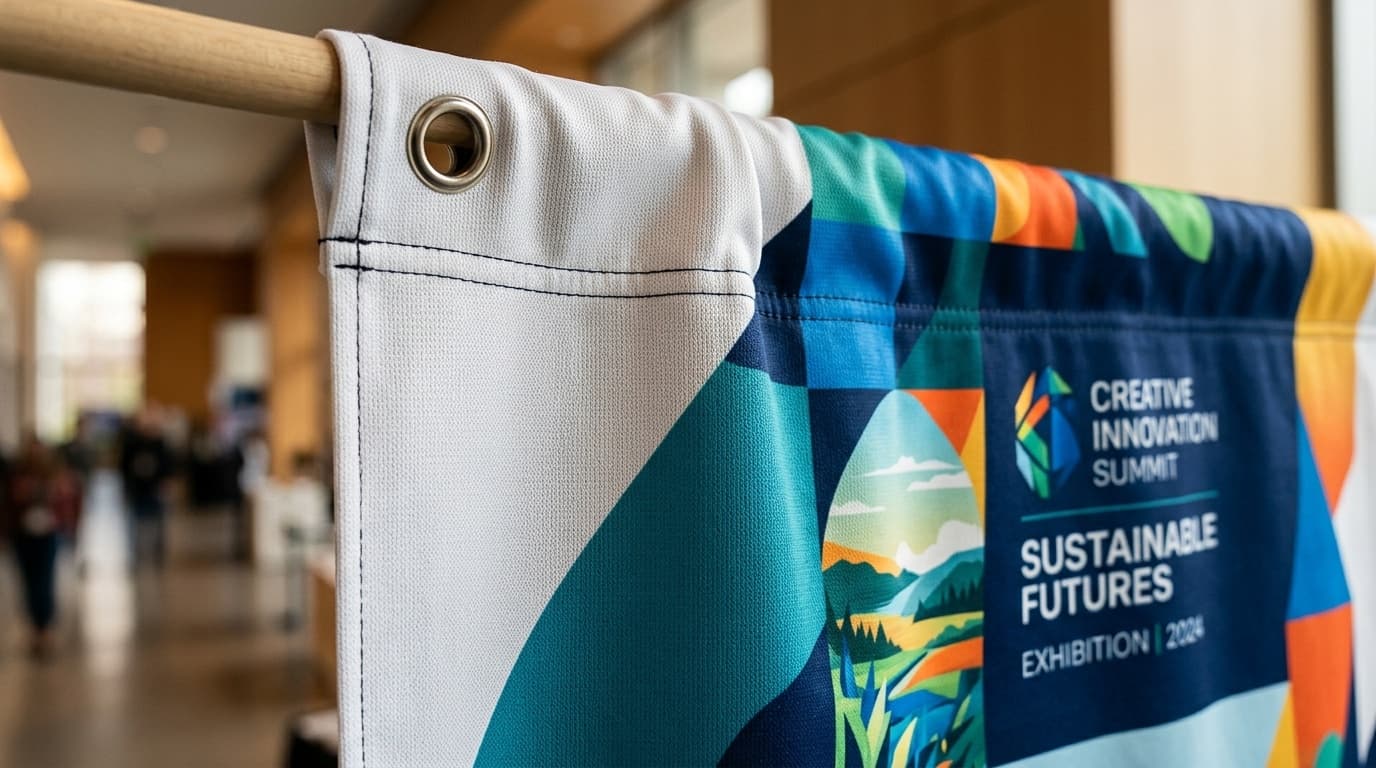
A fabric banner is a printed textile graphic, but the useful buying question is how that graphic is finished and supported. A loose hanging banner, a pillowcase display, and a step and repeat are all fabric formats with different hardware. They should not be treated as interchangeable products.
The tension fabric stand is an indoor display available with its own frame. Its graphic is dye-sublimated polyester sewn as a pillowcase, then pulled over an interlocking aluminum tube frame. A heavy-duty steel base plate and carrying case come with the complete kit.
A 36 x 90 inch Graphic + Frame kit is $449.39. The 48 x 90 inch kit is $534.99. Single- and double-sided graphics cost the same. Production is the next business day after artwork approval, and shipping is a flat $10 to any US address.
| Display | Printed construction | Supported by | Best fit |
|---|---|---|---|
| Tension fabric stand | Dye-sublimated pillowcase graphic | Aluminum tube frame and steel base plate | Indoor booth, lobby, or event display |
| Step and repeat backdrop | Printed fabric photo wall | Telescoping backdrop frame | Sponsor wall or group photo area |
| Vinyl banner | Flat printed vinyl with selected finishing | Existing wall, rail, or approved hanging points | General indoor or outdoor banner use |
| Mesh banner | Perforated 9oz mesh with hems and grommets | Open fence or approved barrier | Outdoor location where air needs to pass through |
The first decision is the setting and mounting plan. Choose the exact product only after you know where it will stand or hang.
How Is Tension Fabric Different From Vinyl?
Tension fabric becomes part of a fitted display system. The pillowcase graphic wraps around the frame, which controls its shape. Vinyl remains a flat sheet and depends on the wall, fence, rail, or other approved surface used to hang it.
The surface also behaves differently. The textile graphic has a soft fabric texture. Vinyl has a smooth, weather-resistant surface and is available in 13oz, 15oz, and 18oz weights. The material choice changes the construction, storage method, and installation plan.
A matte textile surface can reduce reflections compared with glossy material under the same lighting, which can help at photo areas and presentation spaces. The result still depends on the exact fabric, print, lighting angle, and camera. It is not a guarantee that every fabric graphic will be glare-free.
Do not choose fabric only because it sounds more refined, or vinyl only because it is familiar. A fabric graphic without the correct frame is not a freestanding display. A vinyl banner without safe hanging points is not an installation plan.
For a booth wall or tall indoor panel, a tension fabric stand can create a finished shape with no separate wall mounting. For a flat promotion on an existing surface, a vinyl banner may solve the job with fewer components.
When Does a Fabric Display Make Sense?
A fabric display makes sense when the event or indoor location needs a portable branded surface with its own support hardware. Trade show booths, registration areas, lobbies, and presentation spaces are common examples. The stand can be moved as a complete display rather than depending on permission to attach a banner to a wall.
Choose the 36 inch width when floor space is tight or the panel sits beside a table. Choose the 48 inch width when the message needs more horizontal room and the booth plan can spare the extra foot. Both are 90 inches tall.
Single sided works against a wall. Double sided works in an island booth, open corner, or lobby where people can see the rear. Because both choices cost the same on this product, placement decides the correct option.
A wide photo area calls for a different format. A step and repeat backdrop is built as a broad wall for sponsor marks and photographs. It should not be confused with the narrower tension stand simply because both use printed fabric.
The same fabric formats can support church programs, gala backdrops, brand launches, school events, and showroom displays. Choose the format from the job: a wide photo wall, a narrow supported panel, or a flat banner with approved hanging points.
When Does Vinyl Make More Sense?
Vinyl makes more sense when the job is a traditional flat banner, especially where weather resistance or custom dimensions matter. Custom printed banners are available in 13oz, 15oz, and 18oz vinyl. The product can be configured with hems, grommets, or pole pockets according to the selected mounting plan.
For an open fence, use mesh instead of treating fabric or solid vinyl as a universal answer. The 9oz mesh product is perforated so air can move through it, and hems and grommets provide defined attachment points. The condition of the fence and the approved fasteners still matter.
Outdoor use should be based on the exact product specification. A fabric trade show graphic should not be described as weatherproof because another polyester product is rated for a different use. Material names alone do not establish UV life, water resistance, or wind performance.
Indoors, vinyl can still be practical for a temporary wall banner, a gym promotion, or a space with existing attachment points. Fabric is a better fit when the textile look and self-supported frame are part of the display requirement.
How Should Fabric Display Artwork Be Designed?
Design the artwork for the exact finished shape. A tension fabric stand is 36 x 90 or 48 x 90 inches, so it needs a tall composition. Put the headline and logo in the upper half, where a table, chair, person, or product sample will not block them.
Use one main message. The stand can identify the organization, state one benefit, and give one next step. A service catalog or event schedule belongs on a handout or screen. Long paragraphs become difficult to read while someone is moving through an aisle.
Keep type and logos away from seams, zipper areas, and the outer edges. Use a high-resolution file or vector artwork. A small web logo may look sharp on screen and become soft when enlarged to 90 inches tall.
Review both sides when ordering a double-sided graphic. Label each file by viewing direction, and make sure the proof shows the intended front and back. The price may be the same, but the artwork still needs two deliberate faces.
How Should Fabric Displays Be Packed and Cleaned?
Pack the graphic and hardware according to the instructions for that display. Keep the frame tubes, steel base plate, and carrying case together. Fold or roll the printed graphic only as directed, and do not place sharp hardware against the printed surface.
A fabric graphic can pack into a compact space after it is removed from its frame, but the full travel volume still includes the frame, base, and case. Packing size depends on the exact hardware and the approved folding or rolling method, so it should be checked before a flight or multi-city event.
Do not rely on a universal claim that every fabric graphic is washable or crease-proof. Polyester products can use different inks, coatings, seams, and finishing. Follow the care instructions supplied for the exact item before washing, steaming, ironing, or applying a cleaner.
Inspect the graphic before the event. Give the fabric time to settle on the frame, check that the zipper closes without strain, and confirm that the frame is fully connected. If a mark remains, use only the treatment permitted by the product instructions.
After the event, make sure the graphic is dry and clean before returning it to the case. Keeping the components together reduces the chance of reaching the next venue with a graphic but no compatible base or frame.
What Should You Check on a Fabric Display Proof?
Check the ordered size, the number of printed sides, the placement of the headline, and the quality of the artwork. A small logo enlarged across a tall panel can become soft. The proof can show position, but it cannot restore detail that is absent from the source file.
Look for important copy near a seam or too low on the display. Move the main message upward before approval if a table or counter will stand in front. On double-sided orders, check that the two faces are identified correctly.
A digital proof comes with the order, and approval starts the production window. Read every name, URL, phone number, and event date on the digital proof. Production is the next business day after approval, and shipping transit follows it.
How Do You Choose the Right Display?
Start with four questions: Will it stand or hang? Will it be indoors or outdoors? Will people see one side or both? Does the location already have approved attachment points? Those answers usually separate tension fabric, step and repeat, vinyl, and mesh.
Choose the tension fabric stand for a portable indoor panel with its own frame. Choose a step and repeat for a broad photo wall. Choose vinyl for a flat banner with a known hanging surface. Choose mesh for an open fence where a perforated panel is appropriate.
Then measure the exact space and review the product specifications. The material is only one part of the order. Hardware, finishing, size, artwork, proof approval, production, and shipping determine whether the display is ready for the place it has to work.
Frequently Asked Questions
36 x 90 inches costs $449.39 for the display with its graphic and frame. A 48 x 90 inch display is $534.99. Single- and double-sided graphics cost the same at each size.
A tension fabric display uses a dye-sublimated polyester pillowcase over a frame. A traditional banner uses a flat vinyl sheet finished for hanging. Choose by the mounting system and setting, not by the word banner alone.
No. Cleaning instructions depend on the exact fabric, ink, seams, and finishing. Follow the care instructions supplied for the specific graphic and do not assume that every polyester display is machine washable.
No. Fabric works well when the display needs a fitted textile surface and its own frame. Vinyl can be the simpler choice for a flat wall banner, temporary promotion, or a location that already has approved hanging points.
Yes. The 36 x 90 and 48 x 90 inch tension fabric stands can be ordered single or double sided at the same price. Use double sided when visitors can approach from both directions.
One business day is the production window after artwork approval. Shipping follows production and costs a flat $10 to any US address.
Related Articles

Fabric Backwall Display Guide: 8, 9 and 10 Ft Booth Fit
An 8 ft fabric backwall comes in 8, 9, and 10 ft widths. Compare booth fit, frame and graphic [...]
Read More: Fabric Backwall Display Guide: 8, 9 and 10 Ft Booth Fit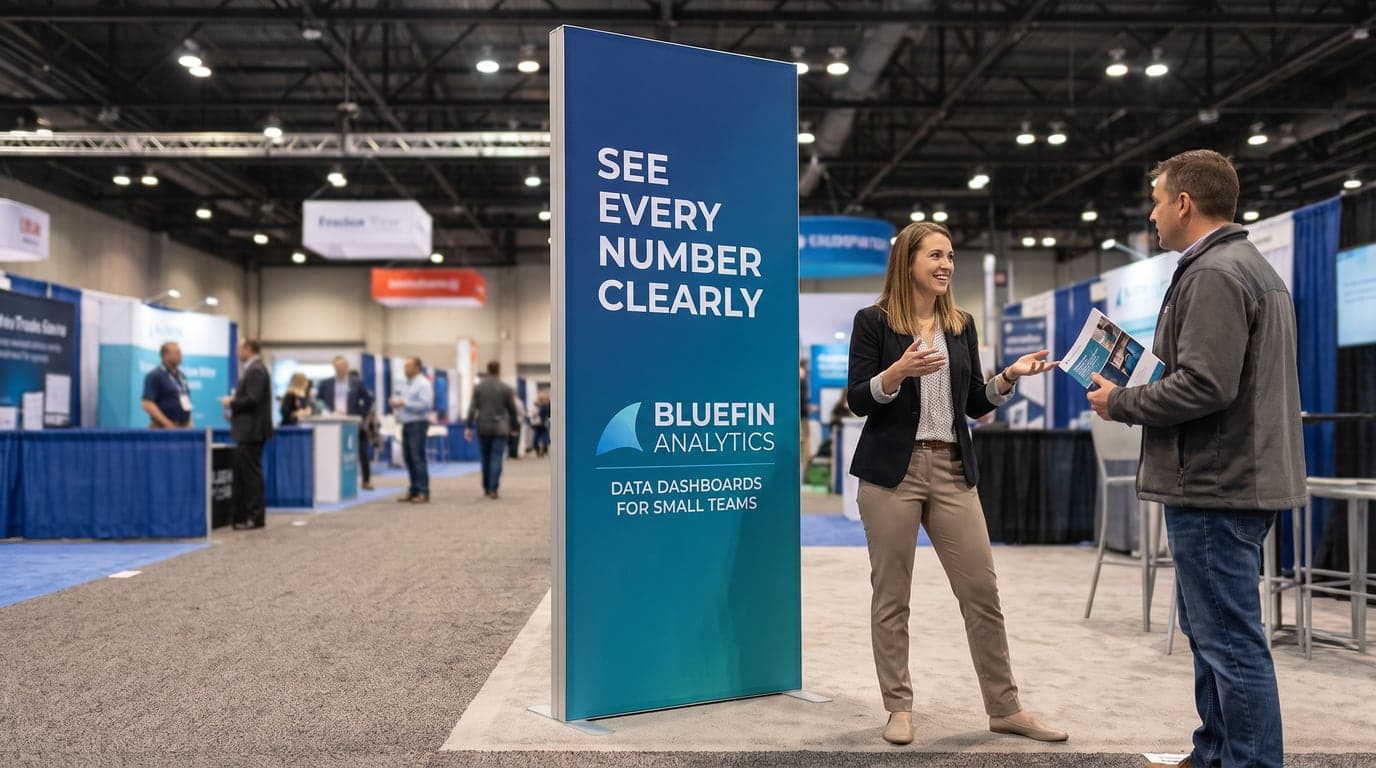
Pop Up Display Design: 36 x 90 and 48 x 90 in Tension Fabric
A pop up display design is 36 by 90 in or 48 by 90 in, a tension fabric pillowcase on an [...]
Read More: Pop Up Display Design: 36 x 90 and 48 x 90 in Tension Fabric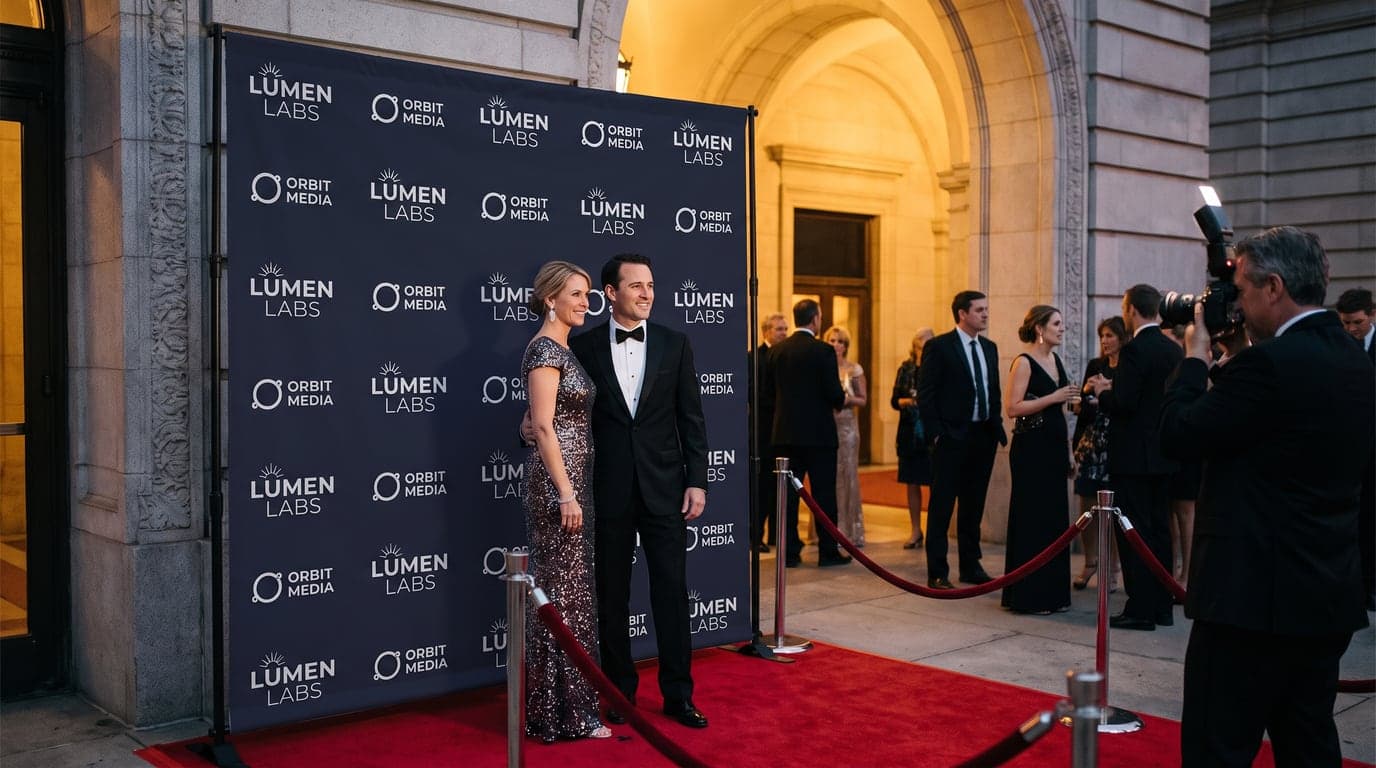
Step and Repeat Backdrop: 8, 9 and 10 ft Sizes and Prices
A step and repeat backdrop is a repeating logo wall, 8 ft tall and 8, 9 or 10 ft wide. What the [...]
Read More: Step and Repeat Backdrop: 8, 9 and 10 ft Sizes and Prices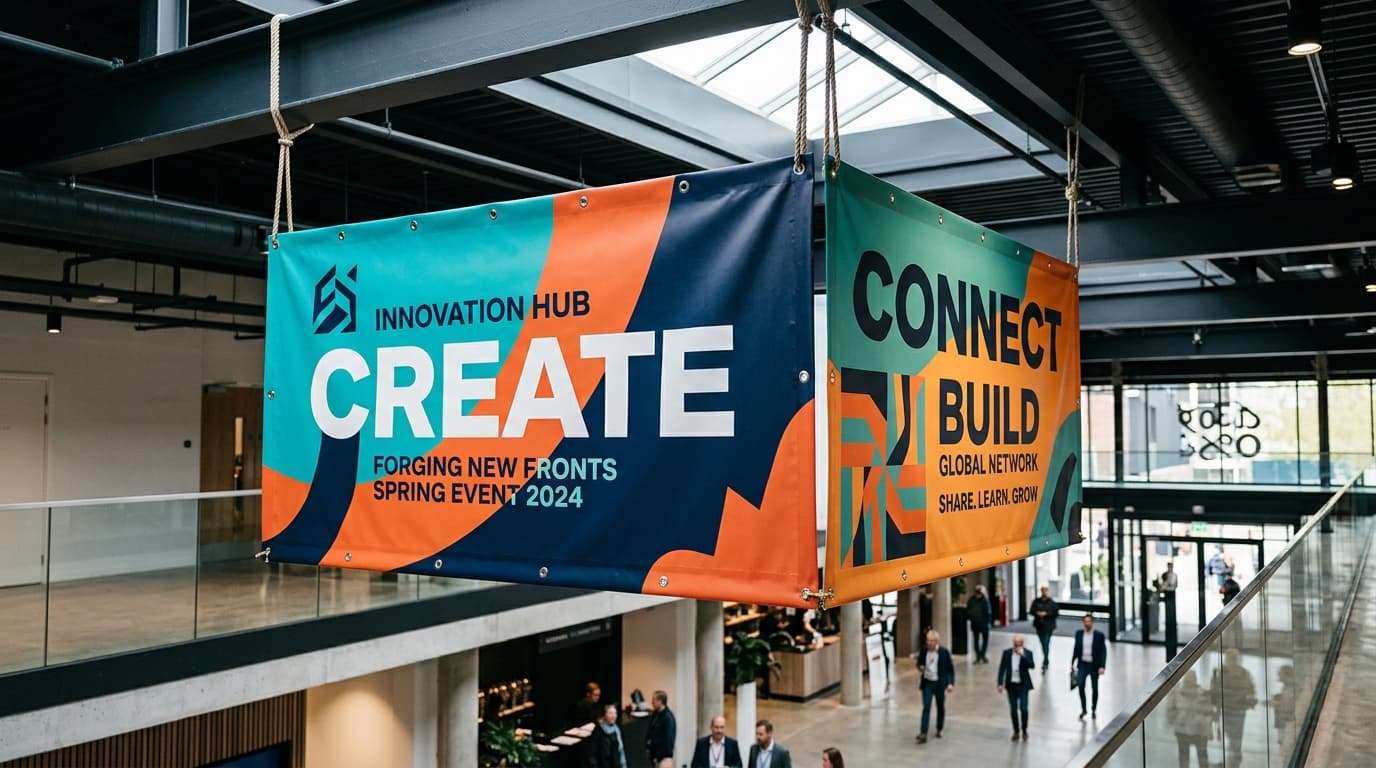
Single vs Double-Sided Banners: Cost, Uses and Specs
Double-sided banners use 18oz vinyl and cost about 60 percent more than single-sided. Compare [...]
Read More: Single vs Double-Sided Banners: Cost, Uses and Specs