Fabric Backwall Display Guide: 8, 9 and 10 Ft Booth Fit
 Daniel
March 28, 2026Updated October 16, 20269 min read
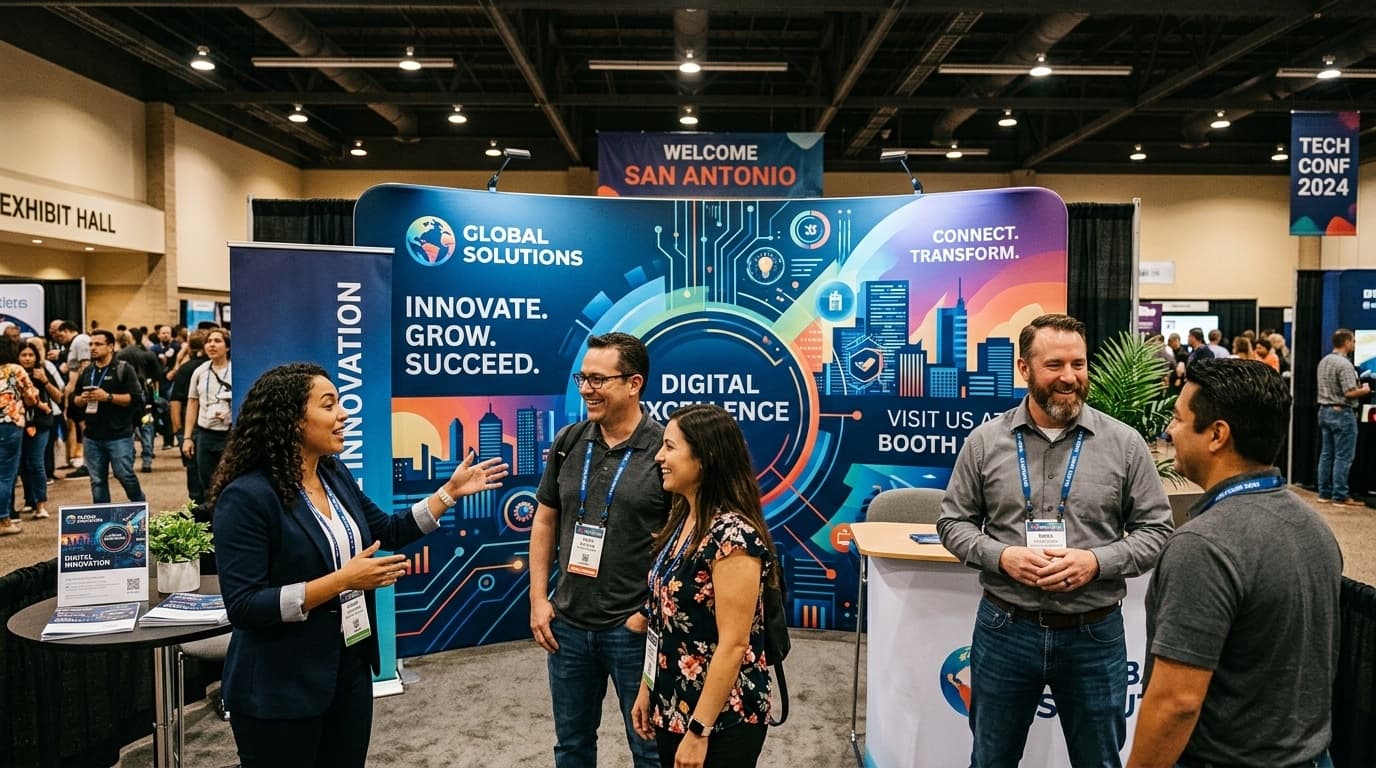
How Much Does a Fabric Backwall Display Cost?
An 8 ft tall fabric backwall comes in 8, 9, and 10 ft widths. The 10 x 8 ft kit is $534.99 and the 8 x 8 ft kit is $492.19, with the graphic, frame, and bag. Printed in the USA the next business day after artwork approval, it ships nationwide for a flat $10.
| Backwall choice | Printed size | What is included | Price |
|---|---|---|---|
| Step and repeat kit | 8 x 8 ft | Graphic, frame, feet, carrying bag | $492.19 |
| Step and repeat kit | 9 x 8 ft | Graphic, frame, feet, carrying bag | Select on the product page |
| Step and repeat kit | 10 x 8 ft | Graphic, frame, feet, carrying bag | $534.99 |
| Graphic Only | Selected width x 8 ft | Replacement fabric, no frame or bag | Select on the product page |
The graphic is single-sided 9oz wrinkle-free dye-sublimated fabric with hemmed edges and pole pockets. Production is the next business day after artwork approval. Shipping follows production and costs a flat $10 to any US address.
This backwall is a complete photo and booth backdrop, not a promotional counter. A counter, table cover, retractable stand, or second wall is a separate product. Build the floor plan before adding those pieces so the main backwall fits the space first.
What Is a Fabric Backwall Display?
A fabric backwall display is a large printed graphic supported by a portable frame. On this step and repeat kit, the fabric connects to a telescoping backdrop frame through pole pockets. The frame adjusts to the ordered width and uses feet to stand behind the printed face.
The backwall creates the broad visual surface of a booth or photo area. It can carry a repeating logo pattern, an event name, sponsor marks, or one simple brand scene. People stand in front of it, so the artwork must still read when part of the lower wall is covered.
The product is 8 ft tall in every width. The choice is 8, 9, or 10 ft across. It does not become a 10 ft tall display when the wider size is selected. Measure width and height separately, and confirm the venue's maximum display height before ordering.
What Fabric Backwall Formats Exist?
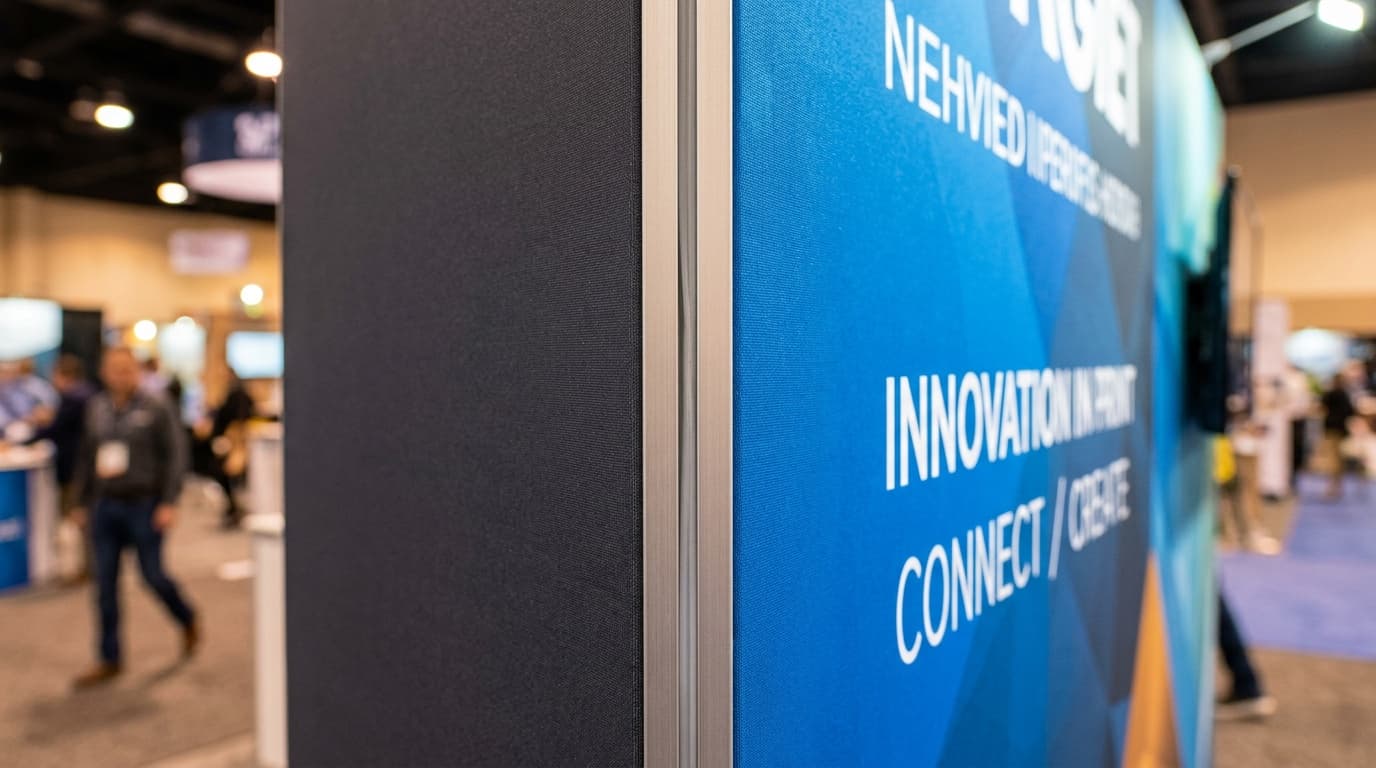
Fabric backwalls are a broad industry category. A straight backwall presents one flat printed face. A curved backwall uses a shaped frame to bend the graphic around the scene. A tension fabric tower is narrower and taller, while a backlit fabric wall places lighting behind a compatible graphic.
Those names describe general display types, not options included with every product. The linked step and repeat is a straight, single-sided 8 ft backdrop on a telescoping frame. It does not include a curved frame, tower, or lighting system. Verify the exact hardware on the product page instead of assuming one fabric format includes another format's features.
The larger wall and SEG-channel close-up in this guide illustrate other fabric display systems. The priced step and repeat kit uses pole pockets, not an SEG channel, and its available widths stop at 10 ft.
How Do You Choose an 8, 9, or 10 Ft Width?
Choose the width from the clear area available after aisles, neighboring exhibits, doors, tables, and required setbacks are accounted for. An 8 ft wall can fit a tighter booth or photo corner. A 10 ft wall gives a larger group more horizontal room. The 9 ft choice sits between them.
Measure the actual floor plan rather than relying only on a booth label. A space sold as 10 x 10 ft may still have pipe, drape, electrical service, or furniture that reduces the usable width. Record the widest clear span and the depth needed for the frame feet.
Think about the photograph too. A wall that barely fits the booth may still be too narrow for a group photo if people stand close to the edges. A wall that is wider than the assigned footprint can cross the boundary and create a problem with the organizer.
Use the 8 ft option when the wall serves one or two people in a compact area. Use the 10 ft width when the measured space and expected group size support it. Select 9 ft when the clear span or composition falls between those two.
The same sizing process applies whether the wall is used at a trade show, church event, gala photo area, brand launch, school program, or showroom. The subject changes, but the wall still needs a measured footprint, a readable graphic, and a clear viewing direction.
How Should the Backwall Artwork Be Designed?
Design the artwork for the exact ordered width and 8 ft height. A repeating step and repeat pattern should keep every logo large enough to read in a photograph, with even spacing across the wall. A booth backdrop with one headline should place that message in the upper half. Aim for five to seven words and test whether they can be read from 30 ft away. Keep the logo prominent at the top center or top left.
Keep essential type, faces, and marks away from pole pockets, hems, and the outer edges. Plan for the bottom 2 ft to be blocked by people, a covered table, or a counter, and keep critical content above 4 ft when possible. Use it for background color or supporting graphics rather than the only phone number, URL, or offer.
One strong image works better than a collage when the wall carries a booth message. For a photo wall, repeat one mark or a small sponsor set consistently instead of mixing several unrelated layouts. Check the proof at the full wall proportion, then zoom in to inspect every name.
Small web graphics can become soft when enlarged to an 8 ft wall. Send vector artwork when available, or the highest-resolution image file. A digital proof can show size and placement, but it cannot create detail missing from the original logo.
How Do a Backwall and Counter Work Together?
The backwall attracts attention and controls the scene behind the staff. A promotional counter or covered table creates the surface where a visitor can stop, see a sample, use a tablet, or continue a conversation. They should share the same colors and mark while doing different jobs.
Do not assume a counter includes shelves, locks, or a wheeled case unless the selected product says so. Counter hardware varies. Verify its width, height, storage, and case separately before building the booth plan around those features.
Promotional counters are commonly about 38 to 42 inches tall, which creates a standing interaction surface. That typical range is a planning reference, not a specification for every counter. Check the selected counter's listed dimensions before placing artwork or arranging the floor plan.
A standard 6 or 8 ft table can use a fitted table cover when a separate counter is not needed. Keep the table far enough forward that staff can move behind it, but not so far that it blocks the aisle.
The wall should hold the main name and message. Put the logo on the counter front, a short value statement below it, and secondary branding on side panels. Keep the top clear for samples, business cards, or a tablet. Repeating the entire wall design on every surface makes the booth busy without making the offer clearer.
How Is a Fabric Backwall Different From a Tension Stand?
The step and repeat is 8 ft tall and 8, 9, or 10 ft wide. It uses a telescoping frame and is built as a broad background for photographs or a booth. The tension fabric stand is a narrower 36 x 90 or 48 x 90 inch pillowcase display on an aluminum tube frame and steel base plate.
Choose the broad backdrop when people will stand in front of it or when the booth needs one wide visual wall. Choose the narrow tension stand when the message belongs beside a table, near an entrance, or at an open booth corner.
The formats also handle their printed faces differently. The step and repeat is single sided. The tension fabric stand can be single or double sided. Match the product to how visitors move through the space instead of treating every fabric display as the same backwall.
What Should You Check on a Backwall Digital Proof?
Check whether the artwork matches the ordered 8, 9, or 10 ft width, whether the repeating pattern is even, and whether the main marks stay visible when people stand in front. A file built for one width should not be stretched into another without checking the spacing again.
Check names, dates, sponsor marks, and URLs. A misspelled sponsor repeated across the wall becomes many visible errors in every photograph. Read each unique mark before approving the proof.
A digital proof comes with the order. Check edge clearance and pole-pocket areas. Important copy should not run into the finishing. Artwork approval starts production, so the proof is the point to correct the file before the fabric is printed.
How Do You Prepare the Backwall for an Event?
Open the carrying bag before the event and confirm that the telescoping frame, feet, and graphic are present. Practice extending the frame and fitting the pole pockets without forcing the fabric or hardware. Follow the included assembly instructions for the exact kit.
At the venue, keep the entire frame inside the assigned footprint and place the printed face toward the aisle or camera. Confirm that the feet sit flat and that the wall does not block an exit, sign, access point, or neighboring booth.
Keep the bag and packing material together for breakdown. After the event, inspect the fabric and follow the care instructions supplied for that graphic. Washing methods vary by fabric, so use only the method specified for your graphic.
Order the complete kit when you need the frame and bag. Choose Graphic Only when you already have the compatible frame and need replacement artwork. Confirm the width, event date, and artwork on the digital proof before approval.
Frequently Asked Questions
10 x 8 ft is $534.99 for a step and repeat backdrop with its graphic and frame. The 8 x 8 ft kit is $492.19. Both include the telescoping frame and carrying bag.
Available widths are 8, 9, and 10 ft. Each backdrop is 8 ft tall. Choose the width that fits the measured booth or photo area without crossing an aisle, door, neighboring exhibit, or required clearance.
The kit includes a single-sided 9oz wrinkle-free dye-sublimated fabric graphic with hemmed edges and pole pockets, a telescoping frame with feet, and a carrying bag. Graphic Only is a replacement fabric and does not include the frame or bag.
No. The step and repeat backdrop is single sided. The printed face points toward the camera or aisle, while the telescoping frame and feet remain on the back.
One business day is the production window after artwork approval. Shipping follows production and costs a flat $10 to any US address, so the arrival plan must also allow for carrier transit.
Put the main name or repeating logo pattern above the lower area that people, tables, and counters may block. Keep essential words away from pole pockets and edges, and review the entire wall on the digital proof before approval.
Related Articles
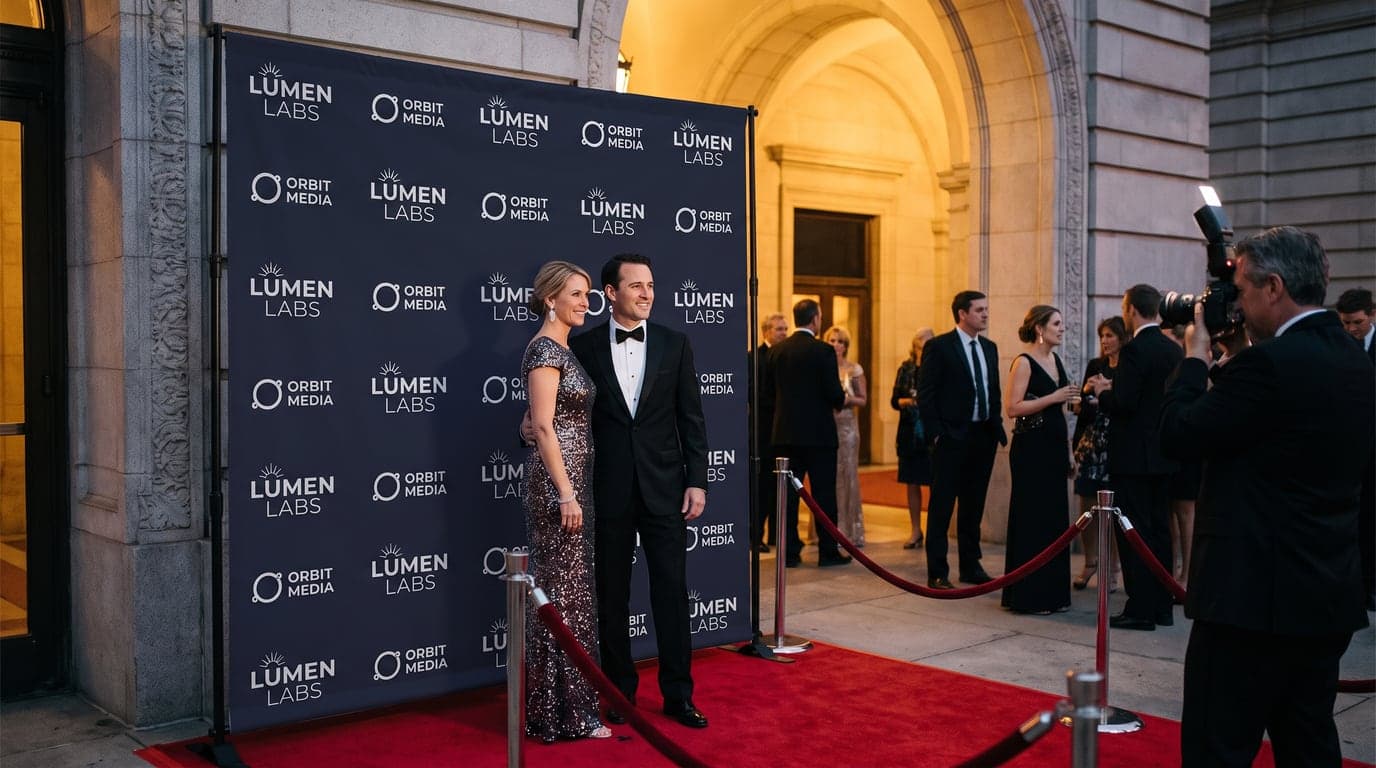
Step and Repeat Backdrop: 8, 9 and 10 ft Sizes and Prices
A step and repeat backdrop is a repeating logo wall, 8 ft tall and 8, 9 or 10 ft wide. What the [...]
Read More: Step and Repeat Backdrop: 8, 9 and 10 ft Sizes and Prices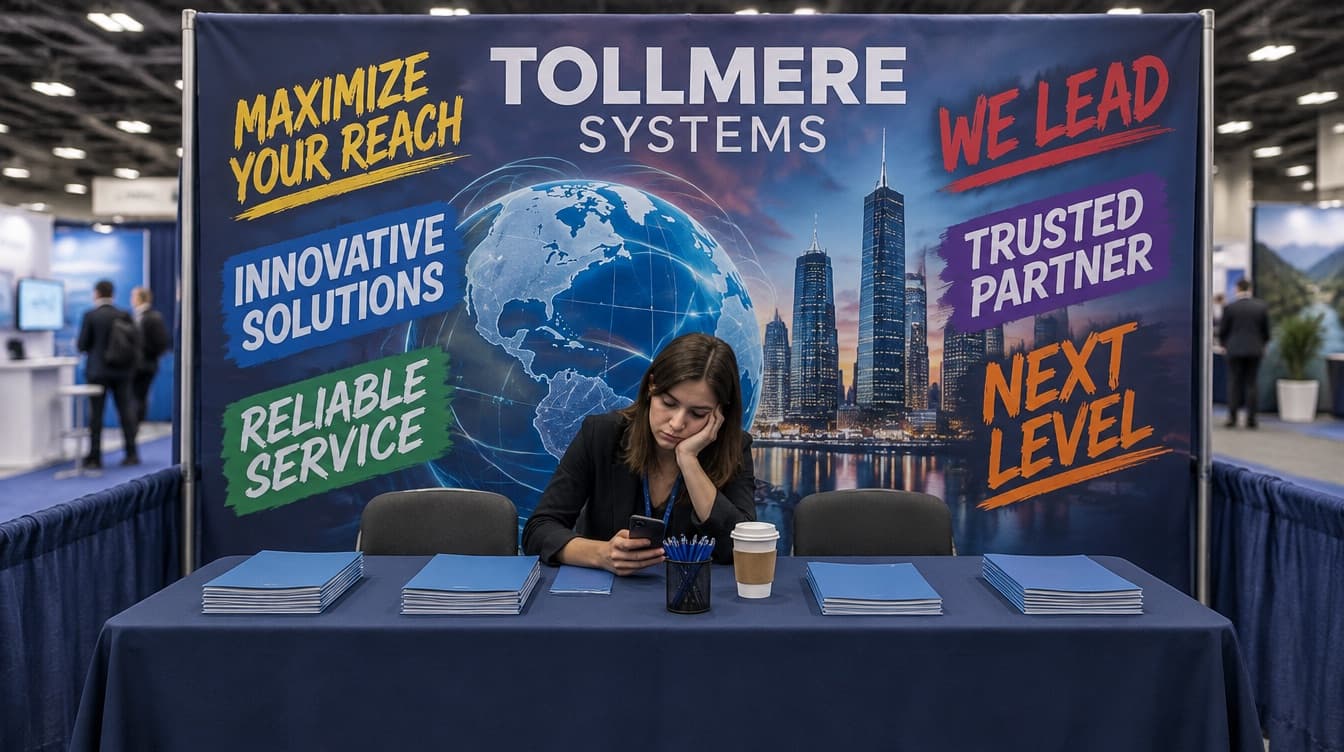
Trade Show Display Mistakes: One Headline on the Wall
A back wall becomes hard to scan when it is full of paragraphs. A tension fabric stand is 36 by [...]
Read More: Trade Show Display Mistakes: One Headline on the Wall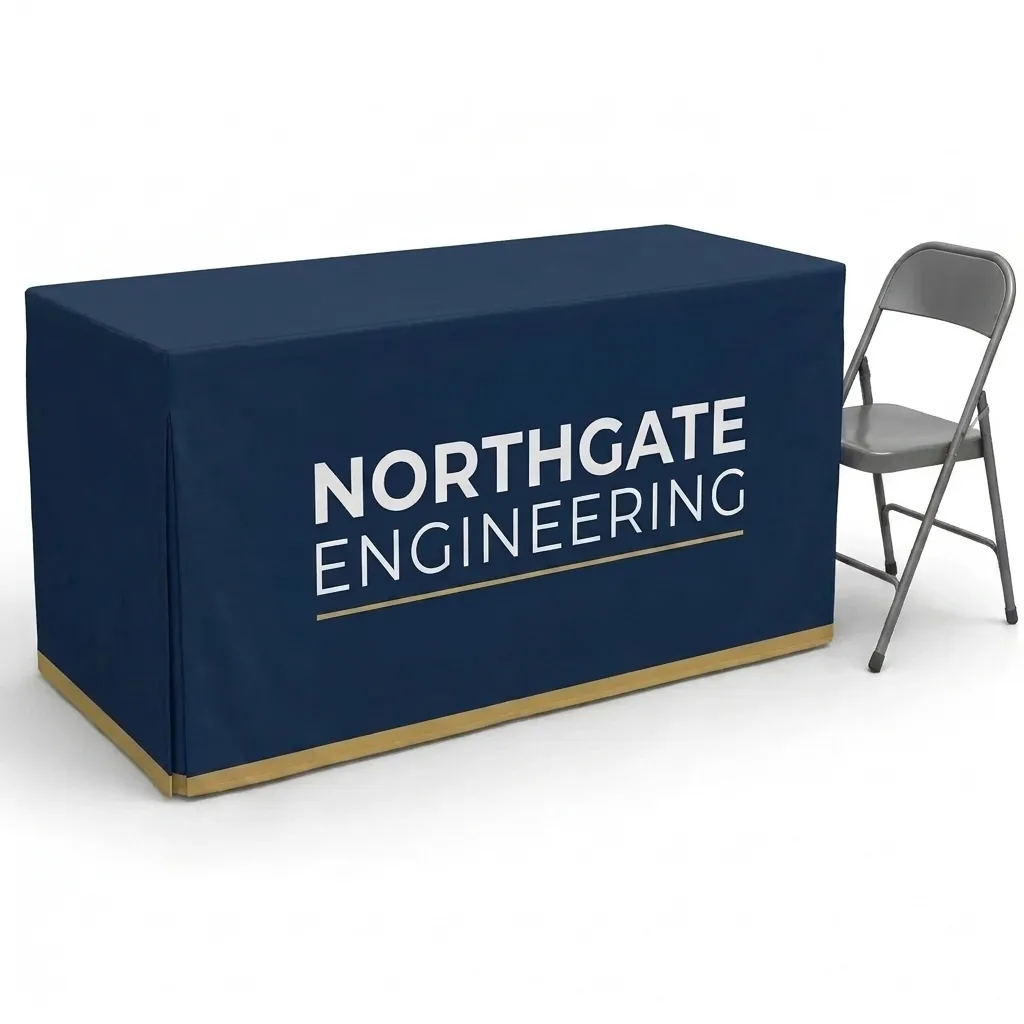
Fitted vs Stretch vs Throw Table Cover: Which to Buy
Fitted and stretch covers fit 6ft or 8ft tables, while throws drape over 72 x 30 x 30 or 96 x [...]
Read More: Fitted vs Stretch vs Throw Table Cover: Which to Buy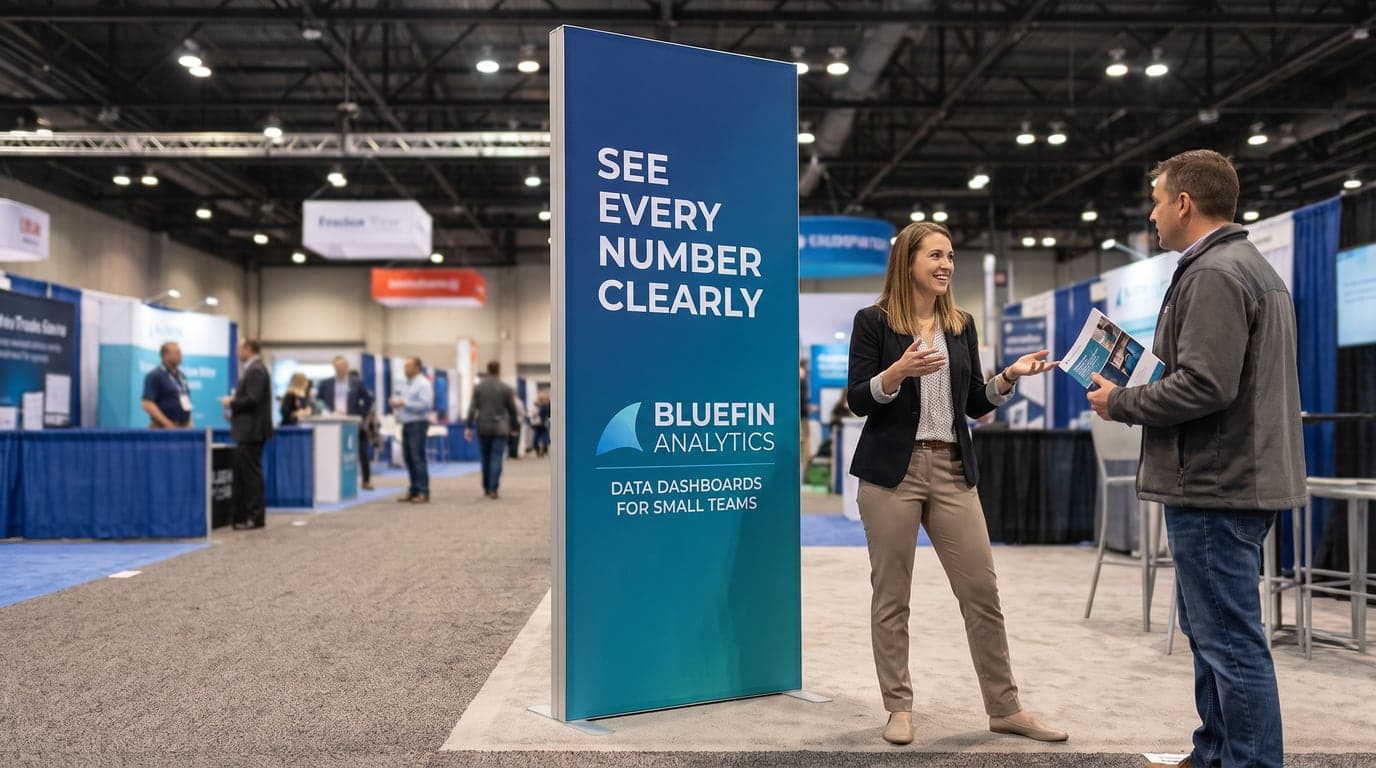
Pop Up Display Design: 36 x 90 and 48 x 90 in Tension Fabric
A pop up display design is 36 by 90 in or 48 by 90 in, a tension fabric pillowcase on an [...]
Read More: Pop Up Display Design: 36 x 90 and 48 x 90 in Tension Fabric