Pop Up Display Design: 36 x 90 and 48 x 90 in Tension Fabric
 Tomas Amaya
January 6, 2026Updated October 16, 20268 min read
What Size Is a Tension Fabric Pop Up Display?
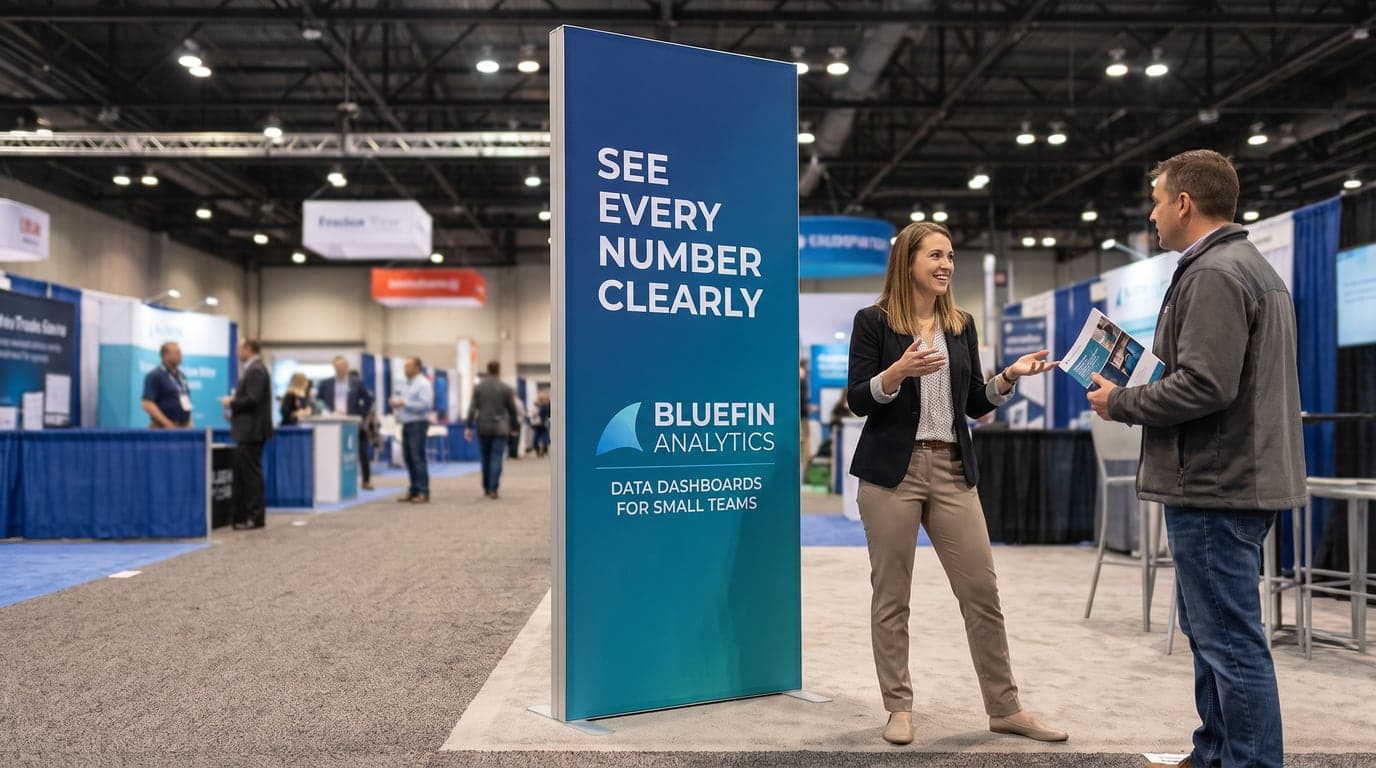
A 36 by 90 inch tension fabric pop up display is $449.39; the 48 by 90 inch stand is $534.99. Both use a dye sublimated pillowcase on an aluminum frame, and single sided and double sided cost the same. Put the headline in the top half, where the aisle can read it.
The pop up on this page is the back wall of a small booth, a photo wall, or a lobby graphic. It is not an 8 foot fabric wall and not a retractable banner. Design the file to the size you are actually buying.
The two kits on the tension fabric stand page include the frame, the steel base plate and a carrying case. Single sided and double sided are the same price. The page opens on 36 by 90 inches, single sided.
| Size | Graphic and frame |
|---|---|
| 36 x 90 in | $449.39 |
| 48 x 90 in | $534.99 |
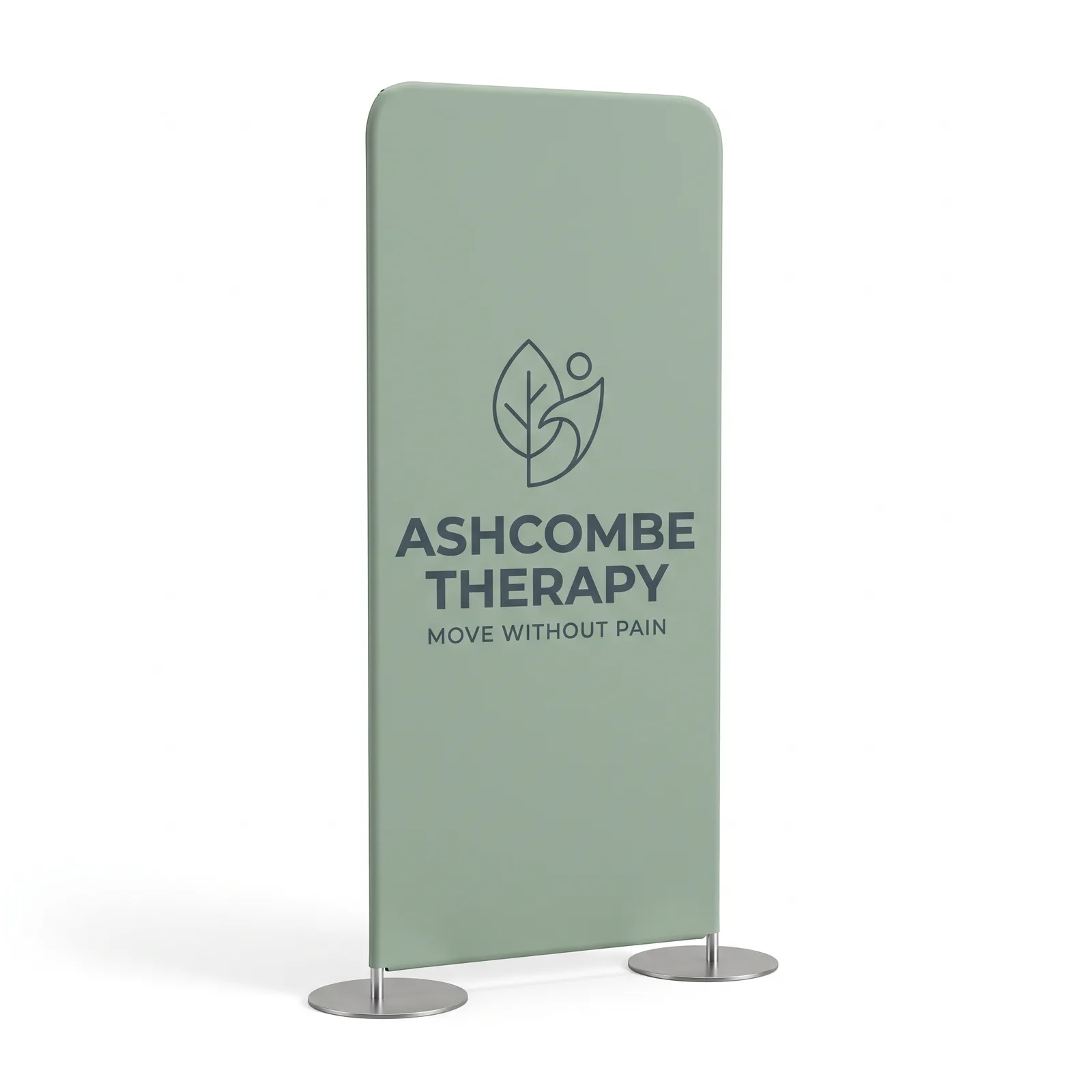
The frame is interlocking aluminum tube. It locks together with no tools. The pillowcase slips over it and zips, so the tubes disappear behind the print. A heavy duty steel base plate holds the stand. A carrying case is included with the graphic and frame kit. Setup is the tubes, the zip and the base, which is why the file has to be right before you travel. You will not be rebuilding the layout in the aisle.
The pillowcase is the graphic. It is dye sublimated, so the print is in the fabric rather than a film on top of it. The product page calls that finish glare free, with no curl, and machine washable. It packs down in the case. A replacement pillowcase is a separate order for a frame you already own. It does not include the frame, the base or the case. Order the full kit the first time. Order the pillowcase alone when the hardware is already in the closet and the message changed.
Where Should the Headline Go on a Pop Up Display?
Someone walking the aisle does not stop to read a paragraph. The pillowcase is 90 inches tall. The useful part of that height is the top half.
- One headline, short enough to read while walking, high enough to clear the people standing in front of the stand.
- The logo in that same upper area. A logo at the bottom is a logo behind a shoulder.
- One picture in the middle, if you need a picture at all. A product, a face, or a simple scene. Not a collage.
- The bottom of the graphic as color or a simple pattern. Chairs, a table and the people working the booth cover it.
Do not put the offer, the booth number or the only phone number in the bottom 18 inches. That band is decoration. If the booth number has to be on the wall, put it up with the headline, large, or put it on a small sign at the table where people are already stopped.
The 36 inch width is a narrow wall. Five to eight words fit if the type is large. A sentence does not. The 48 inch width buys you 12 more inches, which is enough for a slightly longer line or a logo beside the words. It is not enough for two columns of body copy. Both sizes are 90 inches tall, so the top half rule does not change when you spend the extra $85.60. You are buying width, not a second headline zone.
Design the file at the size you are buying: 36 by 90, or 48 by 90. A file drawn for a 10 foot wall, then shrunk, turns the headline into the small type you were trying to avoid. A file drawn for a landscape banner, then cropped, loses the top of the logo. Build portrait, at the inch size, and look at the proof from across the room.
What Contrast Works on a Show Floor?
Hall lighting is flat and overhead. A pale graphic goes gray.
Use light type on a dark field, or a dark brand color on a clean light field. Skip pastel on pastel and color on color. The pillowcase is dye sublimated fabric, so it stays matte under a flash. That helps photographs of the booth. It does not help a low contrast file. If the headline does not pop when you look at the proof in grayscale, it will not pop on the floor.
White type on a photo of a sky is the usual miss. The sky is already light. The type vanishes. Put the words on a solid band, or move them onto the dark part of the picture. A thin font makes the same mistake. The aisle is not a magazine page. A heavier weight, in one color, is the line that survives.
The same rule is why a shiny vinyl banner and this pillowcase photograph differently. Vinyl can glare under a flash. This fabric does not. You still have to give the flash something to see. Contrast is the something.
Single Sided or Double Sided?
On this product the second side does not cost more. The reason to choose it is the floor plan.
Against the back of a booth, single sided is enough. The frame's back is not the aisle. You are not saving money by choosing it. You are choosing not to print a face nobody walks past. In an island space, or anywhere people walk behind the stand, double sided gives you a finished face on both sides for the same $449.39 or $534.99.
A lobby, a salon floor or a photo moment can be either. If guests stand on one side and the wall is behind the frame, single sided. If guests walk around the stand to get into the photo, double sided, so the back of the frame is not bare tube in the picture. The rear of the stand, before the pillowcase is on, is the tube frame and the steel plate. The zip hides that on the faces you print.
You do not get two unrelated designs for the price of one unless you build them that way in the file. Double sided means a finished back. Use the same headline rules on that back. A back that is a block of sponsor names is still a block of sponsor names, and it still fails from ten feet.
How the Stand Is Used
Trade show backdrops are the main job. The stand is the wall behind a 6 ft or 8 ft table, tall enough that the headline clears the people working the booth. A branded photo wall uses the same kit: people stand in front, the words stay in the top half, and the matte fabric keeps the flash from blowing out a vinyl sheen.
Corporate and tech events, a pop-up retail wall, and a reusable display you wash and pack are the other jobs on the product page. The case is what makes the reuse practical. Tubes, plate and pillowcase go in it. At the next show you zip on the same pillowcase, or you order a replacement pillowcase if the offer changed.
A step and repeat backdrop, a retractable banner and a canopy tent are different products. This stand is the pillowcase on the aluminum frame, in the two sizes above. If the booth also needs a printed cloth on the table, that throw is its own page and its own price. The stand does not include it.
Keep the words on the pillowcase true at the next show. A date baked into the headline makes the case a one-time purchase. Print a second graphic later if one event needs its own line, and leave the everyday pillowcase undated.
What We See on Pop Up Proofs
- A brochure pasted onto the pillowcase. Paragraphs do not read from ten feet.
- The logo in the bottom third, then a photo of the booth where the logo is missing.
- Type sized for a 10 foot wall on a 36 inch wide graphic. This stand is 36 or 48 inches across and 90 inches tall. Design at that size.
- A date baked into the headline. The pillowcase is reused. Keep the words true at the next show.
- Pale type on a pale photo. It looked fine on the laptop and it disappears under hall lights.
- Double sided art that puts the only offer on one face and a pattern on the other, in an island booth where half the aisle sees the pattern.
- Graphic only ordered as a first stand. There is no frame, no plate and no case in that box.
Production
Next day production starts after the free proof included with every order is approved. Add shipping after that. The order ships for a flat $10. Put the show date in the notes if the case has to be in the crate before a date you cannot move.
The stand is printed in the USA. Order the size on the tension fabric stand page.
Frequently Asked Questions
36 by 90 inches costs $449.39, and 48 by 90 inches costs $534.99. Both are a dye sublimated pillowcase on an interlocking aluminum tube frame with a steel base plate. A carrying case is included.
No. On this stand, single sided and double sided are the same price at each size. Double sided is the one to pick when the stand sits in an island booth and people walk behind it. Against a wall, single sided is the same dollars and the back is not in the aisle.
No tools. The aluminum tubes lock together, the pillowcase slips over the frame and zips closed, and the steel base plate holds it. A replacement pillowcase is a separate order for a frame you already own. It does not include the frame, the base or the case.
In the top half of the 90 inch graphic. People in the booth block anything low. Keep the logo and the one line above the crowd, and treat the bottom of the pillowcase as pattern or empty space. A call to action in the bottom 18 inches is a call to action nobody sees.
Light type on a dark ground, or a strong brand color on a light ground. Pastel on pastel looks fine on a laptop and disappears under overhead hall lights. The fabric is dye sublimated, so it does not glare the way a shiny vinyl banner does under a camera flash.
Next day production after you approve the free proof included with every order. Add shipping after that. The order ships for a flat $10.
Related Articles
6 ft Table Throws: 3 Sided or 4 Sided, Sizes and Fit
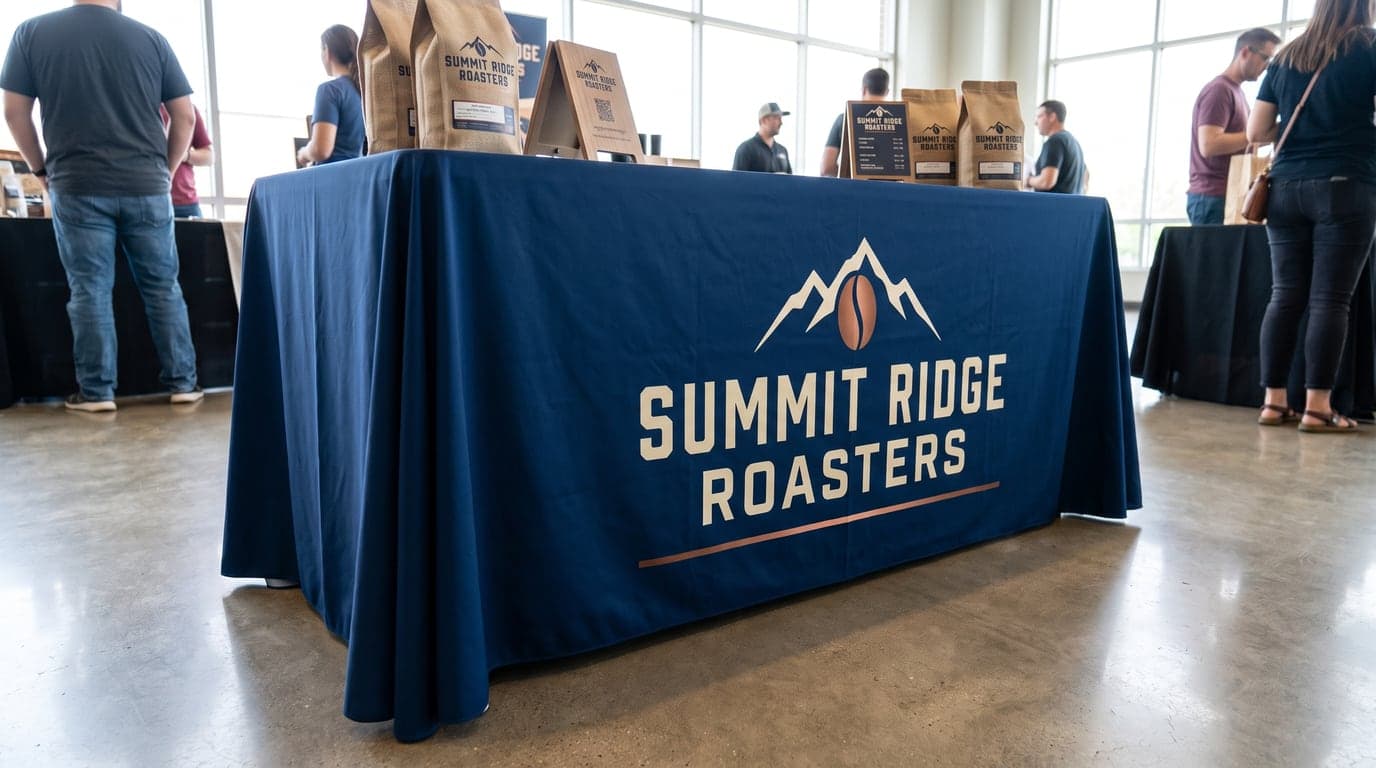
A 6 ft table throw fits a 72 by 30 by 30 in table. The 3 sided finish is 126 by 62.25 in and [...]
Read More: 6 ft Table Throws: 3 Sided or 4 Sided, Sizes and Fit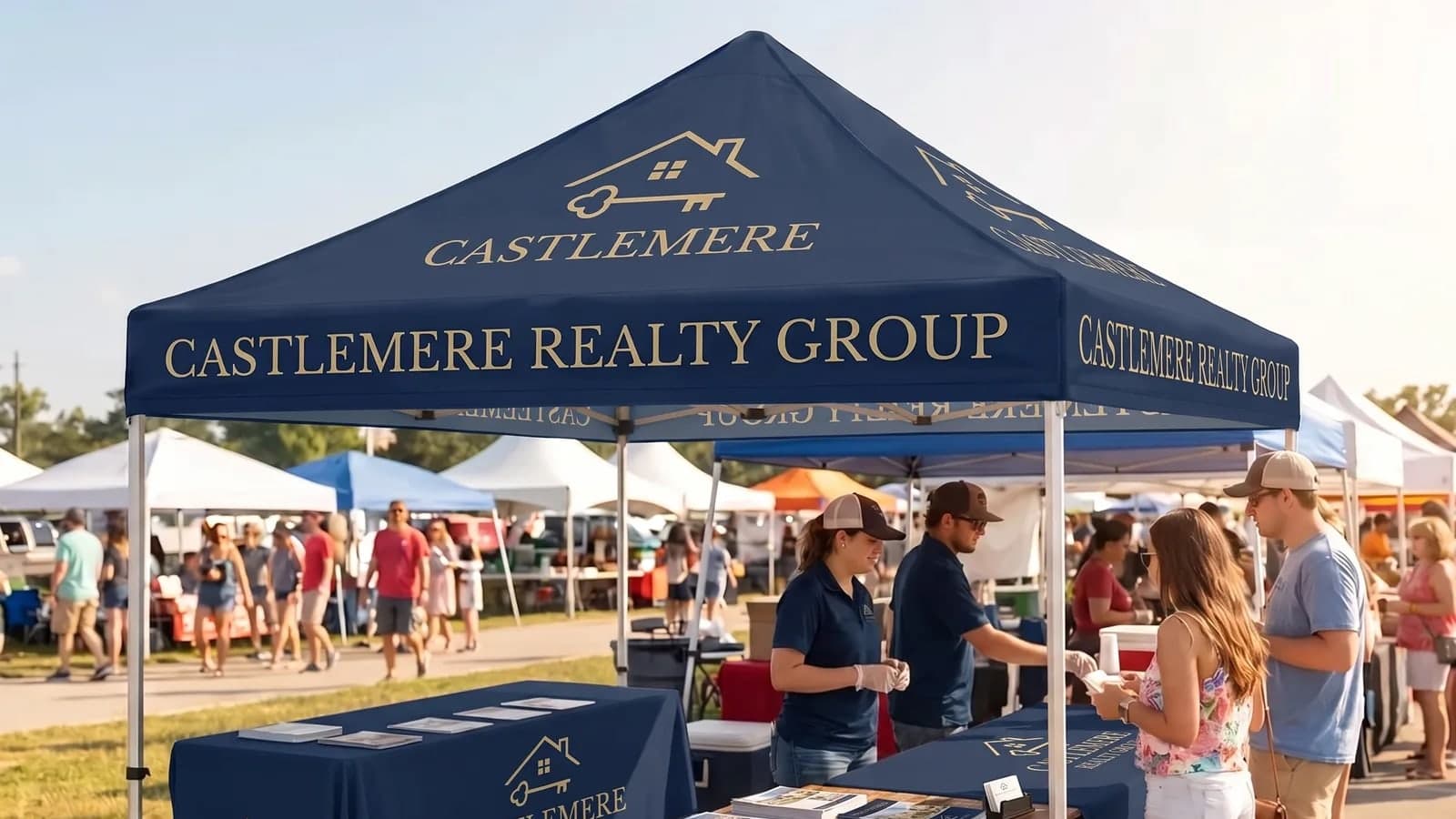
Trade Show Booth Checklist: Tent, Wall, Table, Stands
A 10 by 10 event tent with canopy and frame is the first booth order, in 3 to 4 business days. [...]
Read More: Trade Show Booth Checklist: Tent, Wall, Table, Stands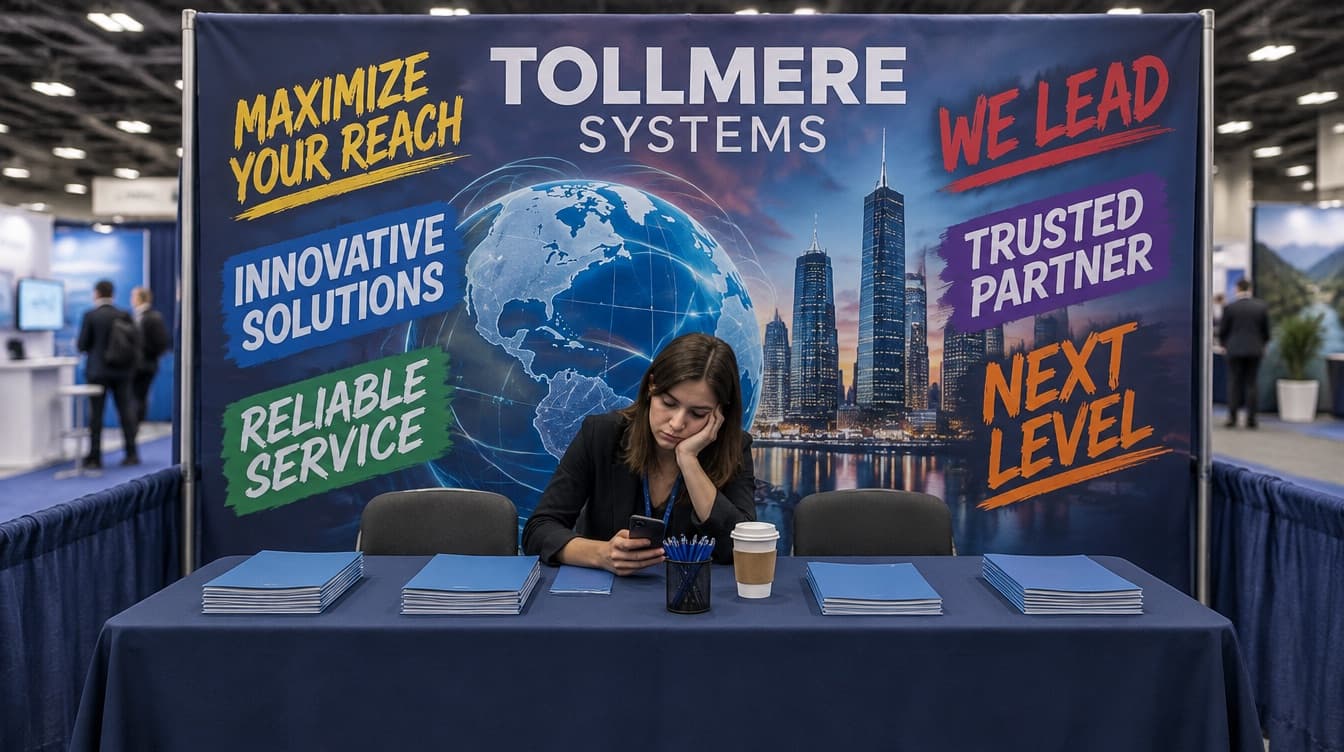
Trade Show Display Mistakes: One Headline on the Wall
A back wall becomes hard to scan when it is full of paragraphs. A tension fabric stand is 36 by [...]
Read More: Trade Show Display Mistakes: One Headline on the Wall
Single vs Double-Sided Banners: Cost, Uses and Specs
Double-sided banners use 18oz vinyl and cost about 60 percent more than single-sided. Compare [...]
Read More: Single vs Double-Sided Banners: Cost, Uses and Specs