10x10 vs 10x20 Canopy Tents: How the 10x15 Fits Between
 Daniel
October 31, 2026Updated November 3, 20268 min read
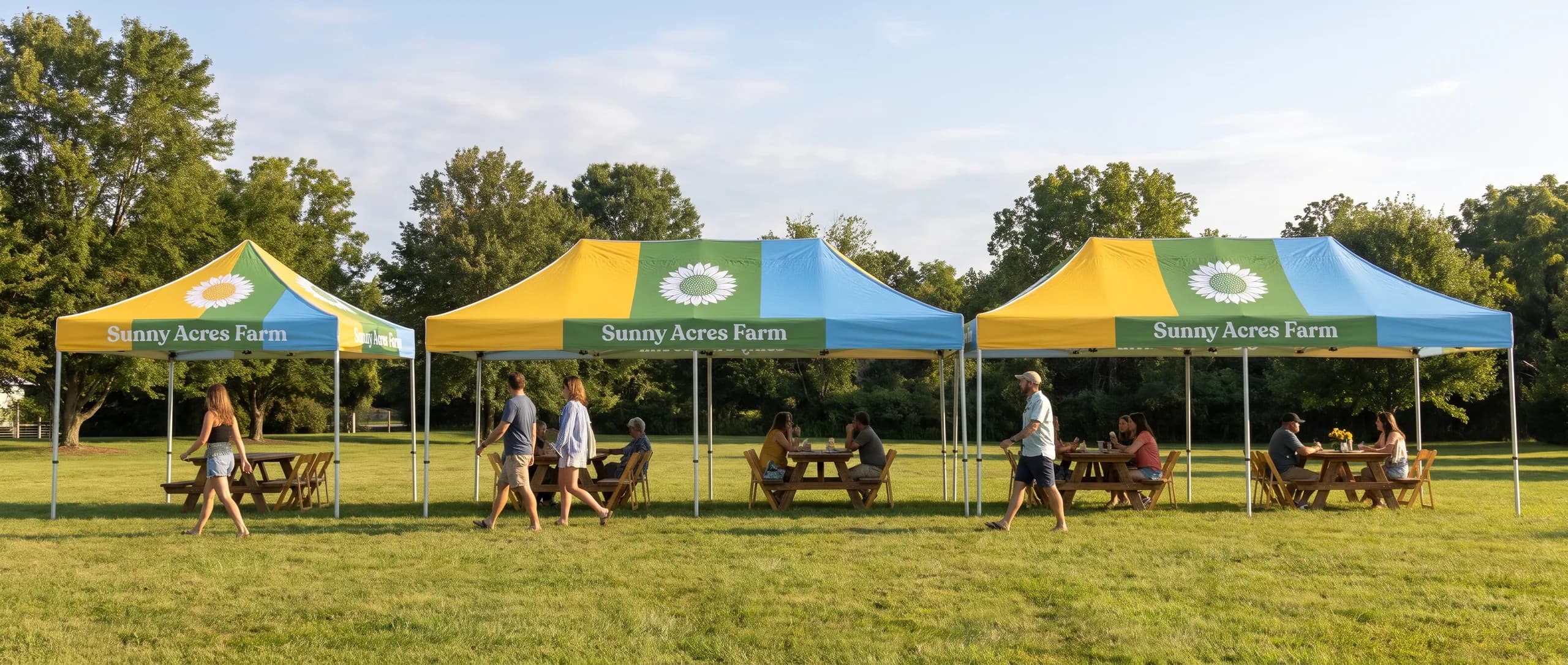
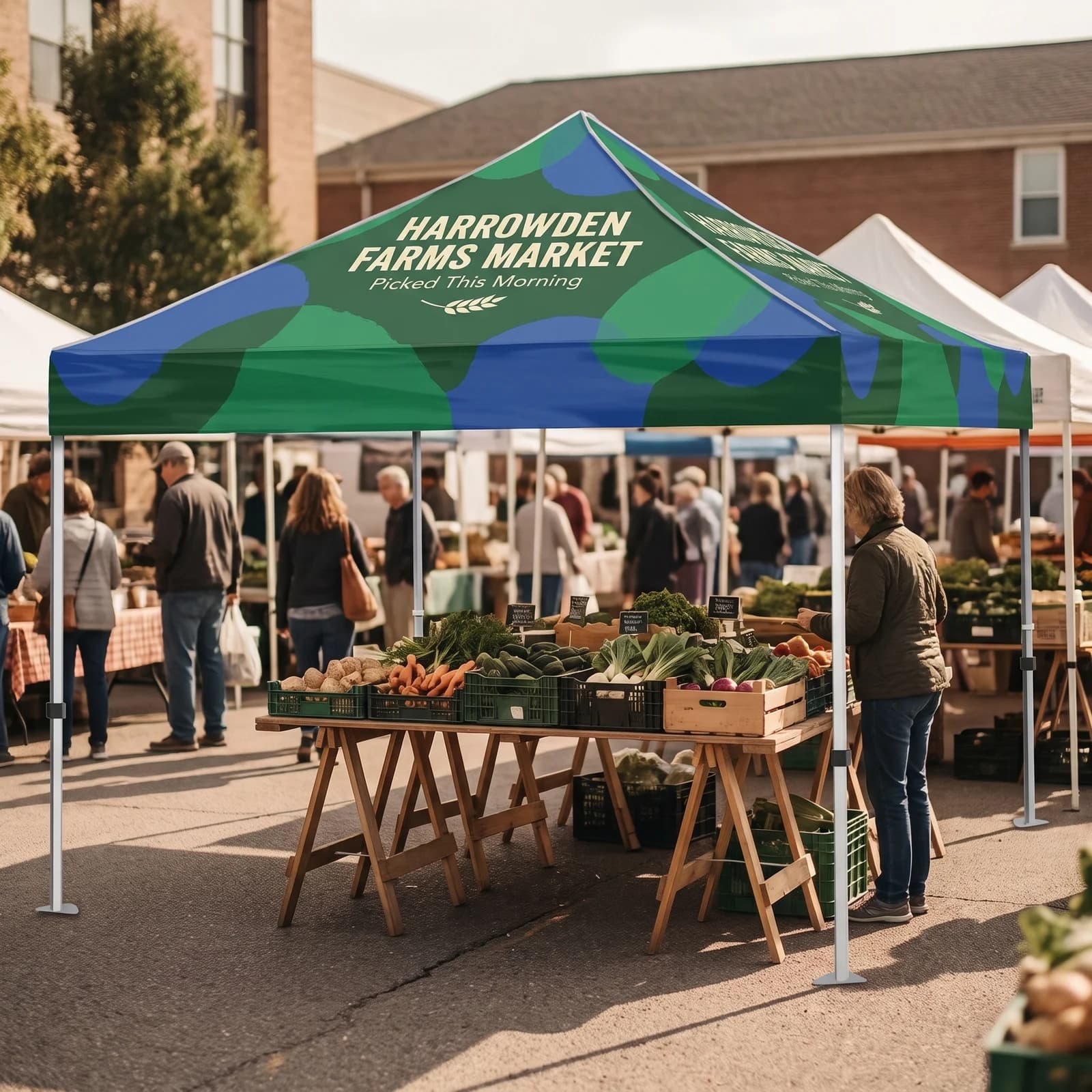
Which Canopy Size Should You Choose?
A 10x10 event tent with printed canopy and frame starts at $973.69, a 10x15 at $1,390.99 and a 10x20 at $1,615.69. All three print in 3 to 4 business days after proof approval, in the USA, with flat $10 shipping per product. Pick the size from your booth space, not the price.
Choose the canopy that matches the space the event assigns you. A 10x10 fits a standard single vendor space, a 10x15 fits a deeper or wider space when the organizer allows it, and a 10x20 fits a double space. A tent bigger than your space cannot go up, so measure before you compare prices.
Every size below is a printed canopy on its frame, with ropes, stakes and a carry bag. Each prints in the USA in 3 to 4 business days after you approve the proof and ships for a flat $10 per product to any US address.
| Size | Covered space | Starts at | Frame |
|---|---|---|---|
| 10x10 | 100 sq ft | $973.69 | Pop-up frame, 4 legs |
| 10x15 | 150 sq ft | $1,390.99 | 40mm aluminum hex, 6 legs |
| 10x20 | 200 sq ft | $1,615.69 | 40mm aluminum hex, 6 legs |
The canopy is dye sublimated seam to seam on 6 oz weatherproof polyester on all three. The legs telescope, so you can lower the tent to fit a loading door or raise it for headroom.
If you already own a frame in good shape, a custom canopy top on its own starts at $631.29. It ships with no frame or hardware.
What Fits Under a 10x10 Tent?
A 10x10 fits one 6 ft table, one or two people working it, and a small display behind them. It is the size many farmers markets, craft fairs and school events assign, and it is the size every tent package on the site is built around.
The 10x10 is also the easiest tent to handle alone or with one helper. It folds into a single carry bag and sets up without tools. For a business doing a few events a month, that matters more than extra floor space.
Plan the layout before you choose a bigger size. A table across the front, a back wall behind it and a flag on one front leg makes a full looking booth in 100 square feet. A crowded booth usually needs less product on the table, not a bigger tent.
When Is a 10x15 Canopy the Better Middle Size?
Choose a 10x15 when your space is deeper or wider than 10 ft but not a full double, and you need a second table or a staff area out of sight. It adds 50 square feet, enough for an L shaped table layout or a checkout corner.
Check the rules first. Some events sell space only in 10 ft units, so a 10x15 can force you to pay for a double space anyway. If the event sells 10x20 spaces only, a 10x15 leaves 5 ft of space you paid for and cannot use.
The 10x15 uses the same heavy-duty 40mm aluminum hex frame as the 10x20, with foot plates. It is heavier than the 10x10 pop-up, so plan on two people for setup.
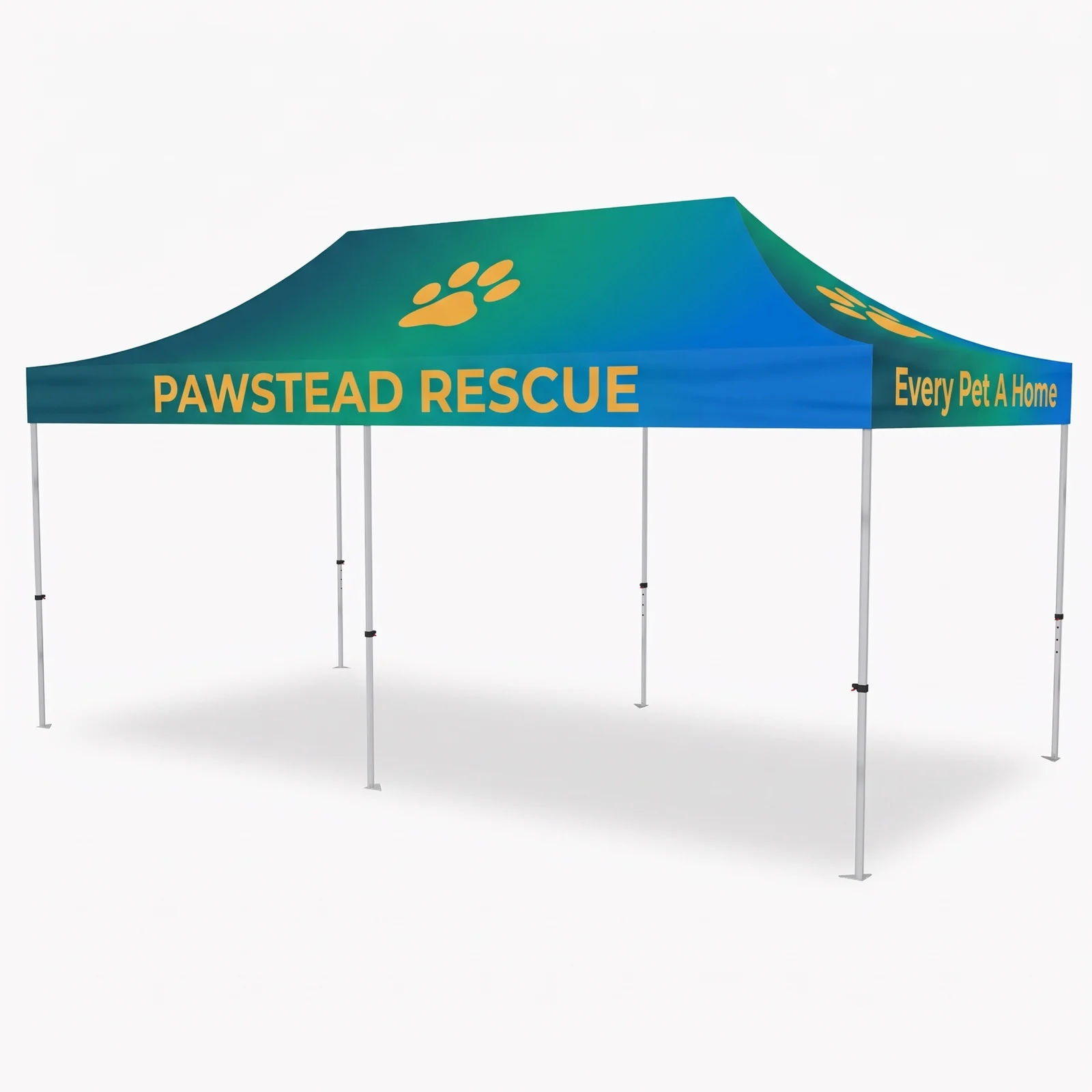
When Does a 10x20 Tent Make Sense?
A 10x20 makes sense when you have a double space and enough staff and product to use it: two tables, a demo area or a seating area for customers. It doubles the covered space of a 10x10 and gives you a 20 ft front, which reads from much farther down an aisle.
It also takes more work. Six legs, a longer frame and a bigger canopy mean two or three people at setup and more weight to secure. Sandbags or other weights on every leg matter more on a big tent, because a larger canopy catches more wind.
For a business that does one or two large events a year and smaller markets the rest of the time, a 10x10 plus a tent package of matching pieces is often the better buy. For a business whose events assign double spaces, the 10x20 is the honest choice.
How Do Walls Change the Size You Need?
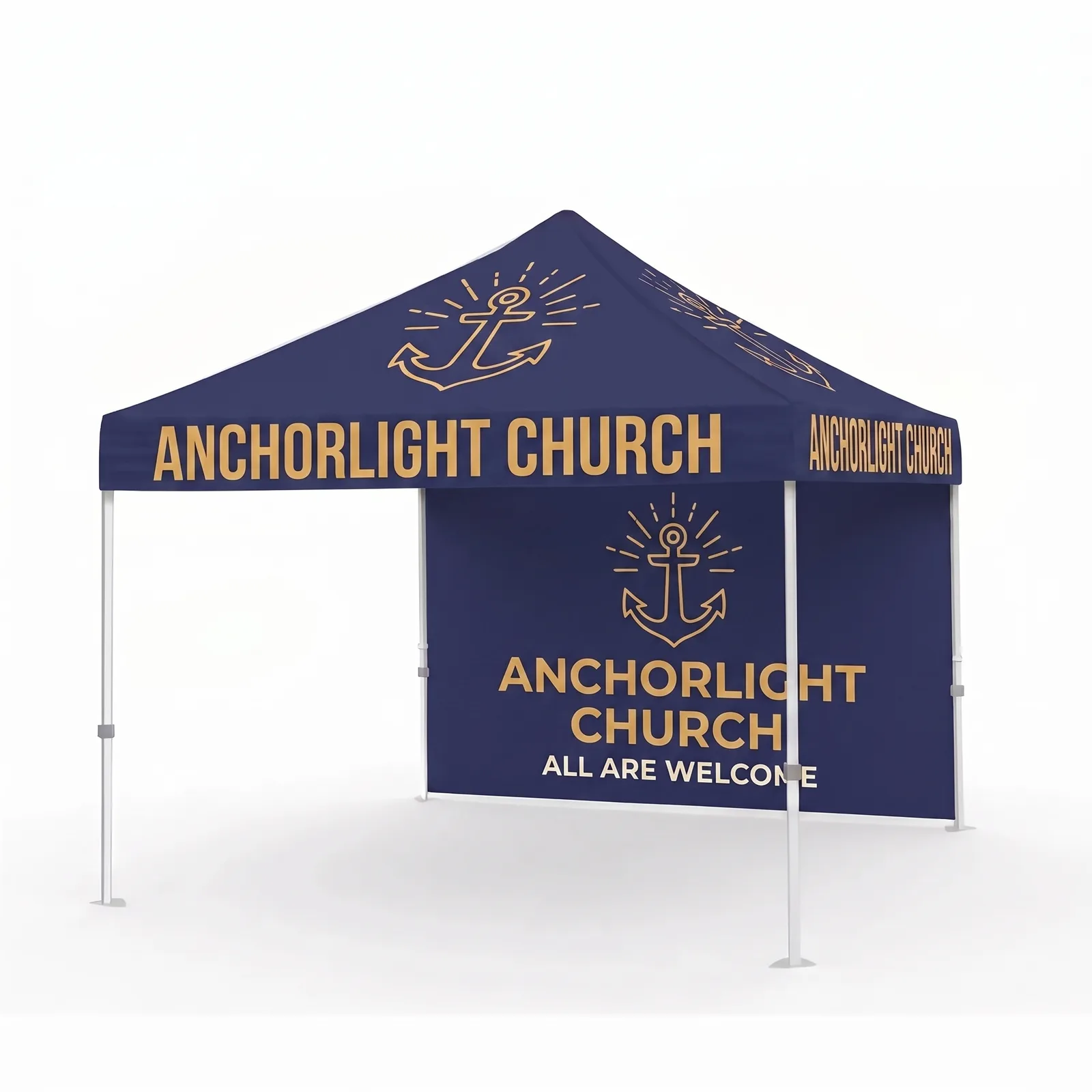
Walls change how much of the space feels usable. A full wall closes one side to within 4 inches of the ground. A half wall stops at counter height, about 39 inches, so the booth stays open and visible.
| Wall | Size | Fits |
|---|---|---|
| 10x10 full wall | 113 x 78 in | Any side of a 10x10 |
| 10x10 half wall | 113 x 39 in | Any side of a 10x10 |
| 10x20 full wall | 113 or 228 x 78 in | Short or long side |
| 10x20 half wall | 113 x 39 in | Short sides only, up to 2 |
A full wall on a 10x10 starts at $385.19 and a half wall at $278.19. Every wall prints in 3 to 4 business days after proof approval.
A back wall on a 10x10 often does more for a booth than moving up to a 10x15. It puts your name behind the people working the booth, in every photo taken there, without adding floor space.
Should You Buy a Complete Kit or a Package?
Buy the event tent alone when you only need the canopy, and buy a package when you also want a table cover, a back wall or flags that match. The 10x10 Essentials Package starts at $1,214.99 with the tent and a 6 ft fitted table cover, and design setup is included.
Packages are built on the 10x10 only. If your events assign 10x15 or 10x20 spaces, build your booth piece by piece from the tent, walls and flags.
What Should You Check on Canopy Artwork Proofs?
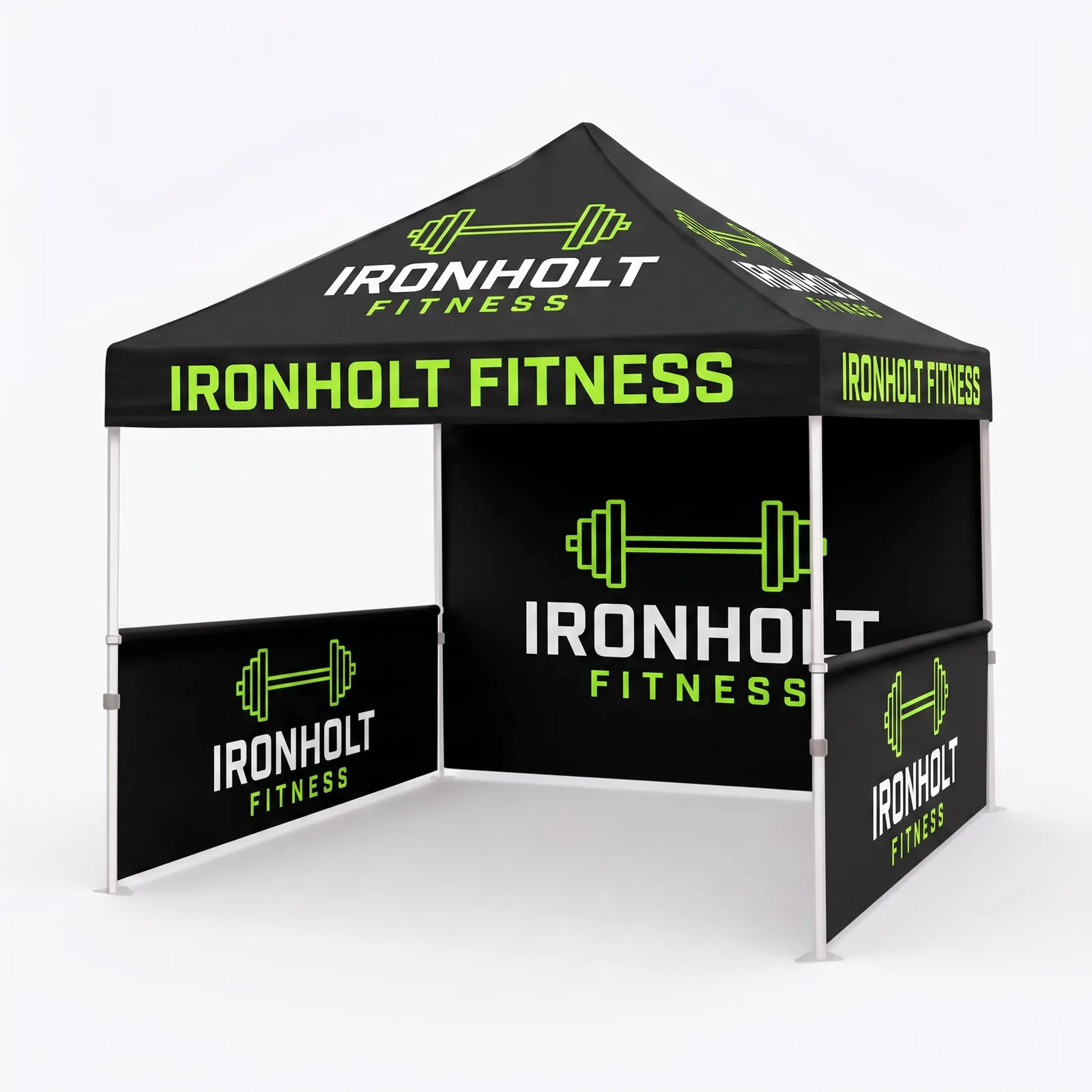
Check first for artwork built for a flat rectangle. A canopy has four sloped roof panels and four valances, and a logo placed across a seam or too high on a peak bends out of view. Put the main name on the valances, the strip that hangs straight down, where people read it at eye level.
Next, check for a file built for the wrong size. A 10x20 has longer valances on two sides, so a 10x10 layout stretched to fit looks pulled. Each size has its own layout, and the proof shows every panel before anything prints.
If you are not ready to order, canopy mockup and print files start at $69.99: a 3D mockup in front, back and corner views plus the flat print-ready layout, emailed in 2 business days. Once you order, the artwork prep fee is waived on canopy tents, even when you send a phone photo or a ChatGPT image.
How Do You Weigh Down Each Tent Size?
Weigh down every leg on every size, every time, whether the tent stands on grass or pavement. The frame kit includes ropes and stakes for soft ground. On asphalt or concrete, stakes do nothing, so you need weights on the legs.
A sandbag set of 4 bags starts at $139.09. The set ships empty and holds 76 lb of ballast when filled, and sand is not included. A 10x10 has 4 legs, so one set covers it. A 10x15 or 10x20 has 6 legs, so plan on two sets, or one set plus your own weights for the middle legs.
Some events publish a minimum weight per leg. Read the vendor packet before the event, not in the parking lot, and bring the weights the packet asks for.
Take the tent down when the wind picks up beyond what the weights can hold. A tent that lifts in a gust can damage your frame, your canopy and the booth beside you. A bigger canopy catches more wind, so the 10x20 needs the most attention.
How Many People Does Each Size Need to Set Up?
A 10x10 pop-up can go up with one practiced person, and two make it easy. Open the frame partway, attach or check the canopy, extend it fully, then raise the legs one notch at a time on opposite corners.
A 10x15 or 10x20 is a two person job at minimum, and three is better the first time. The hex frame is heavier and longer, and the canopy is larger to stretch over it. Do a practice setup at home or in a parking lot before the first event, so the first time is not in front of customers.
Pack the tent the same way every time: frame in the bag, canopy folded on top, stakes and ropes in their own pouch. A wheeled carry bag is sold separately with the tent hardware and helps most on the larger frames.
How Do You Order the Right Tent Size?
Confirm your assigned space with the event, then order the size that fits inside it with room to stake or weight the legs. Choose the frame kit unless you already own a frame of the same size, add walls only for the sides that need them, and approve the proof for every panel.
Production is 3 to 4 business days after approval for the tent, the walls and the tent flag kit. Shipping is a flat $10 per product to any US address, so order early enough to set the tent up once at home before the first event.
Frequently Asked Questions
A 10x10 event tent with a full color printed canopy and frame starts at $973.69. That includes the pop-up frame, ropes, stakes and a standard carry bag. Walls, sandbags and a wheeled bag are options. Shipping is a flat $10 to any US address.
A 10x20 event tent starts at $1,615.69 and a 10x10 at $973.69. The 10x20 doubles the covered space to 200 square feet and uses a heavy-duty 40mm aluminum hex frame with six legs.
A 10x15 covers 150 square feet and starts at $1,390.99. Some markets and fairs rent space in 10 ft units, so confirm your assigned space before ordering. Buy the 10x15 only when your space is at least 15 ft deep or wide.
All three sizes print in 3 to 4 business days after you approve the proof, then ship for a flat $10 to any US address. Walls and the tent flag kit run on the same 3 to 4 business day clock.
Yes. A 10x20 takes full walls on the 113 inch short sides or the 228 inch long side, and up to 2 half walls on the short sides. The long and short wall templates are different and are not interchangeable.
Yes. A custom canopy top on its own starts at $631.29 at 10 x 10 ft. It ships without the frame, ropes, stakes or bag, so it only makes sense when your frame is the same size and still in good shape.
Related Articles
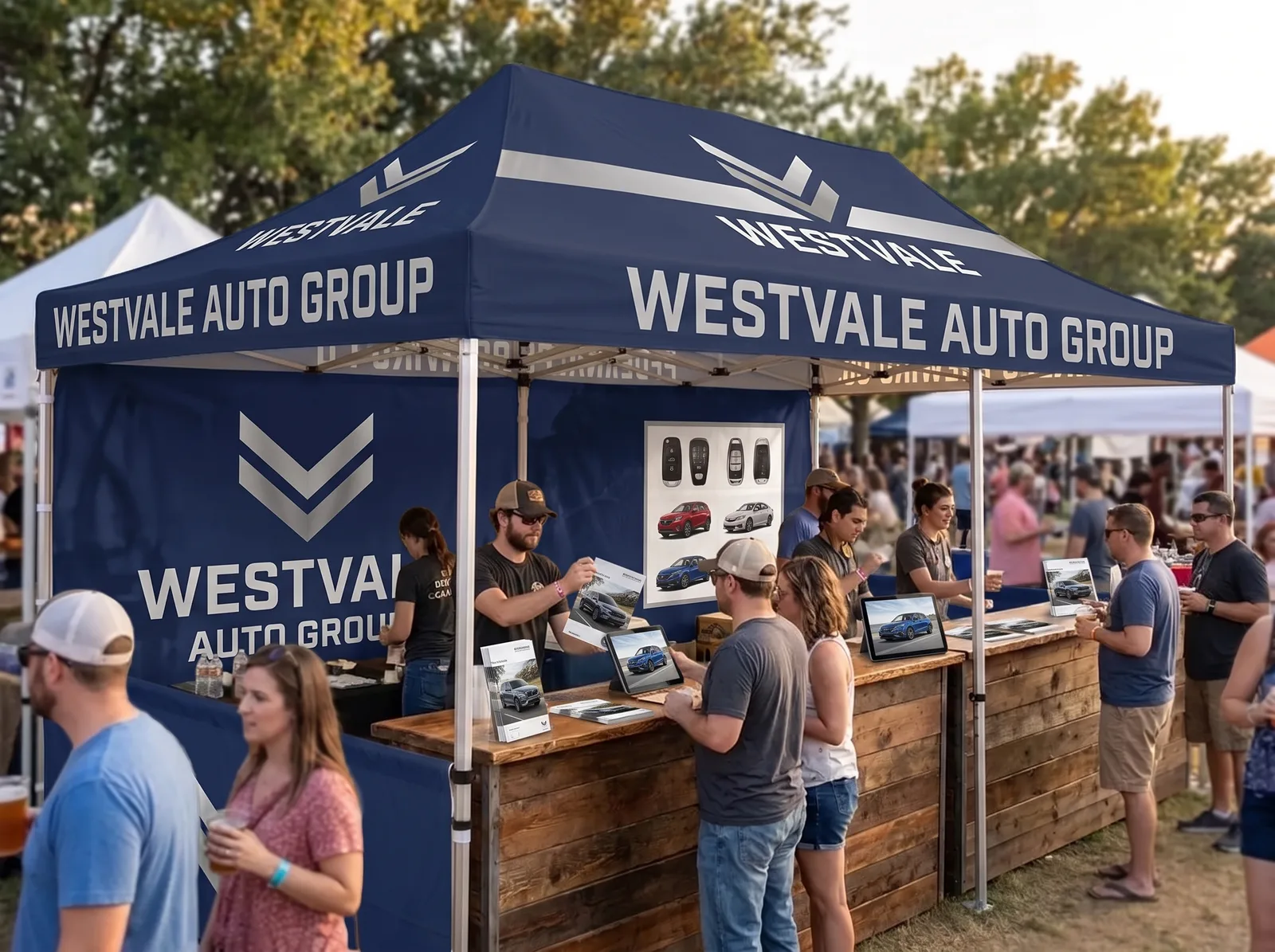
Canopy Tent Sizes Guide: 10 x 10, 10 x 15, and 10 x 20
Canopy tent sizes are 10 x 10, 10 x 15, and 10 x 20 ft. Compare each footprint, event layout, [...]
Read More: Canopy Tent Sizes Guide: 10 x 10, 10 x 15, and 10 x 20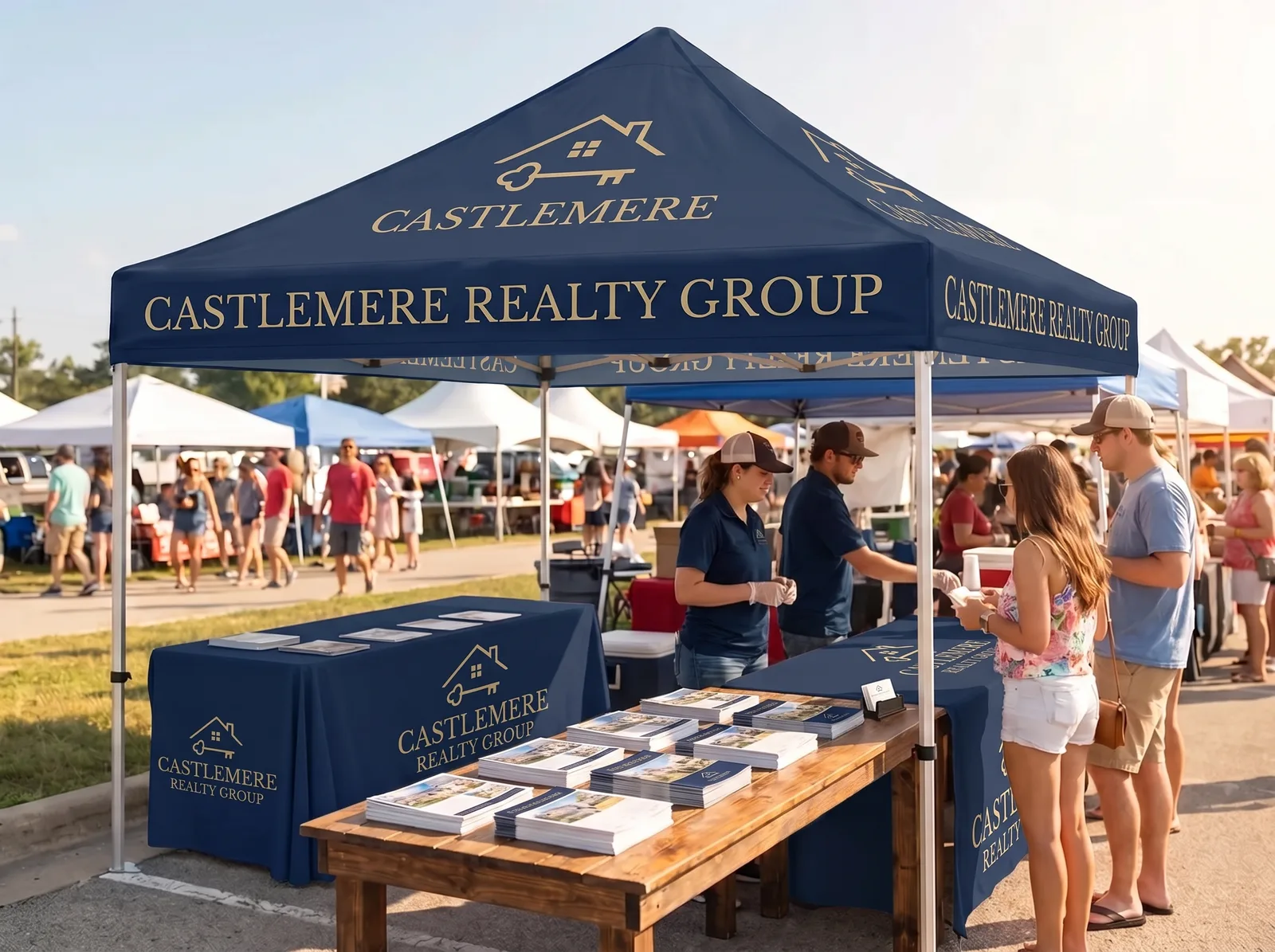
10 x 10 Custom Canopy Tent: 2026 Prices, Frames and Add-Ons
A 10 x 10 custom canopy tent with a full-color printed roof and V6 frame starts at $973.69. [...]
Read More: 10 x 10 Custom Canopy Tent: 2026 Prices, Frames and Add-Ons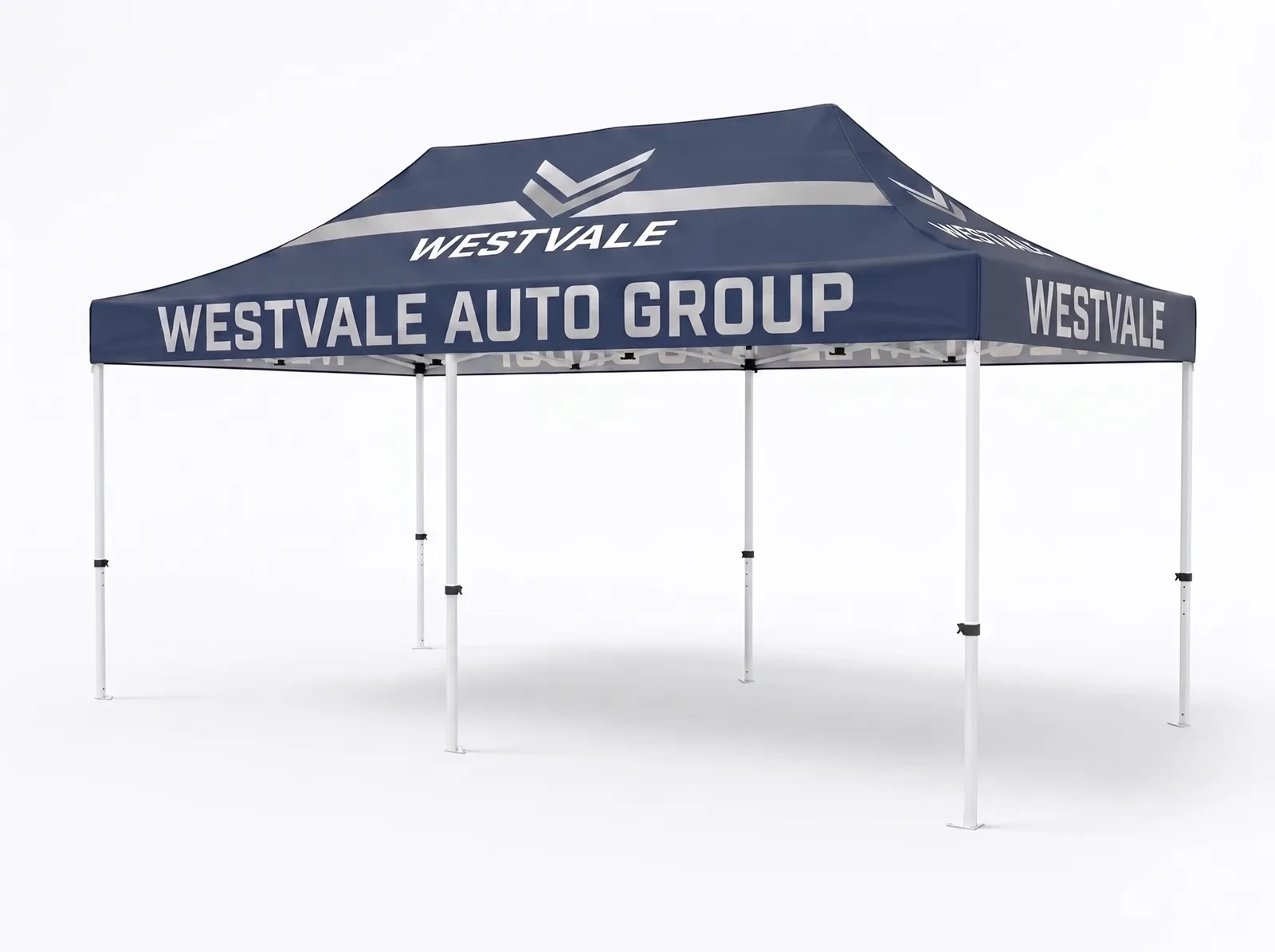
10x20 Canopy Tent Price: Kit, Walls and the 10x15 Size
A 10x20 custom canopy tent with printed canopy and aluminum frame is $1,615.69, and a 10x15 is [...]
Read More: 10x20 Canopy Tent Price: Kit, Walls and the 10x15 Size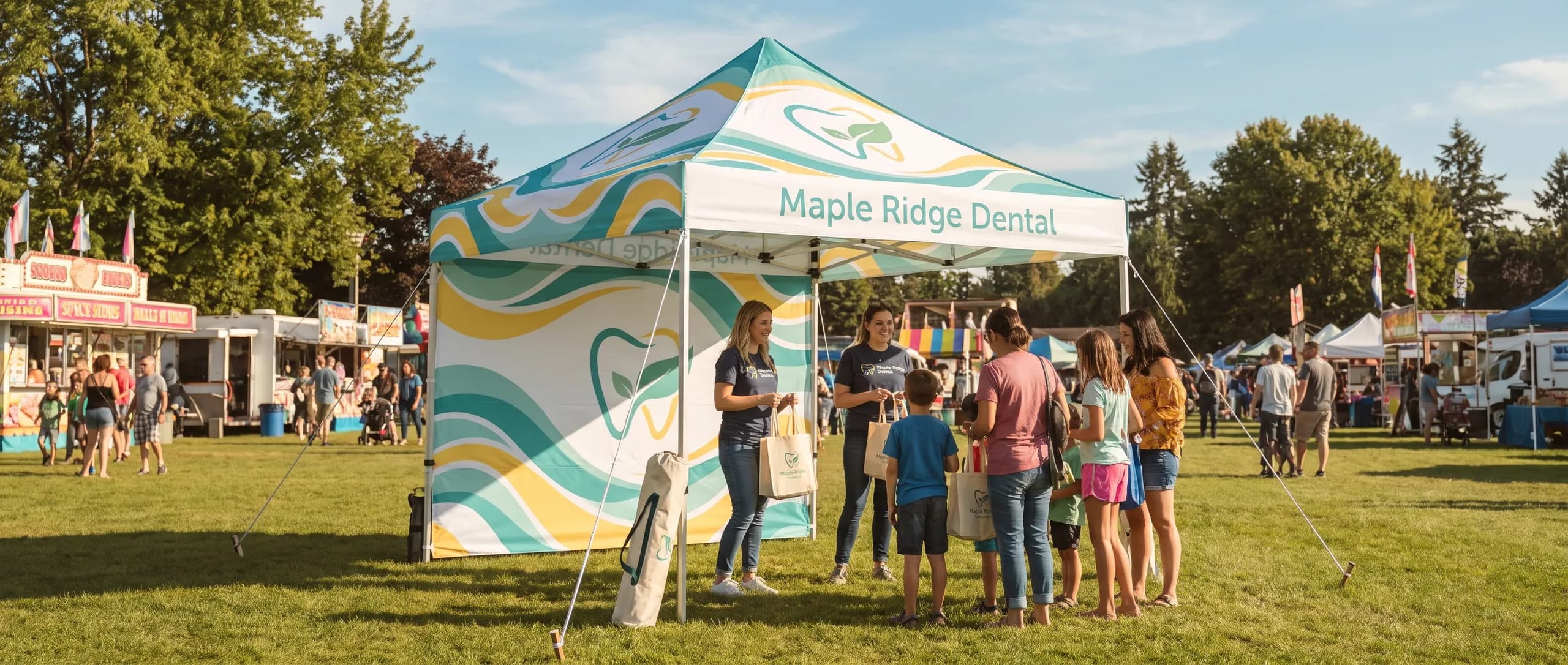
Custom Canopy Tents: Sizes, Kits and Buying Checklist
A custom 10x10 canopy tent with frame starts at $973.69 and prints in 3 to 4 business days. [...]
Read More: Custom Canopy Tents: Sizes, Kits and Buying Checklist