Vinyl vs Fabric Banners: Best Uses and Differences
 Jean
January 27, 2026Updated October 19, 20268 min read
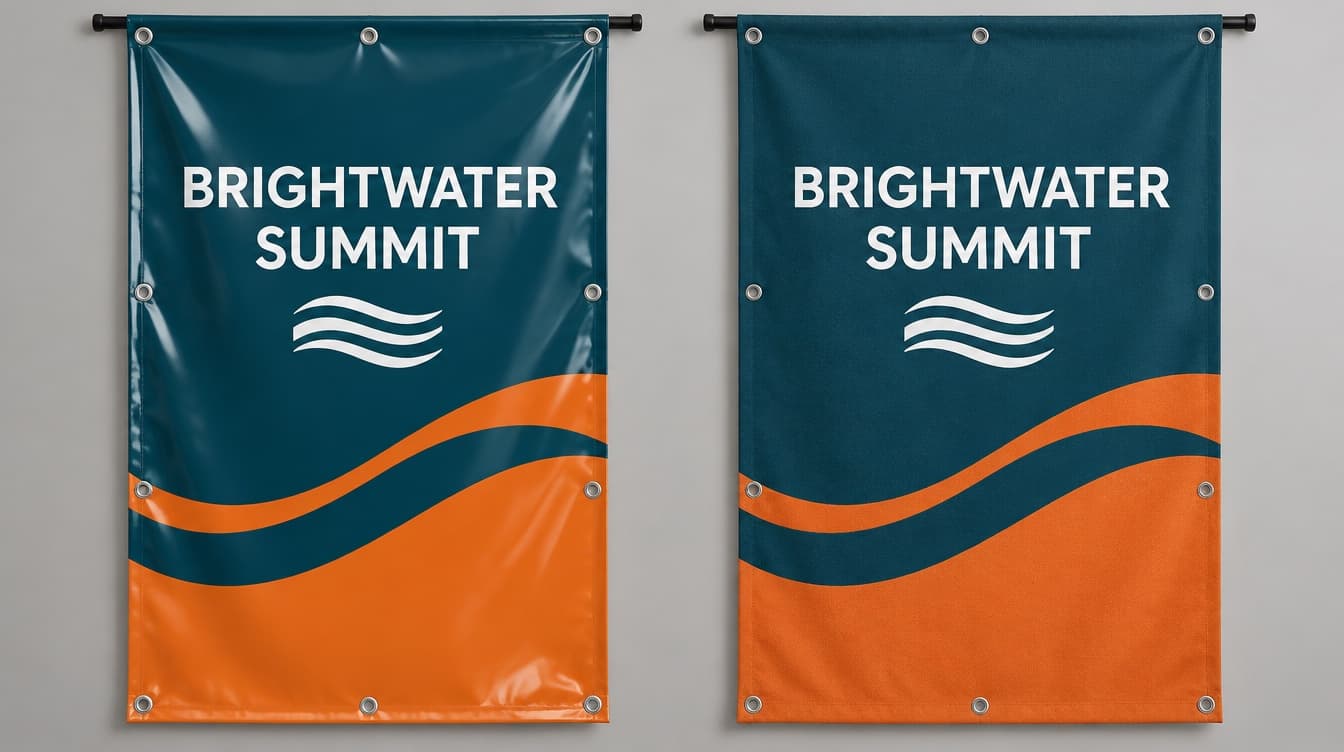
Which Banner Material Is Best: Vinyl or Fabric?
A 6 x 3 ft single-sided 13 oz vinyl banner is $133.00, printed in the USA in 3 business days after artwork approval and shipped nationwide for flat $10. Choose vinyl for outdoor or repeated promotional use because it is weather-resistant and includes hems and grommets. Choose fabric when a softer, low-sheen indoor presentation matters more.
Vinyl is the practical choice when a banner must handle outdoor placement, repeat promotions, or a hanging plan built around grommets or pole pockets. Fabric belongs in the comparison when the display stays indoors and a softer, low-sheen presentation matters more than weather resistance. Neither material wins every job. The placement decides.
The custom vinyl banner page does not list a standalone fabric banner. If the planned display depends on fabric, confirm that format and its specifications separately before building artwork or promising a deadline.
| Decision | Vinyl banner | Fabric banner |
|---|---|---|
| Best placement | Outdoor or repeated promotional use | Indoor display where presentation is the priority |
| Surface appearance | Firm printed surface that can show more sheen | Softer, low-sheen presentation |
| Hanging plan | Hems and grommets are included; pole pockets require grommets set to No and add $21.39 plus $2.14 per linear foot of width for each pocketed edge | Match the display system to the fabric format |
| Weather exposure | Weather-resistant | Keep the comparison focused on indoor use |
| Artwork priority | Leave room for hems, grommets, or pole pockets | Check the finished display area before placing edge content |
| Available specifications | Custom vinyl banner options | Confirm the exact fabric product separately |
The useful decision comes from walking through the exact display: where it sits, who sees it, how often it moves, what the lighting looks like, and what will hold it up.
When Does Vinyl Make More Sense?
Vinyl makes more sense for outdoor promotions, repeat campaigns, and temporary signs that need flexible sizing. A banner can announce an opening, identify an event entrance, carry a seasonal offer, or mark a registration area without becoming a permanent building sign. It can then be rolled and used again when the message still applies.
The default material is 13 oz vinyl. Both 13 oz Standard and 15 oz Premium are single sided. Double-sided printing is available only on 18 oz Heavy Duty vinyl. Standard sizes run from 2 x 4 ft through 10 x 20 ft, and custom dimensions are available.
Hems and grommets are included. Pole pockets require setting grommets to No and add a $21.39 setup fee plus $2.14 per linear foot of banner width per pocketed edge. Top or Bottom uses one edge, while Both uses two. Match that finishing choice to the hardware that will carry the banner.
When Does Fabric Make More Sense?
Fabric makes more sense when the banner stays indoors and the visual goal is a softer, low-sheen presentation. That can matter in a presentation room, on a stage, or in a photographed event space where the surface should feel quieter than a typical outdoor promotion.
Do not use the vinyl product page as proof of a fabric specification, price, or production time. Treat fabric as a separate format that must be confirmed before the artwork is finalized.
Start with the room. Look at the lighting direction, the background behind the display, and the distance from the first row of viewers. Then decide whether the softer appearance is important enough to drive the material choice. If the same graphic must later move outdoors, vinyl is the more direct fit for the full job.
How Do Sheen and Texture Change the Presentation?
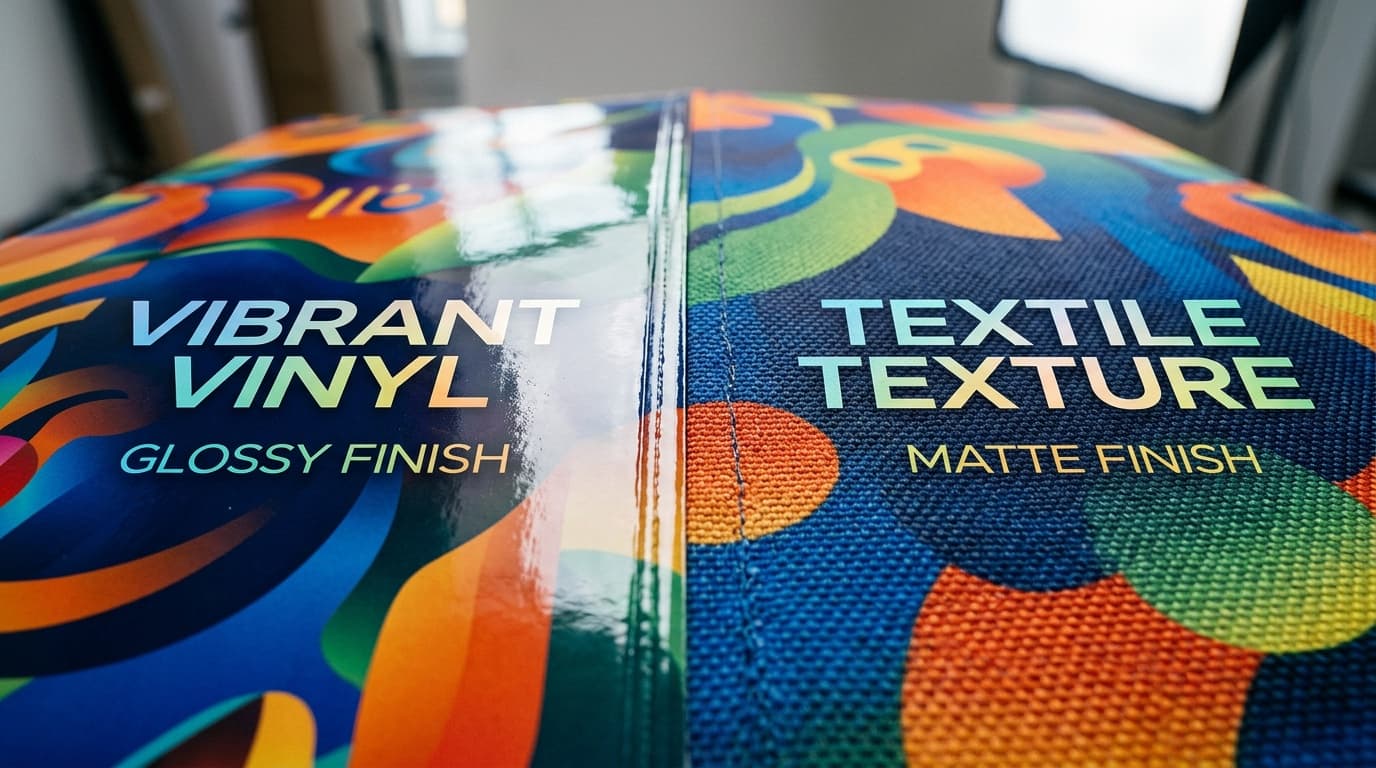
Sheen and texture change how a banner sits in a scene, especially when lights or cameras point toward it. Vinyl has a firmer printed surface and can show a glossier look. Fabric offers a softer, low-sheen textile presentation. The choice affects the mood before anyone reads a word.
That does not mean every indoor banner must be fabric. A retail promotion can benefit from the direct, sign-like look of vinyl. A formal stage or presentation area may benefit from fabric's softer appearance. Judge the material beside the surrounding finishes, not as a small swatch viewed by itself.
Color, contrast, and type hierarchy still do most of the communication work. Material cannot rescue an overcrowded layout. A clean headline, a short supporting line, and one action will usually read better than a dense design on either surface.
How Should Artwork Change for Vinyl or Fabric?
Artwork should be built for the finished display area, with important content held away from every sewn, folded, or mounted edge. In the shop, we see hems and grommets occupy the banner edge, so edge content needs room. That observation matters before the file reaches production, not after the banner is finished.
Begin with the final width and height. Keep the logo, phone number, date, and call to action comfortably inside the perimeter. If grommets are selected, avoid placing small type where a fastener will interrupt it. If pole pockets are selected with grommets set to No, account for the sleeve area when judging how much visible space remains.
The same discipline helps fabric artwork. Confirm the actual visible face of the intended display, then keep essential content inside it. Do not assume the full file rectangle will remain equally visible after finishing or mounting.
Use one main message. A person passing an outdoor banner or looking across an event room should understand it quickly. Supporting details can live on a website, flyer, or handout instead of being squeezed into the banner.
Can One Event Use Both Vinyl and Fabric Banners?
One event can use vinyl outside and fabric indoors when the placements have different demands. An entrance banner displayed outdoors for several event days needs weather resistance and a suitable hanging finish. An indoor presentation wall behind speakers may benefit from a softer, low-sheen surface.
The two graphics can share the same colors, typography, and event name without using the same material. Keep the outdoor message short: organization name, event dates, and entrance direction. Indoors, the presentation wall can carry the event mark and a broad color field because people will see it for longer.
Material should follow placement. Buying one format for every location sounds simple, but it can ignore what each display must do. One brand system can use two materials while keeping its identity consistent across the event.
What Does a Custom Vinyl Banner Order Include?
A 6' x 3' single-sided 13oz Standard Custom Printed Banner is $133.00. Printed in the USA in 3 business days and shipped nationwide, flat $10 shipping to any US address.
The default configuration is 6 x 3 ft, single sided, on 13 oz Standard vinyl. Standard sizes begin at 2 x 4 ft and extend through 10 x 20 ft, with custom dimensions available. The 13 oz and 15 oz materials stay single sided; only 18 oz Heavy Duty offers double-sided printing.
Production begins after artwork approval. That approval point matters when planning an event date because file preparation and review come before the 3 business day production window. Shipping follows production.
Choose the finish from the real hanging plan. Hems and grommets are included. For pole pockets, set grommets to No. Pole pockets add a $21.39 setup fee plus $2.14 per linear foot of banner width per pocketed edge, using one edge for Top or Bottom and two for Both. A correct size with the wrong finish can still create a difficult setup.
What Banner-Material Mistakes Should You Avoid?
The first mistake is choosing from appearance alone. A soft indoor look does not answer an outdoor placement, and a weather-resistant material does not automatically create the quiet presentation wanted behind a speaker. Write down the environment before comparing finishes.
The second mistake is designing to the edge. Hems, grommets, and pole pockets all affect the perimeter. Pole pockets also require grommets set to No. Give names, dates, logos, and contact details enough room that the finishing does not crowd them.
The third mistake is carrying vinyl facts into a fabric plan. Confirm the fabric format independently rather than carrying over the vinyl price, size range, or turnaround.
Finally, do not choose the banner before choosing how it will hang. The mounting method determines the finishing choice, and the finishing choice affects the artwork. That sequence keeps the material, file, and display working together.
Which Banner Should You Choose Now?
Choose vinyl when the job is outdoors, repeats across promotions, or needs the included hems and grommets. Choose the finish described above when a pole or crossbar carries the banner. Choose fabric when the display is indoors and a softer, low-sheen presentation is the main requirement.
For the vinyl portion, measure the finished area, choose 13 oz or 15 oz for single-sided printing or 18 oz Heavy Duty when double-sided printing is needed, and select the hanging finish before approving artwork. Configure the custom vinyl banner when those decisions are ready.
Frequently Asked Questions
Vinyl is the better outdoor choice because weather resistance is part of the material's intended use. Fabric is the softer, low-sheen alternative for indoor presentation. The location comes first: choose the material for where the banner will be displayed, then choose the finish and artwork.
Fabric is a strong indoor choice when a softer drape and low-sheen presentation matter most. Vinyl still works indoors when the same banner will be reused for promotions or when the included grommets fit the hanging plan. Decide from the room, lighting, and mounting method.
A 6 x 3 ft single-sided banner on 13 oz Standard vinyl is $133.00. Production is 3 business days after artwork approval, and shipping is flat $10 to any US address. This price is for custom vinyl, not a fabric banner.
Custom vinyl banner sizes run from 2 x 4 ft through 10 x 20 ft, with custom dimensions available. The default configuration is 6 x 3 ft. Measure the display area before choosing a size, and leave enough surrounding space for the planned hardware.
A 13 oz or 15 oz vinyl banner is single sided. Double-sided printing is available only on 18 oz Heavy Duty vinyl. The priced 6 x 3 ft 13 oz Standard configuration is single sided, so select 18 oz Heavy Duty when both faces must be printed.
A vinyl banner includes hems and grommets, while pole pockets add a $21.39 setup fee plus $2.14 per linear foot of banner width per pocketed edge. For pole pockets, set grommets to No. One edge is charged for Top or Bottom, and two edges are charged for Both.
Related Articles
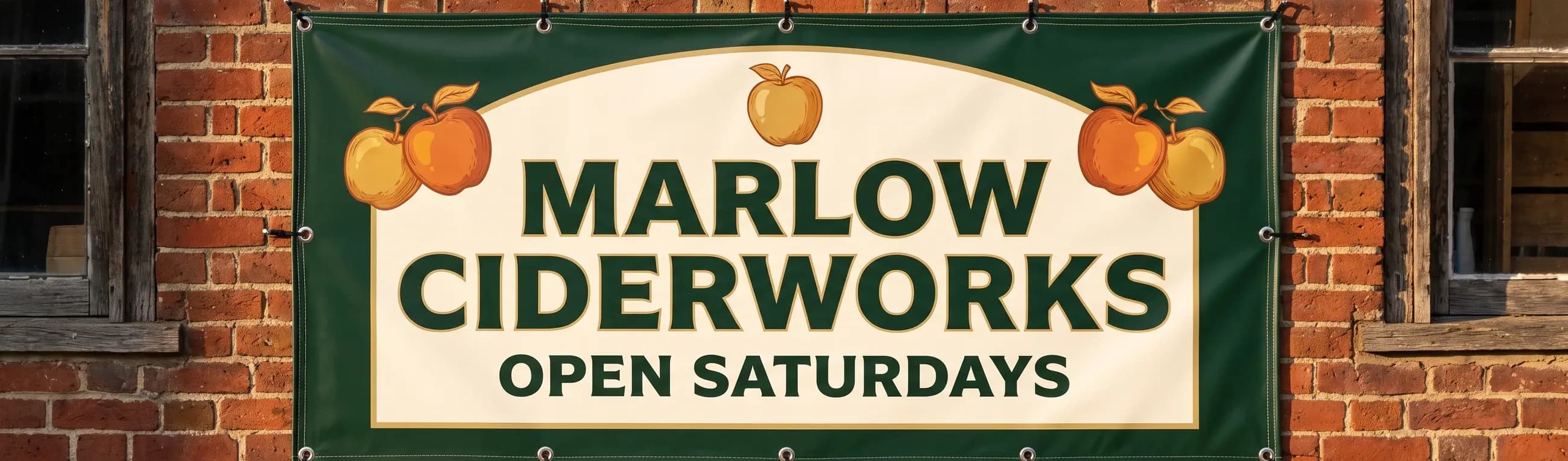
Banner Sizes: 2x4, 3x6, 4x8, 6x10 Feet and Letter Height
Standard banner sizes are 2 x 4, 3 x 6, 4 x 8 and 6 x 10 feet. Get the letter height rule, hem [...]
Read More: Banner Sizes: 2x4, 3x6, 4x8, 6x10 Feet and Letter Height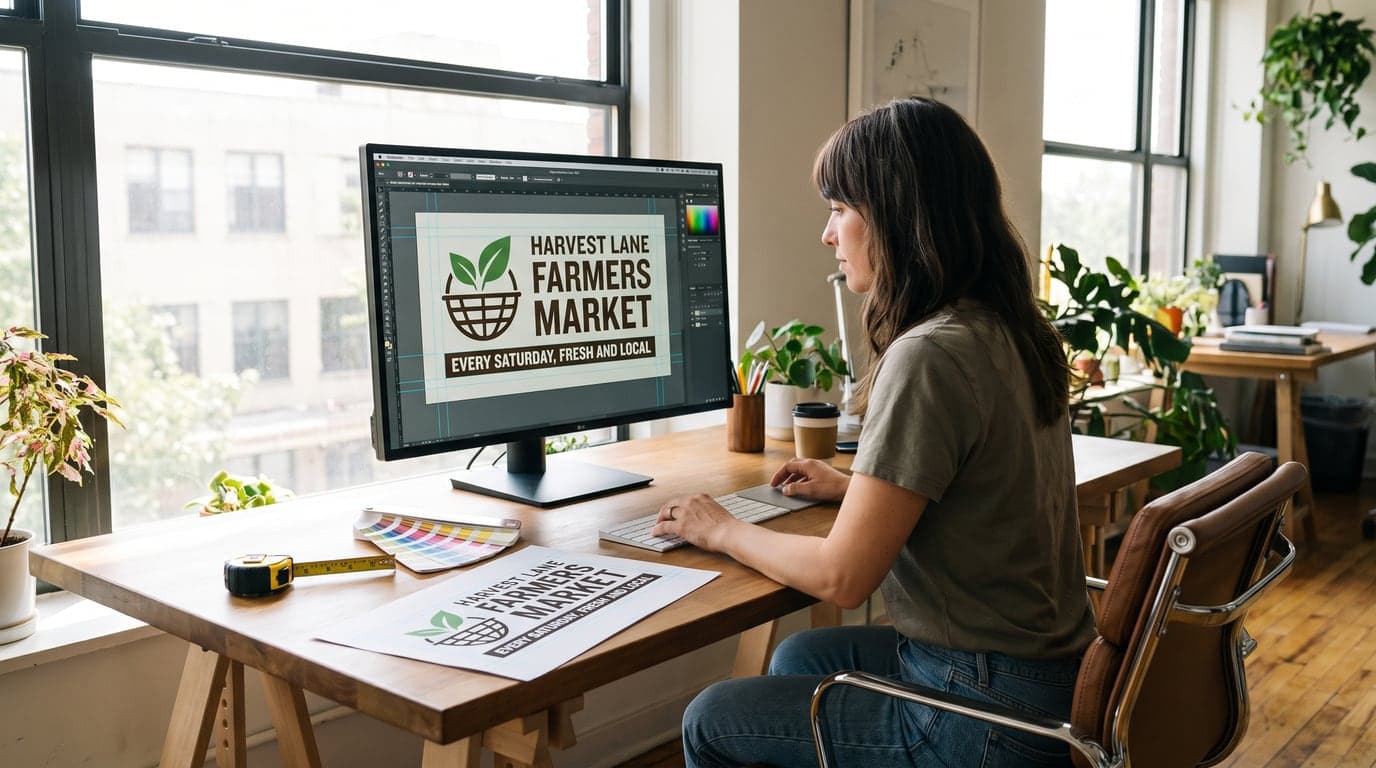
Banner Design Guidelines: Clear Artwork That Prints Well
Banner design guidelines start with a 6' × 3' layout, bold hierarchy, safe margins, and sharp [...]
Read More: Banner Design Guidelines: Clear Artwork That Prints Well
How to Hang a Banner: Safe Steps for Walls and Fences
A 6 ft x 3 ft banner hangs best when its surface, hardware, and load are matched before every [...]
Read More: How to Hang a Banner: Safe Steps for Walls and Fences
Single vs Double-Sided Banners: Cost, Uses and Specs
Double-sided banners use 18oz vinyl and cost about 60 percent more than single-sided. Compare [...]
Read More: Single vs Double-Sided Banners: Cost, Uses and Specs