UV DTF vs DTF Transfers: Which One Fits Your Project?
 Daniel
November 14, 2026Updated November 14, 20269 min read
What Is the Difference Between UV DTF and DTF Transfers?
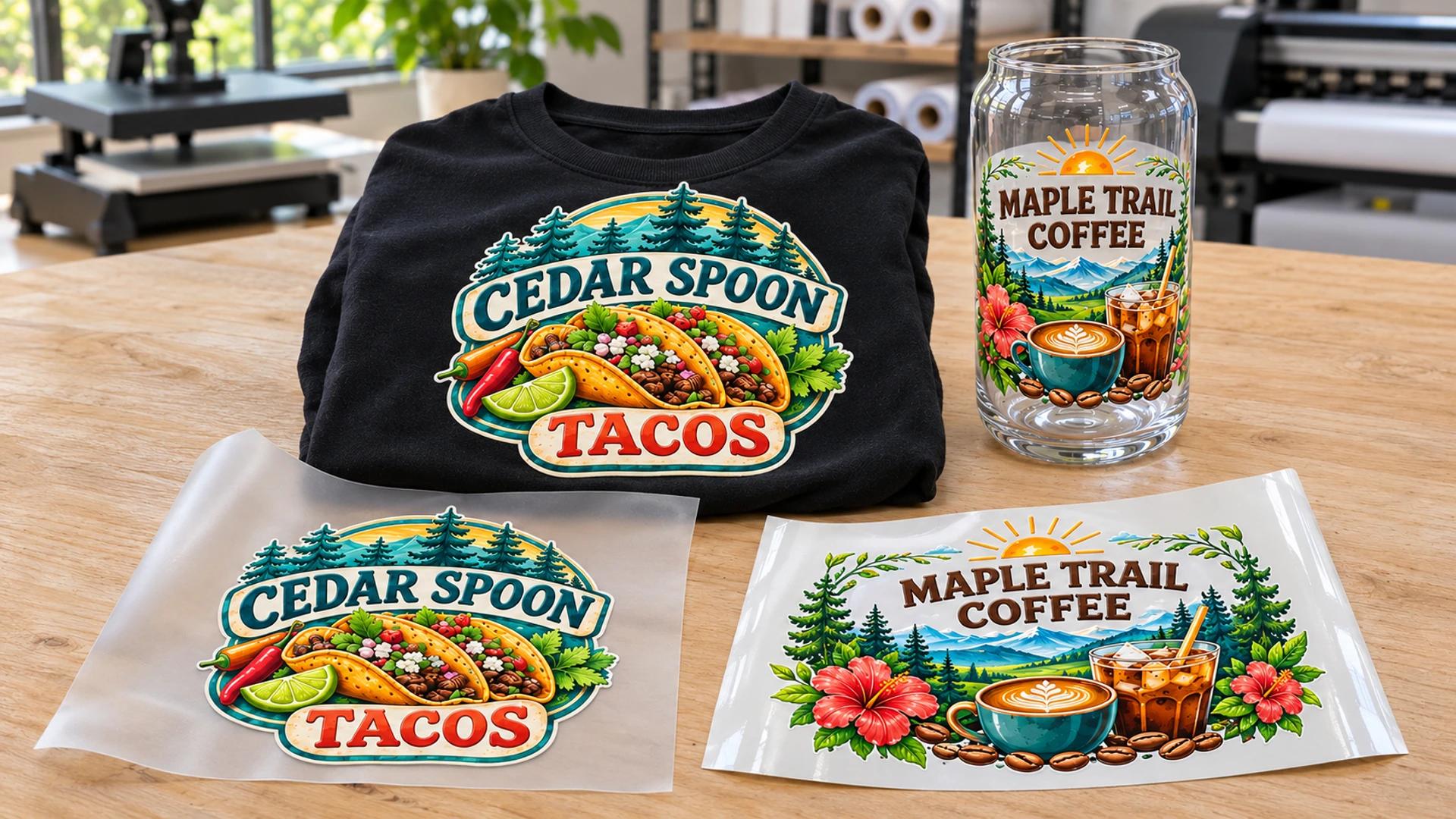
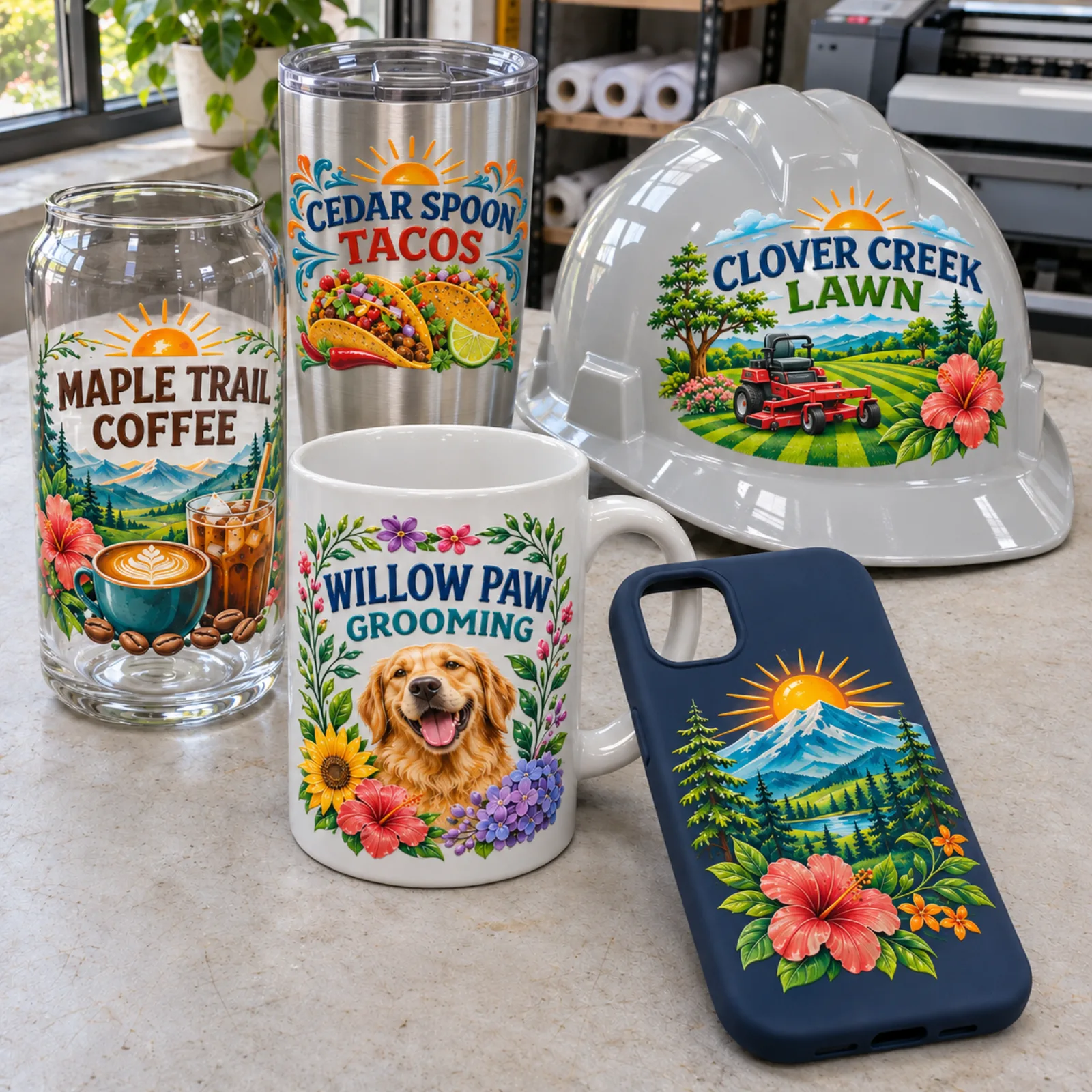
DTF presses onto fabric at 290 to 320 F; UV DTF sticks to hard surfaces without heat. Choose DTF for cotton, polyester, blends and canvas, or UV DTF for tumblers, mugs, glass, phone cases, helmets, coasters, awards and signs.
DTF presses onto fabric at 290 to 320 F; UV DTF sticks to hard surfaces without heat. Choose DTF for cotton, polyester, blends and canvas, or UV DTF for tumblers, mugs, glass, phone cases, helmets, coasters, awards and signs.
| Choice | DTF transfers | UV DTF transfers |
|---|---|---|
| Surface | Fabric | Hard surfaces |
| Application | Heat press | Peel, stick and burnish |
| Printed layers | CMYK color, white base, hot melt adhesive | Color, white, raised gloss |
| Sheet width | 22 in | 22.5 in |
| Sheet lengths | 1 to 10 ft | 1 to 10 ft |
| Peel | Cold after pressing | Clear carrier after burnishing |
A 22.5" x 24" (2 ft) UV DTF gang sheet is $39.99. No minimum, order just one sheet. Upload a logo, photo or ChatGPT image and we make it print ready for $14.99 per item, with a free proof before printing. Printed in the USA in 3 to 4 business days and shipped nationwide, flat $10 shipping to any US address.
Which Transfer Should I Use for Fabric?
Use DTF for 4 fabric groups: cotton, polyester, blends and canvas. DTF can also decorate shirts, fabric hats and tote bags with full-color CMYK artwork and a white base for light or dark fabric.
The transfer is pressed at 290 to 320 F for 10 to 20 seconds after a 5 to 7 second pre-press. Keep the complete design flat under firm, even pressure at 35 to 50 PSI. Let it cool completely, peel the carrier cold, then post-press through parchment or a cover sheet for 5 to 7 seconds.
Settings vary by press and garment.
Use the DTF transfer page to order sheets for pressing yourself. Use the custom t-shirt page when you want a finished printed shirt instead of a transfer sheet.
Which Transfer Should I Use for Cups and Other Hard Surfaces?
Use 22.5 inch wide UV DTF sheets for cup wraps and stickers on tumblers, mugs, glass, phone cases, helmets, coasters, awards and signs. UV DTF adds color, white and a raised gloss layer without a heat press.
UV DTF is not for fabric. Hand washing is the safe choice for a UV DTF cup; these transfers are not rated for a dishwasher.
Open the UV DTF transfer page when the project is a clean hard surface. Open the DTF gang sheet guide when the project is fabric and you need to compare sheet capacity.
How Do DTF and UV DTF Sheet Prices Compare?
10 lengths are listed for each transfer type, from 1 to 10 feet. DTF is 22 inches wide, UV DTF is 22.5 inches wide and every price below comes from the matching live build.
| Length | DTF, 22 in wide | UV DTF, 22.5 in wide |
|---|---|---|
| 1 ft | $29.99 | $29.99 |
| 2 ft | $29.99 | $39.99 |
| 3 ft | $29.99 | $49.99 |
| 4 ft | $29.99 | $64.99 |
| 5 ft | $34.99 | $74.99 |
| 6 ft | $34.99 | $89.99 |
| 7 ft | $39.99 | $99.99 |
| 8 ft | $44.99 | $114.99 |
| 9 ft | $49.99 | $124.99 |
| 10 ft | $54.99 | $139.99 |
Shipping is a flat $10 per design to any US address. One sheet is the minimum order.
Several DTF lengths share a price, so check the table and fill the longest sheet at your price. Every UV DTF length has its own price, so pick the length that fits your layout.
How Many DTF Designs Fit on a 2 Foot Sheet?
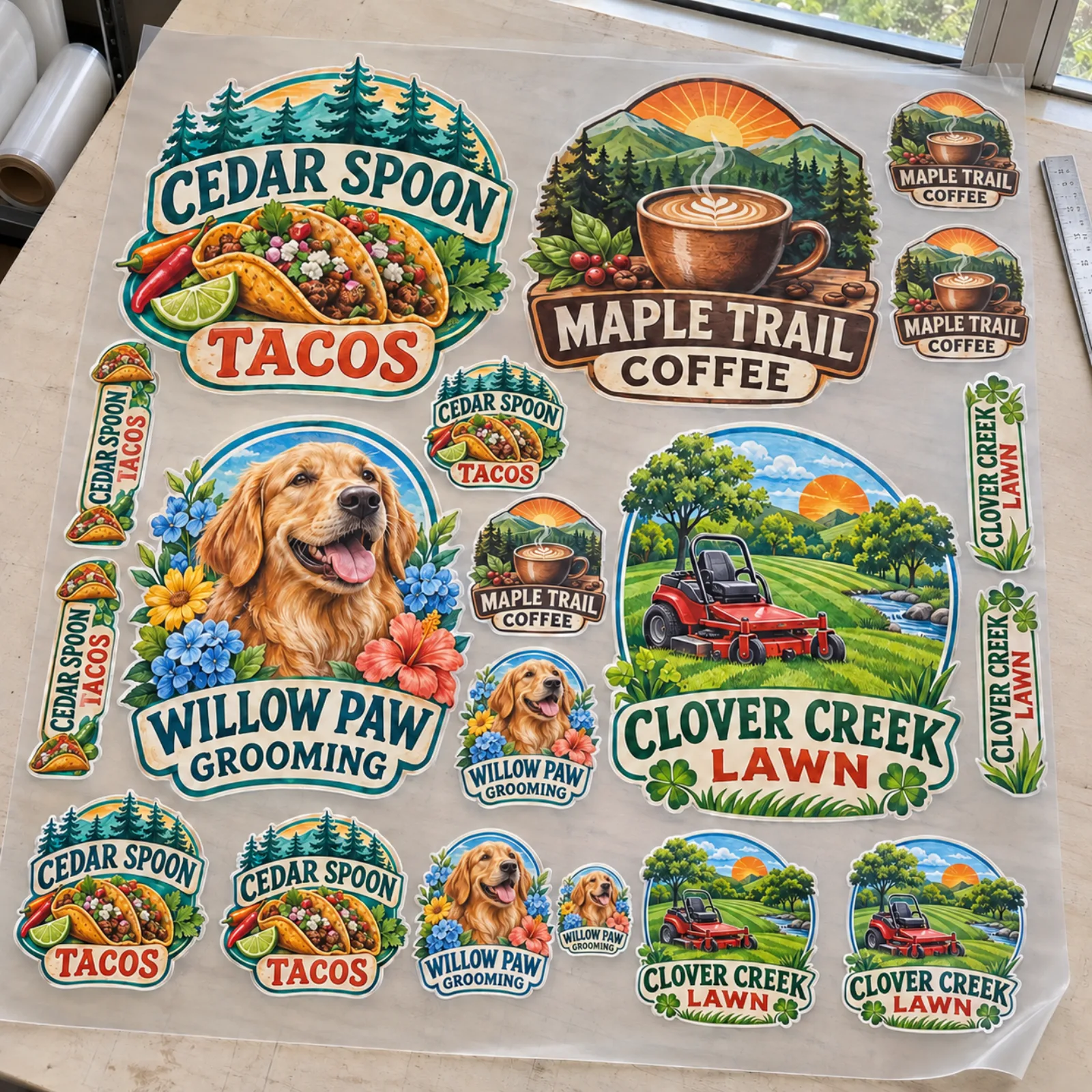
4 designs at 10 x 10 inches, 42 designs at 3 x 3 inches or 20 designs at 5 x 4 inches fit the 22 x 24 inch DTF example. The arithmetic uses 1/4 inch between designs and keeps 1/8 inch clear at every sheet edge.
The clear edges leave 21.75 inches of usable width and 23.75 inches of usable height. Use number × design size + (number - 1) × 0.25 inch in each direction. The total must be no more than the sheet dimension minus 0.25 inch.
Two 10 inch columns use 2 × 10 + 1 × 0.25 = 20.25 inches, and 2 rows use the same 20.25 inches. That gives 2 × 2 = 4 designs. Six 3 inch columns use 6 × 3 + 5 × 0.25 = 19.25 inches, while 7 rows use 7 × 3 + 6 × 0.25 = 22.5 inches. That gives 6 × 7 = 42 designs.
Four 5 inch columns use 4 × 5 + 3 × 0.25 = 20.75 inches. Five 4 inch rows use 5 × 4 + 4 × 0.25 = 21 inches, giving 4 × 5 = 20 designs. These are arithmetic examples, not standard dimensions for shirts, hats or tote bags.
How Many UV DTF Designs Fit on a 2 Foot Sheet?
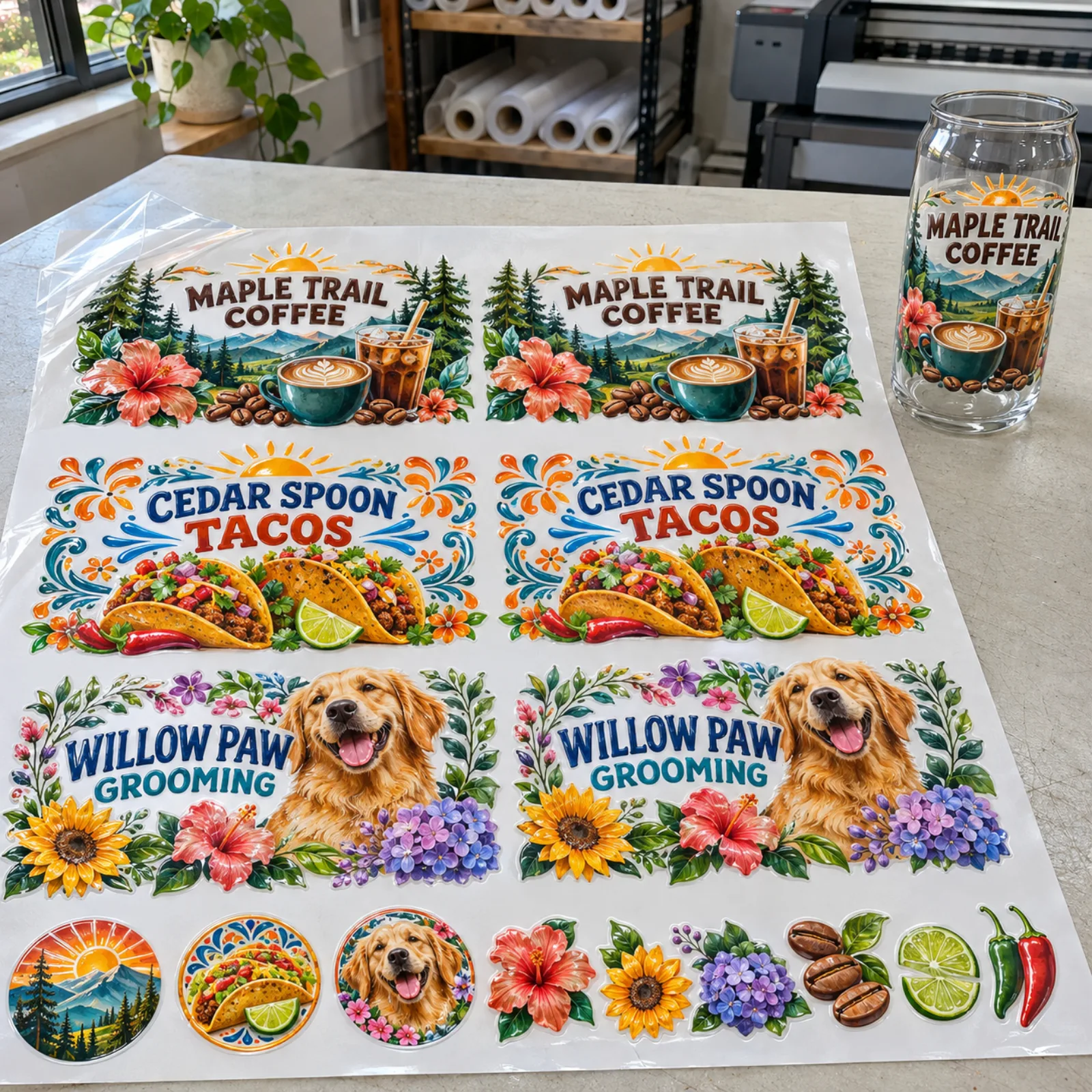
10 wraps at 9 x 4 inches or 42 decals at 3 x 3 inches fit the 22.5 x 24 inch UV DTF example. Both layouts use 1/4 inch between designs and keep 1/8 inch clear at every sheet edge.
The clear edges leave 22.25 inches of usable width and 23.75 inches of usable height. Two 9 inch columns use 2 × 9 + 1 × 0.25 = 18.25 inches. Five 4 inch rows use 5 × 4 + 4 × 0.25 = 21 inches, giving 2 × 5 = 10 wraps.
For 3 x 3 inch decals, 7 columns use 7 × 3 + 6 × 0.25 = 22.5 inches, which is too wide for the 22.25 inch usable area. Six columns use 6 × 3 + 5 × 0.25 = 19.25 inches. Seven rows use 22.5 inches, giving 6 × 7 = 42 decals.
The 9 x 4 inch wrap is only a layout example. It is not a standard cup dimension and is not a promise that the example size fits every cup. Measure the hard surface and prepare the transfer at the required final dimensions.
How Do I Apply a UV DTF Transfer?
Apply UV DTF in 7 steps without heat. The adhesive grabs when it touches the surface, so finish alignment before contact.
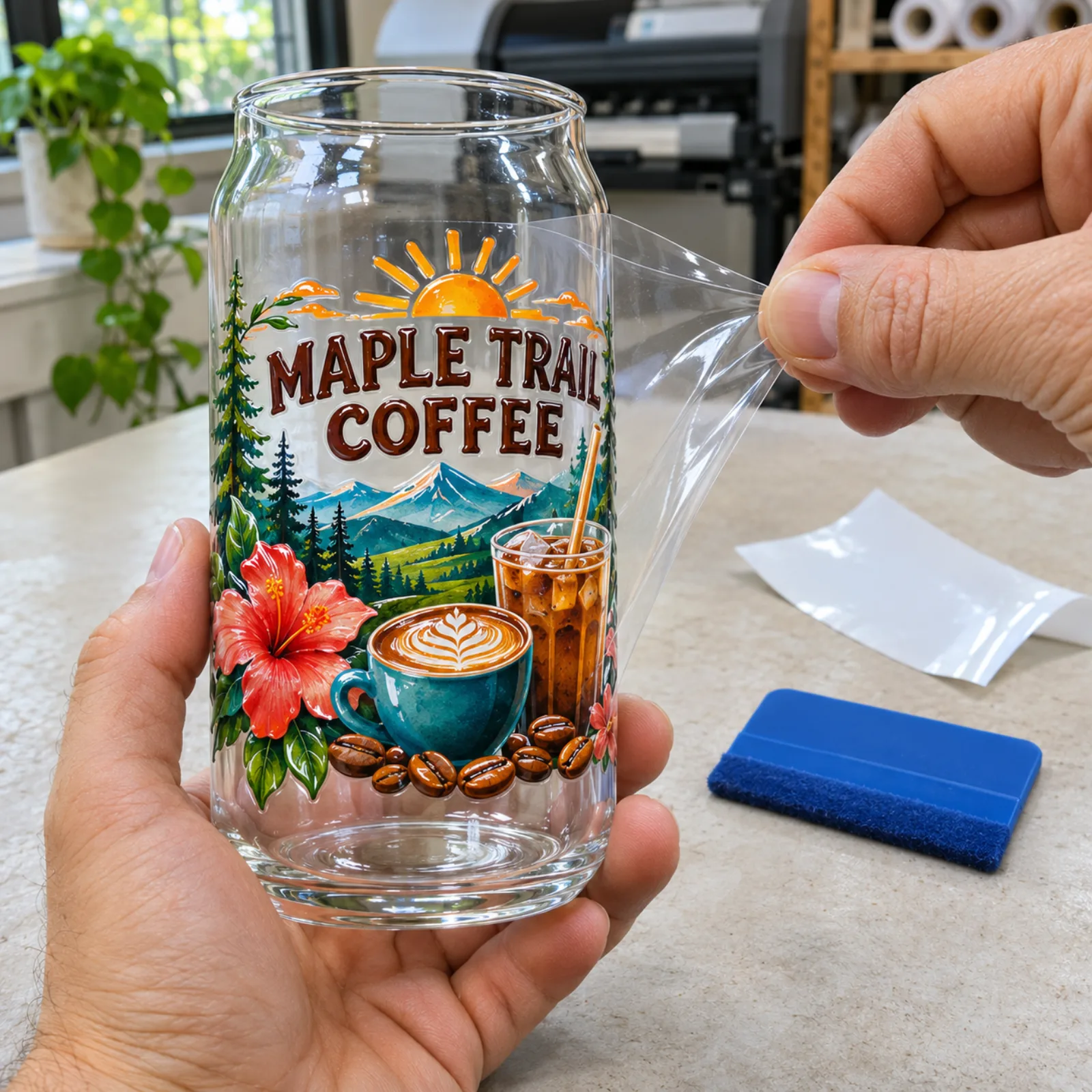
- Clean the hard surface with soap and water.
- Squeegee the transfer while it is still on the sheet.
- Peel away the white backing or carrier.
- Align the design before contact; use a hinge for a large graphic.
- Place the transfer onto the surface, keeping the design aligned.
- Burnish the complete design onto the surface.
- Peel the clear carrier film slowly and watch that every printed area stays on the object.
For a wet application, use water with a few drops of dish soap to gain positioning time. Align the design, squeegee the liquid from beneath it, burnish the transfer and peel the clear film slowly.
How Should I Prepare the Artwork File?
Use the same 5 file rules for both products: one transparent PNG, final print size, 300 dpi recommended, 1/8 inch clear at every edge and features at least 0.02 inch (0.5 mm).
Arrange as many designs as fit at their final print sizes. Remove unused transparent padding before choosing a longer sheet, and keep enough room to separate individual transfers after the gang sheet arrives.
At 300 dpi, a 22 x 24 inch DTF canvas is 6,600 x 7,200 pixels. A 22.5 x 24 inch UV DTF canvas is 6,750 x 7,200 pixels. These pixel counts describe the full sheet at the recommended resolution, while each design still needs its final physical width and height.
For DTF, arrange shirt, hat or tote bag graphics for fabric pressing. For UV DTF, arrange wraps and decals for the hard objects you measured. Keep the complete background transparent wherever no printed layer is wanted.
If you have a ready transparent PNG, upload the arranged sheet. You may also send a logo, photo or ChatGPT image, and we can make that item print-ready for $14.99 per item. Include the intended final size for every item.
Which Transfer Should I Order?
Choose between 2 products first: 22 inch wide DTF for fabric or 22.5 inch wide UV DTF for a hard surface. Then complete the layout before choosing its 1 to 10 foot length.
Use 7 ordering steps:
- Choose DTF for fabric or UV DTF for a hard surface.
- Measure every design at its final physical width and height.
- Arrange every required copy in one transparent PNG with 1/8 inch clear at every edge.
- Measure the completed layout height and compare it with the matching price table.
- Place the order with the ready PNG, or send a logo, photo or ChatGPT image for print-ready preparation.
- Review the digital proof sent only after the order.
- Approve the proof before printing. Nothing prints until you approve it.
Read how to press DTF transfers before applying fabric transfers. For UV DTF, follow the clean, align, burnish and slow-peel sequence above.
What Do We Check on Every Sheet Before It Prints?
We make 5 file checks before every sheet prints: sheet width, PNG transparency, recommended resolution, clear edges and minimum feature size. We check for the selected 22 inch DTF or 22.5 inch UV DTF width, transparent PNG artwork, 300 dpi recommended, 1/8 inch clear at every edge and features at least 0.02 inch (0.5 mm).
The digital proof comes only after the order and before printing. Review whether the correct transfer type, design count, final sizes, spelling and orientation appear there. Nothing prints until you approve it.
Frequently Asked Questions
No. DTF uses hot melt adhesive and a heat press on fabric, while UV DTF uses a permanent peel-and-stick adhesive on hard surfaces with no heat.
No. UV DTF is made for hard surfaces, not fabric. Use DTF transfers for cotton, polyester, blends and canvas.
Use UV DTF for tumblers and mugs because it applies to hard surfaces without a heat press. DTF is made to press onto fabric.
We do not rate these UV DTF transfers for the dishwasher. Hand washing is the safe choice for a decorated cup.
Use 1 transparent PNG at 300 dpi recommended for either sheet type. Keep 1/8 inch clear at every edge and make no feature thinner than 0.02 inch (0.5 mm).
2 fixed widths apply: DTF sheets are 22 inches wide and UV DTF sheets are 22.5 inches wide. Both products offer lengths from 1 to 10 feet.
Related Articles
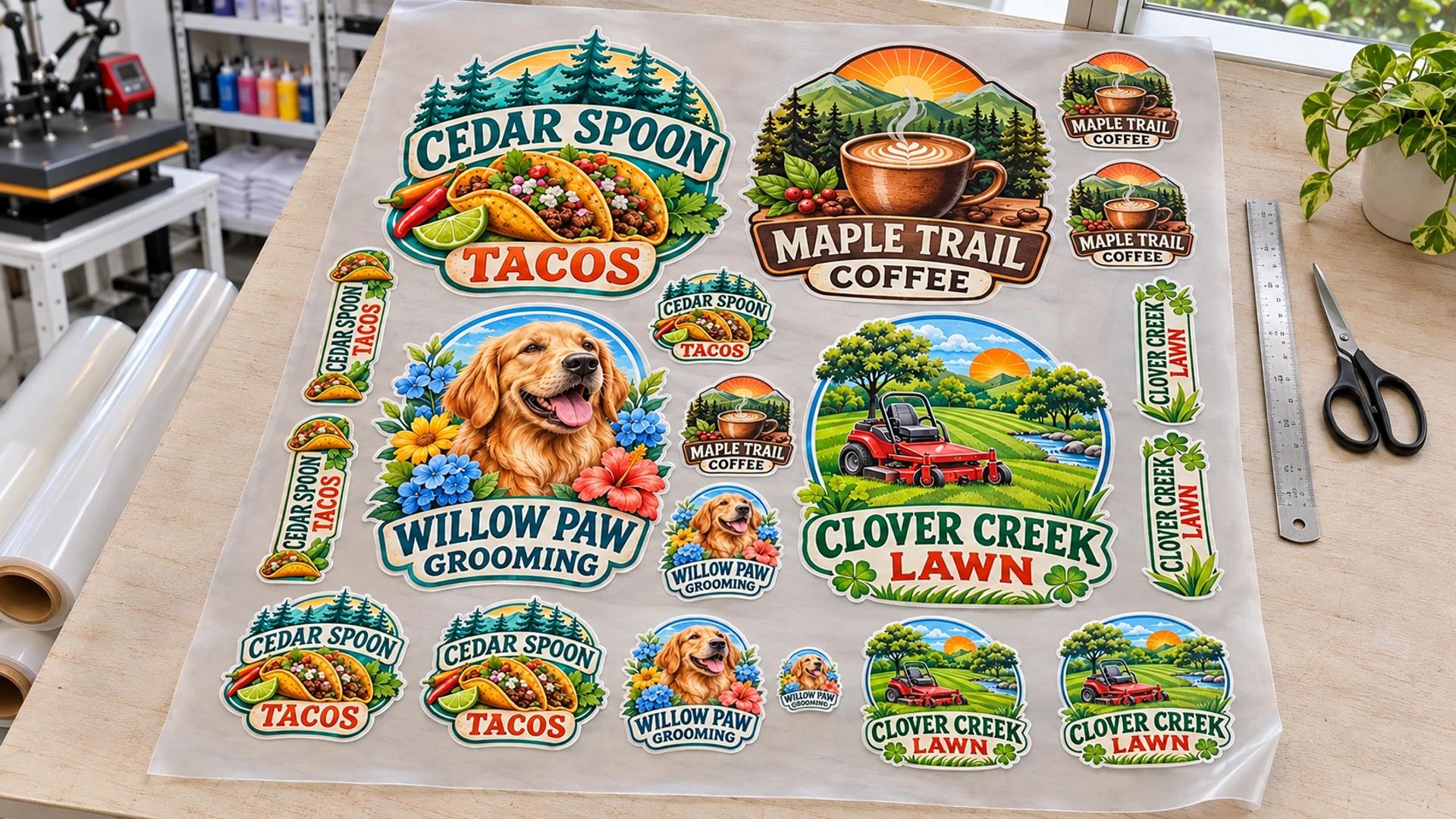
DTF Gang Sheet Sizes and Prices: All 10 Sheet Lengths
10 DTF gang sheet lengths run from 22 x 12 inches to 22 x 120 inches. Compare live prices, [...]
Read More: DTF Gang Sheet Sizes and Prices: All 10 Sheet Lengths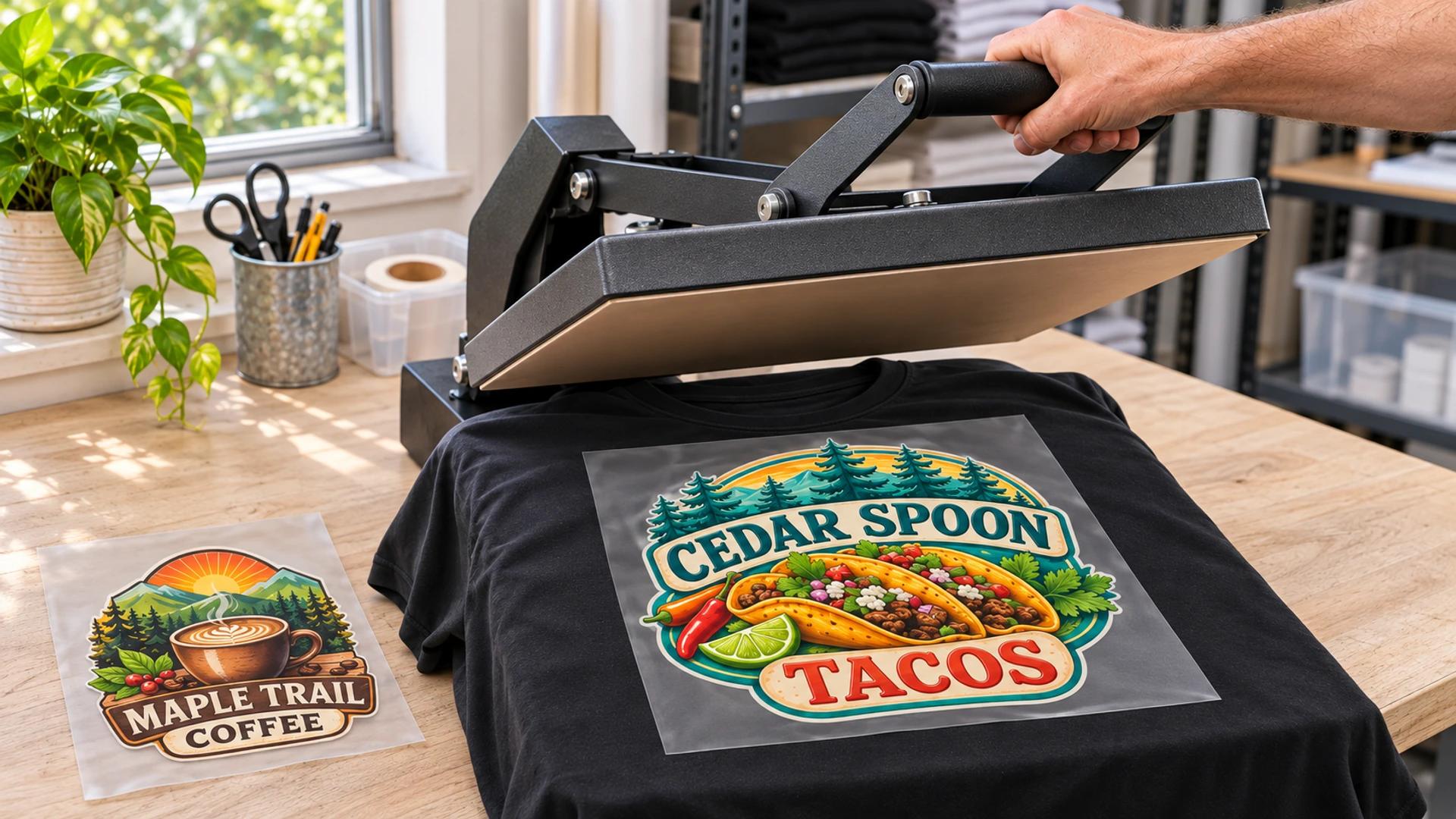
How to Press DTF Transfers: Temperature, Time and Peel
How to press DTF transfers: use 290 to 320 F for 10 to 20 seconds at 35 to 50 PSI, cool, peel [...]
Read More: How to Press DTF Transfers: Temperature, Time and Peel
T-Shirt Print Size Guide: Front, Back and Left Chest
12.5 x 15.7 inches is our largest front print area. Compare common left-chest and back sizes, [...]
Read More: T-Shirt Print Size Guide: Front, Back and Left Chest
Custom T-Shirt Cost: Quantity, Size and Print Sides
Custom printed t-shirts run sizes S to 3XL in white or black, on one side or both. See the [...]
Read More: Custom T-Shirt Cost: Quantity, Size and Print Sides