Signicade vs Simposign II: Which A-Frame Should You Buy
 Tomas Amaya
October 12, 2026Updated October 19, 20269 min read
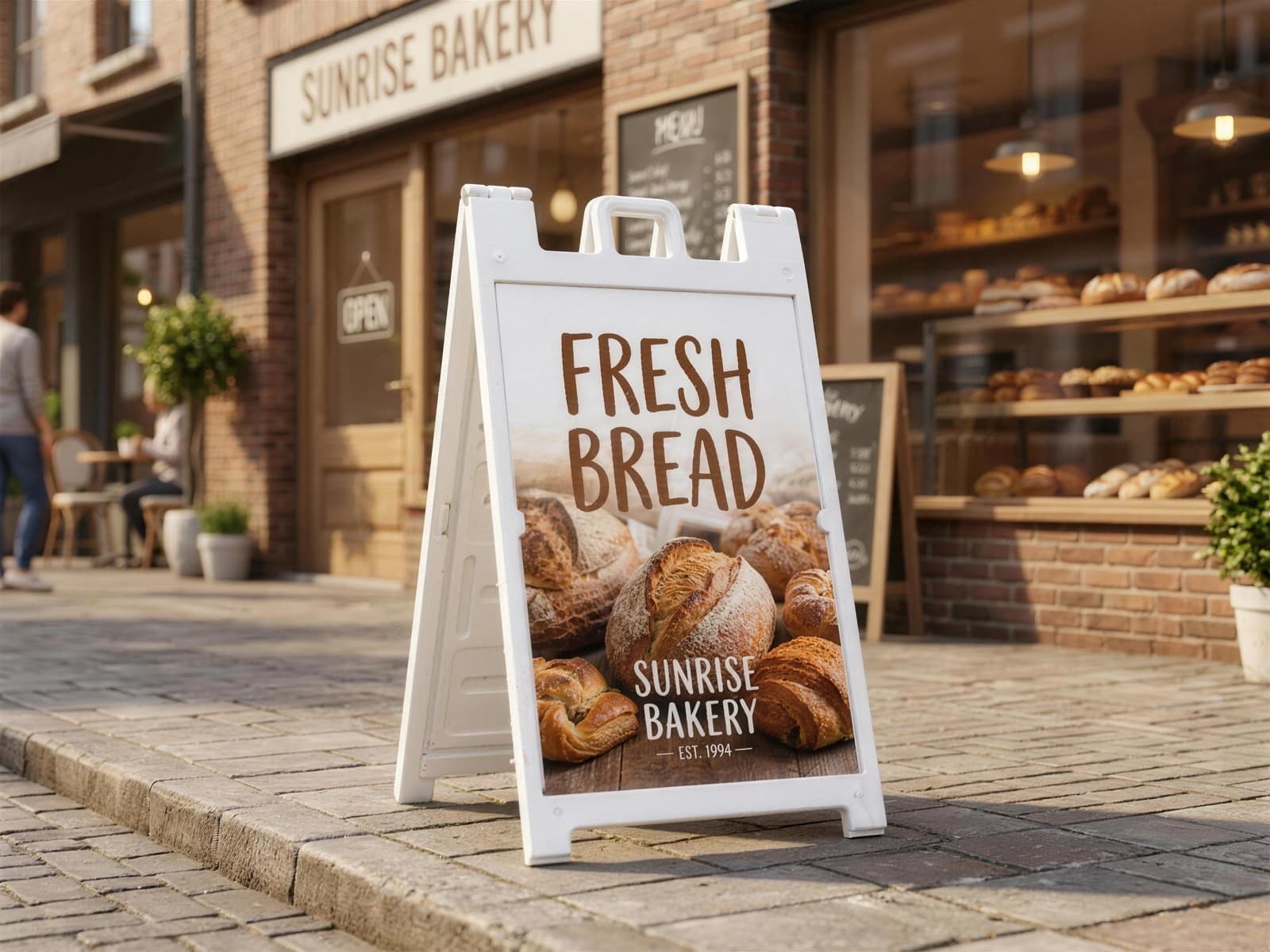
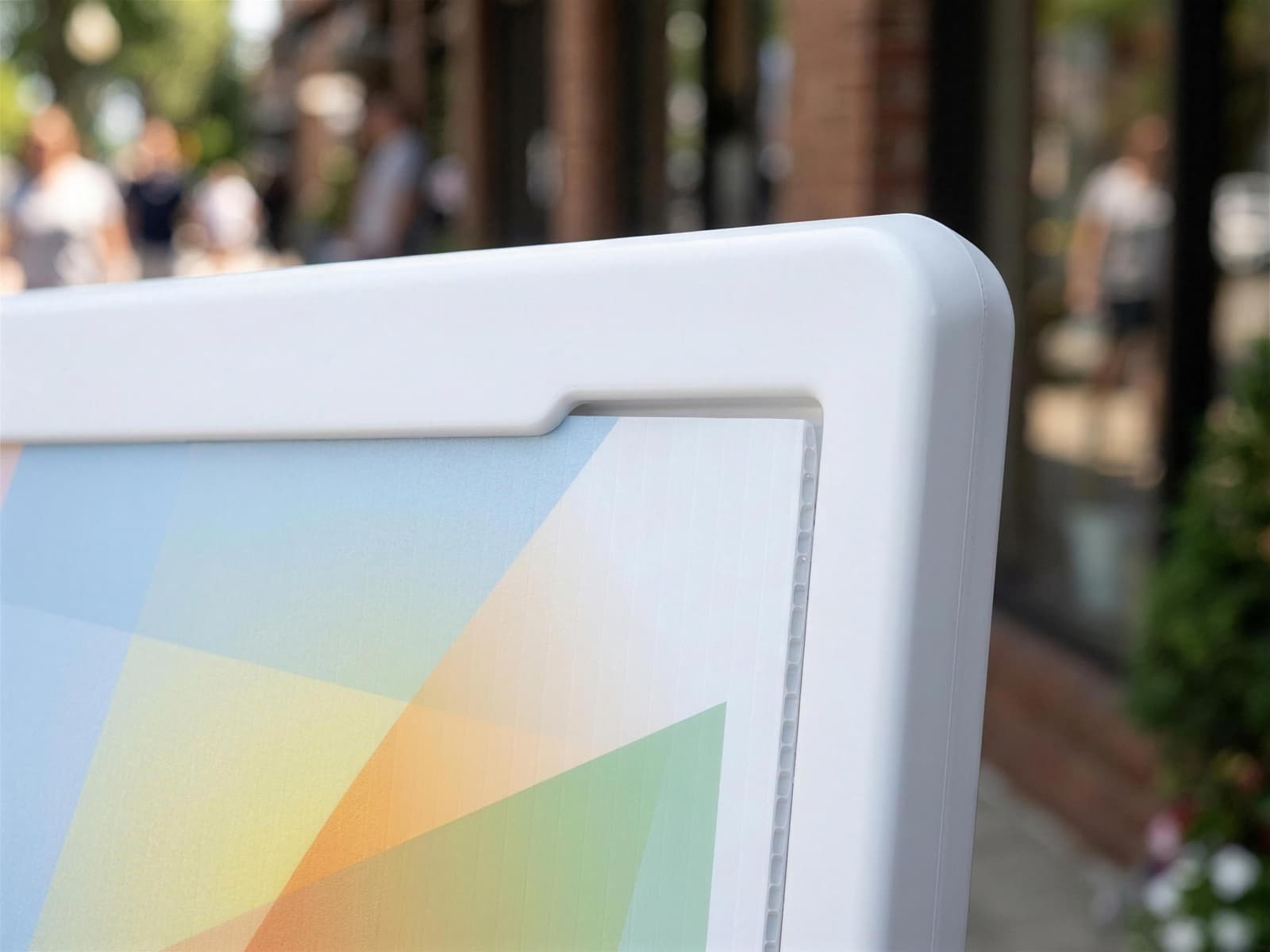
Signicade or Simposign II: Which A-Frame Should You Buy?
Choose Simposign II for removable 22 x 28 inch coroplast inserts; choose Standard Signicade for a larger 24 x 36 inch adhesive vinyl face. One-face kits cost $278.19 and $267.49 respectively. Both are printed in the USA in 3 business days after artwork approval and ship nationwide, with flat $10 shipping to any US address.
Choose Simposign II when you want a lightweight white frame and rigid graphics that slide out for a new message. Choose Standard Signicade when you want the larger 24 x 36 inch face and adhesive vinyl applied directly to the frame. That difference affects daily handling, artwork size, and how you update the sign later.
The Simposign II opening configuration includes the frame and one 22 x 28 inch coroplast insert. A second insert fills the other face. The Standard Signicade uses a 24 x 36 inch peel-and-stick vinyl graphic instead of a rigid board. Its white hollow frame is 46 inches high, 25 inches wide, 3 inches deep, and 19 pounds. The Simposign II description calls it lightweight but does not publish a pound figure, so there is no honest numeric weight comparison to make.
| Simposign II configuration | Graphic size | What is included | Current price |
|---|---|---|---|
| A-frame plus 1 graphic | 22 x 28 in | White frame and 1 coroplast insert | $278.19 |
| A-frame plus 2 graphics | 22 x 28 in each | White frame and 2 coroplast inserts | $299.59 |
| Graphic only, 1 piece | 22 x 28 in | 1 replacement coroplast insert, no frame | $74.89 |
| Graphic only, 2 pieces | 22 x 28 in each | 2 replacement coroplast inserts, no frame | $96.29 |
Every figure in the table is for one configured order. The two complete choices include the A-frame. The graphic-only choices are replacements and should not be ordered as though they include hardware.
How Do the 22 x 28 and 24 x 36 Inch Graphics Compare?
The Standard Signicade has the larger printed face at 24 x 36 inches, while Simposign II uses a 22 x 28 inch insert. The difference is visible in both directions. Standard gives a headline and logo more physical room, especially when the sign must be understood several steps before a person reaches it.
Simposign II still has enough space for a short offer, an arrow, store hours, or a simple event message. Its smaller panel rewards restraint. A large logo, one headline, and one supporting line usually communicate more clearly than a complete service list. If a QR code is necessary, keep it secondary and leave enough quiet space around it to scan.
Do not resize the same finished PDF blindly between the two formats. Moving a 24 x 36 inch layout onto 22 x 28 inches changes the proportions, not just the scale. Text may crowd the edges, a logo can become too small, and a photograph may crop differently. Set the artboard to the ordered graphic size first, then rebuild the spacing around the content.
How Are the Graphics Installed on Each A-Frame?
Simposign II uses rigid coroplast inserts that drop into the frame, while Standard Signicade uses adhesive vinyl that peels and sticks directly onto its frame. This is the deciding construction difference for most buyers.
A coroplast insert remains a separate piece. That makes it useful when a frame carries one promotion this month and another message later. Keep the removed panel flat and dry so it is ready for its next use. The white Simposign II frame stays in service while the printed piece changes.
The Standard graphic is not a coroplast insert. It is a printed adhesive vinyl piece made for direct application to the Signicade face. The completed sign has no loose board to lift out. That approach works well for a message that is expected to stay on the frame, but it is not the same swap process as sliding out a rigid panel. Order the system that matches how often the message will realistically change.
What Comes With a Simposign II Order?
The complete Simposign II choices contain a white A-frame and either one or two printed 22 x 28 inch coroplast inserts. One insert supplies one printed face. Two inserts supply art for both faces. The catalog describes both complete configurations as ready to use.
The graphic-only choices contain no frame. They are intended for an existing compatible Simposign II. This distinction matters because the words "graphic only" are literal. One replacement piece does not include a second piece, and neither replacement option adds another frame.
Before ordering, count the physical parts needed. A first-time one-face setup needs one frame and one graphic. A first-time two-face setup needs one frame and two graphics. A later artwork change needs only the replacement insert count. Matching the order to those parts prevents paying for an extra frame or receiving replacement art with nothing to hold it.
When Is Simposign II the Better Choice?
Simposign II is the better choice when low carrying effort and replaceable rigid art matter more than the largest available face. Its own product description identifies it as the lightweight option, and its drop-in construction supports repeated message changes without applying another adhesive graphic.
That combination fits a sign that moves between storage and a doorway, or a frame used for rotating offers. It also helps an organization that keeps one general panel and one event-specific panel ready. The important point is the workflow, not a vague claim that one frame is always better. Someone must still carry, open, position, retrieve, and store the sign.
Choose the one-graphic setup when only one approach has useful foot traffic or the back faces a wall. Choose two graphics when both faces can be read. They may carry the same design for recognition in both directions or different designs when each direction needs a different message.
When Is Standard Signicade the Better Choice?
Standard Signicade is the better choice when the larger 24 x 36 inch printed area is the priority and the message can remain applied to the frame. The extra height and width support a larger headline, a more visible arrow, or a little more separation between a logo and supporting information.
Its published frame measurements also make planning easier. The frame stands 46 inches high, measures 25 inches wide, is 3 inches deep, and weighs 19 pounds. Those are product dimensions, not a wind rating. They help with storage space, doorway clearance, and carrying plans, but they do not promise that the sign will remain upright in every condition.
Standard is also the clearer choice when there is no reason to store separate rigid inserts. A long-running hours sign or a recurring directional message may not need a swap system. In that case, direct adhesive vinyl keeps the order focused on one frame and the required printed faces.
Should an A-Frame Have One Graphic or Two?
Order one graphic when only one face will be seen, and order two when people can approach from both directions. The number of pieces is not a print-quality choice. It is a visibility choice based on placement.
Walk to the intended spot and look at it from both approaches before ordering. If one face points into a wall, display, parked vehicle, or closed area, that second face may have no useful reader. If both directions stay open, two inserts can make the message visible earlier and for longer.
Two graphics do not have to match. One side can welcome approaching visitors while the reverse side gives an exit message or a different call to action. Submit each face as a clearly named file, even when the designs look similar. The proof should make it obvious which art belongs on each side and whether the orientation is correct.
What Do We Check on A-Frame Proofs?
We check that the proof uses the ordered 22 x 28 inch proportion, that every submitted face matches the selected piece count, and that the main message stays readable before a person reaches the frame. These are concrete checks that prevent a correct file from becoming the wrong sign.
Arrows need special attention. An arrow that points the right way on a computer screen can point the wrong way after the frame is placed. Name the file by viewing direction or label the intended placement when the direction matters. Hours, dates, phone numbers, and web addresses should be read character by character rather than treated as decoration.
We also look at hierarchy. A small panel filled with equal-size lines forces the reader to stop and study it. The headline should carry the message, the supporting line should explain it, and any QR code or contact detail should remain secondary. This is especially important on Simposign II because its face is smaller than the Standard Signicade graphic.
Are These A-Frames Rated for Wind?
Neither product publishes a wind rating, so neither should be chosen from an assumed wind number. Standard Signicade is described as outdoor safe and has a listed 19 pound frame. Simposign II is described as lightweight. Those statements describe the products, but they do not guarantee performance in a gust or at an exposed location.
Placement remains part of using any portable sign responsibly. Keep the frame out of travel lanes, preserve the required clear path, and bring it inside when conditions are not appropriate for a lightweight portable display. A sandbag, water base, or spring is not listed as part of either complete configuration discussed here.
Outdoor safe also does not mean permanent installation. An A-frame is portable hardware intended to be opened, positioned, closed, and stored. If the message must remain fixed to a post, wall, or fence, a mounted rigid sign is a different product type.
How Do You Order the Right Simposign II Setup?
Start by choosing between a new complete frame and replacement graphics for a frame you already own. Then count the visible faces: one coroplast insert for one face, or two inserts for both faces. That two-step decision selects the correct configuration without guessing from the product name.
Build the artwork at 22 x 28 inches and keep the most important words large. Submit separate, clearly named files for two different faces. Review the digital proof for message hierarchy, spelling, numbers, arrow direction, graphic count, and orientation before approval.
Use the Simposign II order page when the lightweight drop-in format fits the job. Production is 3 business days after artwork approval. Transit follows production, so plan around the approval date and shipping time rather than treating production time as an arrival promise.
Frequently Asked Questions
22 x 28 inch removable coroplast inserts define Simposign II, while 24 x 36 inch adhesive vinyl graphics apply directly to the Standard Signicade frame. Simposign II is described as the lightweight option; the Standard frame is listed at 19 pounds.
$278.19 buys a Simposign II with its white A-frame and one 22 x 28 inch coroplast insert. That configuration is ready to use on one face. Production is 3 business days after artwork approval, followed by nationwide shipping.
$299.59 buys a Simposign II with its white A-frame and two 22 x 28 inch coroplast inserts. Choose two graphics when people can approach from both directions or when the back face carries a different message.
$74.89 buys one replacement 22 x 28 inch coroplast insert, and $96.29 buys two. These graphic-only choices do not include another A-frame, so order them only when you already have a compatible Simposign II frame.
It can be. The one-graphic configuration fills one face, while the two-graphic configuration supplies an insert for each face. The frame does not create the second printed message by itself; the order must include two printed coroplast pieces.
No published wind rating is stated for either product. The Standard Signicade page calls its frame outdoor safe and lists it at 19 pounds, while Simposign II is described as lightweight. Those facts do not promise performance in wind, so placement and any added weight remain the buyer's decision.
Related Articles

A-Frame Sign Sizes: 24 x 36 in Graphic and Frame Specs
The standard a-frame sign size is a 24 x 36 in graphic in a frame 46 in tall. Get 22x28 and [...]
Read More: A-Frame Sign Sizes: 24 x 36 in Graphic and Frame Specs
Wind Resistant Sidewalk Sign: Is a 19 lb A-Frame One?
A sidewalk A-frame is 46 by 25 by 3 inches and 19 lb, with one 24 by 36 inch vinyl graphic. [...]
Read More: Wind Resistant Sidewalk Sign: Is a 19 lb A-Frame One?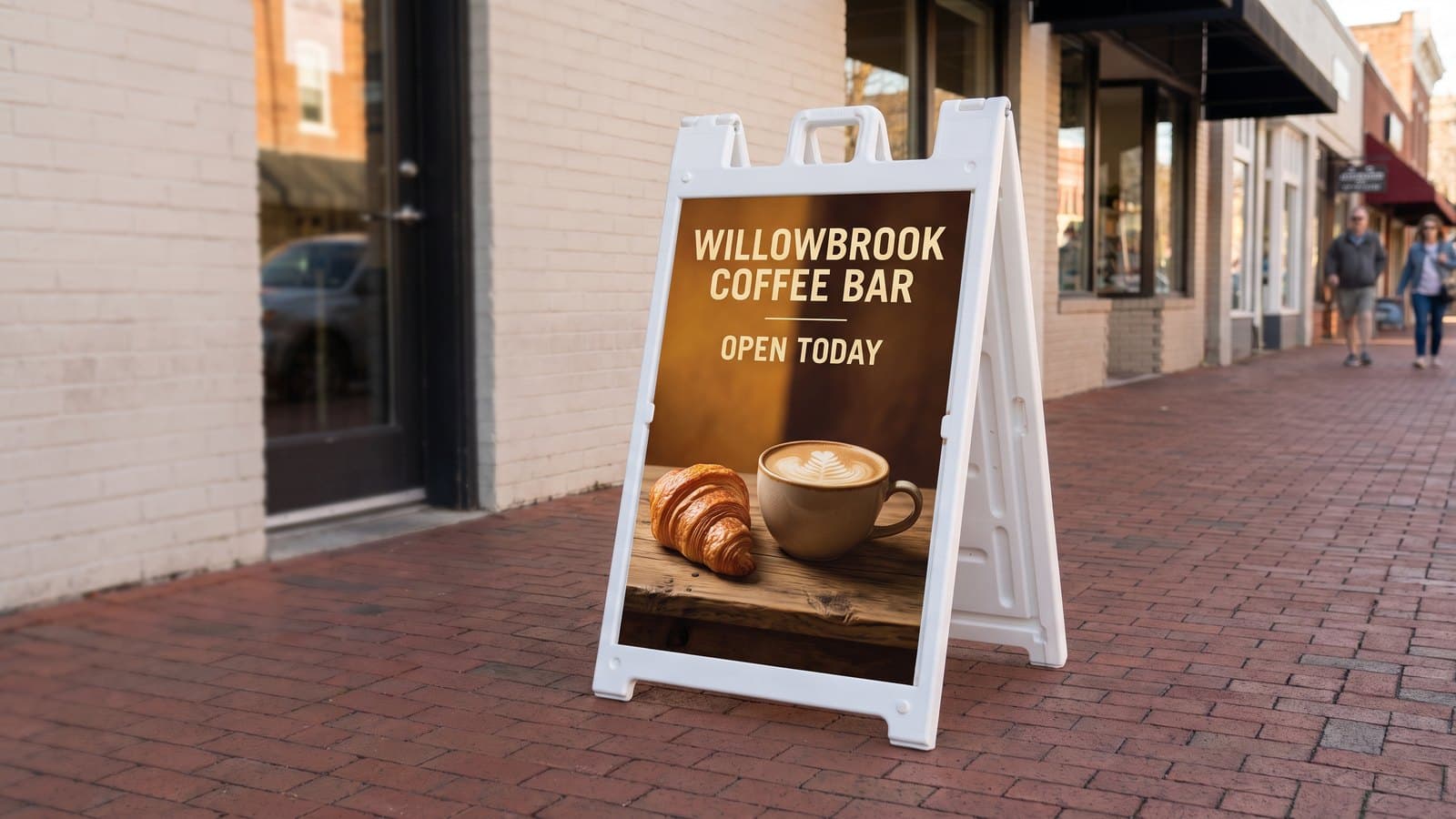
Sandwich Board Signs: Where to Put Them and What to Say
A sandwich board works when it sits 5 to 10 ft ahead of the door with one message in 3 inch [...]
Read More: Sandwich Board Signs: Where to Put Them and What to Say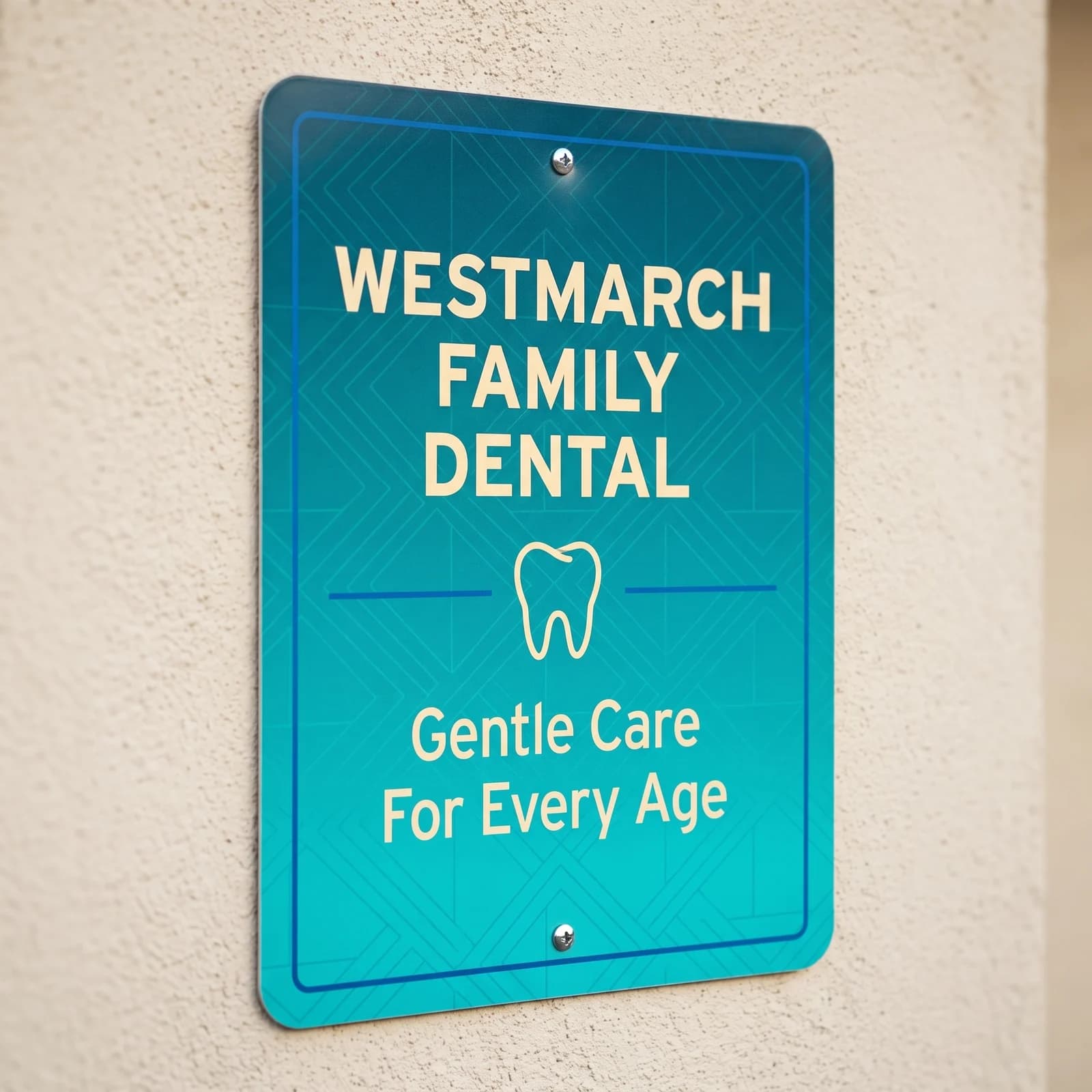
24 x 36 Aluminum Sign Cost: Current Price and Options
A 24 x 36 inch aluminum sign uses a .040 inch metal panel and can print on one or both sides. [...]
Read More: 24 x 36 Aluminum Sign Cost: Current Price and Options