Neon vs LED Signs: Lifespan, Cost and Where Each Wins
 Daniel
May 21, 2026Updated October 19, 20269 min read
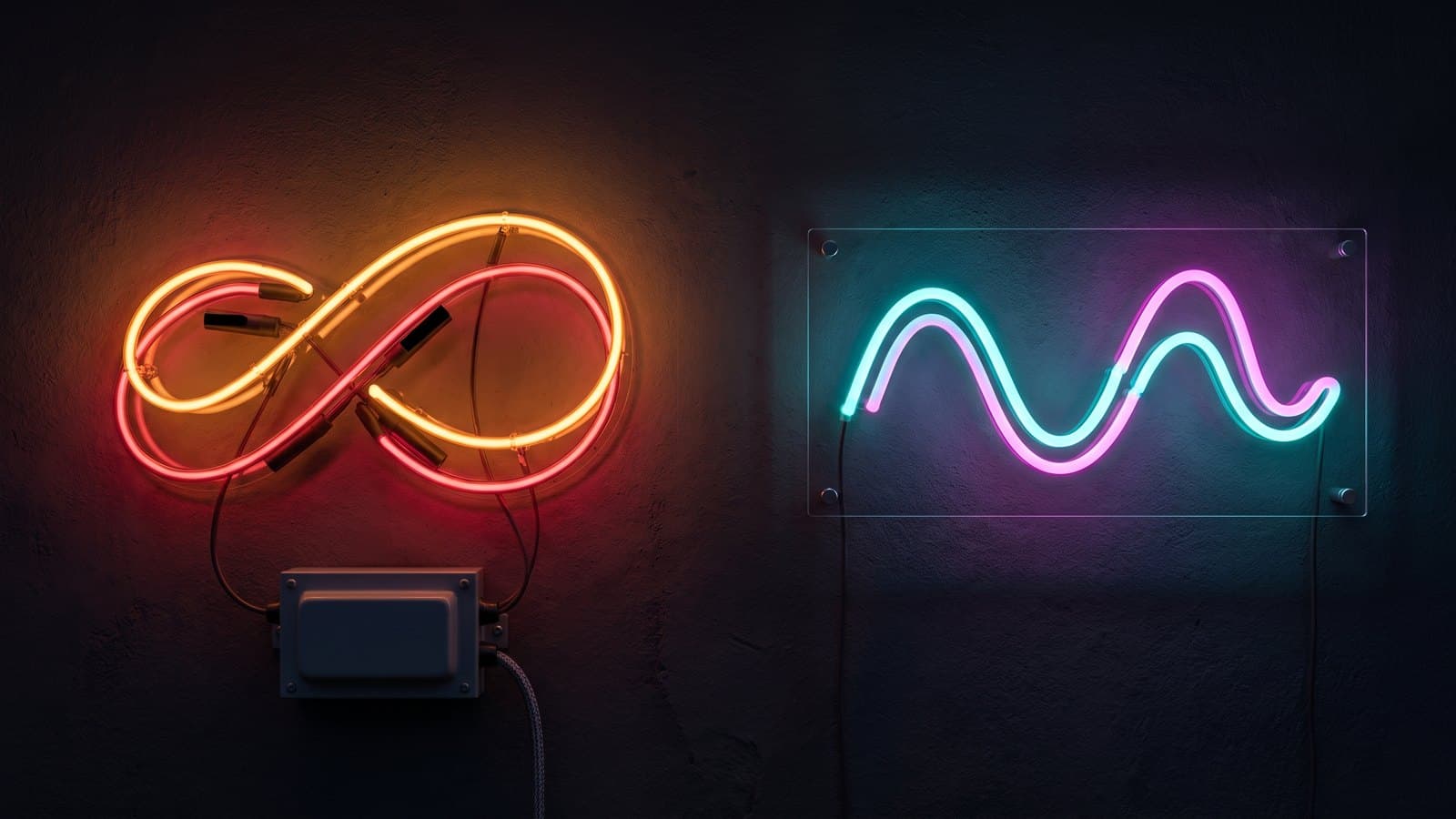
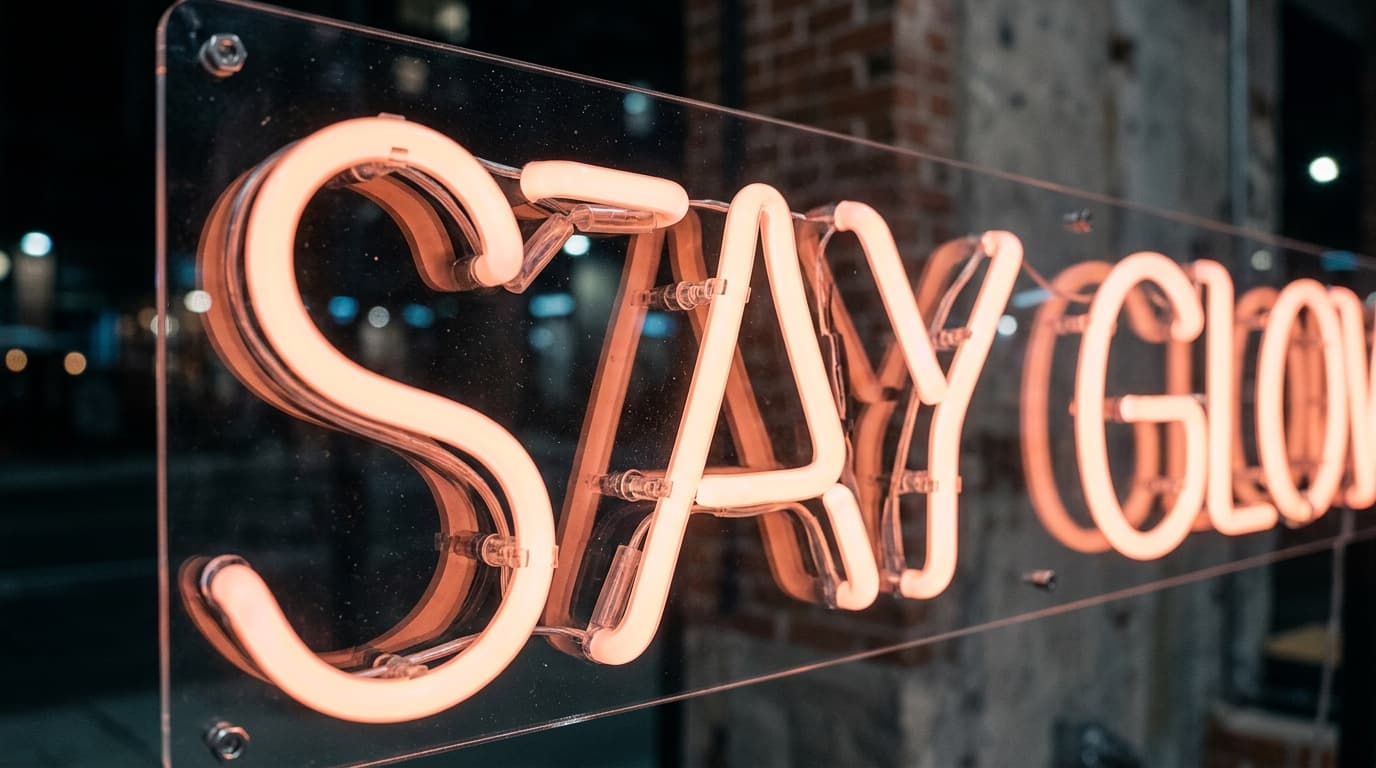
Neon vs LED Signs: Which Should You Buy?
LED neon is usually the practical business choice: its tubing commonly uses a 12V or 24V supply and carries claimed ratings of 50,000 hours or more; glass neon typically lasts 8 to 15 years. Choose glass when hand-bent tubes and authentic glow define the brand. Compare custom quotes because neither type has a reliable size-only price.
Lit at night and photographed, the two can look similar, which is why the comparison keeps coming up. Up close, glass neon often runs warmer and its transformer can hum, while LED neon usually runs cooler and quieter. Exact heat and sound depend on the sign, power supply, installation, and operating conditions.
| Feature | Traditional neon | LED neon-style |
|---|---|---|
| Typical lifespan or claimed rating | 8 to 15 years | 50,000 hours or more |
| Power draw | Higher | Lower |
| Voltage | High, transformer required | 12V or 24V, plug in |
| Heat output | Often warmer in use | Usually cooler, but can warm |
| Sound | Transformer can hum | Usually quiet |
| Weight | Glass plus a transformer | Light |
| Repair | Tube rebent by hand | Segment replaced |
| Outdoor use | Rated enclosure and installation required | Entire sign and power supply must be outdoor rated |
| Shapes | Hand bent by a craftsperson | Flexible tubing follows many paths |
| Upfront cost | Often higher | Often lower |
What Is a Traditional Neon Sign?
A traditional neon sign is a sealed glass tube filled with an inert gas that glows when high voltage runs through it. Neon gas itself glows red orange. The blues, greens and purples come from argon, mercury vapor and the phosphor coating painted inside the tube, which is why the trade still calls all of it neon even when there is no neon in the tube.
Every tube is bent by hand over a flame, one letter and one curve at a time, then evacuated, filled and sealed. That craft is the whole reason real neon still exists. It also explains the cost, the lead time and the repair path: a broken tube is not a part you order, it is a tube somebody bends again.
The technology dates to the 1910s and has been the look of a storefront at night ever since. LED only got close to imitating it in the last decade or so.
What Is an LED Neon Sign?
An LED neon sign is flexible silicone tubing with LED diodes running inside it, mounted to a cut backing panel and powered through an adapter. The tubing diffuses the light evenly along its length, which makes it read as a continuous glowing line rather than a row of dots.
Because the tube is flexible and solid rather than blown and hollow, it can follow many cut paths and logo shapes. The LED tubing commonly operates at 12V or 24V on the low-voltage side of an adapter, while the adapter itself still connects to mains power. The adapter, wiring, and connections must match the product instructions and the installation location.
That combination of lower-voltage tubing, lower heat, flexible construction, and lighter weight explains why LED neon-style signs are common. Those traits also make many models easier to pack and ship, although the backing panel, adapter, and wiring still need protection in transit.
How Long Does Each One Last?
LED neon products commonly claim ratings of 50,000 hours or more, while glass neon typically runs 8 to 15 years. Those figures are measured differently enough that they are worth translating: 50,000 hours is about five and a half years of continuous operation, or roughly fourteen years at ten hours a day. Actual service life depends on product quality, installation, environment, and operating schedule.
The failure modes differ more than the lifespans do. A glass tube dims gradually as the gas and the electrodes age, and a tube that breaks can be rebent and refilled by somebody who does that work, so a well maintained neon sign can outlive its rated life several times over. An LED sign fails at a point rather than across the whole face: one segment goes dark, or the power supply quits. Segments and supplies are replaceable, but nobody repairs a silicone tube.
For a business, the practical question is not only which lasts longer on paper. It is whether a qualified repair technician is available when a tube, segment, connection, or power supply fails.
Traditional Neon
- Lifespan
- 8 to 15 years
- Tube can be repaired
- Power
- High voltage
- Transformer required
- Heat and sound
- Often warm in use
- Transformer can hum
- Repair path
- Tube rebent by hand
- Specialist work
LED Neon-Style
- Lifespan
- Claimed 50,000 hours or more
- Sealed silicone tube
- Power
- 12V or 24V tubing
- Mains-powered adapter
- Heat and sound
- Usually runs cooler
- Can warm in use
- Repair path
- Segment replaced
- Or the sign swapped
When Is Real Neon Worth It?
Real neon is worth it when the sign is part of the brand story rather than a way to display words. Four situations come up again and again.
Heritage and vintage brands. A bar, diner, theater or record shop going for an authentic mid century look. Customers who care about that look can tell the difference at close range, and those are the customers the sign is for.
Art pieces and installations. When the hand bent glass is the point, an imitation of hand bent glass defeats the purpose.
Letterforms LED cannot hold. A tight script, a very small radius, a shape that doubles back on itself. Silicone tubing has a minimum bend radius. Glass, in the right hands, has fewer limits.
High end hospitality and retail. Hotels, restaurants and flagship stores where the budget exists and the difference between real and imitation is part of what is being sold.
When Does LED Win?
LED wins for almost everything else, and the list is longer than the one above.
Indoor branding for bars, salons, gyms, restaurants, and retail. Exterior storefront signage when the complete sign and power supply are rated for the installation. Event and trade show signage when a lighter sign is easier to pack and carry. Custom logo shapes because the flexible tubing follows a cut path. Family venues where lower-voltage tubing and lower operating heat can help, while the adapter and wiring remain properly mounted and protected. And any business where energy use matters, because LED neon generally draws less power than comparable glass neon.
If you are weighing the two and nothing in the previous section describes you, LED is the answer.
What Drives the Price of Either One?
Both are priced by the length of tubing the design needs, not by the size of the panel it sits on. That single fact explains most of the quotes that surprise people.
A short bold word in a heavy face uses less tube than a long delicate script at the same overall width, so the script costs more even though it looks lighter. Adding a second color adds tube. An outline around a letter roughly doubles the tube for that letter. After tubing, the variables are the backing material and cut, indoor versus weather rated construction, the mounting method, and whether a dimmer or a remote is part of the build.
We do not fabricate either type, so we do not publish a price for one. If a glowing sign is part of a bigger signage plan, share the plan through our contact page or call (210) 293-5651. We will identify the printed pieces we can make and the fabricated pieces that need a neon or LED specialist.
Where a Glowing Sign Fits in a Storefront System
A neon or LED sign is one element in a storefront, not the whole thing, and it works best when the printed pieces around it are doing their jobs.
A glowing sign carries the name or a short phrase after dark. It does not carry your hours, your services, your phone number or your offer, because tubing cannot hold small text and nobody wants it to. That information belongs on the printed layer: window graphics on the glass for hours and services, an aluminum panel at the parking entrance or on the building itself, a banner for anything seasonal, and A-frame signs on the sidewalk during opening hours.
The pieces should look like they came from one place. Same brand colors, same typeface family, same logo lockup. A beautiful custom sign above a window full of mismatched printed notices is a common and expensive way to look less professional than you are.
What We See When Businesses Plan Lighted Signage
Most of the signage plans we are handed have the same shape of problem, and it is not the choice between neon and LED.
The lighted sign gets picked first, budgeted generously and mounted beautifully, and then everything else gets bought reactively over the following year: a banner, window lettering, a sidewalk sign in a different typeface, and a parking panel in a different shade of the brand color. By the time it is all up, four elements are pulling in four directions, and the expensive one is the one that looks out of place.
The fix costs nothing at the start. Decide the colors and the type before anything is ordered, then plan the printed layer as one system. A dark blue matched across an aluminum panel, a window decal, and a banner is one decision made once. Matching those pieces afterward creates three separate approximations.
What We Print, and What We Do Not
We print signage. We do not build neon or LED neon signs, and they are not in our catalog, so anything you read here about them is a comparison rather than a pitch.
What we do print for a storefront: aluminum signs on .040 blanks, guaranteed 5 plus years outdoors, starting at $74.89 for a 12 x 18 panel and produced in 3 business days after proof approval. Adhesive vinyl window graphics at $13.38 per square foot. Vinyl banners in 13oz, 15oz and 18oz with 3 business day production. Coroplast, foam board, magnets, decals and displays sit alongside them on the custom signs page.
Every order gets a free digital proof before anything prints, everything is printed in the USA, and shipping is a flat $10 per order to any US address. If you are still working out which types of signs your business actually needs, we laid the whole list out in what kind of signs your business needs.
Frequently Asked Questions
For most businesses, yes. LED neon-style products commonly claim 50,000 hours or more, use 12V or 24V on the tubing side of a mains-powered adapter, usually run cooler, and often cost less to buy and operate. Real glass neon is better when the look itself is the product: a heritage bar, an art piece, or a letterform only a glass bender can shape.
LED neon products commonly claim a rating of 50,000 hours or more, which is over five years of continuous operation and longer at normal business hours. Actual life depends on product quality, the power supply, connections, environment, and operating schedule. Glass neon typically runs 8 to 15 years and a damaged tube may be repairable by a specialist.
12V or 24V is common on the tubing side of an LED neon power supply, and LED neon generally uses less electricity than comparable glass neon. Traditional neon needs a transformer to excite the gas in the tube. The actual power difference depends on sign size, design, brightness, power supply, and operating hours.
Yes, when the complete sign, power supply, connections, enclosure, and mounting method are rated for that outdoor installation. Glass tubes are vulnerable to impact. A sealed LED neon product may resist impact better, but the tubing, adapter, and connections still need the proper outdoor rating.
Price is driven by the length of tubing your design needs, not by the size of the backing panel, so a wordy script sign costs more than a short bold one at the same width. Mounting method, backing material and whether the sign is indoor or weather rated all move the number too. We do not build either type, so we do not publish a price for one.
No. We print signage: aluminum panels, coroplast, window graphics, banners, decals and displays. Neon and LED neon are fabricated products rather than printed ones, and they are not in our catalog. If a glowing piece is part of a larger signage plan, tell us what you are planning at our contact page and we will be straight with you about what we can and cannot make.
Yes, and the more common mistake is going too bright rather than not bright enough. A sign sized for the pane and dimmed slightly reads better at night than a maximum output sign that blooms against the glass and washes out anything behind it. Warm white and warm colors read as neon. Cool blue white reads as a light fixture.
Related Articles
What Is a Neon Sign? How Glass, Gas and Voltage Work
A neon sign is a sealed glass tube of neon or argon gas lit by 2,000 to 15,000 volts. How the [...]
Read More: What Is a Neon Sign? How Glass, Gas and Voltage Work
Business Signs: Choosing the Right Type for Each Job
A 13 oz vinyl banner suits temporary promotions; choose decals for glass, A-frames for [...]
Read More: Business Signs: Choosing the Right Type for Each Job
Indoor and Outdoor Signage: Materials, Sizes and Cost
Outdoor signs need UV printed 13 oz vinyl, 4 mm coroplast or .040 aluminum rated 5 plus years. [...]
Read More: Indoor and Outdoor Signage: Materials, Sizes and Cost
Small Business Signage: 9 to 18 ft Flags at the Door
Feather flag kits run 9 to 18 ft, and the page opens on the 14 ft kit. Compare heights, bases, [...]
Read More: Small Business Signage: 9 to 18 ft Flags at the Door