Business Signs: Choosing the Right Type for Each Job
 Daniel
February 14, 2026Updated October 19, 20269 min read
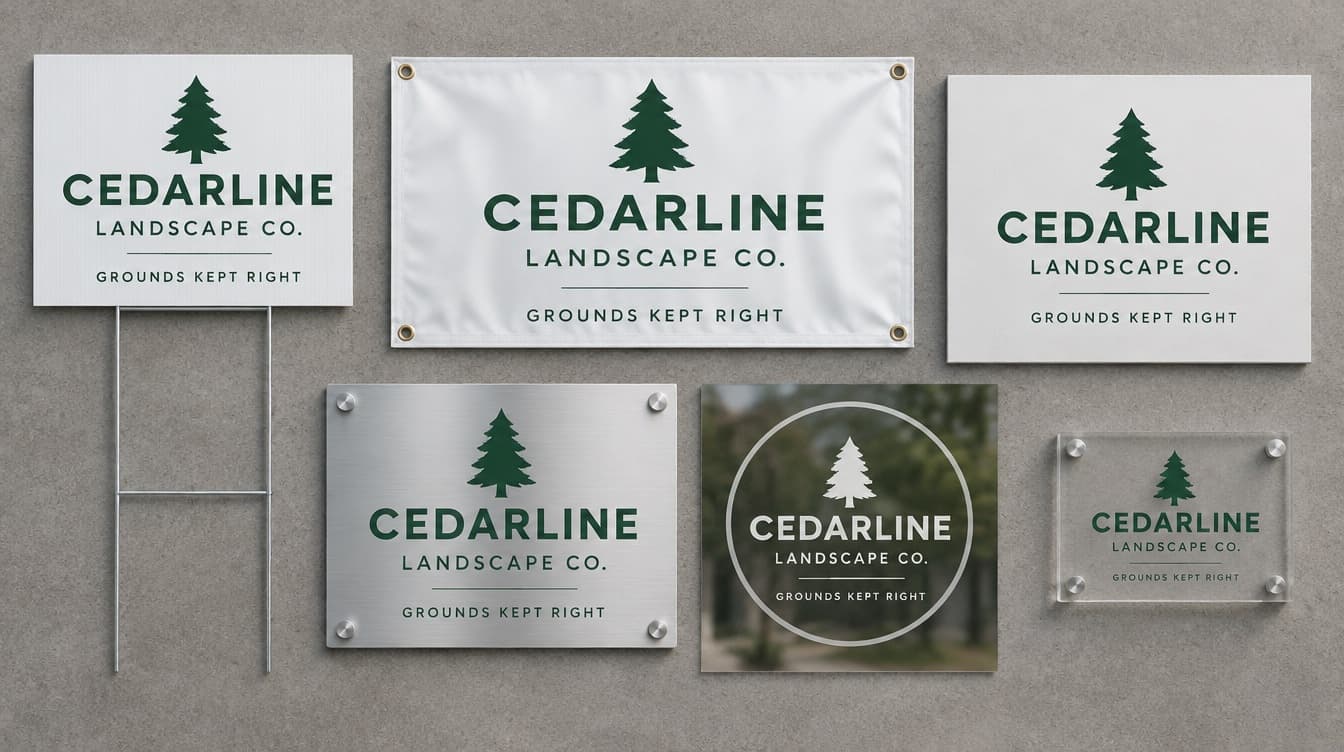
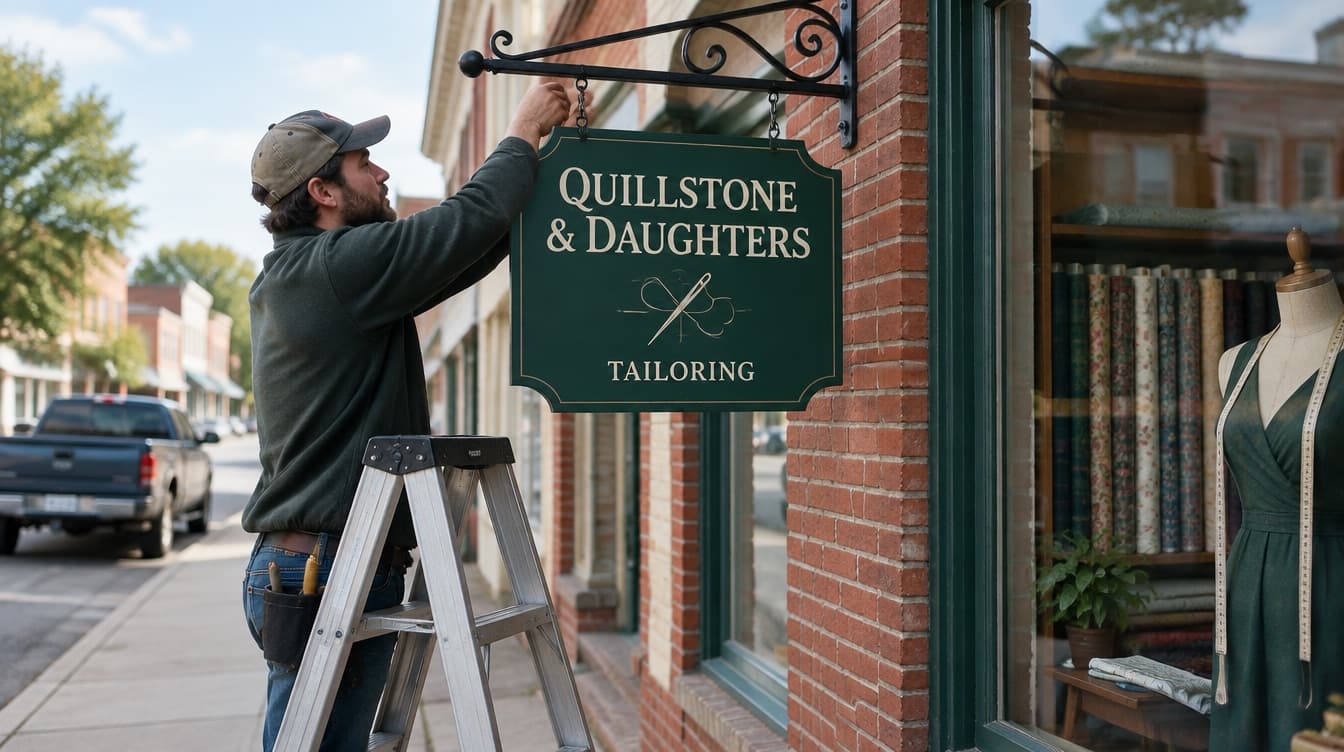
How Do You Choose the Right Business Sign?
A 6 x 3 ft single-sided 13 oz vinyl banner is $133.00, printed in the USA in 3 business days after artwork approval and shipped nationwide for flat $10. Choose a business sign by the customer moment: banners for temporary promotions, window decals for glass, A-frames for walk-up traffic, yard signs for lawns, and portable displays for indoor events.
Choose the sign that fits the customer's location, viewing distance, and next action. A banner announces a temporary promotion. A window decal uses glass already in the storefront. An A-frame speaks to people walking past. A yard sign reaches a lawn or approved ground placement. A portable display organizes an indoor event space.
That sequence is more useful than asking which sign is best in general. One format should answer one placement. When a business tries to make the same piece work on a window, sidewalk, lawn, and event booth, the size, hardware, and message usually stop matching the job.
| Customer moment | Sign format | Placement | First design job |
|---|---|---|---|
| Temporary promotion | Vinyl banner | Wall, railing, fence, or event entrance with suitable hardware | State one offer, date, or direction |
| Looking through glass | Window decal | Door or window | Work around handles, frames, and sightlines |
| Walking past | A-frame | Approved sidewalk or entry area | Make the main action readable at a glance |
| Approaching across a lawn | Yard sign | Approved ground placement | Use one short name, direction, or event message |
| Entering an indoor event | Portable display | Booth, lobby, or presentation area | Identify the organization and the next stop |
Find the customer moment first, then move into the category that belongs there. Temporary promotions lead to custom vinyl banners, while glass, sidewalks, lawns, and indoor events each lead to a different sign category.
Why Are Vinyl Banners the Most Flexible Starting Point?
Vinyl banners are a flexible starting point because they cover temporary promotions across many business types without becoming a permanent building sign. A retailer can announce an opening, a school can mark registration, a church can direct an event, and a service business can identify a temporary work area with the same basic format.
The default configuration is 6 x 3 ft, single sided, on 13 oz Standard vinyl. Both 13 oz Standard and 15 oz Premium are single sided. Double-sided printing is available only on 18 oz Heavy Duty vinyl. Standard sizes run from 2 x 4 ft through 10 x 20 ft, and custom dimensions are available.
Hems and grommets are included. Pole pockets require setting grommets to No and add a $21.39 setup fee plus $2.14 per linear foot of banner width per pocketed edge. Top or Bottom uses one edge, while Both uses two. Identify the display hardware before choosing the finish or approving artwork.
The message still needs discipline. A temporary banner works best when it carries one purpose: opening now, sale this week, check in here, entrance this way, or event name and date. It should not become a full brochure stretched across vinyl.
Which Other Sign Categories Match Specific Placements?
Four related categories cover the placements a banner should not be forced to handle. Use vinyl and window graphics when the message belongs on glass or another suitable smooth surface. Use A-frame signs when approved walk-up placement is the customer moment. Use yard signs for approved lawn or ground placement. Use banner stands for portable indoor display formats.
Exact prices and specifications vary across those categories. Start with the placement, then compare the relevant choices inside the category that fits it.
A permanent building identifier is a separate project. It may involve the property owner, site conditions, permitting, fabrication, and mounting requirements that do not apply to a temporary printed banner. Do not treat a promotional banner as a substitute for that process.
How Does Placement Change the Sign Choice?
Placement changes the sign choice by defining the surface, support, viewing angle, and distance. Glass supports one family of graphics. A sidewalk creates a walk-up viewing path. A lawn points toward staked signs. An indoor booth creates a portable display problem. A railing or wall can support a banner when the hardware and site are suitable.
Write the placement as a complete sentence before shopping. For example: "The sign will hang on a 10 ft wide railing and drivers will see it while entering the lot." That sentence is more useful than "We need a big sign." It exposes the available width, the moving audience, and the need for appropriate fastening.
Then measure the usable area, not the whole building face or window. Door swings, frames, landscaping, furniture, and existing signs reduce the real display space. A format that technically fits can still block a sightline or crowd the entrance.
Finally, confirm that the property or venue allows the planned placement. The right printed product cannot correct a location that is not approved for use.
How Should Business Sign Artwork Be Planned?
Business sign artwork should be planned around one message, one reading distance, and one action. Start with what the customer needs to know first. Put the business or event name at the top of the hierarchy, then add the short action or direction that moves the person forward.
For banners, keep essential content away from the perimeter. In the shop, we see hems and grommets occupy the banner edge, so edge content needs room. A logo or phone number pressed against the file boundary can feel crowded even when it is not physically covered.
The same principle changes shape across other formats. Window graphics must work around glass divisions and door hardware. A-frames need a message that reads from the approach. Yard signs need fewer words because the viewer may be moving. Portable displays should identify the booth before they explain everything the organization does.
Consistency comes from repeating the same identity, not the same layout. Keep the logo, colors, type choices, and tone consistent, then adapt the composition to each sign's proportions and customer moment.
Which Signs Fit a Grand Opening?
A grand opening with three placements may need three formats. A vinyl banner can mark the temporary opening promotion on an approved exterior railing. A window decal can place business hours on the entrance glass. An A-frame near an approved walk-up path can point customers toward the door.
Do not force the banner artwork onto every piece. The banner can carry the name, grand opening message, and dates. The window can carry the name and hours. The A-frame can carry a short direction and a featured item. Each sign should answer the moment in front of it.
An indoor event may add a portable display as a fourth placement. The identity stays consistent, but the display is selected for the booth instead of borrowed from the storefront. A useful sign system is a set of coordinated pieces with separate jobs.
What Comes With a Custom Vinyl Banner Order?
A 6' x 3' single-sided 13oz Standard Custom Printed Banner is $133.00. Printed in the USA in 3 business days and shipped nationwide, flat $10 shipping to any US address.
The default configuration is 6 x 3 ft, single sided, on 13 oz Standard vinyl. Standard sizes run from 2 x 4 ft through 10 x 20 ft, with custom dimensions available. The 13 oz and 15 oz materials are single sided, while only 18 oz Heavy Duty offers double-sided printing.
Production begins after artwork approval. Keep that approval point in the schedule because file review happens before the 3 business day production window. Shipping follows production.
Measure first and choose finishing second. Hems and grommets are included. If the banner will hang from a pole or crossbar, set grommets to No before adding pole pockets. They add a $21.39 setup fee plus $2.14 per linear foot of banner width per pocketed edge. Top or Bottom uses one edge, while Both uses two. Those choices affect the visible artwork area.
What Business-Sign Mistakes Should You Avoid?
The first mistake is shopping by product name before identifying the placement. A sign may look appealing on a category page and still be wrong for the surface, viewing path, or event setup. Start with where it goes and who sees it.
The second mistake is asking one sign to do too much. A banner should not carry the full service list, history, hours, promotion, directions, and contact details at once. Choose the next action and remove anything that does not help it.
The third mistake is reusing one layout without adapting it. A wide banner, tall portable display, window panel, and compact yard sign do not share the same proportions. Keep the brand system, then rebuild the hierarchy for each shape.
The fourth mistake is ignoring the edge and hardware. On a banner, hems and grommets need room, and pole pockets require grommets set to No. On glass, frames and handles interrupt the surface. On a lawn or walk-up path, the physical placement determines what the reader can actually see.
Where Should a Business Start?
Start with the customer moment that has the clearest deadline or biggest gap. If an opening, sale, registration day, or event entrance needs a temporary message, a vinyl banner is the direct place to begin. Measure the display area, choose a material that supports the needed print sides, and select the hanging finish described above before approving the file.
Add other sign categories only when a separate placement needs them. Glass points to window graphics, foot traffic to an A-frame, a lawn to a yard sign, and an indoor event to a portable display. That approach builds a useful sign system one real job at a time.
Configure the custom vinyl banner when the temporary promotion has a measured location and a clear message.
Frequently Asked Questions
Start with the sign that answers the first customer moment. A temporary opening promotion usually points to a banner. A glass entrance points to a window decal, walk-up traffic to an A-frame, a lawn approach to a yard sign, and an indoor event to a portable display.
A 6 x 3 ft single-sided 13 oz vinyl banner is $133.00 and fits a temporary promotion, event entrance, sale, registration point, or repeat message. Hems and grommets are included. Pole pockets require grommets set to No and add a $21.39 setup fee plus $2.14 per linear foot of banner width for each pocketed edge. Top or Bottom uses one edge, while Both uses two.
A 6 x 3 ft single-sided banner on 13 oz Standard vinyl is $133.00. Production is 3 business days after artwork approval, and shipping is flat $10 to any US address. Prices for the other sign categories vary by their product choices.
A window decal is the direct category for a message that belongs on glass. Decide whether the graphic is branding, hours, a promotion, or privacy before choosing the exact window product. Measure the usable glass and keep door handles, mullions, and sightlines in the placement plan.
An A-frame is the direct category for people approaching on foot because it places a message near the walking path. Keep the copy brief and select the format only after confirming where it can stand. Placement rules belong to the property or venue, so verify them before ordering.
A yard sign is the direct category for a lawn or other approved ground placement. Use it for one name, direction, event, or action. The message must remain simple because the reader is moving. Confirm the site allows the sign before deciding quantity or layout.
Related Articles
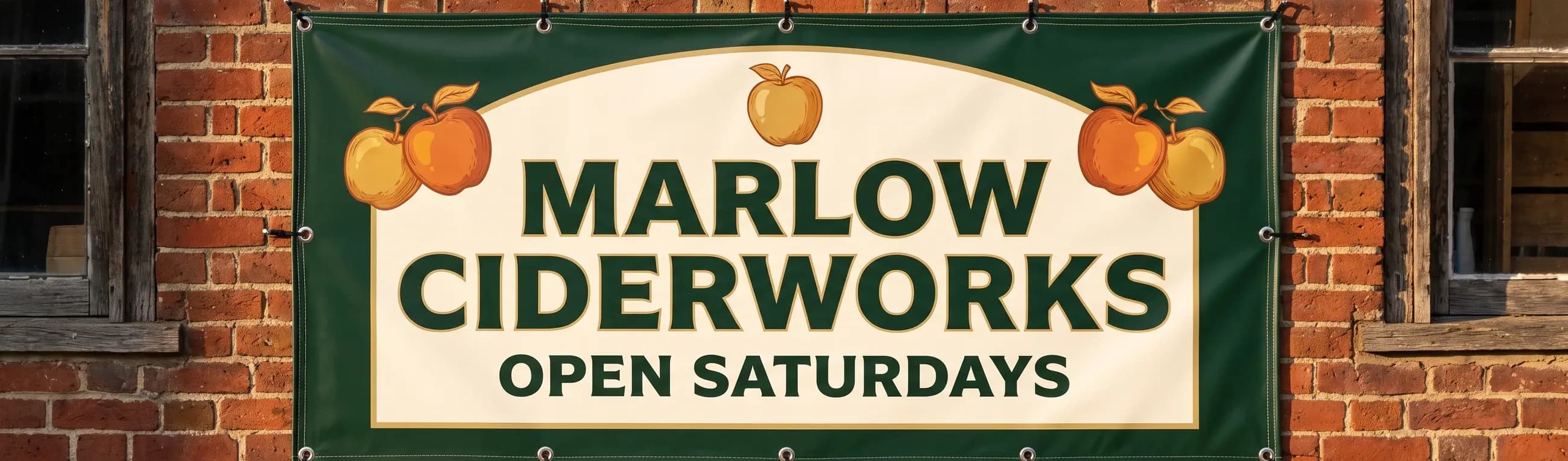
Banner Sizes: 2x4, 3x6, 4x8, 6x10 Feet and Letter Height
Standard banner sizes are 2 x 4, 3 x 6, 4 x 8 and 6 x 10 feet. Get the letter height rule, hem [...]
Read More: Banner Sizes: 2x4, 3x6, 4x8, 6x10 Feet and Letter Height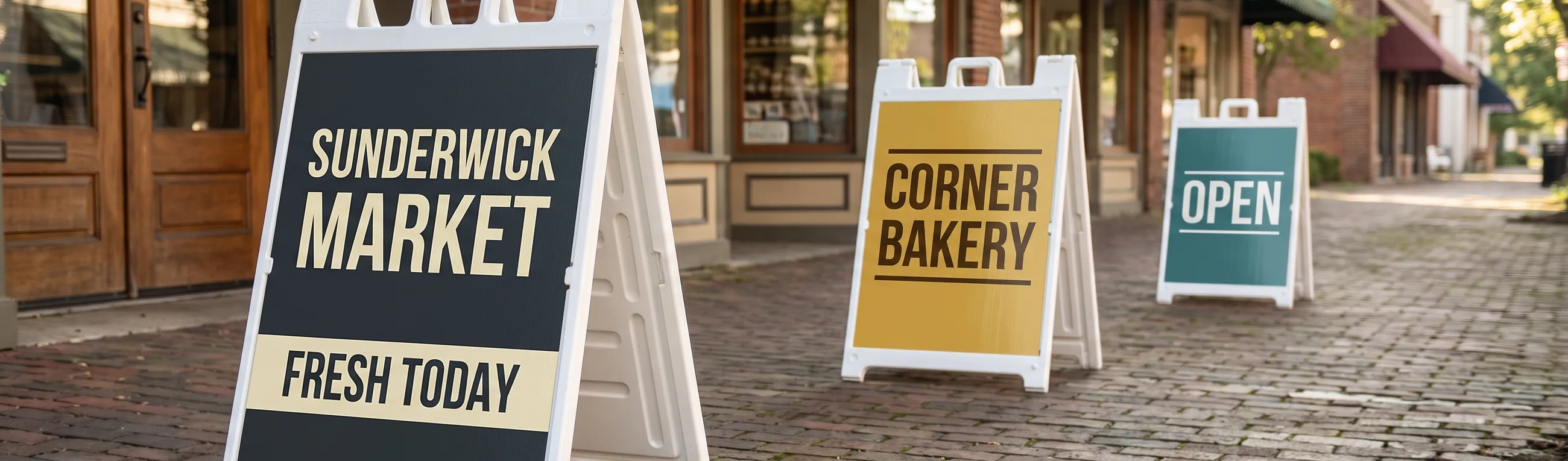
A-Frame Sign Sizes: 24 x 36 in Graphic and Frame Specs
The standard a-frame sign size is a 24 x 36 in graphic in a frame 46 in tall. Get 22x28 and [...]
Read More: A-Frame Sign Sizes: 24 x 36 in Graphic and Frame Specs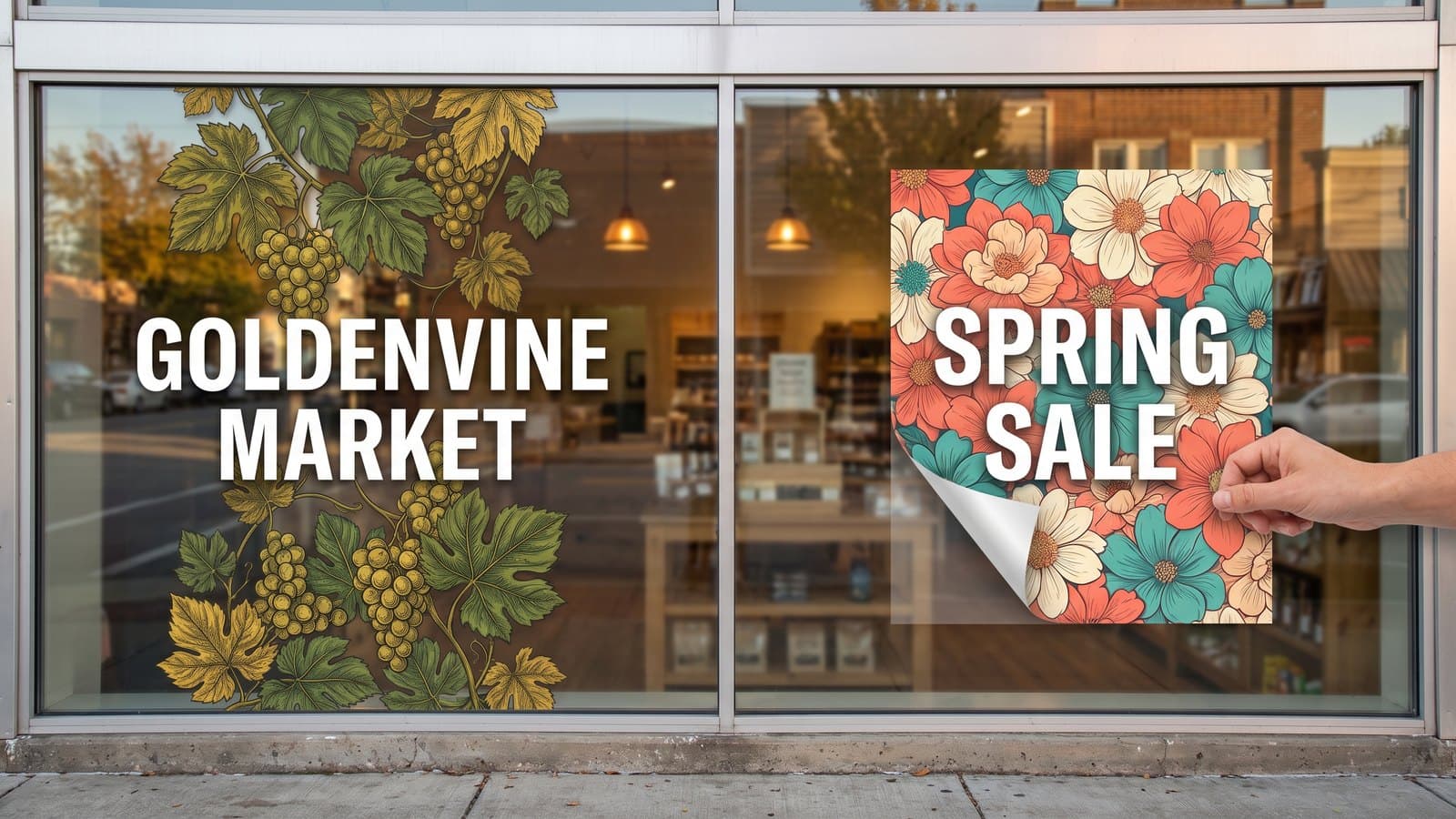
Window Decals vs Window Clings: Which One Lasts Longer
Window decals use adhesive and stay put for years. Window clings use static and peel off clean. [...]
Read More: Window Decals vs Window Clings: Which One Lasts Longer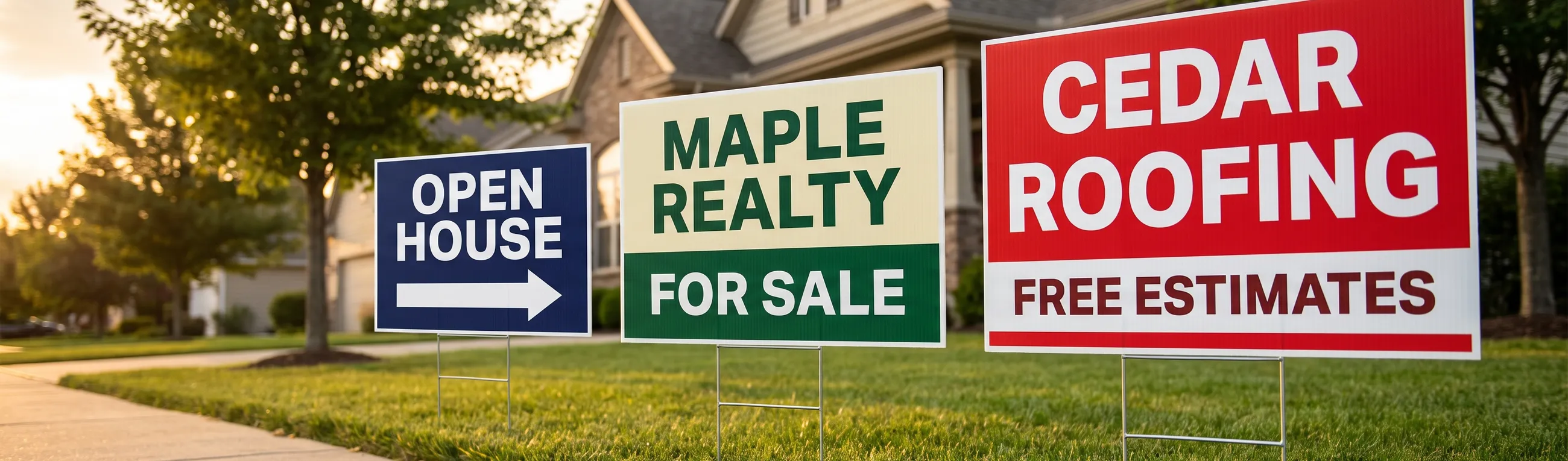
Yard Sign Sizes: 12x18 to 36x24 in, Bleed and Stakes
Standard yard sign sizes are 12x18, 18x24, 24x24 and 36x24 inches. Get letter height by [...]
Read More: Yard Sign Sizes: 12x18 to 36x24 in, Bleed and Stakes