Top 7 Advantages of Banner Advertising for Business
 Jean
January 9, 2026Updated October 19, 20268 min read
What Are the Top Seven Advantages of Banner Advertising?
The seven advantages of banner advertising are location-based visibility, flexible sizing, weather-resistant vinyl, included hems and grommets, three material weights, print-side options, and broad business use. A 6 ft x 3 ft 13oz Standard banner is $133.00, printed in the USA in 3 business days after artwork approval, with flat $10 shipping nationwide.
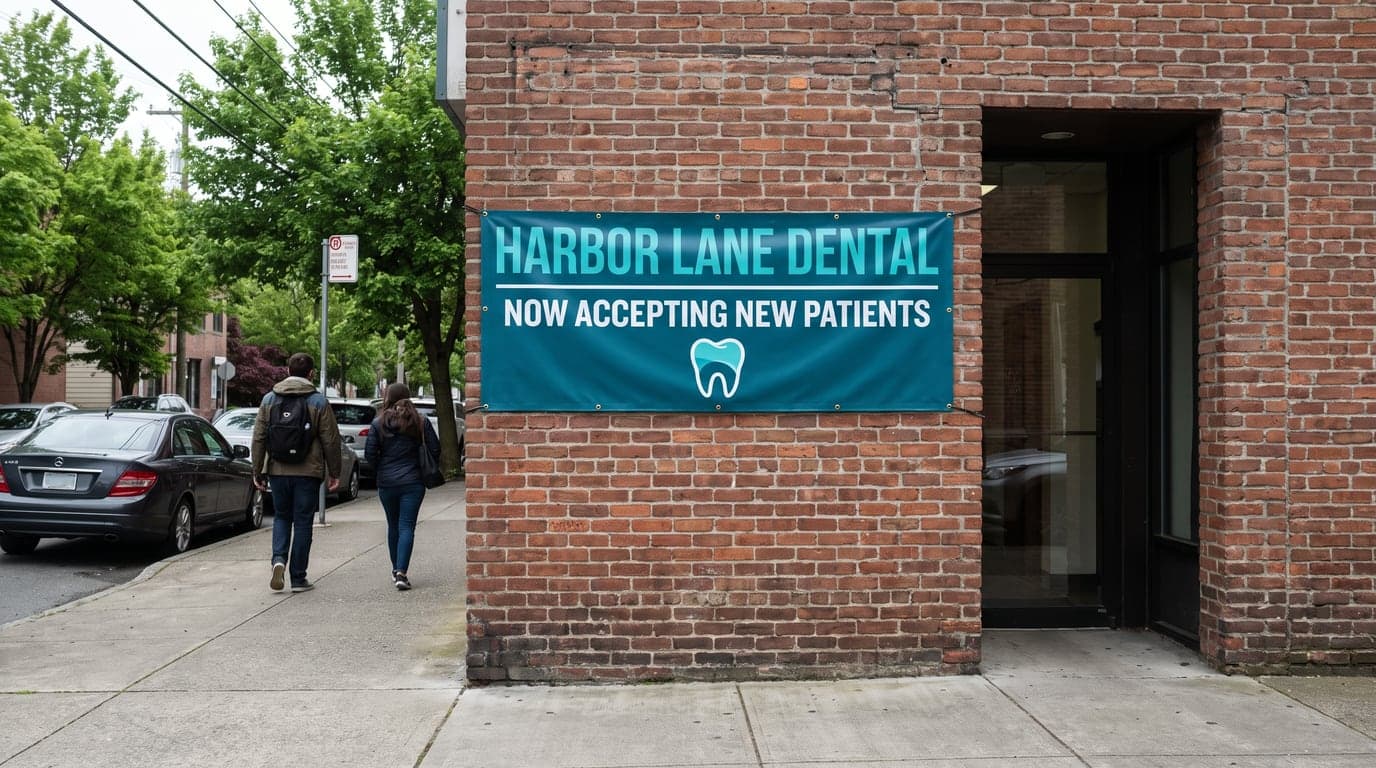
Banner advertising puts a message in the physical place where it matters. A grand-opening banner can face an approaching road, a restaurant promotion can sit beside the entrance, and a school or sports banner can address people already at the event. The location and message work together.
| Advantage | What it gives a business | Planning question |
|---|---|---|
| 1. Location-based visibility | A message where customers already pass | From which direction will people see it? |
| 2. Flexible sizing | Standard and custom dimensions for many spaces | What is the clear mounting area? |
| 3. Weather-resistant vinyl | A material intended for promotional display | Will the placement be indoors or outdoors? |
| 4. Included finishing | Hems and grommets on the banner | What mounting hardware fits the site? |
| 5. Material choice | 13oz, 15oz, or 18oz vinyl | Which weight and print-side option fits the job? |
| 6. One or two viewing directions | Single-sided or 18oz double-sided printing | Does traffic approach from one side or two? |
| 7. Broad business use | Promotions, events, sites, schools, and sports | What one action should the message prompt? |
A banner still needs a readable design, an appropriate size, and a suitable mounting plan. The format gives a business flexible choices, but the placement determines whether those choices support the goal.
Why Does Physical Placement Make Banner Advertising Useful?
Physical placement makes banner advertising useful because the message appears at the business, event, site, or decision point it refers to. A restaurant special beside the entrance connects the offer to the doorway. A construction banner identifies the active site. A real estate banner puts information at the property.
Start by standing where the intended viewer will be. Note the approach direction, distance, obstructions, and time available to read. A person walking toward an event can absorb more than a driver passing a property, so those two banners should not carry the same amount of text.
Placement also determines orientation. A wide wall or fence usually calls for a landscape banner. A narrower mounting zone needs different proportions, not smaller lettering squeezed into the same layout.
How Does Custom Sizing Help a Banner Fit the Location?
Custom sizing helps a banner fit the actual mounting area instead of forcing the location to fit a stock product. Standard sizes run from 2 x 4 feet through 10 x 20 feet, and any custom size is available when the space calls for different proportions.
Measure only the clear area that can support the banner. Do not count doors, gaps, posts, landscaping, or sections that cannot accept the planned mounting hardware. Leave room around the perimeter so the hem and grommets can do their job.
Size should also follow reading distance. A larger banner gives a short headline and action more room, but it does not make a crowded paragraph easier to read. Use the extra area for scale and spacing, not more copy.
Why Is Weather-Resistant Vinyl a Practical Format?
Weather-resistant vinyl is practical because the same banner format can serve storefronts, construction sites, real estate, restaurants, events, schools, and sports. The available material choices are 13oz, 15oz, and 18oz vinyl.
Weather-resistant does not remove the need for a sensible installation. The mounting surface, hardware, exposure, and site conditions still matter. Inspect the display regularly and remove it if the site can no longer support it.
Indoors, vinyl can work for gym walls, event entries, stages, and temporary retail promotions. Outdoors, the same clear-message rule matters even more because viewing distances are often longer.
How Do Hems and Grommets Simplify Banner Installation?
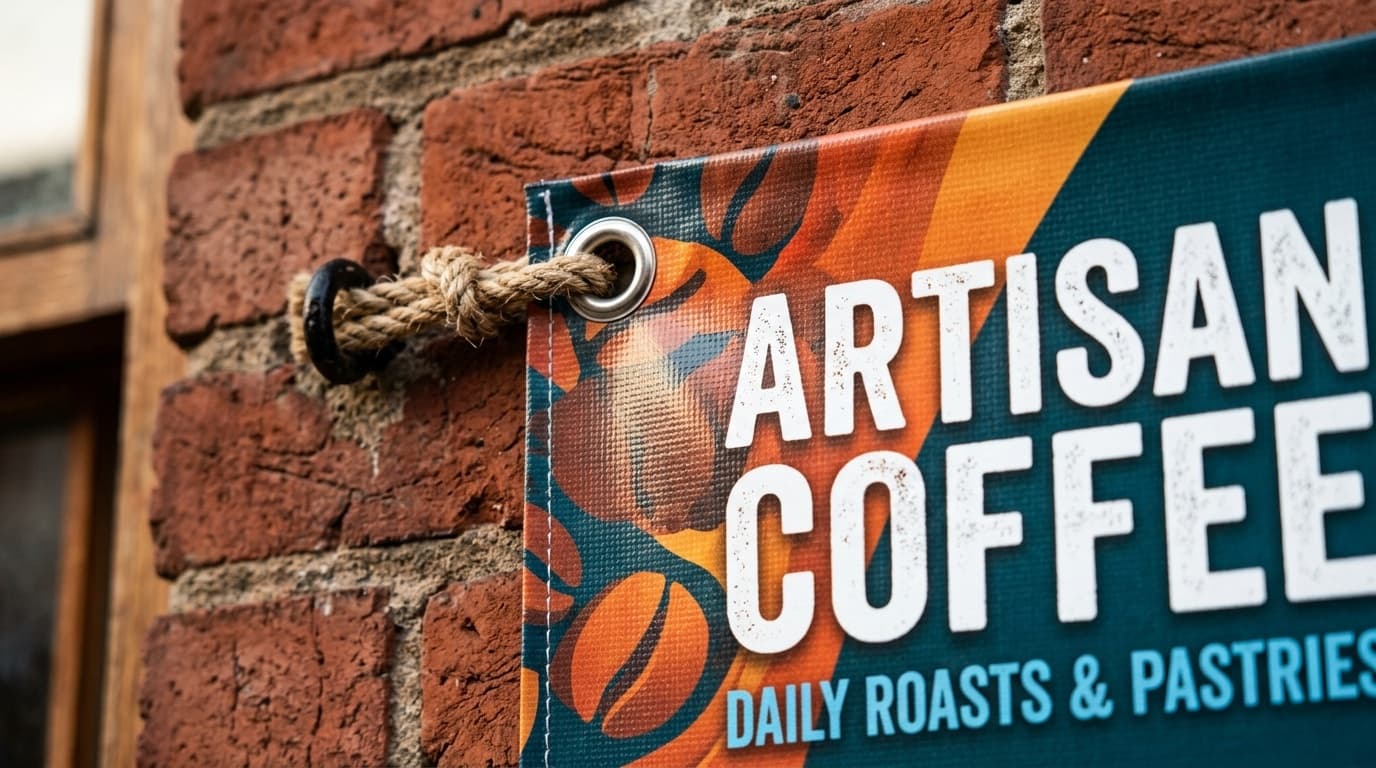
Hems and grommets simplify installation by giving the banner a reinforced perimeter and prepared mounting points. Both are included on the selected custom vinyl banner, so the printed piece arrives with the standard finishing needed for common hanging plans.
The grommets do not decide the hardware for you. A wall, railing, fence, or temporary event frame may use different fasteners. Choose hardware that fits the structure and does not concentrate all tension in one corner.
Before ordering, count the usable anchor points and make sure the banner dimensions fit between them. A clear installation plan prevents a finished banner from being folded, stretched across an opening, or mounted with the message off-center.
How Do Banner Material and Print Sides Expand Your Options?
Three vinyl weights and two possible viewing formats expand the choices: 13oz, 15oz, and 18oz are available, while double-sided printing is limited to 18oz. All three weights can be printed single-sided.
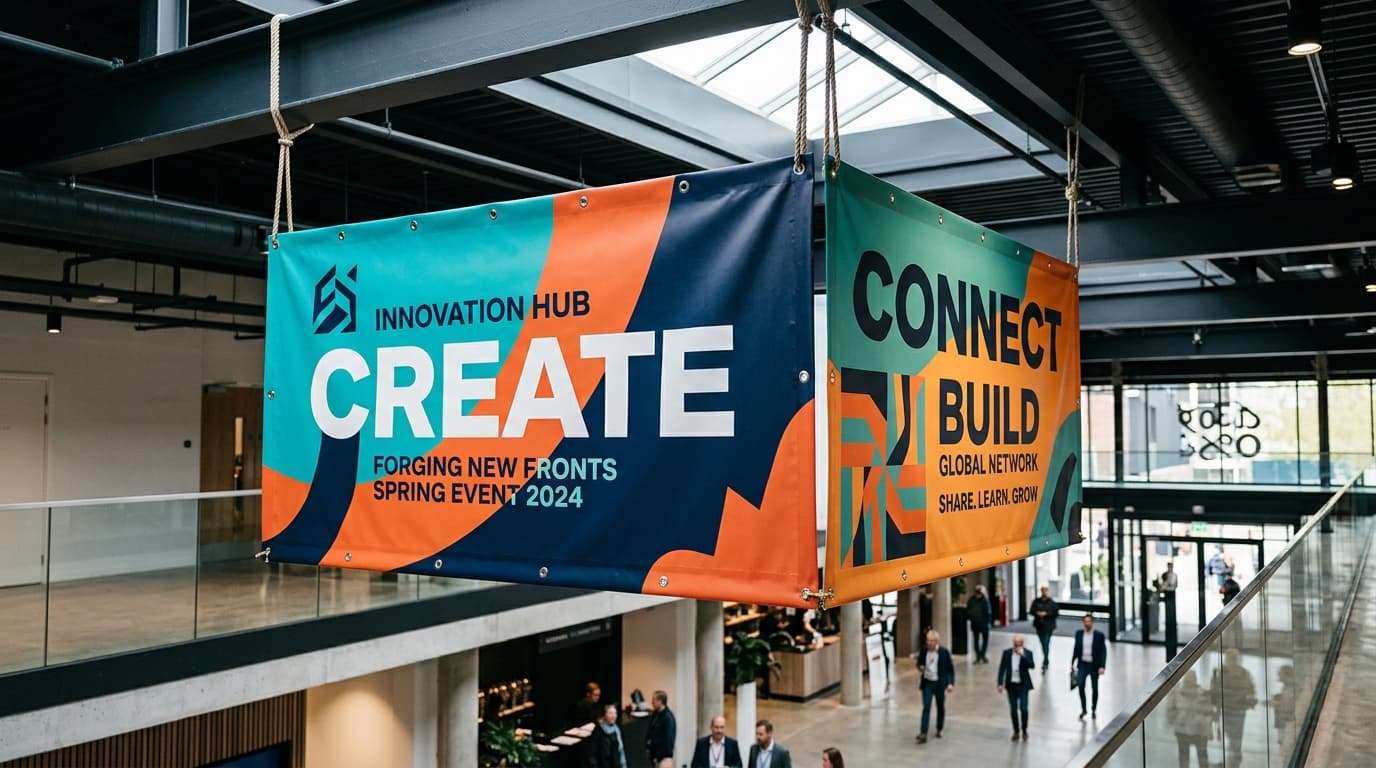
A single-sided banner is the direct choice when the back faces a wall or when viewers approach from one direction. A double-sided 18oz banner is useful when the banner is suspended or placed where people approach from opposing directions.
Design both faces intentionally. If the banner hangs perpendicular to a path, each side may address a different approach. Keep the central message consistent so the display still reads as one campaign.
Which Business Uses Fit Banner Advertising?
Banner advertising fits grand openings, retail and seasonal promotions, construction and real estate, restaurants, events, schools, and sports. Each use benefits from a short message tied to a place and a period of time.
Grand openings need the business name, opening message, and clear next step. Retail promotions need the offer and timing. Construction and real estate banners need identification and contact information sized for the expected viewing distance. Event and school banners often need a date, location cue, or team message.
The format stays the same while the content changes. That is the useful part: one product can support many campaigns without pretending every campaign needs the same design.
How Does a Banner Support Other Marketing?
A banner supports other marketing by repeating the same offer, name, or event information at the physical location. A person who has seen an email or social post can recognize the same colors and wording when arriving at the business or venue.
Use the same primary message across channels. The banner does not need every detail from the landing page. It needs the recognizable headline and one action, such as entering the store, visiting the event, or asking about the featured offer.
Consistency also helps a temporary promotion feel connected to the brand. Match the established logo, colors, and type choices instead of treating the banner as a separate visual identity.
Where Does Banner Advertising Fall Short?
Banner advertising falls short when the location has little relevant traffic, the design cannot be read at the viewing distance, or the mounting area is wrong for the banner. It also does not provide digital campaign measurement by itself.
That makes the planning questions important. What should the viewer notice? How far away will they be? How long do they have to read? What action can they take at that location? If those answers are unclear, increasing the banner size will not solve the problem.
A banner is also a poor place for a full service list. Use the banner for the headline and action, then send interested people to the business, event, or digital destination for details.
What We See in Business Banner Files
What we see most often is a design created at screen size instead of viewing distance. The logo looks large on a laptop, but a long headline, several photos, and multiple contact methods leave no strong element once the banner is installed.
The fix is a hierarchy. Give the first line the most space, make the action obvious, and remove anything the viewer does not need at that moment. A restaurant banner can promote one seasonal offer. A school banner can identify one event. A construction banner can name one company and one way to respond.
We also see dimensions selected before the mounting area is measured. Measuring first protects the layout from last-minute cropping and gives the grommets a usable structure to connect to.
How Do You Order a Business Banner?
Order a business banner by measuring the placement, selecting a standard or custom size, choosing 13oz, 15oz, or 18oz vinyl, and deciding whether the display needs one printed side or two. Double-sided printing is available only on 18oz.
A 6 x 3 13oz Standard vinyl banner is $133.00, with hems and grommets included. It is printed in the USA in 3 business days after artwork approval and ships for a flat $10 to any US address.
Frequently Asked Questions
A 6 x 3 ft 13oz Standard vinyl banner costs $133.00. Hems and grommets are included, production takes 3 business days after artwork approval, and flat $10 shipping reaches any US address.
Standard sizes range from 2 x 4 feet through 10 x 20 feet, and any custom size is also available. Measure the installation area and choose dimensions that keep the message readable without forcing the banner across obstructions.
The available vinyl weights are 13oz, 15oz, and 18oz. The 13oz Standard option fits general banner uses, while the heavier choices provide alternate material specifications for the same custom format.
18oz vinyl is the only available material with double-sided printing. The 13oz and 15oz choices are single-sided, and 18oz can be ordered single-sided or double-sided depending on how people approach the display.
Production takes 3 business days after artwork approval. Shipping time follows production, and the order ships for a flat $10 to any US address, so the approval date is the trigger to use when planning.
Yes. Hems and grommets are included. The hem reinforces the perimeter and the grommets provide mounting points, while the final mounting method should match the actual installation location.
Related Articles
Single vs Double-Sided Banners: Cost, Uses and Specs
Double-sided banners use 18oz vinyl and cost about 60 percent more than single-sided. Compare [...]
Read More: Single vs Double-Sided Banners: Cost, Uses and Specs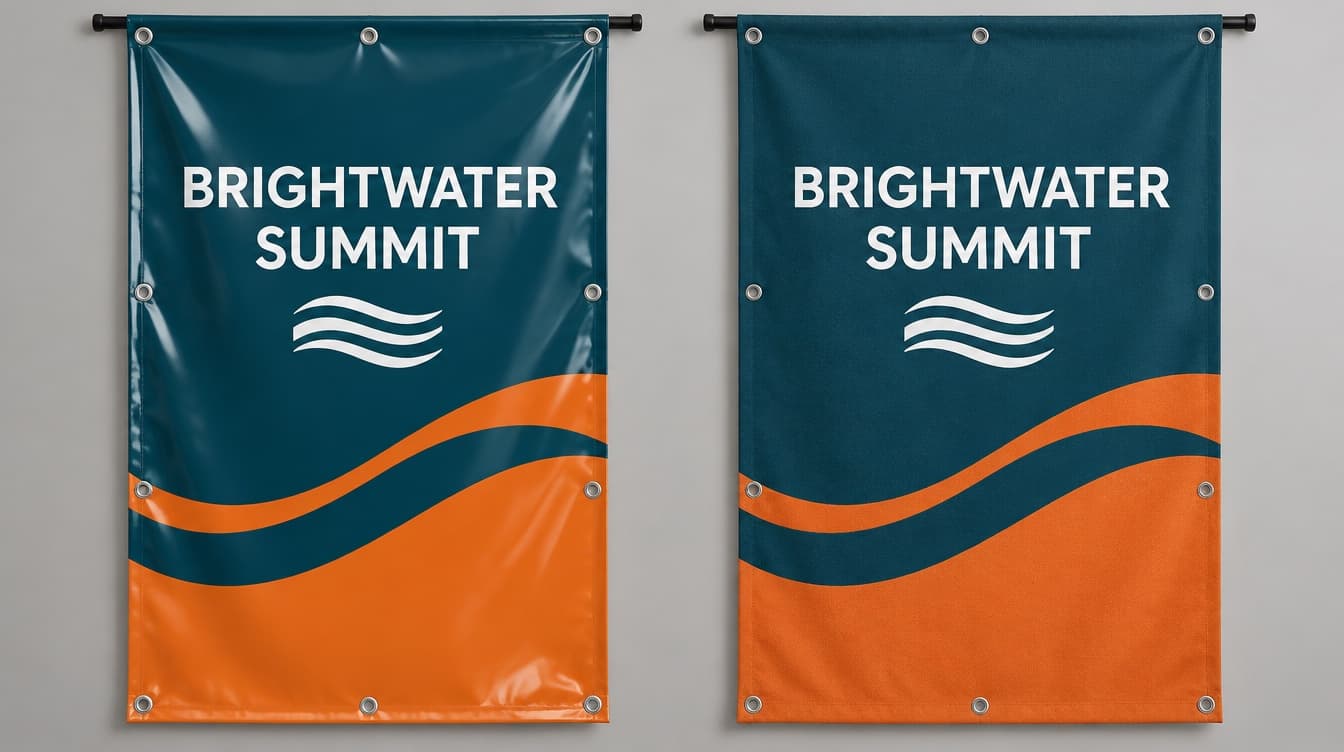
Vinyl vs Fabric Banners: Best Uses and Differences
A 13 oz vinyl banner suits outdoor and repeated promotions; fabric suits low-sheen indoor [...]
Read More: Vinyl vs Fabric Banners: Best Uses and Differences
Pop Up Display Design: 36 x 90 and 48 x 90 in Tension Fabric
A pop up display design is 36 by 90 in or 48 by 90 in, a tension fabric pillowcase on an [...]
Read More: Pop Up Display Design: 36 x 90 and 48 x 90 in Tension Fabric
Custom Banner Cost: Vinyl Prices by Size and Weight
A 3 x 6 ft custom vinyl banner is the common storefront choice. Compare current 13 oz prices by [...]
Read More: Custom Banner Cost: Vinyl Prices by Size and Weight