Nonprofit Printing: Plan Outreach and Fundraising Pieces
 Tomas Amaya
February 25, 2026Updated November 6, 20268 min read
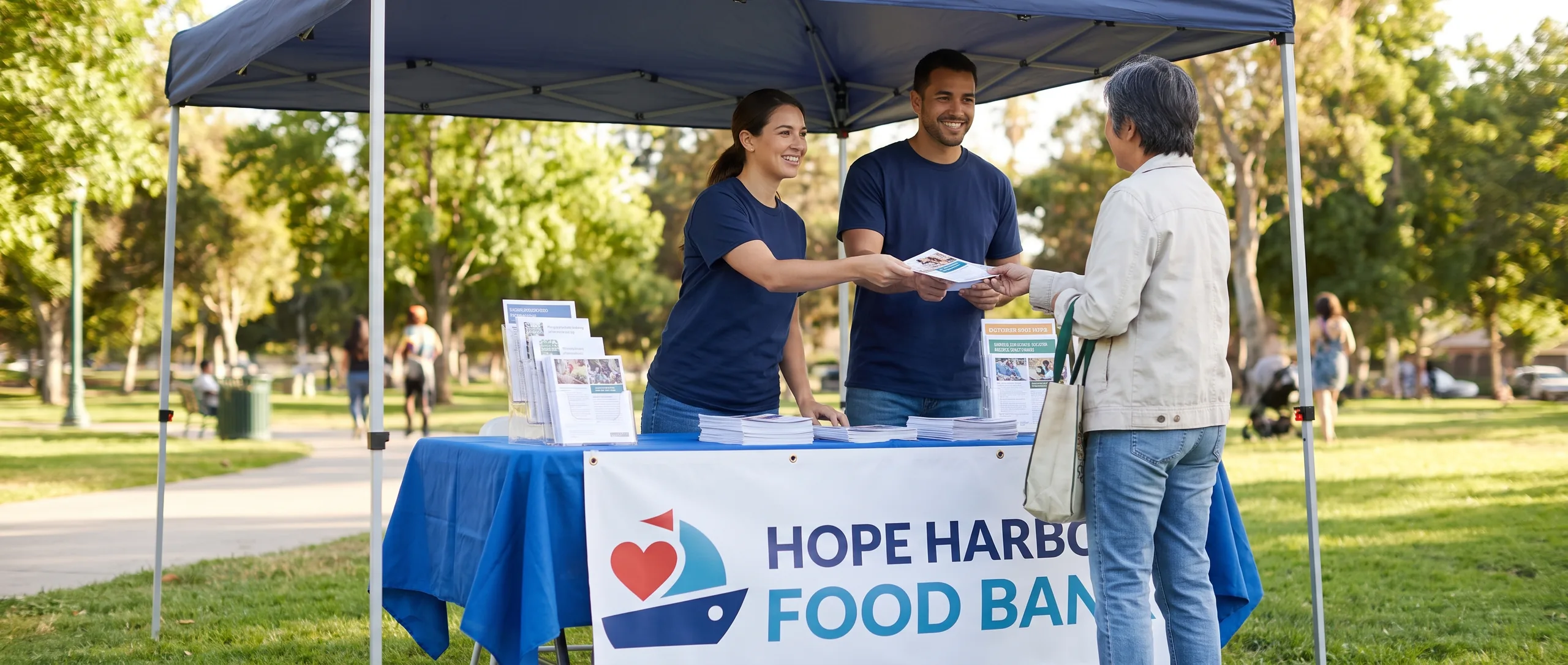
How should a nonprofit decide what to print?
Nonprofit printing should give each audience a clear way to participate, using reusable core pieces and separate campaign details. Inline Graphics prints 250 double-sided 8.5x11 tri-fold brochures on 70# text stock for $246.09. Ground shipping is a flat $10 per design nationwide.
Write a distribution plan before a shopping list. Name the audience, the place where someone will encounter the piece and the action you want them to take. A sponsor meeting, a church welcome table and a supply drive each call for a different amount of explanation.
For a sponsor, that action may be requesting a conversation about a program. For a volunteer, it may be opening a registration page. For a donor, it may be reviewing a specific appeal. Give each piece one primary purpose so that the headline, supporting details and contact route all point in the same direction.
List the pieces you already have before ordering replacements. Check whether existing materials still carry the correct phone number, logo and program information. Set aside outdated copies so a volunteer does not accidentally hand out an old schedule alongside the new campaign.
Which materials support outreach, donations and events?
Brochures explain the work, postcards carry a short donor message, and banners, canopies and yard signs help people recognize an event or collection point.
Use a brochure when a conversation needs a takeaway. Explain who the program serves, what participation involves and where someone can ask questions. A church can use the same structure for a ministry overview, with a clear distinction between attending, volunteering and requesting support. Avoid asking a single panel to explain every program the organization runs.
A donor postcard should focus on one appeal, invitation or thank-you message. Identify the organization and give the reader a clear next step. If the card directs people to online giving, show a readable website beside the QR code. Inline Graphics prints the cards and ships them to you; it does not provide mailing lists, postage or mailing.
An event banner should work at a glance. Use the organization name and a short purpose such as volunteer check-in or donation drop-off. Leave detailed eligibility, hours and donation instructions in the handout or on the event information page. The custom banner cost guide covers the separate material and size decisions.
A branded canopy can identify your organization at repeated outdoor community events. Consider who will transport, store and handle it before adding one to a small print budget. Yard signs can identify a collection drive or direct arriving visitors, provided the organization has the property owner's permission. Placement rules vary by city, county, state, venue and HOA, so check yours before the signs go out. Keep that sign message short enough to understand without stopping to read a paragraph.
How much should a nonprofit budget for printing?
For a starting comparison, 250 double-sided 8.5x11 tri-fold brochures on 70# text stock cost $246.09, while 250 double-sided 4x6 inch 16pt gloss postcards cost $106.99.
These products serve different jobs. Compare the amount of information each must carry, the number you can distribute and the full cost of the planned order.
| Item and details | Price |
|---|---|
| 250 brochures, 8.5x11 tri-fold, 70# text stock, full color both sides, folded | $246.09 |
| 500 brochures, 8.5x11 tri-fold, 70# text stock, full color both sides, folded | $256.79 |
| 250 donor postcards, 4x6 inches, Standard 16pt Gloss, full color both sides | $106.99 |
| One event banner, 6 feet wide by 3 feet high, 13oz vinyl, single-sided printing | $89.99 |
| One 10x10 full custom canopy, 6 oz polyester printed exterior, V6 aluminum frame, ropes, stakes and standard carry bag | $973.69 |
The brochure printing cost guide gives a fuller quantity comparison. A lower price per piece is useful only if the organization can use the copies while the information remains correct. Do not spend the remaining campaign budget on excess inventory simply because the next quantity looks attractive.
Budget separately for artwork and shipping. Existing files or images go through AI image to print for $14.99 per item. Design it for me is +$29.99 with two revisions and is free when the item itself reaches $499. There is no production setup fee. Canopy and canopy package orders include artwork design, and their AI image fee is waived.
Ground shipping is $10 per design, meaning each design in the cart carries that charge. Ordering several different formats together does not turn them into one shipping charge. A canopy package ships as one kit with one $10 charge.
How can reusable pieces stretch the budget?
Keep stable identity and program information on reusable materials, and move changing campaign details to something you can update separately.
A core brochure can describe the organization's purpose, the help it provides and how to contact the program. It does not need a specific gala date, a temporary fundraising target or an event speaker list. A generic banner can identify your organization at several kinds of gathering without naming a single occasion.
Reusable should still mean specific. A brochure that says only that your organization helps people gives readers little reason to keep it. Name the kind of work you do and explain how someone can participate. Leave out only the details that make an otherwise useful piece expire.
If you include results or program numbers, verify them and identify the period they cover. Review those figures before every reorder. Have a staff member confirm the public contact route will stay active for the intended life of the piece.
Can one design work across several print sizes?
One visual system can work across brochures, postcards and displays, but each format needs its own layout and a fresh readability check.
Start with a shared logo treatment, color palette, photograph selection and headline style. Reuse those elements rather than rebuilding the organization's identity for every campaign. Keep source images and approved copy in a common folder so volunteers do not pull different versions from old email threads.
Then adapt the amount of content to the viewing distance. A brochure can explain three program areas. A postcard may need only the campaign purpose and next action. A banner might carry just the organization name and a few words that identify the table. Shrinking the brochure onto a postcard will also shrink its type, while enlarging it onto a banner will leave too much copy to read while walking past.
Check every exported version independently. A photograph cropped for a wide banner may hide a subject that was visible in the brochure. A QR code that worked in the original design may be too small on a reduced version. Matching the design across pieces is useful; matching every detail is unnecessary.
How should nonprofits order for a whole season?
Combine the expected demand for stable pieces into one seasonal order, while keeping uncertain event details out of that larger run.
Count copies by distribution point: sponsor appointments, welcome tables, planned outreach events and the reserve for follow-up requests. Assign responsibility for each stack. Counting where copies will go produces a more useful quantity than ordering the largest pack the budget can cover.
Store spare brochures flat and dry, labeled with the version and review date. Track how many remain after an event. That simple inventory helps the next order reflect actual use without claiming that a handout guarantees a donation or a new volunteer.
Use the print marketing collection to choose companion formats, then order custom brochures in the fold your artwork uses. The digital proof comes free after the order. Have one person gather corrections and one authorized reviewer approve the final version so conflicting edits do not reach production.
Brochures take 3 to 4 business days of production after artwork approval. Approval on a weekday before 12 PM Central starts production the next business day; later approvals shift that starting point. Allow about 3 business days for ground transit after production. Plan for review time too, without treating the estimate as a promised arrival date.
Need nonprofit printing or other custom printing? Inline Graphics helps businesses, churches, schools, and event organizers across the country design and print cards, banners, signs, decals, displays, and marketing materials that get noticed. Contact us today for a quote.
Frequently Asked Questions
Print the piece your next audience will actually receive. A program brochure fits conversations that need explanation; a donor postcard fits a short appeal or invitation. Add displays when an event plan gives them a clear job.
250 8.5x11 tri-fold brochures, printed full color on both sides of 70# text stock and folded, cost $246.09. The same configuration in a quantity of 500 costs $256.79. Artwork and shipping are separate.
Yes. Brochures can explain ministries and volunteer opportunities, postcards can invite people to an event, and banners can identify a welcome table. Use current contact information and one clear next step.
No. Inline Graphics prints and ships the postcards to you. Addressing, mailing lists, postage and mailing are separate responsibilities. The listed product price covers printing, not delivery to individual donors.
Keep the organization name, program purpose and stable contact route on the core piece. Put changing dates, schedules and campaign details on a maintained web page or a separate short-run piece.
Yes. Artwork design is included with canopy and canopy package orders, and the AI image fee is waived. The free digital proof is emailed after the order; printing waits for approval.
Brochure production takes 3 to 4 business days after artwork approval, followed by about 3 business days of ground transit. A weekday approval before 12 PM Central starts production the next business day.
Related Articles
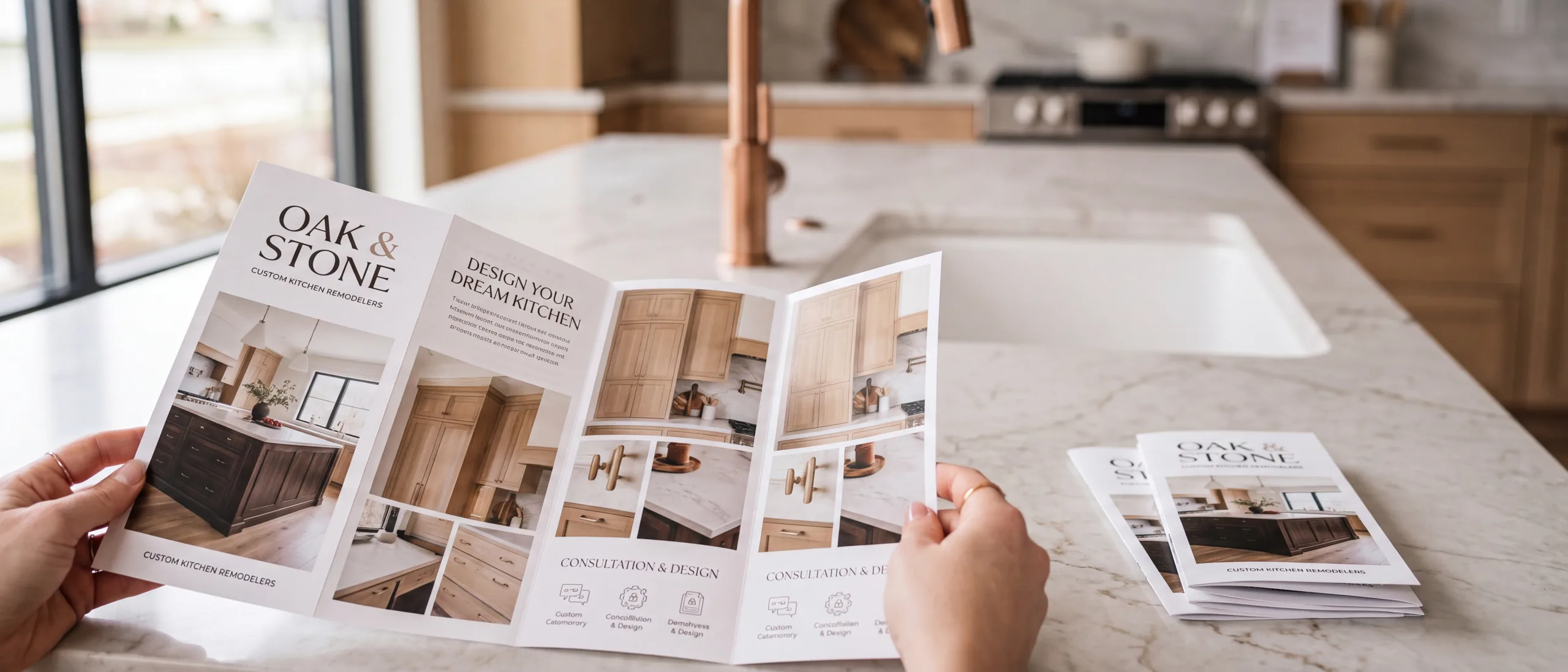
Brochure Printing Cost: Prices for 250 to 2,500 Copies
Brochure printing cost is $246.09 for 250 letter-size half-folds or trifolds on 70# text, both [...]
Read More: Brochure Printing Cost: Prices for 250 to 2,500 Copies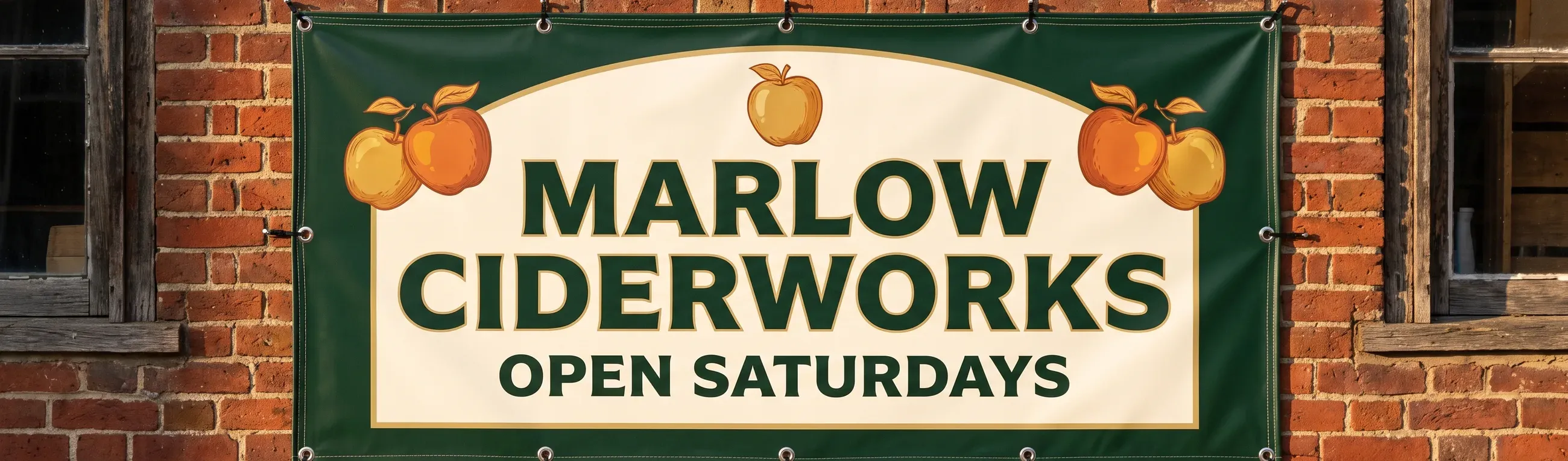
Custom Banner Cost: Vinyl Prices by Size and Weight
A 3 x 6 ft custom vinyl banner is the common storefront choice. Compare current 13 oz prices by [...]
Read More: Custom Banner Cost: Vinyl Prices by Size and Weight
Postcard Sizes in Inches and Pixels: 4x6, 5x7, 6x9 Chart
Standard postcard sizes are 4x6, 5x7 and 6x9 in. A 4x6 card is 1200 x 1800 pixels at 300 dpi. [...]
Read More: Postcard Sizes in Inches and Pixels: 4x6, 5x7, 6x9 Chart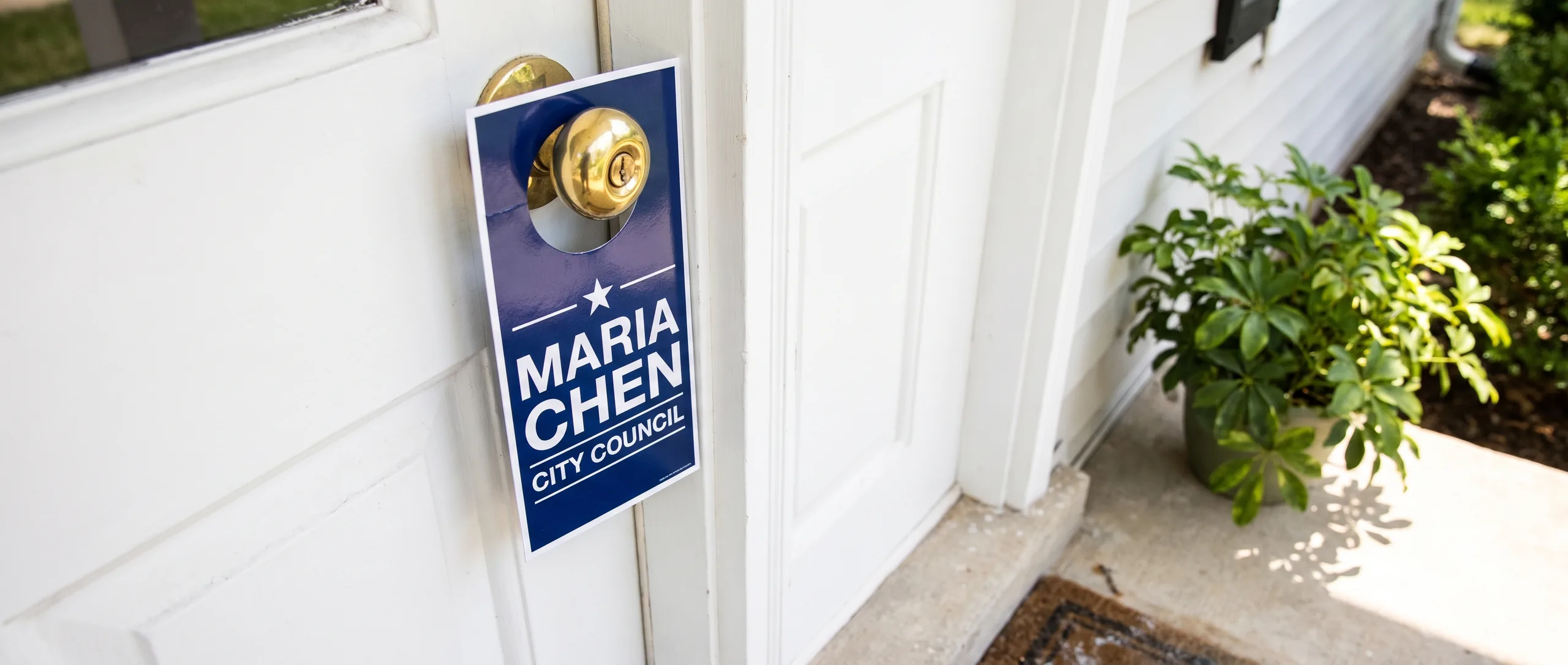
Campaign Door Hangers and Push Cards That Voters Keep
Campaign door hangers start at $246.09 for 250 at 3.5 x 8.5 in, double sided with a UV gloss [...]
Read More: Campaign Door Hangers and Push Cards That Voters Keep