24 x 36 Sign and Stake Packs Cost: Full Price List
 Jean
October 12, 2026Updated October 16, 20268 min read
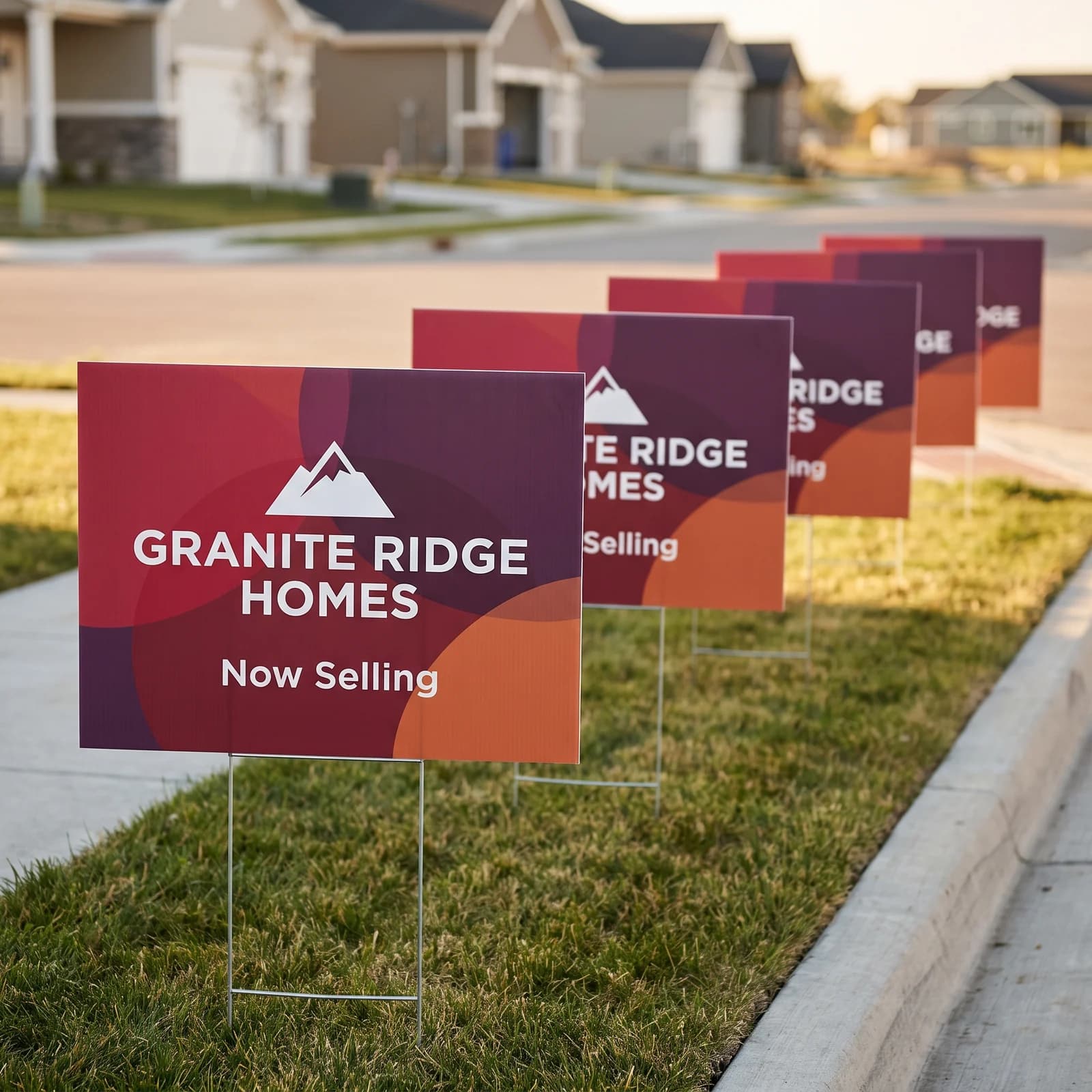
How Much Do 24 x 36 Sign and Stake Packs Cost?
A 4-sign 24 x 36 inch pack, sold as a 36 x 24 inch landscape Extra Large Sign + Stake Pack, costs $181.89 with the default two wire H-stakes per sign. It is printed in the USA the next business day after artwork approval, ships nationwide, and has flat $10 shipping to any US address.
The current starting total is $181.89 for 4 double-sided signs with two wire H-stakes per sign. A 24 x 36 inch sign and the 36 x 24 inch product are the same rectangle, hung 36 inches wide by 24 inches tall.
Every listed total below keeps the configuration identical. The signs are 4 mm corrugated plastic, both faces receive full-color UV printing, the cart quantity is one pack, and STAKES remains at its default of two per sign. That fixed setup makes the totals and averages directly comparable.
| Signs in pack | H-stakes included at default | Current pack total | Approximate cost per sign |
|---|---|---|---|
| 4 | 8 | $181.89 | About $45.47 |
| 8 | 16 | $353.09 | About $44.14 |
| 12 | 24 | $524.29 | About $43.69 |
| 20 | 40 | $802.49 | About $40.12 |
| 40 | 80 | $1,487.29 | About $37.18 |
The averages divide each pack total by the number of printed signs and round to the nearest cent. They are comparison figures, not separate unit prices. The product is sold as one configured pack, so the amount shown in the total column is the amount that matters at checkout before shipping.
What Comes in a 36 x 24 Landscape Sign and Stake Pack?
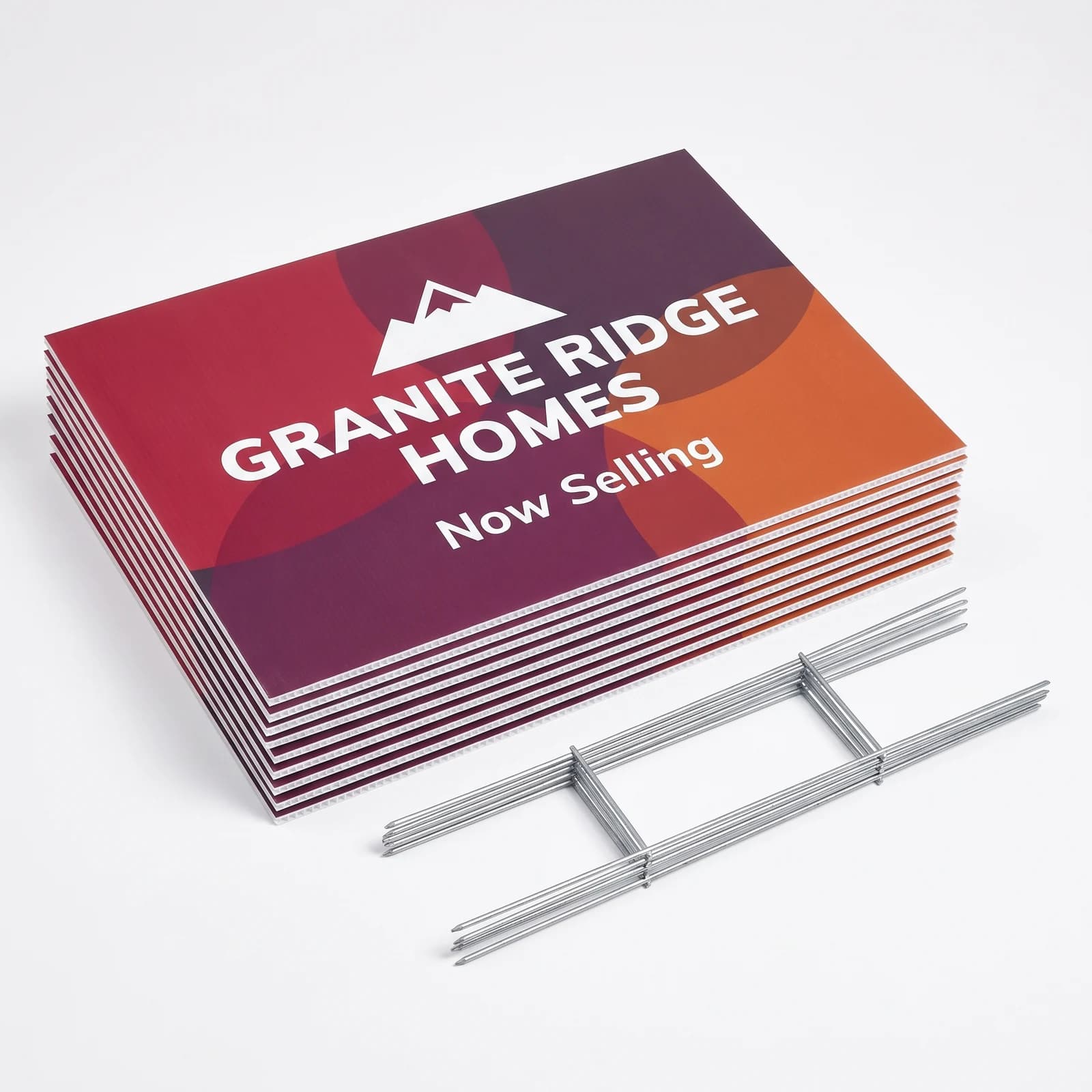
Each pack price includes double-sided 4 mm corrugated plastic signs and one wire H-stake per sign. The recommended default adds a second H-stake per sign, so each sign receives two stakes in the table above. The available online sign counts are 4, 8, 12, 20, and 40, and every pack uses the same finished dimensions and print specification.
The corrugated plastic has vertical channels called flutes. The wire legs slide into those channels from the bottom edge, so the panel can stand above the ground. Two stakes spread the support across a 36-inch-wide lower edge instead of asking one centered stake to control the entire panel.
Double-sided is not an upgrade on this pack. It is the fixed print construction. Both faces are printed in full color, which makes the format useful when readers can approach from either direction. Review both faces on the proof and make sure the artwork reads in the correct landscape orientation before approval.
The selected pack size controls the physical count inside one order line. A 12-sign selection means 12 printed panels, while the default stake setting assigns 24 H-stakes to that pack. This distinction matters because the storefront also has a normal cart stepper. The internal selector builds the pack; the cart stepper controls how many complete packs you are buying.
The pack also includes a digital proof before printing. That proof is the last place to confirm names, phone numbers, web addresses, dates, arrows, colors, and face order. Production starts after artwork approval, so a quick but careful proof review protects both the printed result and the schedule.
Why Are Two H-Stakes Per Sign Selected by Default?
Two H-stakes are the default because the 36 x 24 landscape panel spans three feet across its lower edge. A second stake adds another support point, helps the face stay straighter, and reduces the amount of panel width controlled by either stake. The default is a product recommendation, not a separate loose-hardware estimate.
The configurator also allows one H-stake per sign. That choice can suit a buyer who already understands the placement and support needs, but it should be selected deliberately. Changing the toggle changes the number of stakes packed with the order and can change the configured total. The five prices in the master table do not apply to that alternate setting.
Count the hardware as part of the order before comparing offers. A quote for printed panels alone is not equal to a configured pack with enough stakes for every panel. If another price uses one stake per sign, compare it with the same setting rather than with this guide's two-stake defaults.
Ground conditions and exposure still matter after the hardware is chosen. Stakes need soil that can accept the wire legs, and the sign should be placed only where the person ordering has permission. The product provides the panel and selected hardware. Site selection and safe placement remain the buyer's responsibility.
Which Pack Quantity Has the Lowest Cost Per Sign?
The 40-sign pack has the lowest approximate cost per sign among the current online choices. Its total is $1,487.29, or about $37.18 per sign with two stakes assigned to every panel. The average falls across the ladder, but the best quantity is still the one tied to real, approved placements.
At the opening rung, 4 signs cost $181.89, or about $45.47 each. The 8-sign option is $353.09, or about $44.14 each. Twelve signs cost $524.29, or about $43.69 each. Twenty signs cost $802.49, or about $40.12 each. Those steps show why comparing the full ladder is more useful than looking only at the starting price.
Build a placement list before choosing the rung. Give each planned sign a location, viewing direction, message, and responsible person. That exposes duplicate locations and shows whether both faces will be visible. It also keeps a lower average from persuading you to buy panels that have no approved use.
Group locations by message before uploading artwork. The 36 x 24 landscape face has more room than a standard yard sign, but the viewing time may still be short. Give the design one main message, a clear name, and only the contact detail a reader needs. Confirm any date or arrow separately because those details can change the sign's meaning.
If the plan calls for fewer loose signs, use the 36 x 24 landscape yard signs page. That page sells the panels separately, and its stakes are separate add-ons. It should not be compared with a sign-and-stake pack until the needed hardware is included on both sides of the comparison.
What Should You Check on the Artwork Proof?
Check the landscape orientation, critical text, both printed faces, and every detail that could change the sign's meaning. On this format, the physical panel is wider than it is tall, and the flutes must run vertically so the H-stake legs can enter from the bottom. The proof should make that finished orientation unmistakable.
One specific shop check is the relationship between the artwork direction and the coroplast flutes. A file can look correct on a monitor while being turned relative to the panel construction. We check that the 36-inch edge reads horizontally and that the stake entry edge sits below the design before the proof is approved.
Read short information one item at a time. Confirm the business or organization name first, then the phone number or web address, followed by any date, arrow, unit number, or directional word. A mirrored arrow or transposed digit can make a perfectly printed sign unusable, so meaning matters more than a fast approval.
Also compare the two faces and verify that both show the approved version. Avoid placing essential text against the cut edge. A little breathing room makes the message easier to read and protects it from normal finishing tolerance. Check the entire proof again after any correction, since fixing one line can shift another element.
How Do You Choose and Order the Right Pack?
Choose the pack by counting approved placements, deciding whether both printed faces will be useful, and confirming the stake setting. Then select 4, 8, 12, 20, or 40 signs in the product configurator, leave two stakes per sign selected unless you intentionally need one, and upload the artwork for proof review.
Keep the cart quantity at one when you want one pack. The quantity selector inside the product controls how many signs come in that pack. Increasing the cart quantity would order multiple identical packs, which is different from moving to a larger rung inside the configurator.
Before checkout, read the summary as a complete sentence: one pack, the chosen sign count, double-sided 4 mm corrugated plastic, and the chosen stake count per sign. That final check catches the most common comparison mistake, which is remembering the sign count while overlooking the hardware setting.
Shipping is a separate flat $10 charge to any US address. Approve the proof only after every face, number, arrow, and date is correct. Once approval is complete, the production schedule begins, and the selected signs and stakes move forward as one coordinated pack.
Frequently Asked Questions
The smallest pack contains 4 double-sided signs and costs $181.89 with the default two wire H-stakes per sign. That is about $45.47 per sign, including the hardware in the selected configuration. Shipping is a separate flat $10 charge to any US address.
The 40-sign pack costs $1,487.29 with two wire H-stakes per sign selected. That works out to about $37.18 per sign. It has the lowest approximate per-sign cost among the five current pack quantities.
These signs are double sided. The fixed material is 4 mm corrugated plastic with full-color UV printing on both faces, so the listed totals do not require a separate second-side selection. Confirm that both faces in the proof show the approved artwork before production begins.
One wire H-stake per sign is included in every pack price. Two wire H-stakes per sign are selected by default and recommended for this size. Review that setting before checkout because the selected stake count changes what comes in the pack and can change the configured total.
The current online quantities are 4, 8, 12, 20, and 40 signs. Each choice is one complete pack, not a cart quantity multiplied by an individual sign. Select the sign count inside the configurator, then confirm the stake setting.
Production takes 1 business day after artwork approval. That timing begins after the proof is approved, not when the first file is uploaded. Transit follows production, so the next-business-day statement is a production schedule rather than an arrival promise.
Related Articles
Yard Sign Cost: Sizes, Quantities and Price Factors
Yard sign cost depends on 12 x 18 to 36 x 24 in size, quantity, printed sides, and stakes. [...]
Read More: Yard Sign Cost: Sizes, Quantities and Price Factors
Yard Sign Sizes: 12x18 to 36x24 in, Bleed and Stakes
Standard yard sign sizes are 12x18, 18x24, 24x24 and 36x24 inches. Get letter height by [...]
Read More: Yard Sign Sizes: 12x18 to 36x24 in, Bleed and Stakes
Inline Graphics vs Vistaprint Yard Signs
One 18x24 in single-sided 4mm yard sign is $53.49 with no stake. Compare shapes, rush arrival, [...]
Read More: Inline Graphics vs Vistaprint Yard Signs
12 x 18 Bandit Sign and Stake Packs Cost: Price List
12 x 18 inch bandit sign and stake packs include 20 to 100 double-sided signs with one H-stake [...]
Read More: 12 x 18 Bandit Sign and Stake Packs Cost: Price List