How to Hang a Flag on a Pole: 6 Steps, Sizes, Hardware
 Tomas Amaya
April 3, 2026Updated October 16, 202610 min read
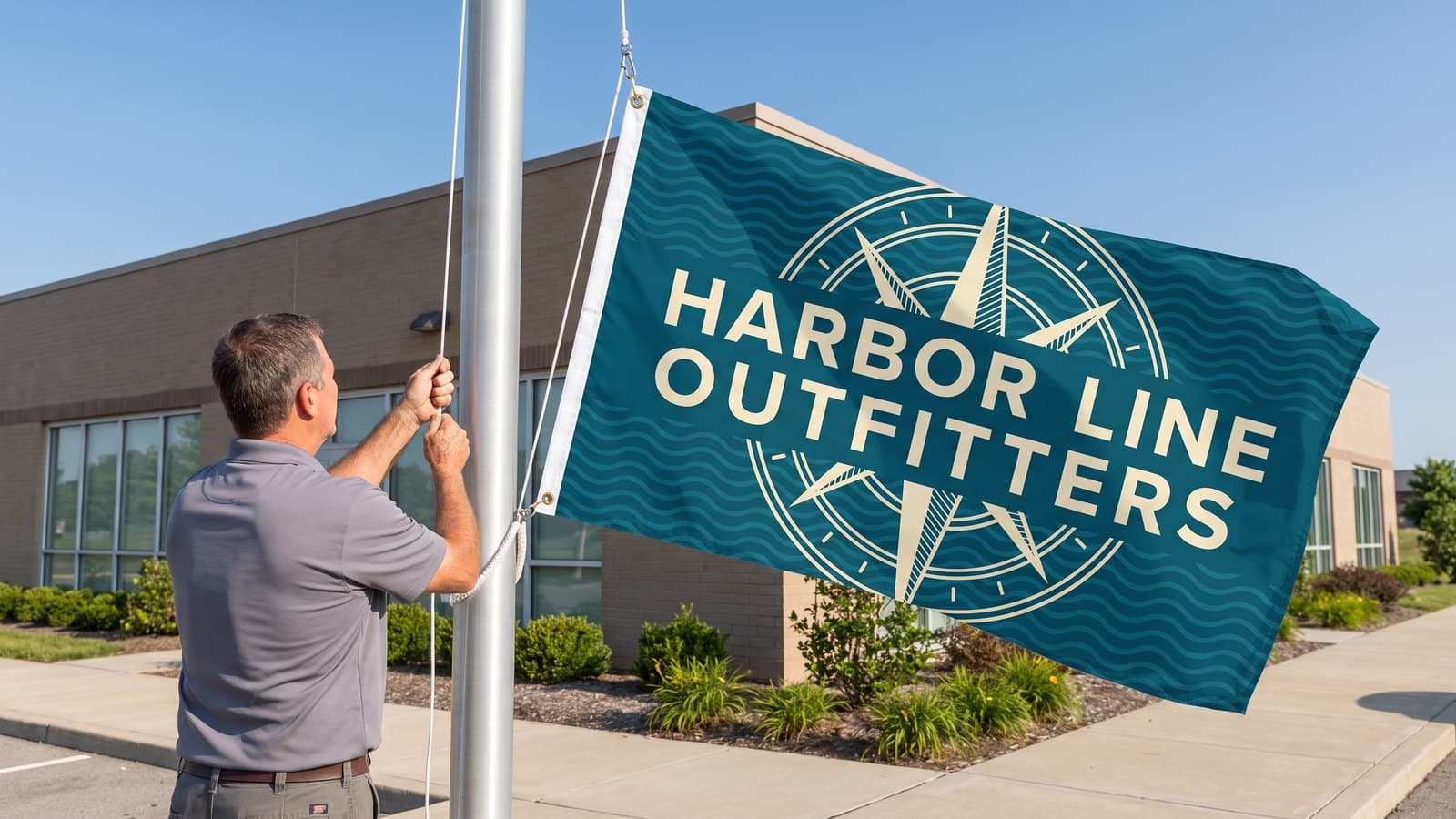

How Do You Hang a Flag on a Pole?
Hang a grommeted flag in 6 steps: choose its size, check the hoist, attach the upper hook, attach the lower hook, raise it, and secure the halyard. A 2 x 3 ft custom pole flag is $96.29, printed in the USA the next business day after artwork approval, with flat $10 nationwide shipping.
The same 6 steps apply to any flag with a grommeted hoist, whether it carries a national, state, school, or business design. A flag with a sewn pole pocket uses a sleeve-style pole instead of snap hooks and a halyard.
- Match the flag size to the pole height.
- Confirm the hoist has two grommets. If it has a sewn sleeve, use a sleeve-style pole instead.
- Clip the upper snap hook through the top grommet.
- Clip the lower snap hook through the bottom grommet, and check the flag is right side up before it leaves your hands.
- Raise it briskly, hand over hand, until the flag reaches the truck at the top.
- Pull the halyard tight, wrap it on the cleat in a figure eight, and tuck the tail so the wind cannot work it loose.
Almost every problem people bring us is one of two things. A flag sized for a different pole, which looks wrong from the first day and never stops looking wrong. Or a halyard cleated off loose, which lets the flag wrap the pole overnight and chews the fly end against the metal.
What Size Flag Fits Your Pole?
A flag should run about a quarter to a third of the pole height, so a 15 foot pole takes a 3 x 5 foot flag, a 20 foot pole takes a 4 x 6, and a 25 foot pole takes a 5 x 8. That ratio is what makes a flag look like it belongs on the pole rather than borrowed from one.
| Pole height | Flag size | Printed panel | We print it |
|---|---|---|---|
| Wall bracket, house flag | 2 x 3 ft | 24 x 36 in | Yes, standard size |
| 15 ft | 3 x 5 ft | 36 x 60 in | Yes, standard size |
| 20 ft | 4 x 6 ft | 48 x 72 in | Yes, standard size |
| 25 ft | 5 x 8 ft | 60 x 96 in | Yes, standard size |
| 30 ft | 6 x 10 ft | 72 x 120 in | No, past our 62 in width |
| 40 ft | 8 x 12 ft | 96 x 144 in | No, past our 62 in width |
A flag that is too small reads as an afterthought from the street. A flag that is too large is the more expensive mistake, because the extra fabric loads the halyard, the snap hooks and the truck at the top of the pole every time the wind comes up.
Our four standard custom pole flag sizes are printed single sided at $96.29 for the 2 x 3, $149.79 for the 3 x 5, $203.29 for the 4 x 6 and $310.29 for the 5 x 8, flag only. Double sided, which prints both faces so each one reads correctly, runs $106.99, $192.59, $278.19 and $438.69 at those same sizes. Custom widths up to 62 inches and lengths up to 100 feet are available when a pole calls for something between the standard sizes.
Grommets or a Sewn Sleeve: Which Hoist Does Your Flag Have?
The hoist is the edge closest to the pole, and it comes in two forms. A grommet hoist has two brass rings set in a reinforced strip, and those rings clip to the snap hooks on the halyard. A sewn sleeve, also called a pole pocket, is a fabric tube that slides over the pole itself.
Outdoor flags on a halyard pole almost always use grommets, because the flag has to come down as easily as it went up. Sleeves belong on indoor flags, parade flags and house flags on a fixed angled bracket, where the flag is not being raised and lowered every day.
Our flags ship with a hem and grommet strip on the left edge by default. At checkout you can move that strip to the top edge, order a plain hem with no grommets, or order a custom pole pocket instead. Choose before you order rather than after, because the hem is sewn as part of the build.
How Do You Attach a Flag to the Halyard?
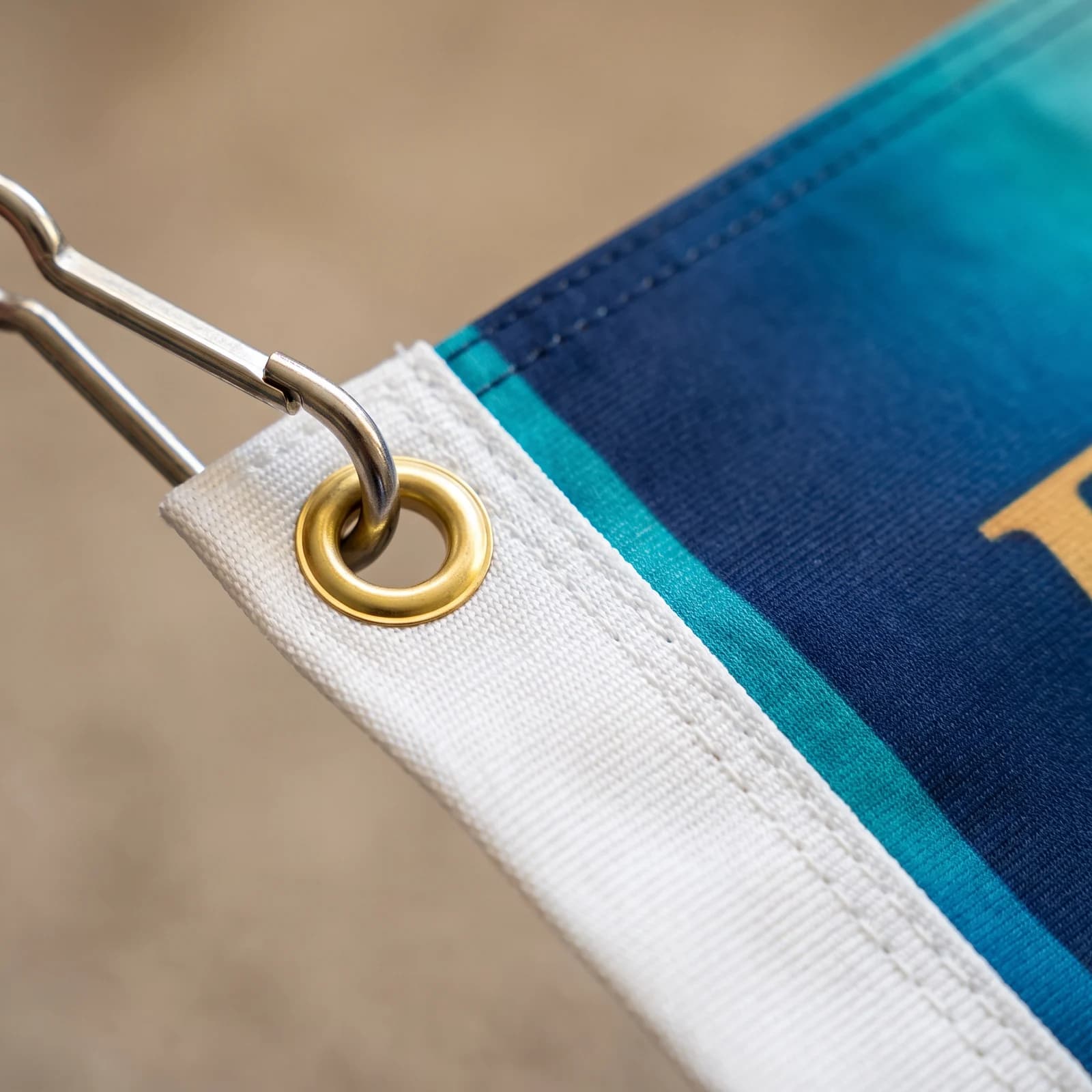
Lower the halyard until both snap hooks sit at chest level, clip the upper hook through the top grommet first, then the lower hook through the bottom grommet. Working top down keeps the fabric off the ground and keeps the flag from twisting a half turn on the rope.
Two checks before you raise anything. First, the design should read correctly when you stand with the pole on your left, because that is how the street sees it. Second, on the U.S. flag the union of stars belongs at the peak of the pole, which puts it in the upper left as you face the flag.
Clip the hooks so the swivel barrels face away from the fabric. A snap hook that beds against the hem will saw through the strip in a season, and that is the failure we are asked about most often on a flag that is otherwise still bright. Vinyl or rubber hook covers cost almost nothing and are worth having on any pole that flies a flag every day.
How Do You Raise and Secure the Flag?
Pull the halyard hand over hand, briskly, until the flag reaches the top of the pole. A slow raise lets the flag ride the pole and pick up a twist that has to be shaken out from the ground.
Then take the slack out. Pull the halyard tight against the cleat, wrap it in a figure eight around both horns, and finish with a half hitch so the last wrap locks. Tuck the loose end behind the wraps. A flapping halyard tail is the sound every building manager learns to hate, and a loose halyard is how a flag ends up wound around the pole by morning.
On an exposed site such as an open lot, hilltop, or waterfront, follow the pole and halyard instructions for tension. Secure loose rope without overtightening it, and check that the flag moves freely without wrapping or rubbing against the pole.
What Do the Flag Display Rules Actually Say?
The United States Flag Code sets display customs for the U.S. flag. Its civilian display guidance is advisory, as explained in the Congressional Research Service flag guide. The customs that matter for a business pole include these:
- Display the flag from sunrise to sunset on a stationary pole in the open, or around the clock if it is properly illuminated during the hours of darkness.
- Hoist it briskly and lower it ceremoniously.
- Nothing flies above the national flag on the same halyard, and flags of states, cities and organizations on that same halyard sit below it.
- On separate adjacent poles of equal height, a state flag may fly at the same height, and no other flag should be larger than the national flag.
- The flag should never touch the ground or anything beneath it.
- Retire a flag that is no longer a fitting emblem in a dignified way rather than putting it in a bin.
Flags carrying your own brand have no code to follow, only the one rule that matters commercially: a faded, frayed flag says more about the business than the logo on it does.
How Long Should an Outdoor Flag Last?
A flag that flies around the clock usually wants replacing every 6 to 12 months, and the fly end tells you first. Constant sun fades the colors, and steady wind frays the outer edge into threads well before the body of the flag wears out.
Three habits stretch a flag: take it down in severe weather, wash it occasionally in cold water with a mild detergent, and let it dry completely before it goes into storage. A flag folded away damp comes out of the box marked.
Material matters as much as habits. Nylon is light and flies in a gentle breeze, which is why it suits homes and small storefronts. Heavier polyester holds up better where the wind is constant. Cotton belongs indoors and in parades, because it soaks up moisture and mildews outside. What we print is a 4 oz flag polyester, dye sublimated so the color is in the fiber rather than sitting on the surface, which is how a printed logo keeps its edges after a season outdoors.
What We See on Flag Orders
A logo built for a banner is the file we send back most often. A flag is never flat, never still, and never read from twenty feet, so hairlines, thin outlines and small taglines disappear into the folds. Bold shapes and two or three strong colors are what survive at the top of a pole.
The second thing we see is surprise about the back of a single sided flag. Single sided print thru means the ink penetrates the fabric, so the back is a softer mirror image of the front. That is fine for a logo and a problem for a phone number, so anything with words on both sides should be ordered double sided.
The third is artwork built edge to edge. The hem and grommet strip take about two inches off the hoist edge, so any text that runs into that band is sewn into the hem. Keep the logo and the wording clear of it and the flag comes back looking like the proof.
What to Send Us
Send vector artwork, an AI, EPS or layered PDF, built at the flag size with the hoist edge marked, CMYK, with fonts outlined and nothing important within two inches of the hoist. It goes through AI image to print for $14.99 once per item; we check it and send a free digital proof after you order.
Send any image, Canva export, PDF or logo through AI image to print and we make it print ready, covering size, bleed, resolution and color, for $14.99 once per item. If you want a designer to build the flag from scratch, Design it for me is +$29.99 with two revisions included. Every order includes a free digital proof before anything prints, production is next day once you approve it, and flags are printed in the USA and shipped anywhere in the country for a flat $10 per order. If a pole is not practical at your location, the advertising flag range stands on its own ground spike or cross base from 7 to 18 feet, and a ground spike feather flag moves from a car lot to a grand opening in the back of a truck.
Frequently Asked Questions
A 20 ft pole uses a 4 x 6 ft flag, creating a 48 x 72 in printed panel. The working rule is that the flag runs about one-quarter to one-third of the pole height, so a 15 ft pole takes a 3 x 5 ft flag and a 25 ft pole takes a 5 x 8 ft flag.
The hoist, the edge with the grommets, always sits against the pole, and the design reads correctly when you stand with the pole on your left. On the U.S. flag the union of stars goes at the peak, which puts it in the upper left as you look at the flag. Check it at chest height before you raise anything.
Yes, but only the optional 74.5 in spinner pole for house flag sizes. Its wall bracket mounts level or angled upward. We do not sell in-ground flagpoles, halyards, snap hooks, or cleats, so buy that hardware separately and confirm the flag size it takes.
Yes. 4 finishing choices are available: a hem with a grommet strip on the left edge, the same strip across the top, a plain hem with no grommets, or a custom pole pocket that slides over a pole. Grommets fit a halyard pole, while a pocket fits a pole that passes through the sewn sleeve.
A practical replacement range for a flag that flies around the clock is 6 to 12 months, with earlier replacement possible in constant sun and steady wind. Watch the fly end for fading and fraying. Rotating 2 flags and taking them down in severe weather can extend their usable life.
The federal Flag Code does not prescribe a penalty for disregarding its civilian display guidance. It calls for proper illumination when the U.S. flag is displayed after dark. Light the flag, or lower it at sunset and raise it again in the morning.
4 standard sizes run from 2 x 3 ft through 5 x 8 ft, and custom flags print up to 62 in wide and 100 ft long. A 6 x 10 ft flag needs 72 in on its short side, beyond the printed width, so larger pole sizes need a conversation rather than an online order.
Related Articles
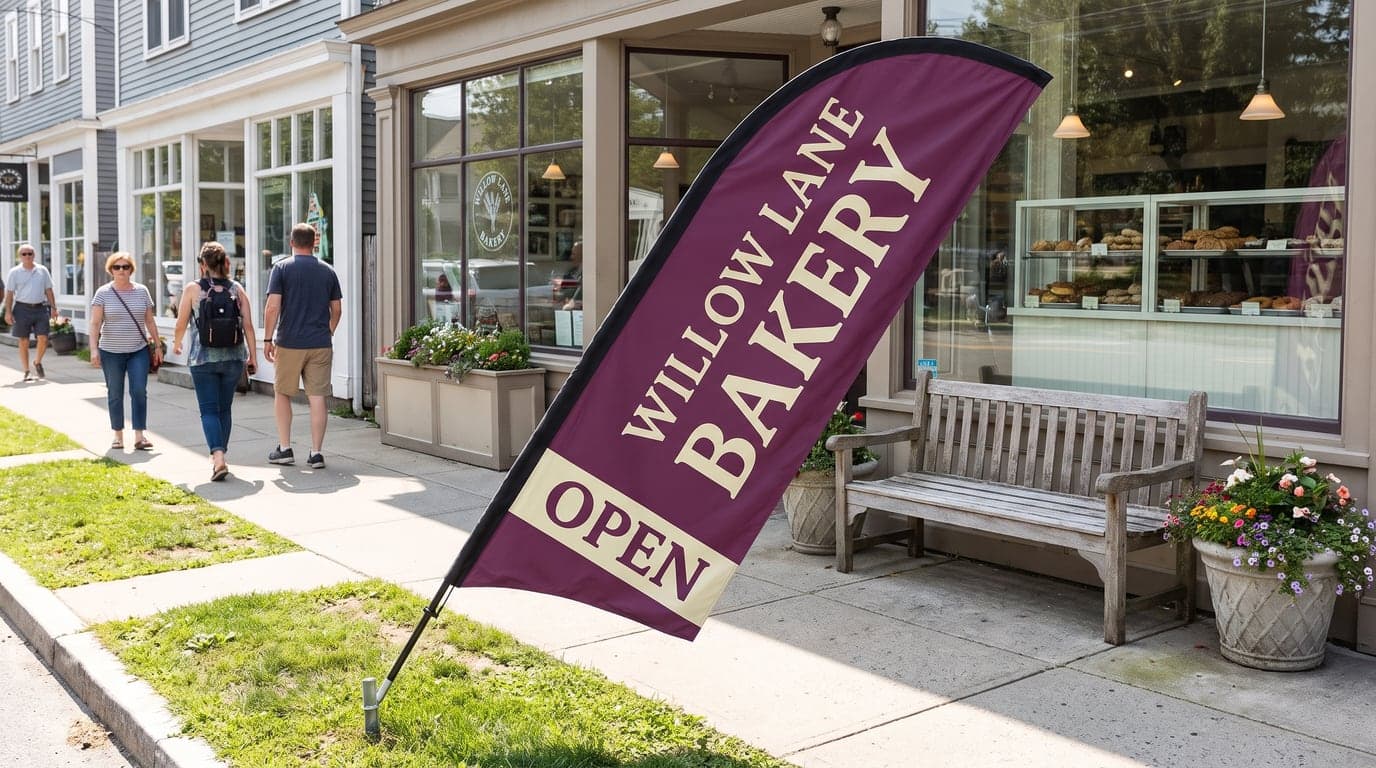
Feather Flag Sizes: 9 to 18 ft Kits, Bases and Prices
Feather flag sizes are 9, 10.5, 14 and 18 ft, printing at 23.5 x 78.5, 24 x 104, 28 x 138 and [...]
Read More: Feather Flag Sizes: 9 to 18 ft Kits, Bases and Prices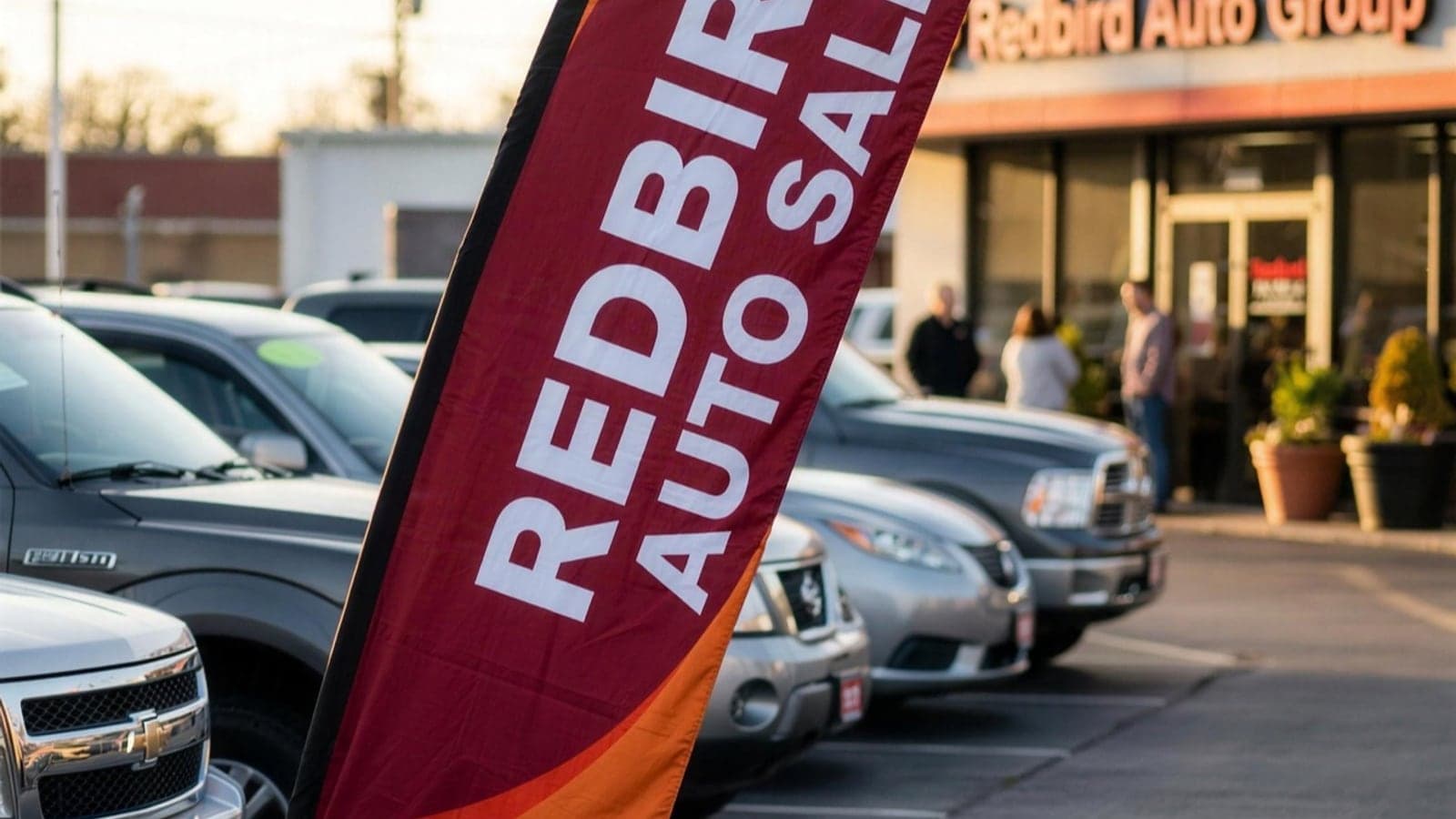
Double Sided Flags: 14 ft Kits, Mirror Back or Two Prints
A 14 ft double sided flag reads correctly from either side. The single sided kit shows a mirror [...]
Read More: Double Sided Flags: 14 ft Kits, Mirror Back or Two Prints
How to Hang a Banner: Safe Steps for Walls and Fences
A 6 ft x 3 ft banner hangs best when its surface, hardware, and load are matched before every [...]
Read More: How to Hang a Banner: Safe Steps for Walls and Fences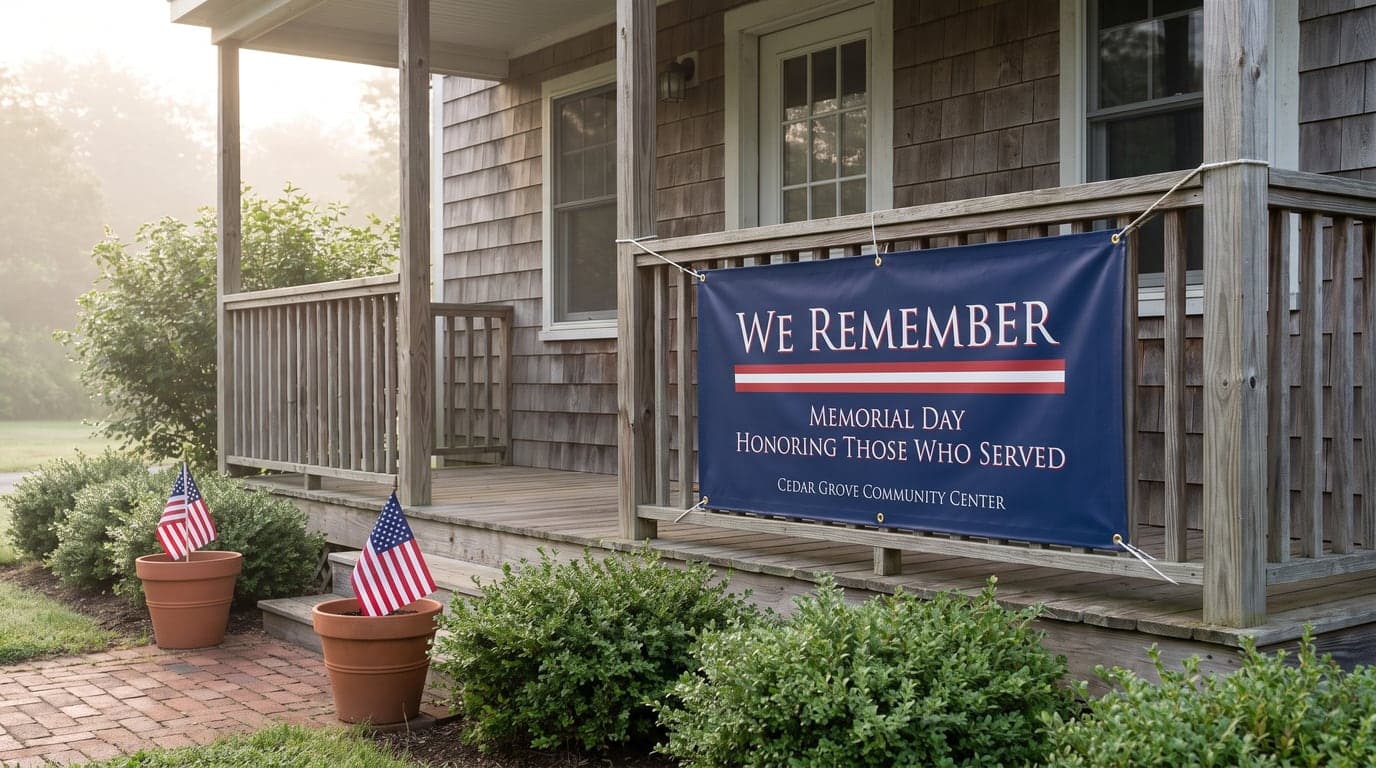
Memorial Day Banners and Flags: Respectful Display Ideas
A 6 ft x 3 ft Memorial Day banner should carry one clear purpose: remembrance or promotion, not [...]
Read More: Memorial Day Banners and Flags: Respectful Display Ideas